

You’re probably trying to plan a Georgia trip that feels worth the time. Not just a quick stop for photos, but a set of places that helps you understand the state. That’s harder than it sounds because many “best of Georgia” lists jump from mountain views to museums to stadiums without explaining why each place matters or what kind of visitor will get the most from it.
A better approach is to look at landmarks as windows into different sides of Georgia. Some places show the state’s natural scale. Some explain its business culture. Some reveal how Georgia handles history, public space, education, science, and major civic institutions. When you visit with that mindset, the trip gets more interesting. You stop seeing landmarks as isolated attractions and start seeing how they connect.
That’s especially useful in Georgia, where the range is wide. You can move from a technology incubator in Atlanta to a civil rights museum, then to a major public venue, then to a mountain site that carries both natural grandeur and historical controversy. The state’s tourism economy is also a major force, contributing nearly $80 billion annually to Georgia’s travel and hospitality sector, according to the Explore Georgia 2023 Official State Travel Guide announcement. That scale helps explain why these places matter beyond leisure. They shape how visitors understand Georgia.
This list of Top Georgia Landmarks Every Visitor Should See leans practical. You’ll find the familiar names, but you’ll also get the context many articles skip. That means what to look for once you arrive, who should prioritize each stop, and how each landmark fits into a fuller picture of the state. If you’re a parent, educator, business traveler, student, or first-time tourist, that extra context helps you choose better.
1. Georgia Tech's Advanced Technology Development Center (ATDC)
ATDC isn’t the kind of landmark most first-time visitors put on a vacation board, but it deserves a place on a smart Georgia itinerary. If you want to understand modern Atlanta, you need to see where ideas get tested, funded, and turned into working companies. A museum tells you what happened. An incubator shows you what’s happening now.
Set on Georgia Tech’s campus, ATDC reflects one of Georgia’s strongest identities: practical innovation. This is the sort of place where students, founders, engineers, and operators work close to each other. For educators, it’s a strong stop because it makes entrepreneurship feel concrete instead of abstract.

What to notice when you visit
Don’t expect dramatic architecture or a theme-park style experience. Pay attention to how the space functions. Look for shared work areas, event rooms, startup signage, and the way the campus setting supports collaboration.
A college student touring Georgia might walk away with a better sense of what a startup ecosystem looks like in real life. A school administrator might see why Atlanta works well for career-oriented field trips. A business visitor might notice the value of being near research, talent, and fast decision-making.
Practical rule: If a landmark helps you see how people build the future of a state, it belongs on the list even if it isn’t scenic.
A few ways to make this stop more useful:
- Book ahead: Campus and innovation spaces often work best when you arrange tours or events in advance.
- Pair it with nearby stops: ATDC fits well with a broader Atlanta day focused on education, research, and business.
- Use it as a conversation starter: Students can compare what they see here with what they expect from traditional workplaces.
If you want to balance major attractions with less obvious destinations, Montclair Crew’s guide to best hidden gems to visit in Georgia is a helpful companion.
2. World of Coca-Cola
Some landmarks matter because they’re beautiful. Others matter because they explain how a state presents itself to the world. World of Coca-Cola does the second job very well.
Located in downtown Atlanta, this attraction centers on one of Georgia’s most recognizable corporate names. Even visitors who don’t care much about branding usually find something useful here. The exhibits make it easy to understand how a local company can become a global symbol, and that makes this more than a simple nostalgia stop.
Why it works for more than tourists
Families often focus on the tasting areas and visual displays. That’s fine, but there’s more to notice. The building also helps visitors think about product history, marketing, packaging, and how large organizations shape a city’s identity.
For students, it can spark questions about design, advertising, logistics, and consumer culture. For business travelers, it’s a reminder that Atlanta is home to institutions that operate at a global scale. That context changes how you see the rest of the city.

Try visiting with one simple question in mind: how does a company turn a familiar product into a cultural landmark? That question makes the exhibits sharper and more memorable.
A few practical examples help. A teacher can use this stop to discuss brand storytelling. A small business owner can watch how the museum organizes a long company history into clear, visitor-friendly themes. A parent can show children that “history” isn’t only about wars and politics. It can also be about products people know from everyday life.
A strong landmark doesn’t just display objects. It gives visitors a framework for understanding why those objects mattered.
If your schedule is tight, pair World of Coca-Cola with nearby downtown attractions so you’re not crossing the city multiple times in one day.
3. Atlanta BeltLine
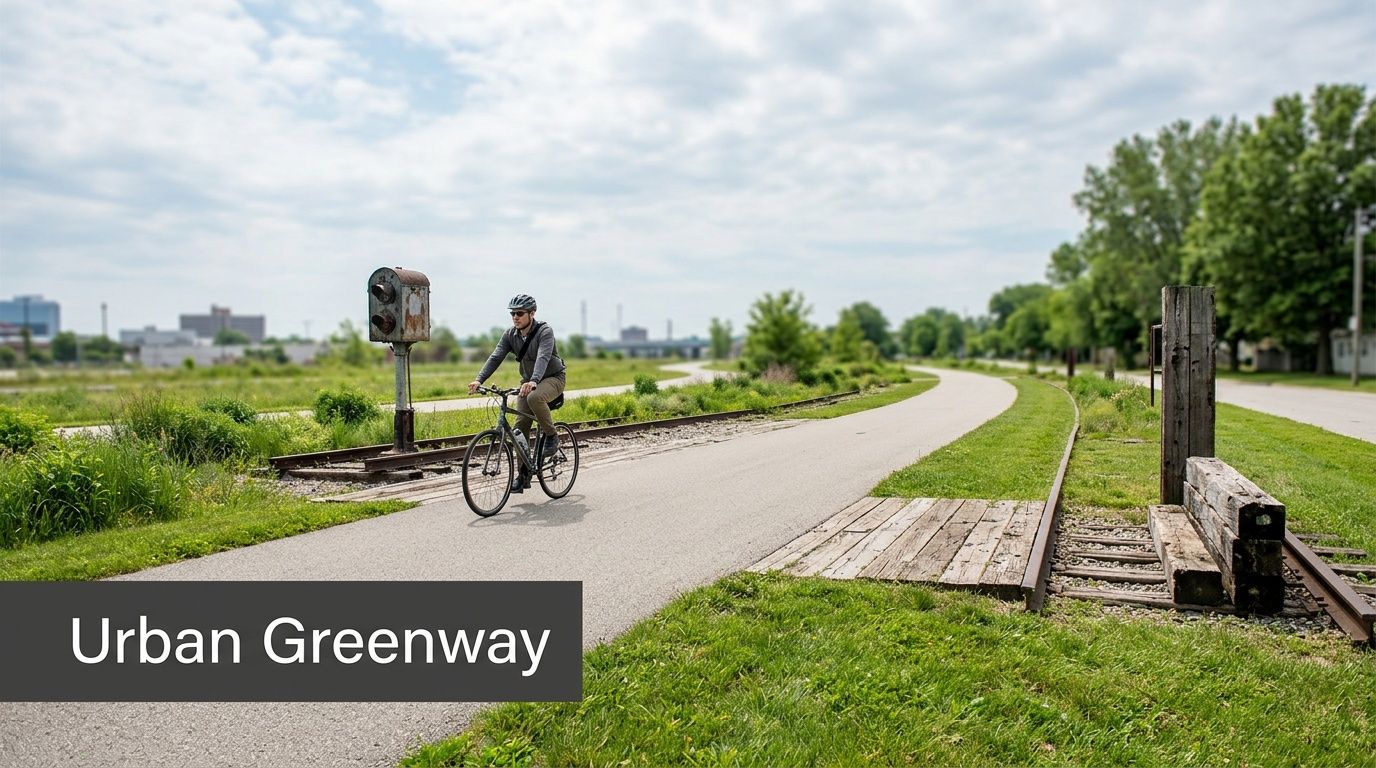
The Atlanta BeltLine stands as a premier example of how a city can repurpose old infrastructure rather than allowing it to decay. That distinction alone makes it worth visiting. It also feels distinct from traditional landmarks because it is not a single building or monument. It is a living public space that people use daily.
Many visitors expect a trail and leave surprised by how much social life they saw along the way. Walkers, cyclists, families, artists, dog owners, commuters, and food-seekers all share the space. That mix tells you a lot about Atlanta.
Why the BeltLine matters
The project transforms abandoned railroad corridors into trails, parks, and cultural areas. For educators, that’s a practical lesson in urban redevelopment. Instead of explaining reuse in theory, you can point to pavement, landscaping, access points, public art, and nearby businesses and show what reuse looks like on the ground.
The BeltLine is especially useful for visitors who want a city experience without staying indoors all day. It lets you learn while moving. That’s ideal for travelers who get tired of back-to-back museums.
Here’s how different visitors might use it:
- Families: Walk a shorter segment and stop for food or open space.
- Students: Observe how transportation, land use, and community design overlap.
- Business travelers: See a visible example of how public investment changes neighborhood activity.
For ideas on fitting this into a city weekend, Montclair Crew’s roundup of top things to do in Atlanta Georgia this weekend can help with planning.
Best way to experience it
Choose one section instead of trying to “do” the whole BeltLine in one visit. Wear walking shoes. Go at a time when people are out, because the public life is part of the experience.
The BeltLine makes one civic lesson easy to see. A city can preserve the memory of old infrastructure while giving it a new purpose.
4. Georgia Aquarium
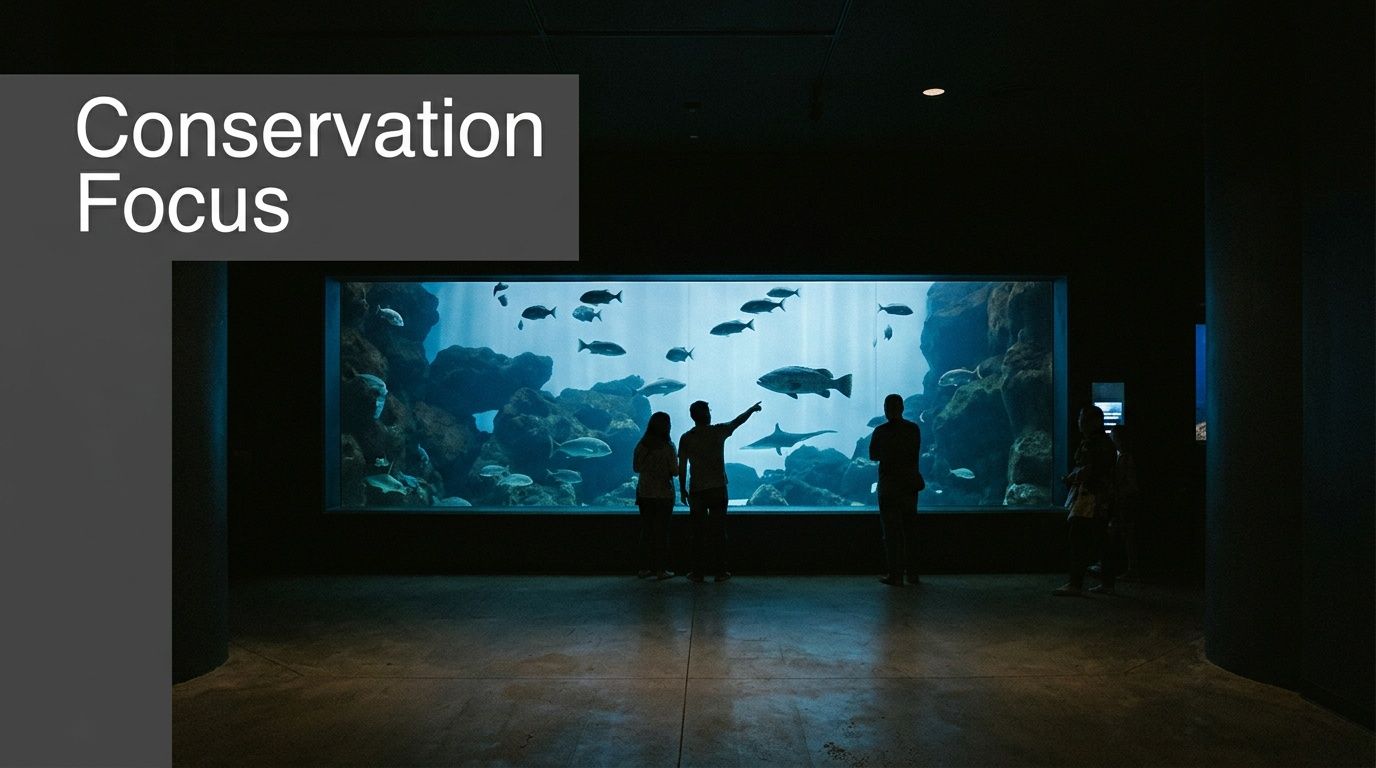
Georgia Aquarium earns its place on any list of Top Georgia Landmarks Every Visitor Should See because it combines spectacle with systems thinking. Children often remember the animals first. Adults often remember the scale of the operations once they stop to think about what it takes to run a place like this every day.
The landmark also stands out in a practical way. In the accessibility gap noted in the provided background, the Georgia Aquarium is identified as a strong example of a landmark with full ADA accommodations and sensory hours in contrast to sites that present more barriers, as referenced in the accessibility discussion tied to Georgia landmarks. That matters for families and group planners who need a more inclusive choice.
More than a family attraction
An aquarium teaches visitors to look at visible and invisible systems at once. You see tanks, animals, lighting, and exhibits. You also start to think about filtration, building operations, scheduling, safety, and information management. That’s what makes the visit richer than a simple sightseeing stop.
For a school group, this creates a strong teaching moment. Students can move from biology to engineering in the same building. For facility-minded visitors, it’s a reminder that public institutions depend on constant behind-the-scenes coordination.
A useful way to approach the visit is to divide your attention in two directions:
- Observe the exhibits: Notice how the design shapes what visitors learn and where they pause.
- Observe the operation: Watch staff flow, signage, crowd control, and the way the building guides movement.
If you’re planning a family-oriented Georgia itinerary, Montclair Crew’s list of top kid-friendly attractions in Georgia offers nearby ideas.
A simple educational lens
Ask a child what they saw. Ask an adult how the place is run. Both answers matter, and together they make the visit more memorable.
5. Mercedes-Benz Stadium
Mercedes-Benz Stadium shows a different side of Georgia. This isn’t about wilderness, historic streets, or museum collections. It’s about scale, coordination, and modern public experience.
Even from the outside, the building signals ambition. The structure, the plaza, and the polished arrival experience all communicate that Atlanta sees itself as a city built for major events. If you care about architecture, sports, operations, or civic identity, that’s enough reason to stop.

What visitors often miss
Many people evaluate stadiums only by whether they attended a game. That’s too narrow. A stadium is also a lesson in circulation, security, signage, access control, food service, and event management. You don’t need to be a sports fan to find those systems interesting.
A teacher leading older students could use the site to discuss how large venues manage crowds and technology. A business visitor might see a case study in high-pressure operations. A local resident bringing out-of-town guests may appreciate that the building has become one of the clearest markers on Atlanta’s skyline.
Try to notice the visitor journey from arrival to entry. Where do people pause? How are lines shaped? What information appears first? Good landmark visits often come from noticing process, not only destination.
A practical visit strategy
Tours usually work better than trying to understand the place only from the exterior. If a tour isn’t available, walk the perimeter and compare the building’s public-facing areas with the surrounding neighborhood fabric. That contrast tells its own story about urban development in Atlanta.
Field note: Large venues reveal a city’s priorities. You can learn a lot from where they invest convenience, visibility, and control.
6. National Center for Civil and Human Rights
Some landmarks entertain. Some challenge. The National Center for Civil and Human Rights does the second, and that’s exactly why it belongs on this list.
Located in downtown Atlanta, it helps visitors connect Georgia to national and global struggles over dignity, law, memory, and public responsibility. This isn’t a stop to rush through. It works best when visitors leave time to read, listen, and reflect.
Why this stop matters educationally
Atlanta is often presented through business growth and major attractions, but that doesn’t explain the city on its own. This center adds moral and historical depth. It reminds visitors that a place can be economically ambitious while also carrying the weight of unfinished civic questions.
For school groups, the center can anchor discussions about protest, rights, institutions, and the preservation of public memory. For adults, it can reset the tone of a trip and make the rest of Atlanta feel more grounded.
One practical benefit of visiting here is that the museum rewards slow attention. You don’t need prior expertise. You need willingness to engage.
- Read the context panels carefully: The meaning often sits in the details.
- Talk after the visit: Groups learn more when they discuss what felt uncomfortable, surprising, or newly clear.
- Avoid stacking too many light attractions immediately after: Give the visit room to stay with you.
Montclair Crew’s guide to top museums to visit in Georgia can help if you want to build a more museum-focused itinerary around this stop.
Best mindset for the visit
Don’t treat this as a box to check. Treat it as one of the places that helps explain why Atlanta matters in American public life.
7. Alpharetta Technology Park
Alpharetta Technology Park won’t appear on every tourist postcard, but it tells you something many travel articles leave out. Georgia isn’t only a state of attractions. It’s also a state of working business ecosystems, and Alpharetta is one of the places where that becomes visible.
If you’re visiting from outside Metro Atlanta, this stop helps explain why so many technology, operations, and service companies cluster north of the city. The setting is practical rather than theatrical. Office buildings, business parks, meeting spaces, and nearby service corridors create the kind of environment where day-to-day economic life happens.
Who should make time for it
This stop makes the most sense for business travelers, students exploring career paths, and educators who want to show how regional economies function. It’s also useful for visitors who are deciding where to expand, relocate, or build partnerships.
A college class studying business geography could compare Alpharetta with downtown Atlanta and see how different forms of growth look on the ground. A company leader from another state might notice how the area balances suburban access with a strong professional presence.
The surrounding region also connects to Montclair Crew’s local roots. Their overview of the City of Alpharetta GA gives helpful local context if you’re building a visit around the area.
What to pay attention to
Don’t judge the landmark only by whether it looks dramatic. Instead, notice how businesses are arranged, how roads and office campuses connect, and how the area supports a technology workforce.
A landmark can be important because it shows where a state earns its living, not only where visitors take photos.
You’ll get the most from this stop if you pair it with a meal, business meeting, campus visit, or nearby tech event. That turns a simple drive-through into a clearer view of how suburban innovation districts function.
8. Georgia Environmental Policy Institute
This is another nontraditional landmark, but it belongs on the list because it speaks to a question many visitors care about now: how does a state think about stewardship, development, and responsible use of resources?
An environmental policy organization doesn’t deliver the instant visual payoff of a mountain overlook. What it offers instead is intellectual context. If you’ve spent time visiting parks, trails, and public attractions across Georgia, this kind of institution helps you think more clearly about what it takes to protect those places.
Why it adds depth to a Georgia itinerary
A lot of travel writing treats nature as scenery. That’s incomplete. Parks, water, urban greenways, and public land all depend on regulation, planning, and ongoing decisions. Visitors who understand that usually see landmarks differently.
This stop is especially valuable for students, civic-minded travelers, and professionals in sustainability or operations. It gives language to issues that often stay invisible during leisure travel. Waste management, environmental compliance, land use, and long-term planning become easier to discuss when you connect them to real institutions.
A useful real-world example is this: after walking a major greenway or visiting a busy public site, ask what happens to the waste stream, the infrastructure, and the maintenance burden. Those questions move a trip from passive sightseeing to active observation.
Best use of the visit
If public tours or events are available, take them. If not, use the institution as a research anchor before or after visiting Georgia’s parks and civic projects.
Short notes can help:
- Track one issue: Pick water, land use, recycling, or urban growth and follow that theme through your trip.
- Compare policy with place: Ask whether a landmark’s design reflects the values people say they support.
- Bring students prepared: A short discussion works better if they already know the basic terms.
This stop won’t suit every vacationer. It will strongly reward curious visitors who want Georgia to make sense as a system, not just as a sightseeing map.
9. Atlanta Science Museum and TechSquare
This pairing works well because it joins two related experiences. One translates science and technology into public learning. The other shows how those ideas move into business, research, and startup culture. Together, they create one of the strongest “how Georgia thinks” stops on this list.
A science-focused museum gives visitors hands-on entry points. TechSquare adds the surrounding atmosphere of real innovation. The combination is useful for families with older children, school groups, and adults who enjoy seeing ideas connect across education and industry.
How to visit this pair well
Start with the museum side if you’re traveling with children or mixed-age groups. Interactive exhibits make technical ideas less intimidating. Then move toward the innovation district and let the environment shift your attention from learning displays to working ecosystems.
That change matters. In one part of the day, people ask, “How does this work?” In the next, they ask, “Who is building with this?”
Here are three practical ways to get more from the visit:
- Follow one theme across both places: Robotics, sustainability, data, or design all work well.
- Ask students to compare audiences: Who is the museum for, and who is the innovation district for?
- Notice the language: Public education spaces explain. Startup districts signal speed, experimentation, and opportunity.
Why it belongs on a landmark list
Not every landmark is old. Some are important because they show a city’s current ambitions. This pair does that clearly.
A parent might use the day to spark interest in engineering or coding. An educator might use it to connect classroom learning with visible career paths. A founder visiting Atlanta might see why the city appeals to people who want both institutional depth and entrepreneurial energy.
The value of this stop comes from contrast. You move from curated explanation to active environment, and that shift helps visitors understand Atlanta as more than a set of attractions.
10. Georgia Technology Authority Building
Government technology lacks glamour, yet it influences daily existence in ways that often go unnoticed. This reality makes the Georgia Technology Authority building an unexpectedly useful landmark for visitors who want to understand how the state functions behind the scenes.
Public services depend on standards, governance, procurement, security practices, and coordinated infrastructure. A state technology authority represents that layer of civic life. For most travelers, this won’t be a scenic highlight. For professionals, students, and educators, it can be one of the most revealing stops.
What makes it meaningful
Many landmark lists focus only on what’s visually striking. This stop matters because it represents decision-making. Where do statewide technology standards come from? How does the public sector manage digital systems responsibly? What kinds of institutions hold that work together? Questions like those matter if you want to understand modern Georgia beyond tourism.
A public administration class could use this as a case example in state-level governance. A cybersecurity professional visiting Atlanta might see it as part of a broader ecosystem of compliance and operational discipline. A student considering public service may come away with a more realistic view of how much technical work government requires.
How to approach a non-spectacle landmark
The best way to “visit” a place like this may be partly physical and partly research-based. Seeing the building helps anchor the institution in real space. Reading about the authority’s role adds the missing layer of purpose.
Keep these points in mind:
- Think institutionally: This stop is about responsibility, not entertainment.
- Connect it to daily life: Licensing systems, digital services, and state operations all depend on structured technology management.
- Use it as a comparison point: Contrast public-sector technology priorities with what you saw in startup or corporate spaces elsewhere on the trip.
For the right visitor, this kind of landmark rounds out the list. It shows that Georgia is not only a place of attractions and enterprise. It’s also a place of governance, standards, and long-term operational thinking.
Top 10 Georgia Landmarks Comparison
| Item | Implementation 🔄 | Resources ⚡ | Expected Outcomes 📊 | Ideal Use Cases 💡 | Key Advantages ⭐ |
|---|---|---|---|---|---|
| Georgia Tech's Advanced Technology Development Center (ATDC) | Moderate 🔄, structured incubator programs for startups | Moderate ⚡, mentorship, workspace, technical support | High 📊, startup partnerships and innovation pipelines | Pilot sustainable IT solutions; partner with early-stage tech firms | University affiliation, strong startup network ⭐ |
| World of Coca‑Cola | Low 🔄 for visits; moderate for corporate engagement | Low–Moderate ⚡, exhibition spaces and event networking | Medium 📊, insight into enterprise-scale operations and sustainability goals | Corporate networking; benchmarking enterprise sustainability | Illustrates large-scale corporate operations and CSR ⭐ |
| Atlanta BeltLine | Low 🔄, public infrastructure and phased development | Low ⚡, public access; observation requires time | Medium 📊, visible sustainability and resource-recovery examples | Public outreach; demonstrate urban sustainability principles | Accessible, high-visibility demonstration of environmental stewardship ⭐ |
| Georgia Aquarium | High 🔄, complex systems and operational controls | High ⚡, advanced life‑support and IT infrastructure | High 📊, exemplifies institutional IT and security needs | Targeting institutional asset disposition and secure data handling | Represents large institutional clients with complex IT needs ⭐ |
| Mercedes‑Benz Stadium | High 🔄, integrated, real‑time systems and security | High ⚡, extensive networks, access control, event systems | High 📊, shows scale of operational and data-security demands | Venue IT lifecycle management; enterprise-level disposal planning | Demonstrates cutting‑edge infrastructure and security requirements ⭐ |
| National Center for Civil and Human Rights | Moderate–High 🔄, archival/data preservation protocols | High ⚡, secure storage and strict access controls | High 📊, underscores need for secure, ethical data handling | Secure destruction for sensitive records; archival compliance | Emphasizes ethical responsibility and preservation standards ⭐ |
| Alpharetta Technology Park | Low–Moderate 🔄, standard business park operations | Moderate ⚡, concentrated tech firms and office infrastructure | High 📊, direct market access to many potential clients | Local B2B sales, networking, on‑site service offerings | High client density near Montclair Crew HQ; easy access ⭐ |
| Georgia Environmental Policy Institute | Moderate 🔄, policy research and advocacy processes | Low–Moderate ⚡, research teams and regulatory resources | Medium 📊, informs compliance and sustainable practices | Regulatory alignment; evolving e‑waste compliance strategy | Provides regulatory context and compliance guidance ⭐ |
| Atlanta Science Museum & TechSquare | Low–Moderate 🔄, exhibits plus innovation district interactions | Moderate ⚡, event spaces, startup hubs, educational programs | Medium 📊, education, startup connections, sustainability demos | Outreach, talent scouting, showcasing sustainable tech | Combines public education with startup ecosystem access ⭐ |
| Georgia Technology Authority Building | High 🔄, state‑level governance and compliance frameworks | High ⚡, formal standards, security, procurement processes | High 📊, clarifies public‑sector IT and disposal requirements | Government contracts, public‑sector compliance and audits | Authoritative source for state IT policy and security standards ⭐ |
Final Thoughts
The best version of a Georgia trip usually mixes three kinds of places. First, you need landmarks that feel unmistakably Georgian once you arrive. Second, you need places that explain how the state works right now. Third, you need at least one stop that changes the way you think after you leave. That’s why a smart list of Top Georgia Landmarks Every Visitor Should See shouldn’t be limited to scenic overlooks and postcard views.
Stone Mountain Park is the clearest example of why context matters. It stands as one of Georgia’s most iconic landmarks, with the world’s largest bas-relief sculpture carved into a granite monolith that rises 1,686 feet above sea level and spans 1.57 miles in circumference. The carving itself measures 190 feet long by 76 feet high and was completed between 1964 and 1972. The site draws over 4 million visitors annually, sits just 16 miles east of Atlanta, and charges $25 per car for admission, according to Redfin’s overview of what Georgia is known for. Those facts explain its physical scale and tourist pull. They don’t remove its controversy. The same source notes its historical ties to early 20th century Ku Klux Klan gatherings, which means a visit should be informed, not casual.
That tension is part of what makes Georgia an important place to visit. The state contains beauty, achievement, reinvention, and conflict in close proximity. A stadium can sit not far from a civil rights center. A startup hub can shape the same metro area that preserves difficult historical memory. A trail can show reuse and public imagination. An aquarium can model inclusion in ways some other landmarks still need to improve.
Accessibility belongs in that conversation too. The background provided for this article notes that 13.7% of Americans, or over 42 million people, have mobility disabilities, and that Georgia’s aging population includes 12.5% of residents over 65. That helps explain why visitors should think beyond popularity and ask practical questions about access, navigation, and accommodations before they go. A good itinerary isn’t only exciting. It’s workable for the people taking the trip.
If you’re choosing from this list, don’t try to force every landmark into one rushed weekend. Pick based on the kind of understanding you want. If you want Georgia’s present and future, focus on ATDC, TechSquare, Alpharetta, and public technology institutions. If you want civic depth, prioritize the National Center for Civil and Human Rights, the BeltLine, and the Georgia Aquarium. If you want a broad Atlanta snapshot, combine a cultural stop, a public-space stop, and one business or innovation stop in the same day.
That’s the practical lesson many travel roundups miss. The strongest landmark list isn’t just a ranking. It’s a framework. It helps you decide which places fit your interests, your group, your energy level, and the kind of story you want Georgia to tell. When you visit that way, even the less obvious stops become memorable, because they help the whole state come into focus.
If your Georgia itinerary also includes office cleanouts, school equipment refreshes, or data center decommissioning, Montclair Crew Recycling is a practical local partner. Based in Alpharetta with a drop-off center in Smyrna, Montclair Crew helps Metro Atlanta organizations recycle computers, laptops, servers, telecom gear, and other IT assets while protecting sensitive data through secure wiping and optional shredding. For businesses, schools, healthcare providers, and public agencies that want a compliant, convenient way to handle retired technology, they offer a clear path that supports both security and sustainability.
