

Georgia in spring usually creates the same problem for travelers. You want flowers, good walking weather, and enough to do beyond taking a few photos, but you don’t want to waste a weekend on a place that looks better on Instagram than it does in real life.
That’s where most “best of” lists fall short. They give you pretty names, then skip the parts that matter once you’re booking a hotel, loading the car, or trying to decide whether a destination works for a quick day trip, a romantic weekend, or a group outing.
Georgia earns its spring reputation because the season changes the whole state at once. Savannah’s squares feel softer and greener, coastal spots get easier to enjoy before summer heat arrives, and mountain parks show off stronger water flow and fresh leaf-out. If you plan well, spring is the easiest time to see Georgia at its best without forcing a complicated itinerary.
This guide is built for planners, not daydreamers. You’ll get seven of the Best Spring Travel Destinations in Georgia, plus the practical trade-offs that matter: where crowds become a real issue, where you need to book ahead, where parking gets annoying, and which places actually deliver for a full day versus a shorter stop.
Some picks are built around gardens. Some work better for hikes, bike rides, train excursions, or festival energy. All of them are strong spring choices. The goal is simple. Pick the destination that matches your pace, book the pieces that matter early, and skip the guesswork.
1. Savannah Historic District and Forsyth Park
Savannah is the easiest spring recommendation in Georgia because it works on almost every type of trip. If you want a walkable city break with real atmosphere, this is the one. The Historic District gives you oak-lined streets, café stops, old homes, museums, and shaded squares that are pleasant to explore for hours without needing a rigid schedule.
Forsyth Park is the visual anchor. In spring, the fountain, surrounding paths, and blooming plantings make it one of the best low-effort, high-reward stops in the state. You can spend a full morning there, then keep moving through the squares and side streets without ever feeling like you’re forcing the day.
Why it works in spring
Spring suits Savannah better than peak summer for one simple reason. Walking is the whole point here, and this city is best experienced on foot. The Historic District rewards slow travel, short detours, and unplanned stops.
The district’s layout also makes logistics easier than in more spread-out destinations. You can park once, check into a nearby hotel, and handle most of the trip without getting back in the car.

Best fit: Couples, first-time Georgia visitors, food-focused travelers, and anyone who wants a polished city weekend with outdoor time built in.
Must-do move: Start early at Forsyth Park, then walk a loose loop through several squares before lunch. Savannah gets better when you leave room for side streets instead of trying to over-schedule every stop.
Practical rule: If your dates fall near St. Patrick’s Day, decide whether you want festival energy or a calmer garden-and-architecture trip. You won’t get both at the same time.
Pros and cons that matter
Savannah’s strengths are obvious once you arrive. Dining and lodging options are deep, many green spaces are free, and the Historic District makes spring sightseeing feel effortless. It’s one of the few Georgia destinations where wandering without a plan still works.
The downside is crowd pressure. St. Patrick’s week changes the experience completely, with heavier traffic, tighter parking, and higher prices. If you want the classic Savannah spring feel without the event surge, aim for a non-holiday weekday stretch and check details through Visit Savannah.
2. Jekyll Island and Driftwood Beach
Jekyll Island is a strong pick when you want spring coastal scenery without a frantic beach-town pace. It’s compact, easy to get around, and built for slow outdoor days. Driftwood Beach gets the attention, and it deserves it, but the island works best when you treat it as more than a photo stop.
The draw here is balance. You get weirdly beautiful shoreline views, paved paths for biking, quieter stretches of beach, and an educational stop at the Georgia Sea Turtle Center. That mix makes Jekyll one of the most versatile spring destinations in the state.
What to prioritize
Driftwood Beach is the headliner. Go early if you care about photos, parking, or a quieter walk. The bleached tree remains scattered along the shore give the place a stark, sculptural look that stands out from Georgia’s softer marsh and dune scenery.
Then shift gears. Rent bikes or bring your own, follow the paved trails, and build in an unhurried afternoon. Jekyll rewards travelers who don’t try to cram too much into one day.
If you’re deciding between coastal stops, this guide to relaxing Georgia beaches is a useful companion because Jekyll fits the calmer end of that spectrum.
Best fit: Couples, families, photographers, and teams that want a low-stress offsite backdrop rather than a packed itinerary.
Smart plan: Sunrise at Driftwood Beach, late morning bike ride, lunch on-island, then an afternoon stop at the sea turtle center or a quiet beach stretch.
Go to Driftwood Beach early or accept the parking fight. That’s the simplest way to protect the day.
Trade-offs before you commit
Jekyll’s biggest advantage is that it feels manageable. Signage is clear, the island isn’t hard to learn, and spring weather usually makes biking and beach walks more pleasant than midsummer. It’s also a good destination for mixed-interest groups because people can split time between nature, beach downtime, and light sightseeing.
The trade-offs are practical, not dramatic. There’s a vehicle entry fee, and weekend parking at Driftwood Beach can tighten up fast. This isn’t the place to expect nonstop nightlife or a packed urban dining scene. It’s better for a reset than for a high-energy trip. For current planning details, start with Jekyll Island’s official visitor site.
3. Callaway Resort & Gardens
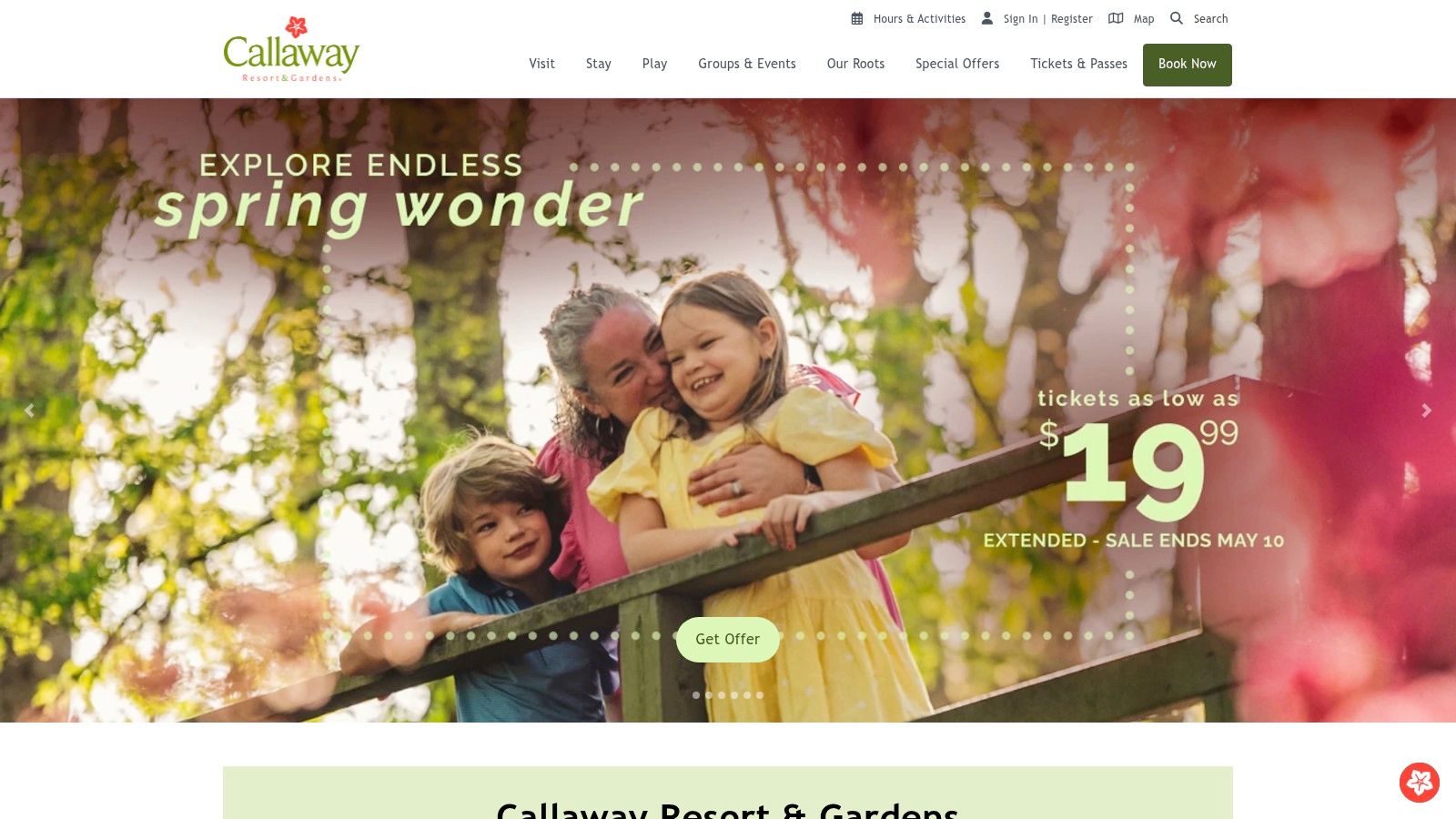
Callaway works best for travelers who want a spring trip with structure. Some places are better for wandering. Callaway is better for choosing your lane, gardens, biking, golf, boating, or family-friendly activity planning, then building the day around it.
That makes it one of the safest spring picks in Georgia. You’re not gambling on whether there’s enough to do. The property is set up for full-day visits and overnight stays, and the spring bloom cycle gives you a strong seasonal reason to go.
Spring strengths
The azalea displays are the main event. That’s what most spring visitors are coming for, and the gardens deliver a more curated, polished experience than a wildflower-heavy hiking destination. If you want color without rugged terrain, this is a smart call.
The Day Butterfly Center adds variety, especially for families or anyone who wants a break from pure garden walking. Bike trails and resort-style add-ons also give the destination more range than a standard botanical garden visit.
For travelers who want more floral stops around the state, this roundup of beautiful gardens in Georgia pairs well with a Callaway trip.
Best fit: Families, couples, multigenerational groups, and travelers who want a spring destination with lodging and activities in one place.
Good strategy: If your group has different interests, use the gardens as the common anchor, then let people branch off into biking, golf, or lake activities.
Where Callaway wins and where it doesn’t
Callaway is easier to sell to a group than a more niche destination. It has broad appeal, on-site lodging, and enough optional activities to prevent the “what now?” problem. That matters if you’re planning for people with different energy levels.
The downside is cost layering. Some experiences sit outside basic admission, so a cheap garden day can turn into a pricier outing once add-ons pile up. Popular spring weekends also book up early, especially if you want lodging, so don’t wait around. Check current seasonal offerings and reservations at Callaway Resort & Gardens.
4. Gibbs Gardens
Gibbs Gardens is for travelers who want spring color with very little ambiguity. If your main goal is to see blooms, walk well-kept grounds, and leave with a camera roll full of flowers, it’s one of the strongest choices in Georgia.
This destination doesn’t rely on side attractions to make the trip work. The gardens are the point. That clarity is a strength because you know exactly what kind of day you’re buying.
Why planners like Gibbs
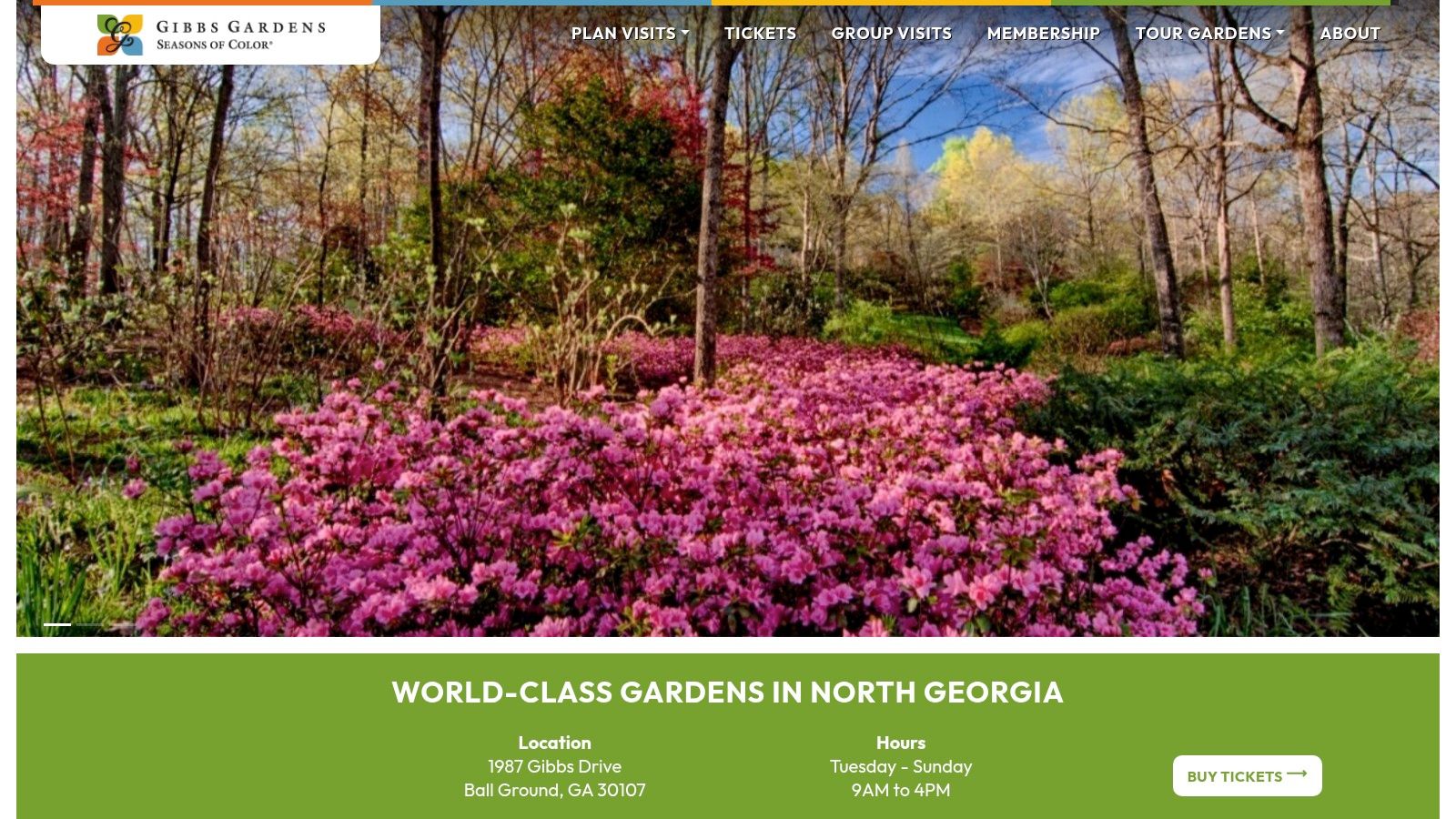
The rolling bloom pattern is the big advantage. Spring here unfolds in layers, starting with daffodils and continuing through other seasonal color across different garden spaces. That gives the destination a longer useful window than a single short-lived bloom event.
The property also has enough variety to keep the walk from feeling repetitive. Japanese garden areas, water features, azaleas, and broader cultivated sections create a smoother rhythm than a one-note flower display.
Best fit: Garden lovers, photographers, couples, and anyone who wants a quiet spring outing without festival chaos.
Best use of time: Arrive early, walk the larger outdoor areas first while energy is high, then slow down in the more detailed garden areas and stop for lunch on-site.
If you want spring flowers without city traffic, event crowds, or a complicated itinerary, Gibbs is one of the cleanest choices in Georgia.
Limits to know before you go
Gibbs is calm, scenic, and straightforward. Online ticketing and free parking remove some of the friction that can sour a day trip, and the on-site café makes it easier to stay longer without leaving the property.
Still, this isn’t the best pick for everyone. Some terrain can be steep, and accessibility planning matters more here than at flatter urban parks. Peak bloom weekends also draw serious traffic, so buying ahead is the smarter move. For seasonal bloom timing, tickets, and accessibility notes, use Gibbs Gardens.
5. Tallulah Gorge State Park
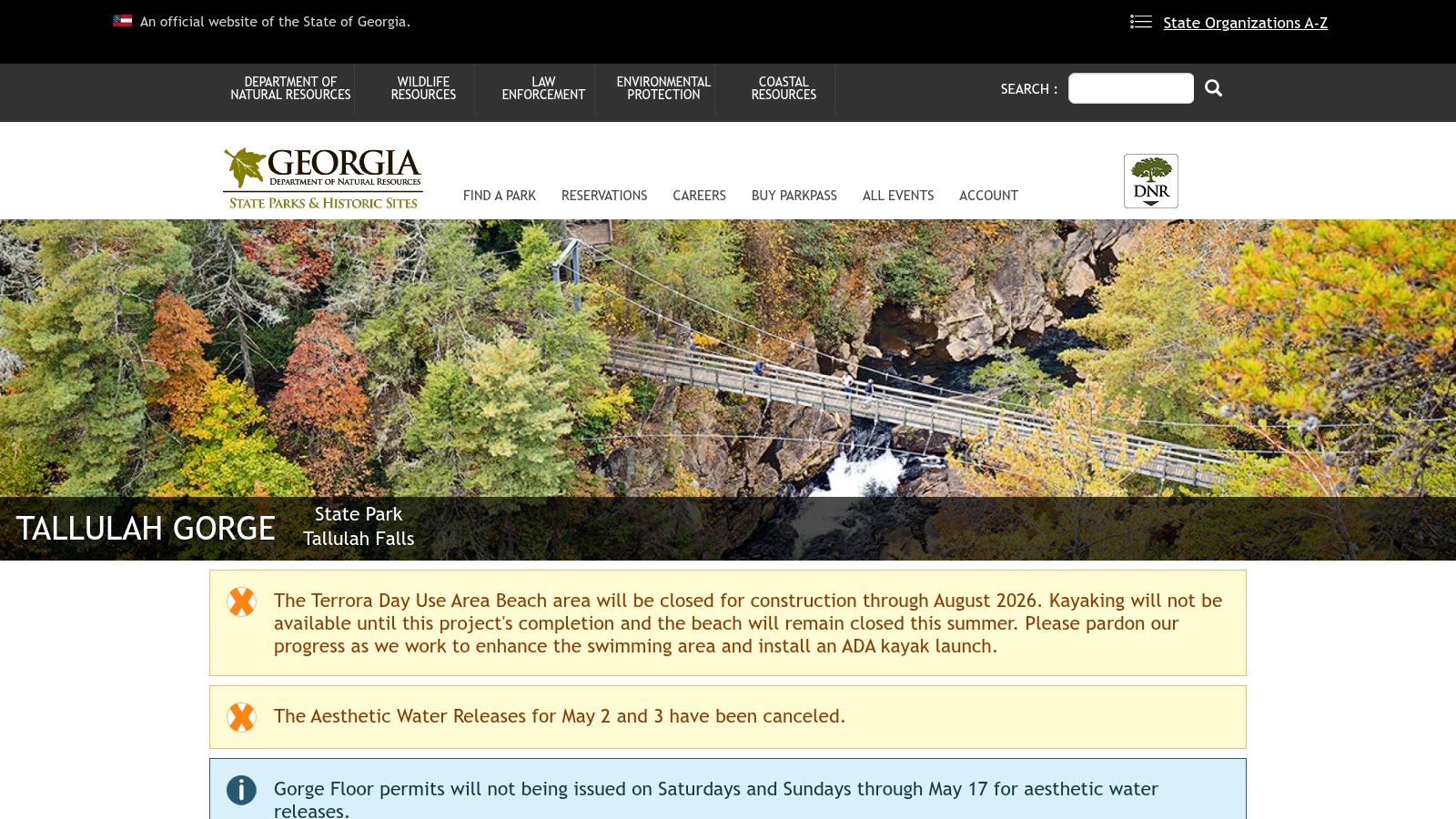
Tallulah Gorge is the best spring destination in Georgia if you want drama. Not “pretty.” Dramatic. The views from the rim, the suspension bridge, the waterfalls, and the depth of the gorge make this one of the few places in the state that feels instantly high-impact the moment you reach the overlooks.
Spring helps because the surroundings feel more alive. Water flow is stronger than in drier periods, the surrounding forest starts filling in, and the whole park gets that fresh-season contrast you want from a mountain outing.
How to plan it right
This park is easy to undersell and easy to mishandle. If you arrive late on a busy spring weekend expecting a smooth, spontaneous visit, you may end up circling for parking and missing out on the experience you wanted.
The safer approach is simple. Get there early, decide whether rim views are enough or whether you’re aiming for gorge-floor access, and plan around the park’s permit structure. The controlled access is a feature, not a flaw, but only if you respect the timing.
If you’re building out a broader North Georgia outdoor itinerary, this guide to Georgia state parks worth exploring helps put Tallulah in context.
Best fit: Hikers, photographers, adventure-minded couples, and day-trippers from Metro Atlanta who want a memorable nature outing.
Worth doing: Walk the overlooks first. Even if you don’t land a gorge-floor permit, the upper views and suspension bridge still make the trip worthwhile.
The real pros and cons
Tallulah Gorge delivers a lot for a day trip. The scenery is bucket-list level by Georgia standards, and the park layers in educational value through its interpretive center and managed access system. It feels like a destination, not just a trail stop.
The downside is that demand concentrates fast. Gorge-floor permits are limited, and busy weekends can push both parking and patience. It’s a place where early arrival makes a visible difference in trip quality. Check trail conditions, permits, and visitor details at Tallulah Gorge State Park.
6. Blue Ridge and the Blue Ridge Scenic Railway
Blue Ridge is the most flexible mountain-town option on this list. If you want a spring trip that can go rustic or comfortable depending on your mood, this is the one. You can ride the train, browse downtown, add a short hike, and still end the day with a good meal instead of trail mix in the car.
The Blue Ridge Scenic Railway is what makes this destination especially easy to recommend to mixed-age groups. Not everybody wants a hard hike in spring, and not everybody wants a full day in town. The train gives the day a built-in centerpiece.
What makes it work
The route along the Toccoa River is the main attraction. It gives you mountain scenery without demanding hiking boots, route planning, or trail stamina. That’s useful when you’re traveling with kids, older relatives, or anyone who wants scenic payoff without much friction.
Downtown Blue Ridge supports the trip well. Shops, restaurants, galleries, and nearby outdoor access mean you can shape the weekend around the train rather than making the train the only reason to come.
If you’re comparing mountain bases for different seasons, this guide to Georgia mountain towns worth visiting year-round is a useful cross-check.
Best fit: Families, couples, casual rail fans, and travelers who want a mountain feel without committing the whole trip to hiking.
Best spring plan: Morning train ride, lunch in town, then a relaxed afternoon with a short outdoor stop or river view rather than trying to cram in a major hike.
Buy railway tickets early if your travel dates are fixed. Waiting for the last minute is how a Blue Ridge plan turns into a “maybe next time” plan.
The trade-offs
Blue Ridge is easy to like because it spreads the experience across town and outdoors. You’re not locked into one activity, and that makes bad weather or changing group preferences easier to manage.
The catch is demand. Popular weekends can push up lodging and dining prices, and train seats can disappear well ahead of time. If you want the railway, treat it as the first booking, not the last. For schedules, coach options, and trip details, go straight to the Blue Ridge Scenic Railway.
7. Macon’s International Cherry Blossom Festival
You arrive in Macon on a spring morning, and the trip plan is already built for you. Blossoms frame city streets, event signs point you toward the day’s schedule, and you can spend less time piecing together stops and more time deciding how much festival energy you want.
That’s Macon’s advantage in spring. It works well for travelers who want a defined window, built-in activities, and a destination that feels active rather than purely scenic.
Why spring travelers choose Macon
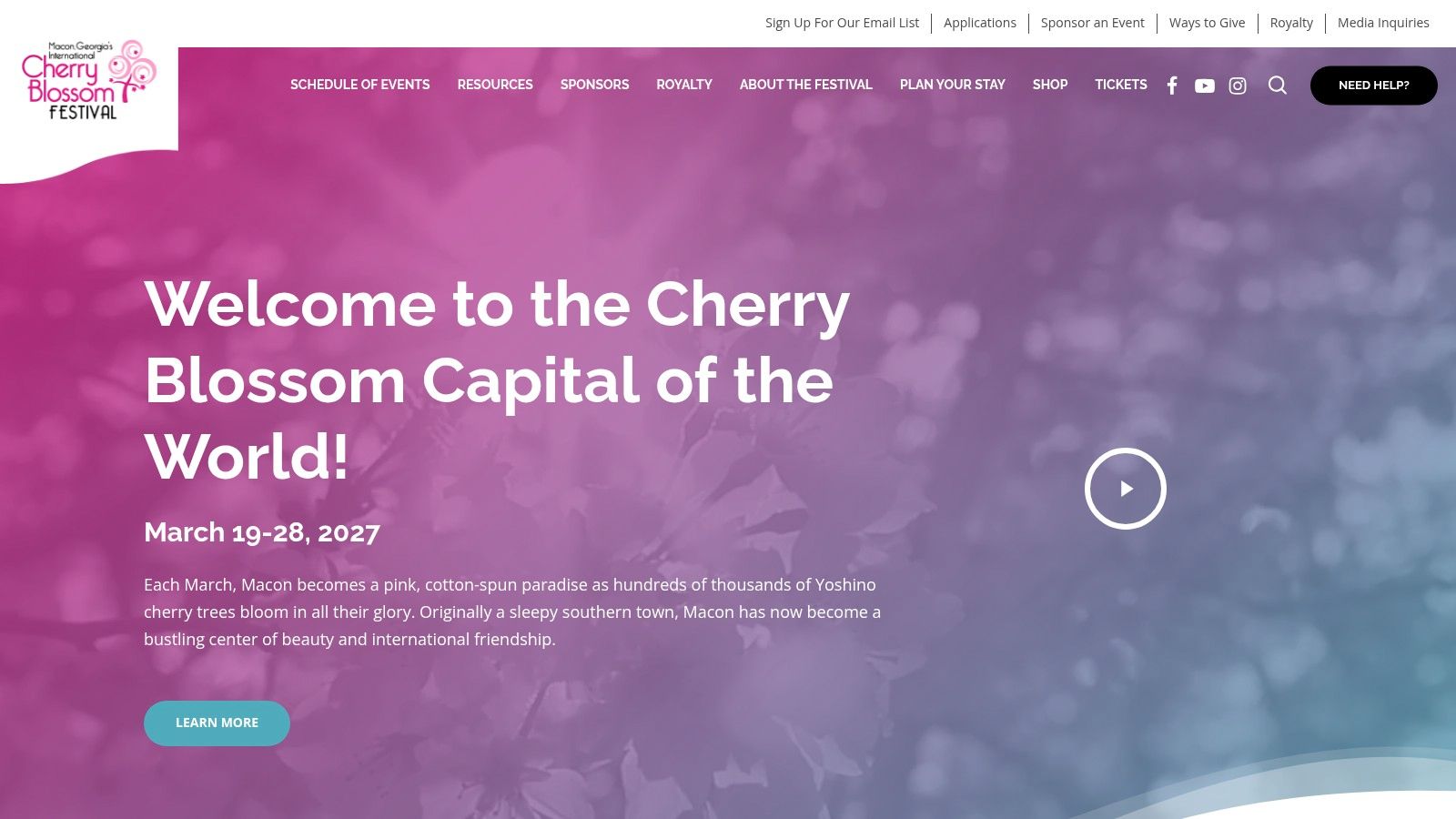
Macon stands out because the blossom experience spreads across the city instead of staying inside one garden gate. You get the flowers, but you also get parades, street activity, family programming, and the sense that the whole city is participating. For travelers who prefer a schedule over a self-built wandering day, that makes planning easier.
The festival gives this stop a clear purpose. You go during the event window, pick the activities that fit your group, and build the rest of the day around them. If you want another planning reference point, this guide to popular Georgia festivals worth visiting helps compare Macon with other event-driven spring trips in the state.
Best fit: Families, friend groups, festival-first travelers, and anyone who wants more structure than a typical flower outing provides.
Best spring plan: Stay flexible, but start with one anchor event each day. Add blossom viewing, a downtown meal, and one lower-effort stop nearby so the schedule stays manageable.
The trade-offs
Macon is a good pick if you want momentum. There is usually something happening, which solves the common spring-trip problem of beautiful scenery but not much to do after an hour.
The trade-off is predictability. Bloom quality depends on weather, and the busiest festival periods bring heavier traffic, tighter parking, and a less relaxed pace. Travelers who dislike crowds should avoid peak weekend windows and aim for a weekday visit.
This is also not the best choice for travelers looking for solitude. Macon works best if you want shared energy, public events, and a trip that feels social. Check the official festival schedule in your final planning stage, then book lodging and parking strategy around the events you care about instead of showing up and improvising.
Top 7 Georgia Spring Destinations Comparison
| Item | Complexity 🔄 | Resources ⚡ | Expected outcomes ⭐ | Results/Impact 📊 | Ideal use cases 💡 |
|---|---|---|---|---|---|
| Savannah Historic District and Forsyth Park (Savannah) | Low–Moderate, easy to explore; high complexity during festival week | Moderate, abundant lodging/food; parking and crowds can add time/cost | Iconic spring photos and lively city festival experiences | High visitor engagement and tourism revenue spikes during St. Patrick’s | City sightseeing, photography, festival attendance |
| Jekyll Island and Driftwood Beach (Golden Isles) | Low, compact, easy to navigate | Low–Moderate, vehicle entry fee; limited beach parking at peak times | Serene coastal imagery and mild outdoor activities | Strong visual/educational value for content and conservation visits | Beach photography, biking, low-key family outings |
| Callaway Resort & Gardens (Pine Mountain) | Moderate, multiple attractions and activity booking | Moderate–High, admission, optional lodging and add‑ons | Immersive garden displays with varied recreational options | High for group packages and multi-activity day trips | Group retreats, garden photography, stay-and-play escapes |
| Gibbs Gardens (Ball Ground) | Low, well-signposted large grounds; some steep terrain | Low, online tickets, free parking; accessibility varies by area | Predictable rolling bloom schedule ideal for photos | Strong seasonal visual impact; steady visitor interest on peak days | Photography, quiet strolls, scheduled bloom viewing |
| Tallulah Gorge State Park (Tallulah Falls) | Moderate–High, permits required for gorge-floor access | Low–Moderate, parking and limited permits can restrict access | Dramatic canyon and waterfall views with enhanced spring flows | High scenic value; limited access increases exclusivity and demand | Hiking, educational outings, bucket-list scenic visits |
| Blue Ridge and the Blue Ridge Scenic Railway (Fannin County) | Low, straightforward rail excursions; advance booking advised | Moderate, ticketed train rides; cabins/dining may be pricier on weekends | Relaxed heritage rail experience with mountain spring blooms | Good regional draw; supports local businesses and outdoor activities | Half-day rail outings, family trips, paired hiking/fishing |
| Macon’s International Cherry Blossom Festival (Macon) | High, large-scale festival logistics and dense programming | High, parking, shuttles, event coordination; variable crowd costs | Citywide cherry-blossom spectacle and parade-centered events | Major regional publicity and high attendance; economic boost | Festival-goers, cultural events, large-group visits |
Making Your Georgia Spring Trip Happen
You have a spring weekend in Georgia, two or three open days, and too many good options. Start by choosing the trip shape first. That decision usually matters more than the destination name.
Savannah works best for travelers who want a walkable base, strong food options, and a trip that does not require much driving once they arrive. Jekyll Island fits travelers who want coastal scenery and a quieter pace. Callaway Resort & Gardens and Gibbs Gardens are the clearest picks for bloom-focused trips. Callaway gives you more variety on-site. Gibbs is the better choice if the goal is a calm day built around flowers, photos, and an easy schedule.
Tallulah Gorge and Blue Ridge both suit spring outdoor trips, but they ask for different planning. Tallulah delivers bigger drama and less flexibility, especially if you want limited-access areas. Blue Ridge is easier to build around because the railway, downtown, and nearby cabins give you several ways to fill a weekend without forcing a strict itinerary. Macon is the option for travelers who want a set calendar, higher energy, and a spring trip built around an event window rather than open-ended sightseeing.
Book the items that can sell out first. For this list, that usually means Blue Ridge Scenic Railway tickets, popular spring lodging, and hotels near festival activity.
Then build around the trade-offs. Early arrivals matter at Tallulah Gorge, Macon, and other places where parking and crowd levels can shape the day. Savannah, Jekyll Island, and Gibbs usually reward a lighter schedule. Trying to cram too much into those destinations often leaves you with more time in the car and less time enjoying the reason you went.
Match the place to the travelers you have with you. Families with different ages and energy levels usually have an easier time at Blue Ridge or Callaway than at Tallulah Gorge. Couples who want a quieter spring weekend may prefer Gibbs over Macon during festival season. Atlanta-based day trippers often get better value from Tallulah or Gibbs than from forcing a rushed coastal run.
Traveling with pets adds another layer, especially when you start comparing lodging rules, outdoor access, and daily drive times. This guide on making pet travel stress-free is worth reading before you book.
Georgia gives spring travelers a strong range of choices. City streets lined with historic scenery. Island paths and beach views. Mountain overlooks. Large-scale garden displays. A festival trip with a fixed seasonal peak. The practical move is to pick the destination that matches your pace, your budget, and your tolerance for crowds.
Choose one place. Reserve the pieces that matter. Keep some room for weather, traffic, and a change of plan. That is how a good spring weekend in Georgia usually turns into one you want to do again.
If your business is planning a spring office refresh, relocation, or technology cleanout after travel and event season, Montclair Crew Recycling can help you clear out retired computers, servers, telecom gear, and other IT assets the right way. They serve Metro Atlanta organizations that need secure data destruction, compliant electronics recycling, and a simpler process for pickups, audits, and responsible equipment disposition.
