
You’re probably trying to pick a Georgia festival without wasting a weekend on bad parking, overpriced last-minute tickets, and a crowd setup that doesn’t fit the group you’re bringing. That’s the right way to think about it. A festival can be a great trip, a strong team outing, or an easy family day, but only if the event matches your tolerance for lines, travel time, walking distance, and schedule rigidity.
Georgia’s festival calendar rewards people who plan early and think practically. The state offers music festivals, film events, citywide street celebrations, mountain-town fall traditions, and large community fairs. Some are best for client entertainment. Others work better for families, friend groups, or low-pressure day trips. If you run operations for a school, office, healthcare practice, or local business, that difference matters.
This guide to Popular Festivals in Georgia You Should Visit takes a business-minded angle. The goal isn’t to romanticize every event. It’s to help you decide where each one fits, what usually works, what usually doesn’t, and how to avoid obvious planning mistakes. It also helps to think about venue readiness, crowd flow, and cleanup standards the same way event operators do. The basics behind festival ready event venues matter to attendees too.
One more thing is worth carrying into every trip. Big festivals create big waste streams. If your business talks seriously about sustainability, that shouldn’t stop at reusable water bottles. Georgia events are a reminder that responsible disposal, reuse, and recycling are part of the same local culture that keeps communities functioning.
1. Shaky Knees Music Festival
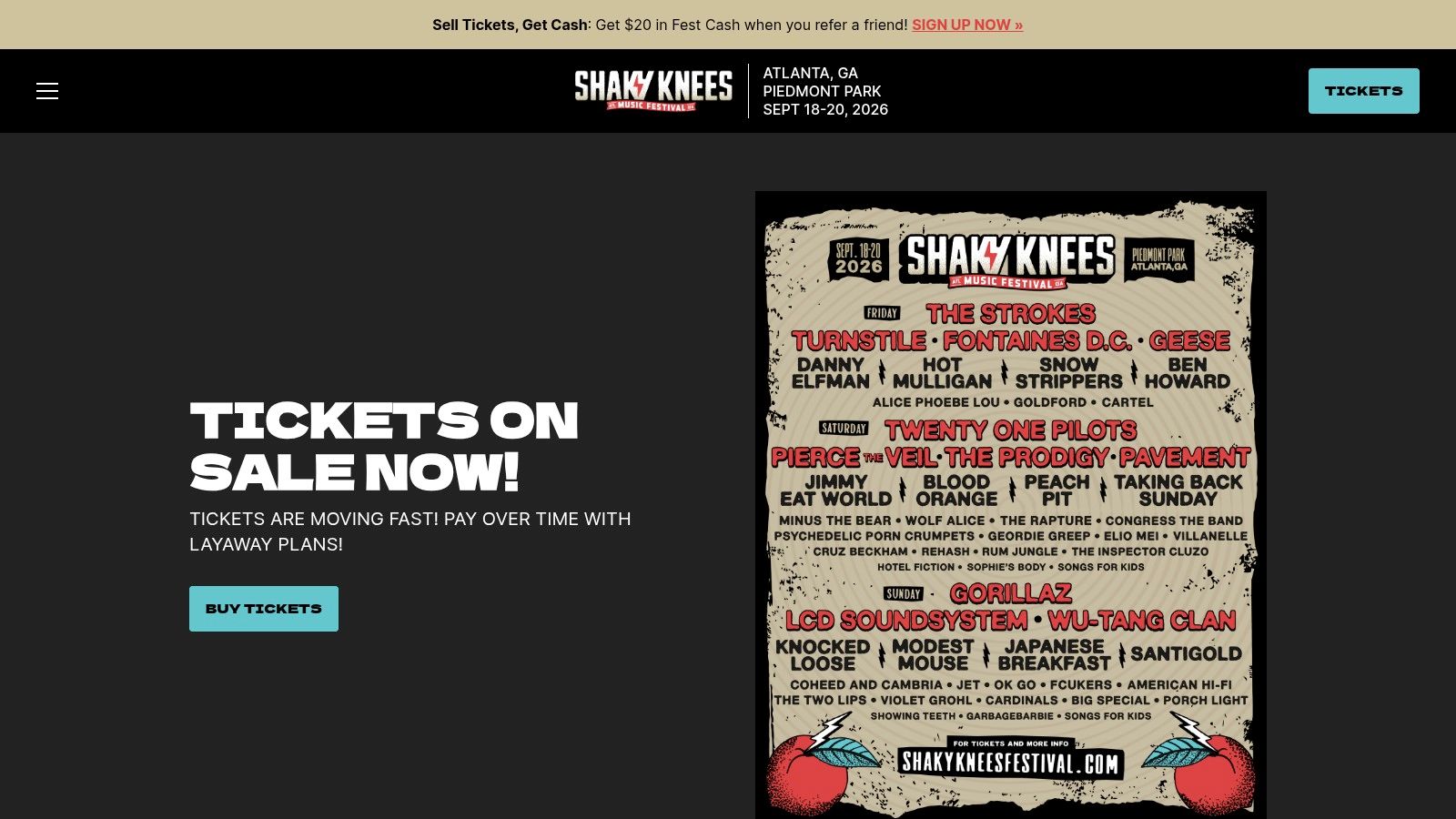
If your group wants a polished Atlanta music festival with a strong reputation and enough ticket flexibility to support different budgets, Shaky Knees Music Festival is one of the easiest calls on this list. It’s built around a multi-stage format in Piedmont Park, which gives you a central location, a walkable footprint, and a familiar Midtown base for hotels, restaurants, and after-hours plans.
The best use case is simple. Bring people who care about the lineup, not just the social setting. This is a better fit for music-forward teams, recruiting outings, or client entertainment where the event itself does the heavy lifting.
What works well
Shaky Knees handles ticket segmentation better than many large festivals. General admission works if your group is price-sensitive and comfortable standing most of the day. Premium tiers make sense if you need dedicated viewing space, a calmer recharge area, and a more polished hosting environment.
A Midtown location also reduces a lot of friction. If you stay nearby, you can avoid the usual park-festival parking pain entirely and treat it like a walking event. For visitors planning a wider Atlanta weekend, this pairs naturally with other top things to do in Atlanta this weekend.
Practical rule: If you’re bringing clients or senior staff, don’t pretend general admission and premium access deliver the same experience. They don’t.
Where people get burned
The biggest mistake is waiting too long on tickets and lodging. Popular days and premium tiers can tighten up fast, and park festivals rarely get more comfortable with age. Large crowds, long food lines at peak windows, and limited shade are normal conditions, not exceptions.
A few planning habits help:
- Arrive before the late-afternoon rush: Security lines and entry flow are usually easier earlier in the day.
- Set one meetup point: Cell service can get unreliable once the crowd thickens.
- Dress for standing, not photos: Shoes matter more than almost anything else at a large park festival.
- Use rail or rideshare if possible: Driving adds stress and usually doesn't save much time.
For sustainability, this is also a good event to practice low-waste habits that people follow. Refillable bottles, compact gear, and digital ticketing beat overpacking every time.
2. Atlanta Jazz Festival
Atlanta Jazz Festival is the opposite of a high-friction event. That’s its advantage. If you want a major Atlanta festival that feels inclusive, easy to scale, and realistic for mixed-age groups, this is one of the smartest picks in the state.
Because the core programming in Piedmont Park is free to attend, the planning conversation changes immediately. You don’t have to justify a big ticket buy-in for every employee, friend, or family member. You can invite broadly, let people come and go, and still build a real day around the festival.
Best for inclusive group plans
This is one of the few large events where “casual attendance” isn’t a bad strategy. That makes it useful for company culture outings where some people want to stay all day and others only want a few hours. It’s also family-friendly in a way that feels organic instead of forced.
Transit access helps. Midtown is easier than most festival zones to get around without making parking the center of the day. Bike valet and central park access add options for locals who don’t want to drive into a crowd.
What works here is flexibility:
- Loose schedules: Good for groups that don't move as one unit.
- Family attendance: Easier than late-night or alcohol-heavy festivals.
- Budget control: You can spend on food and convenience instead of mandatory admission.
- City access: Good for pairing with restaurants, museums, or a short Midtown stay.
The main trade-off
Free access brings volume. If your group expects close-up views for a headline set without arriving early, expectations need adjustment. The event works best when people accept that some performances are better enjoyed from a comfortable patch of grass than from the front.
Dense crowds near popular sets are part of the deal. Pick your priority early. Prime sightline or easy personal space.
Parking is the weak point. If you insist on driving and showing up late, you’ll likely spend more energy circling than enjoying the festival. Carpooling, transit, or an intentional drop-off plan usually works better.
From a sustainability angle, this festival is a good reminder that lower-barrier public events still rely on attendee behavior. Leaving a blanket area clean, using reusable containers when allowed, and packing out what you brought in are simple moves, but they matter in a park setting.
3. Dragon Con

Dragon Con isn’t a casual walk-up festival. It’s an operational challenge wrapped in a great event. If you like sci-fi, comics, gaming, cosplay, maker culture, panels, and high-energy fandom, that complexity is worth it. If you don’t, this can feel overwhelming fast.
The event spreads across major downtown Atlanta hotels and runs with a nonstop rhythm that rewards people who plan in layers. That’s why it works so well for niche team experiences, recruiting, and friend groups that want immersion instead of passive entertainment.
Why it stands out
Dragon Con attracts people who commit. That changes the atmosphere in a good way. Costumes are better, conversations are deeper, and side activities matter almost as much as headline programming. You’re not just attending scheduled panels. You’re navigating an entire temporary city of fandom.
This is also one of the strongest Georgia events for people in tech-adjacent spaces. Gaming, maker culture, media, and fan communities overlap heavily here. Families can enjoy it too, especially if they already like themed attractions and character-driven experiences like these family attractions in Georgia for weekend trips.
What to plan early
Hotel strategy decides whether Dragon Con feels fun or exhausting. Staying downtown changes the whole experience because you can reset, change costumes, drop purchases, and avoid repeated commute friction. Waiting too long usually leaves people with inconvenient lodging and more transit stress than they expected.
The event also demands better schedule discipline than most festivals:
- Choose anchor events first: Parade, major panels, and can’t-miss tracks should be locked in early.
- Leave room for overflow: Lines and crowd movement can derail tight plans.
- Pack for indoor and outdoor conditions: Downtown walking plus hotel AC can create comfort problems fast.
- Set spending limits: Vendor halls and artist alleys are excellent, but they can wreck a budget.
“Book the hotel first” is boring advice. It’s still the advice that saves the trip.
This is also where sustainability becomes more than a slogan. Conventions generate packaging waste, costume waste, and gadget waste. If your team attends in branded gear or uses temporary electronics, plan for reuse and proper recycling afterward instead of treating event materials as disposable.
4. Savannah St. Patrick’s Day Parade and Citywide Festivities

Savannah’s St. Patrick’s Day Parade and official city information deliver one of Georgia’s most recognizable celebration weekends. It’s part parade, part citywide party, part logistics test. If you want energy and tradition, this is a top-tier trip. If you hate crowds and road closures, skip it.
The big upside is variety. You can treat it as a full social weekend, a client entertainment trip, a couples getaway, or a simple parade day with an early exit. Savannah gives you enough surrounding value that even people who aren’t parade-focused usually find a reason to enjoy the trip.
Best use of the event
This one works well when the event is only part of the plan. The parade is the anchor, but your lodging, meals, walking routes, and fallback options matter just as much. Groups that build in restaurant reservations, side sightseeing, and realistic meeting points tend to have a much better time.
For couples or small groups, this also fits naturally into broader weekend getaways in Georgia for couples. Savannah already supports walkability, historic sightseeing, and dining better than most festival destinations.
The non-negotiables
You need to respect crowd density here. “We’ll figure it out when we get there” is how people end up far from the action, blocked by closures, or paying too much for mediocre lodging. City-managed parade resources help, but they don’t replace early planning.
The practical approach looks like this:
- Book lodging early: Central Savannah inventory gets tight around major event dates.
- Decide on free viewing or reserved seating: Don’t debate that after arriving.
- Review road closures in advance: Driving patterns change enough to affect timing.
- Carry light: Big bags make long parade-day walking worse.
Bring less than you think you need. A long city event punishes overpacking.
This event also highlights a broader sustainability point. Historic city festivals put pressure on streets, parks, and public services. Visitors who dispose of cups, food packaging, and temporary decorations responsibly are doing more than being polite. They’re helping keep a high-volume civic tradition workable.
5. International Cherry Blossom Festival in Macon
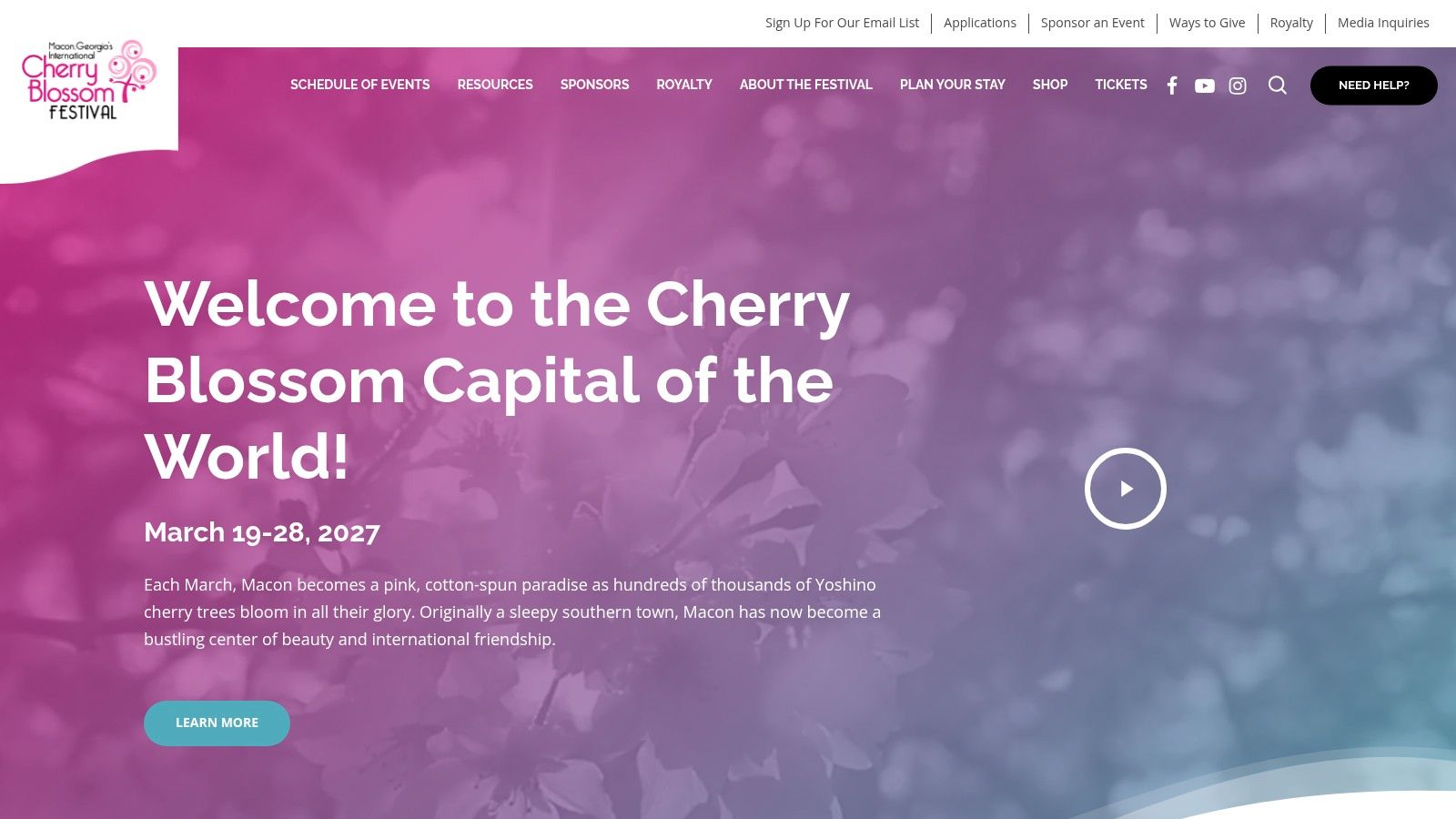
The International Cherry Blossom Festival in Macon is one of the easiest Georgia festivals to recommend for mixed groups. It has enough family appeal to keep kids engaged, enough event structure for planners, and enough visual identity to feel like a real occasion instead of a generic spring fair.
That pink-themed atmosphere helps. So does the mix of park activity, downtown programming, entertainment, and optional paid experiences. It gives visitors multiple ways to build the day depending on budget and attention span.
Why this one is practical
Not every festival needs to be intense to be worth the trip. Macon’s festival works because it offers range. You can keep things simple with a low-pressure family outing, or you can turn it into a more polished hosted event through formal activities and hospitality options.
Weekday attendance is often the better move if your schedule allows it. You’ll usually get an easier arrival, less crowd pressure, and more breathing room for food and rides. That matters if you’re coordinating employees, school groups, or families with younger children.
A few good use cases stand out:
- Family company day: Broad appeal without a complicated learning curve.
- Client hospitality with a softer tone: Better for relationship-building than high-volume nightlife events.
- Spring road trip: Strong seasonal visuals make the travel feel justified.
- Community engagement: Easier to attend without looking overly corporate.
What can go wrong
Parking and congestion around popular areas are the first friction points, especially on weekends. Weather is the second. Because the experience is largely outdoors, you need a backup mindset. Rain gear and flexible timing beat denial.
If you go in with realistic expectations, that’s manageable. This isn’t a festival where you need to optimize every minute. It rewards pacing more than aggressive scheduling.
From a sustainability standpoint, flower-and-park festivals can lull people into careless habits because the vibe feels relaxed. It still matters how visitors handle disposable food items, event handouts, and temporary décor. Respecting public space is part of the value of the trip.
6. Atlanta Film Festival

Atlanta Film Festival works best when you treat it less like a casual night out and more like a curated professional event. Screenings matter, but the primary value for many attendees comes from the mix of panels, conversations, creative energy, and venue-hopping across Atlanta.
This is one of the strongest festival picks for people in media, marketing, production, tech, and creative services. It also suits groups that prefer discussion and networking over loud crowds and all-day outdoor exposure.
Where it delivers value
Flexible access is the main advantage. You can attend a single screening, build a selective multi-day plan, or invest in broader access if you want the full experience. That makes it easier to match different budgets inside the same organization.
The festival’s long-running status also helps with credibility and programming depth. If you’re entertaining clients who prefer ideas and conversation over volume and chaos, film festivals generally outperform music festivals. You can also pair the trip with quieter Georgia plans, including visits to the most beautiful state parks in Georgia to explore before or after your city time.
Trade-offs to respect
This event can punish indecision. Strong screenings and premium access options can tighten quickly, and venue changes require attention. If you build a loose schedule without checking travel time between locations, you can end up missing the parts you cared about most.
The right approach is disciplined but not rigid:
- Prioritize must-see screenings first: Build the rest around them.
- Check venue locations before booking: Atlanta traffic changes what’s realistic.
- Use badges strategically: They make sense for heavy attendees, not everyone.
- Leave room for discussion: Some of the best value happens after the screening, not during it.
For sustainability-minded groups, this is a useful reminder that digital-first event habits help. Mobile ticketing, lighter printed materials, and restrained swag practices are better than producing stacks of throwaway collateral that no one wants by the end of the night.
7. Georgia Apple Festival in Ellijay

The Georgia Apple Festival in Ellijay is one of the most dependable fall picks in the state. If your ideal festival day involves mountain scenery, crafts, food, orchard add-ons, and a manageable road-trip feel, this is a strong choice.
Its biggest strength is predictability. You know the general seasonal mood you’re going for, and the event delivers it without requiring major urban-event strategy. That makes it attractive for families, office social outings, and weekend visitors who want a clear autumn experience.
Why people keep going back
Ellijay gives you a small-town festival atmosphere that still feels substantial. The vendor market, craft focus, and orchard tie-ins create enough variety that you’re not relying on one headliner or one scheduled performance to justify the drive.
It also pairs well with a wider North Georgia weekend. If your group wants local shops, scenic drives, and slower pacing, this fits naturally with other best small towns to visit in Georgia. That’s part of the appeal. The festival feels like a destination, not just an admission gate.
The practical downside
October traffic into mountain towns is real. That’s the issue to solve first. If you wait until peak arrival windows, the drive becomes longer, parking gets harder, and the relaxed small-town mood disappears fast.
Use a simple operating plan:
- Start early: Morning arrival usually gives you a better parking and walking experience.
- Decide whether it’s a day trip or overnight: Last-minute lodging can be limiting.
- Add one orchard stop, not five: Overplanning ruins the pace.
- Pack for changing weather: Mountain conditions can shift during the day.
This event is also where the sustainability angle feels most visible. Agricultural and craft-centered festivals remind people that reuse, repair, and local production still matter. That same mindset applies to business equipment. Keep useful items in circulation when possible, and recycle responsibly when they’ve reached the end of their working life.
8. North Georgia State Fair
You leave Atlanta after work, expect a simple fair night, and hit the usual problem by the time you reach Marietta. Traffic stacks up near the grounds, parking slows, and the line at the gate can burn more time than the first ride. That does not make the North Georgia State Fair a bad pick. It means you should treat it like a high-volume event, not a casual stop.
The fair works best for groups that want range without a lot of explanation. Rides, food, livestock, competitions, and stage entertainment give families and mixed-age groups enough options to avoid the usual argument over what to do next. For planners, that matters. You are not paying for a narrow experience that only suits one age bracket or one interest.
Why it works for practical planners
Marietta is the main advantage. For Metro Atlanta visitors, this is a manageable outing without the longer drive, lodging cost, or full-weekend commitment that some North Georgia festivals require. If you are organizing for a family, school group, church group, or local business team, that shorter access window lowers the risk.
It also has a straightforward value equation. A fair gives people multiple ways to enjoy the night, so one weak concert slot or one long ride line does not ruin the trip. That makes it more forgiving than events built around a single headliner, parade route, or timed performance.
What to sort out before you go
Arrival time decides a lot here.
If your group cares about rides, parking close, or getting children settled before dark, show up early. If your group mainly wants lights, food, and evening energy, go later but accept slower entry and heavier foot traffic. Pick one objective first, then build the visit around it.
A simple operating plan helps:
- Buy tickets in advance when available: It cuts gate friction and makes your total spend easier to control.
- Set a ride budget before arrival: Unlimited enthusiasm gets expensive fast at fairs.
- Choose a meeting point immediately: Large fairgrounds are easy places to split up by accident.
- Wear shoes for pavement and long standing periods: This is not the event for fashion-first footwear.
- Check parking options before leaving home: On-site convenience can be worth more than saving a small amount off-site.
Family-friendliness is strong, but pacing matters more here than at smaller festivals. Young kids can have a great time, then hit a wall fast once noise, sugar, and waiting pile up. Older adults may enjoy the exhibits and entertainment more than the ride areas. Plan around the least crowd-tolerant person in your group. That usually produces the better evening for everyone.
The sustainability angle is practical too. Large fairs generate heavy volumes of food packaging, single-use items, and temporary event material. Businesses that sponsor, attend, or operate at these events should treat waste the same way they handle any other operational issue. Reduce what can be reduced, sort what can be recycled, and keep electronics and event hardware out of the landfill when they reach end of life. That approach is not abstract. It is basic stewardship, and people notice which organizations take it seriously.
Top 7 Georgia Festivals Comparison
| Event | 🔄 Implementation complexity | ⚡ Resource requirements | 📊 Expected outcomes | Ideal use cases | ⭐ Key advantages + 💡 Tip |
|---|---|---|---|---|---|
| Shaky Knees Music Festival | Moderate, multi-stage scheduling and tiered access management | Medium–high, tickets (VIP options), transport, hospitality budgets | High visibility and buzz; strong entertainment value for groups | Employee/client entertainment, large team outings | Strong, marketable lineups and VIP hospitality. 💡 Book early; budget for premium tiers. |
| Atlanta Jazz Festival | Low, free GA programming with simple logistics | Low, transit coordination, minor on-site costs | Broad, inclusive attendance; easy scalability | Large-scale, family-friendly company outings | No ticket barrier and municipal support. 💡 Use transit/bike valet and arrive early for best viewing. |
| Dragon Con | High, multi-venue, 24/7 programming and hotel coordination | High, badges, downtown lodging, long lead planning | Deep niche engagement; excellent recruiting and brand visibility in pop‑culture/tech | Recruiting, niche community outreach, immersive team experiences | Massive reach and media presence (parade). 💡 Reserve hotels and badges far in advance. |
| Savannah St. Patrick’s Day Parade | High, city logistics, road closures and crowd management | High, travel, lodging, coordination with local authorities | High-impact regional visibility and morale boost | Client entertainment, regional meetups, large group outings | Iconic tradition with many viewing points. 💡 Book lodging early; plan crowd logistics. |
| International Cherry Blossom Festival (Macon) | Medium, mix of park events and downtown programming | Medium, possible park admission, transport, sponsorship options | Family-friendly engagement and themed team activities | Family days, themed outings, corporate hospitality/sponsorships | Broad age appeal and sponsorship opportunities. 💡 Weekdays are less crowded and easier to plan. |
| Atlanta Film Festival | Medium, multiple venues, panels and badge management | Medium–high, passes/badges, scheduling, potential travel | Strong industry networking and media exposure | Media/tech networking, client entertainment, industry engagement | Robust industry presence and flexible ticketing. 💡 Buy passes early; plan for sell-outs. |
| Georgia Apple Festival (Ellijay) | Low, predictable seasonal planning for day trips | Low, affordable entry, transport; optional lodging | Predictable, family-friendly team outing with local charm | Fall day trips, family outings, low-cost group events | Reliable timing and local community atmosphere. 💡 Expect weekend traffic; consider weekday visits. |
Your Georgia Festival Adventure Awaits
Georgia’s festival scene works best when you stop thinking like a passive attendee and start thinking like a planner. The right event for your group depends on what you’re optimizing for. If you want major music energy and client-friendly upgrades, Shaky Knees is a strong bet. If you want flexibility and low barrier to entry, Atlanta Jazz Festival is hard to beat. If you want immersion and fandom, Dragon Con stands alone. If you want tradition and citywide spectacle, Savannah delivers. Macon gives you a spring event with broad family appeal. Atlanta Film Festival suits creative and professional networking. Ellijay gives you a dependable fall road trip. The North Georgia State Fair covers the widest mix of family entertainment and regional tradition.
The common thread is logistics. Parking, lodging, ticket timing, walking tolerance, crowd expectations, and backup plans matter more than people admit. Most disappointing festival trips aren’t caused by the event itself. They’re caused by loose planning, late booking, or bringing the wrong group to the wrong environment. A park music festival and a downtown parade weekend are not interchangeable. Neither are a film event and a mountain craft festival.
That same practical mindset should extend to sustainability. Big public events generate visible waste, but the lesson is larger than cups and food trays. Communities notice how organizations behave. Businesses that care about clean operations, responsible disposal, and reuse build more trust over time. If you’re coordinating outings, sponsorship materials, temporary devices, or event tech, make a plan for what happens after the event is over. Responsible cleanup and recycling are part of running a competent operation.
It also helps to study how event operators think about crowd control, access points, and risk. Many festival headaches are predictable. Poor arrival timing, unclear meetup plans, overloaded bags, and weak communication create most avoidable problems. Reviewing common event security mistakes to avoid is useful even for attendees because it sharpens how you approach entry, exits, and personal safety.
Georgia gives you plenty of good choices. The goal isn’t to attend everything. It’s to choose the festival that matches the experience you want, then plan it well enough to enjoy it without fighting the basics all day. Do that, and your next Georgia festival trip will feel a lot less random and a lot more worth the time.
If your business is cleaning out office tech before a team outing, event refresh, relocation, or seasonal operations reset, Montclair Crew Recycling is a practical local partner. They help Metro Atlanta organizations recycle computers, laptops, servers, telecom gear, and other IT assets responsibly while protecting data and keeping reusable equipment out of landfills.
