
As Georgia’s business and tech scene continues to boom, so does the mountain of old electronics left in its wake. All those retired servers, outdated laptops, and last-generation company phones don't just disappear. For any business in Metro Atlanta, figuring out what to do with this equipment isn't just about cleaning out a storage closet—it's a serious security and environmental issue. The good news is, with the right Georgia electronics recycling services, you can turn that pile of potential problems into a secure, compliant, and closed chapter.
The Reality of Business E-Waste in Georgia
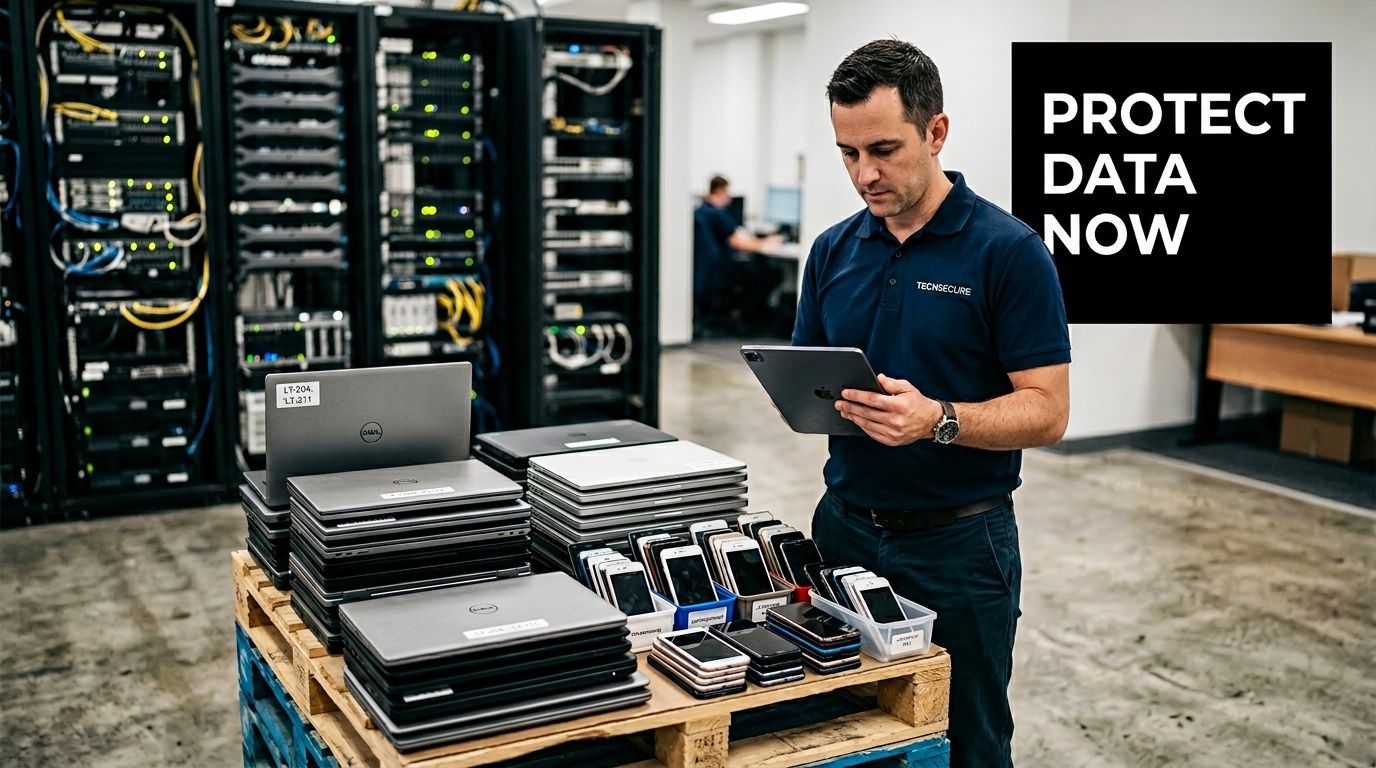
It’s time to stop thinking of your old IT gear as just office clutter. It’s digital hazardous waste. Every single device, from a server rack to a simple smartphone, is a container. It holds sensitive company data and it's built with materials like lead and mercury that you don't want ending up in a landfill. If you don’t handle this stuff correctly, the risks can hit your bottom line and tarnish your company's name.
For businesses here in Metro Atlanta and across the state, the challenge is really two-sided. On one hand, you have the constant threat of a data breach. A single hard drive that goes missing can unleash a nightmare of data loss, huge regulatory fines, and a total collapse of customer trust. On the other, environmental laws are only getting tighter. Tossing old electronics in the dumpster isn't just irresponsible anymore; it's illegal and can lead to some steep penalties.
The Scale of the E-Waste Challenge
The sheer amount of electronic junk we're creating is hard to wrap your head around. Globally, we generate a staggering 50 to 60 million tons of e-waste every single year. What’s worse? We only manage to recycle about 15-20% of it. That means the vast majority is unaccounted for.
This massive gap is exactly why specialized recycling partners are so essential. A professional service provides a clear, documented process to eliminate these risks, making sure every device is handled securely and in line with every environmental law on the books.
For Georgia businesses, tackling e-waste starts before you even unplug a device. Learning how to reduce e-waste and extend your device's life is a powerful first step in a smart, sustainable IT strategy that minimizes future disposal headaches.
Why Partnering with an Expert Is Essential
Let's be honest, you have a business to run. You don't have time to become an expert on data security laws and EPA compliance. That's our job. A true expert in Georgia electronics recycling services takes that entire burden off your plate.
We provide a transparent, fully documented process that covers all the bases:
- Secure Data Destruction: This is non-negotiable. We ensure every byte of sensitive data is either professionally wiped or the physical drive is completely destroyed.
- Environmental Compliance: We stick to every local, state, and federal rule for e-waste. This keeps hazardous materials out of our soil and water and keeps your business compliant.
- Chain-of-Custody Reporting: You get detailed paperwork that tracks your assets from the moment they leave your office to their final disposition. It’s the audit trail you need for total peace of mind.
At the end of the day, bringing in a certified recycler isn't an expense—it's a strategic move. It protects you from liability, protects your reputation, and turns a potential compliance disaster into a smooth, secure process. For more details on finding the right partner, check out our guide on https://www.montclaircrew.com/where-businesses-can-recycle-it-equipment-in-georgia/.
Core Services for Secure IT Asset Disposition
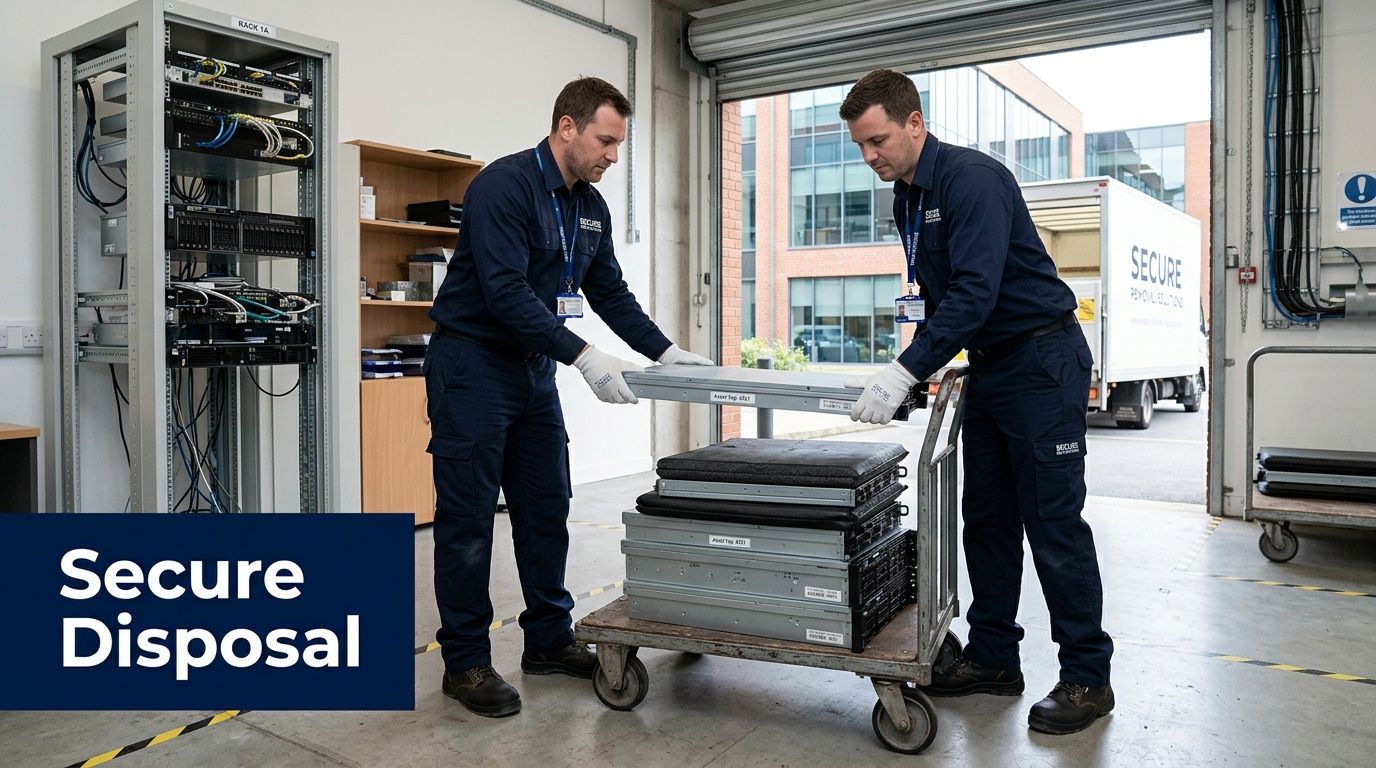
When it's time to retire your company's old IT gear, you’re doing more than just clearing out a storage closet. You're starting a process called IT Asset Disposition, or ITAD. A real ITAD strategy isn't just about hauling away old equipment; it's a full suite of services that protects your data, keeps you compliant with the law, and handles your environmental duties from beginning to end.
Think of it like a white-glove moving service, but for your old digital assets. Our team comes to you, handling all the unplugging, sorting, and heavy lifting. For businesses, data centers, and schools across Metro Atlanta doing big tech upgrades, this on-site removal service is a lifesaver.
On-Site Asset Auditing and Logistics
Before anything leaves your building, we start with a careful inventory. This is the asset audit, and it's your first step toward total compliance. Every single device, from servers and laptops to old networking switches, gets tagged and logged with its serial number.
Doing this creates an unbreakable chain of custody. This document tracks every piece of equipment from your office to its final destination—whether it gets refurbished, resold, or recycled. It’s the auditable proof you need to show that your business handled its e-waste responsibly, which is critical for meeting industry regulations.
Of course, a key step before disposition is making sure you have all the data you need. A good resource is this guide on backing up your phone data, which shares principles that apply to almost any device.
Certified Data Destruction: The Non-Negotiable Shield
At the heart of any legitimate Georgia electronics recycling services is certified data destruction. Let's be clear: just deleting files or reformatting a hard drive won’t stop a determined data thief. We use two main methods to make absolutely certain your sensitive information is gone for good.
Think of your data like a top-secret message on a piece of paper. Data wiping is like using a powerful digital bleach to completely erase the ink, leaving the page blank and unreadable. Physical shredding is like running that paper through a confetti-cut shredder until it’s impossible to ever piece back together.
Each approach meets a different security need. Understanding the difference is how you protect your organization from a potential breach.
Data Wiping (Sanitization): This is a software-based process where we overwrite the entire hard drive with random data, often several times over. We follow strict standards like the DoD 5220.22-M protocol. Wiping leaves the drive intact, so it can be reused or resold, helping you get some value back from your old equipment.
Physical Shredding: For the highest security level or for drives that are already broken, physical destruction is the only answer. We feed the hard drives into industrial shredders that grind them into tiny, irrecoverable metal fragments. This gives you undeniable proof that the data can never be accessed, and we issue a Certificate of Destruction to document it.
Making the right choice between these services is key. This table breaks it down.
Data Destruction Methods Compared
This quick comparison of standard data wiping versus physical hard drive shredding can help your business choose the right level of security for its needs.
| Feature | DoD 5220.22-M Wiping (Free Service) | On-Site Hard Drive Shredding (Premium Service) |
|---|---|---|
| Method | Software-based overwriting | Physical grinding of media |
| Security Level | High; compliant for most needs | Absolute; for maximum security |
| Asset Outcome | Drive is preserved for reuse/resale | Drive is completely destroyed |
| Best For | Value recovery and standard security | Defective drives, top-secret data |
| Proof | Certificate of Sanitization | Certificate of Destruction |
Choosing the right method depends entirely on your risk tolerance and whether you want to recover value from the old drives.
Ultimately, these core services all work together. From the minute our truck pulls up to your Georgia facility to the final reports you receive, every step is built to take risk and hassle off your plate. You can get back to running your business.
To see our full process in action, you can learn more about secure IT asset disposition services in Georgia right here on our site.
Why Georgia Is a Hub for Advanced Recycling
You might think Georgia is just another state with a few recycling programs, but that's not the whole story. The state is quickly becoming a major center for advanced recycling in the U.S., and it's no accident. Big investments in new technology and infrastructure are building a seriously impressive system for handling all kinds of waste, especially complex e-waste.
What does that mean for you? When you work with a local Georgia electronics recycling services provider, you're not just hiring a vendor. You're connecting to a world-class network, right here at home. For any business in Metro Atlanta, this means better, more secure, and greener options for getting rid of old equipment.
The Power of Local Investment
Georgia's reputation is growing thanks to huge projects that boost its ability to process massive amounts of material. The state is turning into a powerhouse for U.S. electronics recycling, helped by investments like the $30 million expansion of the Advanced Drainage Systems (ADS) facility in Cordele. A single project like this massively increases the state's capacity and makes it a regional leader.
For the Metro Atlanta businesses, data centers, and government agencies we work with at Montclair Crew Recycling, these statewide investments make a real difference. They give us more reliable and flexible ways to handle IT asset disposition, so even the biggest decommissioning projects get done efficiently and correctly. Our process has been proven to work for schools, banks, and manufacturers, with detailed chain-of-custody reports that track every single piece of equipment.
Choosing a local Georgia partner means you’re plugging into a state-of-the-art recycling infrastructure. You get the peace of mind that comes from knowing your e-waste is being managed properly within a nationally recognized system, not just shipped off somewhere unknown.
What This Means for Your Business
So, how does all this statewide growth help your company day-to-day? It's simple: when the state's recycling foundation is strong, local providers like us can deliver better services that meet the toughest standards.
- More Processing Power: Large-scale facilities mean your local recycler can handle huge volumes of e-waste without delays. You get a timely and efficient process every time.
- Tougher Environmental Standards: Advanced recycling hubs attract companies that are committed to doing things right, like following zero-landfill policies. This guarantees your old assets are actually recycled, not just dumped.
- Confidence in Your Compliance: Working with a provider that's part of a modern, well-regulated system takes the worry out of e-waste disposal. You know your equipment is managed according to strict environmental and data security rules from beginning to end.
Georgia’s focus on advanced recycling creates a dependable and secure environment for businesses to manage their old IT assets. This is especially important for places like data centers, which have a ton of high-value and data-sensitive equipment. To learn more about this, check out our guide on Data Center Equipment Recycling in Georgia. When you pick a local expert, you're making a smart, secure choice that lines up with the best the industry has to offer.
How to Vet Electronics Recycling Vendors
Picking the right partner for your Georgia electronics recycling services is a huge decision for any IT or compliance manager. This isn't like choosing an office supply vendor; you're dealing with data security, environmental liability, and your company's reputation.
The right partner lets you hand off retired assets with complete confidence. The wrong one? That can open the door to compliance nightmares, data breaches, and risks you never saw coming. This is our playbook for vetting e-waste recyclers in the Atlanta market so you can make the right choice.
Start with Industry Certifications
Think of certifications as your first line of defense. They aren't just logos for a website; they are hard-earned proof that a vendor has been audited by a third party and meets strict standards for safety and security.
You wouldn't hire a builder who ignores building codes, right? The same logic applies here. In the U.S., two certifications are the gold standard:
- R2 (Responsible Recycling): This one is all about environmental protection, worker safety, and data security. An R2-certified recycler is required to track every piece of equipment through the entire process, guaranteeing nothing is illegally exported or dumped in a landfill.
- RIOS (Recycling Industry Operating Standards): Often paired with R2, RIOS is a management system that shows the recycler has solid, documented processes for quality, safety, and environmental controls. It's a sign of a well-run operation.
If a vendor has these certifications, it means they're serious about doing things the right way. Consider this a non-negotiable starting point.
Demand a Rock-Solid Chain of Custody
A detailed chain-of-custody document is your best defense against future liability. This paper trail should track every single asset from the second it leaves your building to its final destruction or resale. It needs to be an unbroken, auditable record.
It’s like shipping a high-value package—you'd demand a tracking number and delivery confirmation. Your IT assets deserve that same level of accountability.
A proper chain-of-custody document is more than a receipt. It's your legal shield, proving exactly where your equipment went and how its data was destroyed. It has to be detailed enough to hold up in an audit.
Always ask a potential vendor for a sample report. Does it include key details?
- Serial numbers for laptops, servers, and hard drives
- The exact date and time of pickup
- A clear record of every transfer
- The final status: destroyed, recycled, or resold
A vague report is a massive red flag. For a deeper look into what separates the pros from the amateurs, check out our guide on comparing e-waste disposal companies.
Verify Their Data Security Guarantees
This is the most critical part. You need absolute certainty that your company's sensitive data is gone for good. A vendor’s word isn’t enough—you need to see proof in their process and in their contract.
First, ask about their destruction methods. As we've covered, true professionals offer both data wiping (sanitization) and physical shredding. Make sure their wiping software meets standards like DoD 5220.22-M. For high-security needs, ask if they offer on-site shredding so you can watch your drives turn into scrap metal.
Next, read the service agreement. Does it explicitly guarantee data destruction? Does it indemnify your business if they fail and a breach occurs? A reputable partner will stand behind their work with clear liability terms and provide a Certificate of Destruction or Certificate of Sanitization for every single job. That certificate isn't just a piece of paper; it’s your documented proof of compliance.
Turning Old IT into New Revenue with Value Recovery
For most businesses, IT asset disposal feels like a chore. It's a line item on the budget, a logistical headache, and something that just has to get done. But what if all those retired servers, laptops, and networking components could actually put money back into your budget?
That's the whole idea behind value recovery. It's a smart approach we use as part of our Georgia electronics recycling services to turn what looks like a financial drain into a new revenue stream. It transforms a disposal problem into a real financial opportunity for your business.
How Value Recovery Works
The process is pretty straightforward, but it takes specialized expertise to get it right. It all starts when you decide to decommission your old IT gear. Instead of just sending everything to be shredded, we step in to see what's really there.
Think of it like having an expert appraiser for your tech closet. We audit your retired assets and pinpoint the items that still have life—and value—in the secondary market. Not everything makes the cut, but you'd be surprised what does.
Here are a few examples of equipment that often retains high value:
- Enterprise-Grade Servers: Even older server models are goldmines for parts or for smaller companies that need affordable hardware.
- Networking Gear: High-end switches, routers, and firewalls from brands like Cisco are always in demand.
- Bulk Laptops and Desktops: When you're doing a large-scale tech refresh, those functional laptops can be refurbished and resold, generating a significant return.
- Specialized Components: Things like high-capacity RAM modules and enterprise hard drives can easily be sold on their own.
Once we've identified the valuable assets, the next—and most critical—step is secure data sanitization. We wipe all data completely using DoD-compliant methods, so you can be confident your information is gone for good. Only then is the hardware tested, refurbished, and prepped for resale.
Unlocking Financial Returns Through Profit-Sharing
This is where it gets interesting for your bottom line. Instead of just sending you a bill for disposal services, a value recovery program works on a profit-sharing model. After we sell the remarketed equipment, you get a percentage of the revenue.
This completely changes the game for IT disposal. It's no longer just a cost center. It becomes a potential revenue generator, creating a win-win for your organization and for us.
The U.S. electronics recycling market is huge, and Georgia is right in the middle of it. With global e-waste hitting 50-60 million tons annually and U.S. companies tossing 33 million PCs each year, the need for smart, sustainable solutions in places like Metro Atlanta is more urgent than ever. You can see more on this in the 2026 report from IBISWorld.
For data centers, corporations, and schools in Roswell, Norcross, and across the region, this is a powerful reason to recycle responsibly. It turns end-of-life electronics from a liability into a documented, secure, and profitable process. By partnering with an expert, you’re not just staying compliant—you're actively boosting your company's bottom line.
You can explore how our IT asset disposal program integrates value recovery to maximize your returns.
Your Step-by-Step E-Waste Recycling Process
Let's be honest, figuring out what to do with a mountain of old office electronics can feel like a massive headache. For any business in Georgia, the questions pile up fast. We get it. That's why we've stripped away the complexity and laid out a straightforward path from pickup to final paperwork.
This isn't just about hauling away junk; it's a secure process designed to protect your data, recover value, and ensure you’re fully compliant.
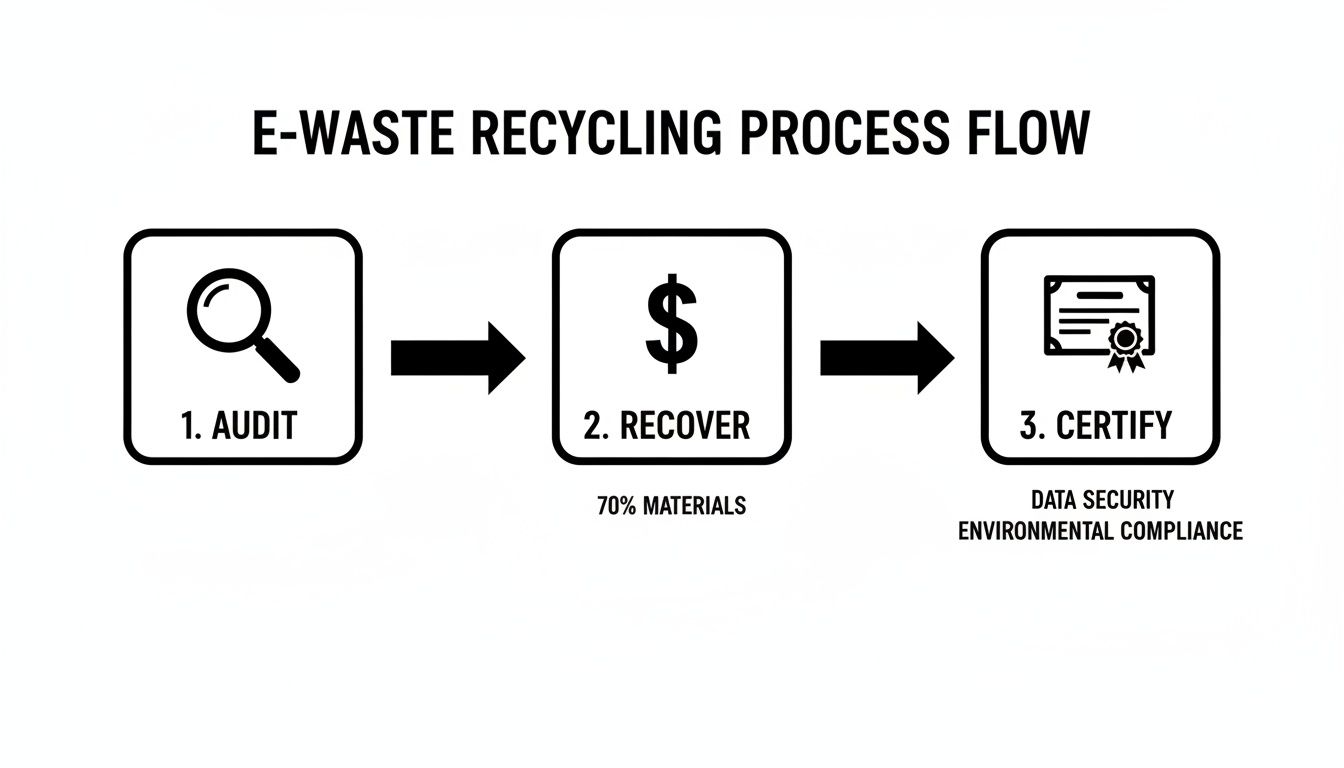
The journey is all about security and compliance, with the potential for a financial return built right in. Here’s a look at exactly what happens when you partner with a professional e-waste recycler like Montclair Crew.
Step 1: Initial Consultation and Quote
It all begins with a quick call or email. Just tell us what you've got—whether it's a server room full of gear in Alpharetta or a few pallets of old laptops from your Smyrna office.
Based on that initial chat, we’ll put together a preliminary quote and a project plan. No guesswork, no surprises. You'll know what to expect from day one, including logistics, data security protocols, and any opportunities to get money back for your old equipment.
Step 2: On-Site Audit and Secure Removal
Once you give us the green light, our team schedules a time to come to you. This is where the real work starts with a detailed on-site audit. We don't just grab boxes; we log every single piece of equipment by its serial number.
This inventory creates a critical chain-of-custody document. It's your first line of defense, providing a clear, auditable trail that proves exactly which assets left your facility for secure disposal.
After the audit, our insured and trained crew handles everything else. We securely pack and load all the equipment, so you don't have to lift a finger. Your assets are then safely transported to our secure processing facility.
Step 3: Data Destruction and Material Processing
Once your equipment arrives at our facility, we immediately get to work on two critical tasks at once: destroying your data and responsibly recycling the hardware.
Your data security is always the top priority. Depending on what you need, we'll either:
- Perform Certified Data Wiping: We use DoD 5220.22-M compliant software to completely erase all information. This keeps the hard drive intact and allows it to be resold.
- Conduct Physical Shredding: For maximum security, we feed hard drives, tapes, and other media into industrial shredders, grinding them into tiny, unrecoverable pieces.
While that’s happening, all other components—things like steel casings, aluminum, plastics, and precious metals from circuit boards—are carefully sorted. These materials are then sent to our certified downstream partners to be refined and recycled.
Step 4: Final Reporting and Certification
You know the job is done when the paperwork lands in your inbox. We provide a detailed Certificate of Destruction or Certificate of Sanitization that lists every single serialized asset we processed.
This report is your official proof of compliance. It’s the document you'll need for any internal or external audits, and it’s your guarantee that your company’s e-waste was handled correctly, securely, and with total environmental responsibility.
Common Questions About E-Waste Recycling
When you're in charge of your company's IT assets, you've got a lot on your plate. Security, compliance, and logistics are all top of mind. Most IT managers and business owners we talk to in Georgia have the same set of practical questions.
We've answered the most common ones here to give you the straightforward information you need to get your old equipment out the door, securely and correctly.
What Types of Electronics Do You Accept?
This is usually the first question people ask. The short answer is: almost anything that has a plug or a battery. We focus on business and IT equipment, so we're set up to handle everything you'd find in an office, data center, school, or medical facility.
Our Georgia electronics recycling services are built for business needs. That includes:
- Computers and Laptops: Any and all desktops, notebooks, and workstations.
- Servers and Networking Gear: Rack and blade servers, switches, routers, firewalls, and all related hardware.
- Phones and Telecom Equipment: Full office phone systems, VoIP hardware, and all your old company cell phones.
- Peripherals: Monitors, keyboards, mice, printers, and boxes of cables.
We take a wide range of devices so you can clear everything out with a single call. No need to juggle multiple vendors.
Is There a Minimum Volume Required for Service?
No. We don't have a strict minimum. We work with everyone, from a small business in Kennesaw retiring a few laptops to a large corporation in Sandy Springs clearing out an entire data center.
The only real factor is logistics. If you only have a few items, bringing them to our Smyrna drop-off center might be easiest. For larger loads, we'll schedule a free on-site pickup anywhere in Metro Atlanta.
Our job is to make it easy for you, whatever the size of your project. We simply adapt our service to what you need.
How Is the Cost of Service Calculated?
For most businesses, our standard IT equipment recycling and data destruction services are free. Pickups for qualifying business clients are free, and every service includes DoD 5220.22-M data wiping at no extra charge.
You'd only see a cost for special requests or premium services:
- On-Site Hard Drive Shredding: If you need to witness the physical destruction of your hard drives at your facility for compliance or security reasons, we offer this as a premium, fee-based service.
- Value Recovery Offsets: In many cases, any costs are completely erased by the resale value of your old equipment. If your assets still have market value, we handle the resale and share the profits. This can turn a disposal project into a revenue stream.
You will always get a clear, upfront quote before we proceed. No surprises.
How Long Does the Process Take?
The entire timeline, from your first call to getting your final paperwork, is surprisingly fast. A typical pickup and recycling job follows a simple, quick path.
- Initial Contact to Pickup (1-3 Business Days): Once you reach out, we can almost always schedule a pickup at your location within a few business days.
- Processing and Data Destruction (5-7 Business Days): After the equipment arrives at our secure Alpharetta facility, our team gets to work auditing the assets and performing the data destruction.
- Final Certification (Within 10 Business Days): Shortly after processing wraps up, you’ll get your official Certificate of Destruction and Recycling. This document lists every single serialized asset, giving you a clear paper trail for your records.
From start to finish, the whole thing is usually done in about two weeks. You get fast, documented, and secure closure on your old IT assets.
Ready to clear out your old IT equipment with a partner you can trust? Contact Montclair Crew Recycling today to schedule your free pickup and ensure your data is secure. Get a fast, compliant, and cost-effective solution for your business. Visit us at https://www.montclaircrew.com to get started.
