
It’s no secret that Georgia, and Metro Atlanta in particular, has become a massive hub for data centers. This has kicked off a relentless cycle of hardware upgrades, fueling a huge demand for professional data center decommissioning services in Georgia. Because of this explosive growth, local organizations can't just see IT asset disposition as a spring-cleaning task anymore. It's a core business strategy for controlling costs, locking down data, and staying on the right side of compliance.
Having a solid decommissioning plan isn't optional in this fast-moving tech environment—it's essential.
Georgia's Data Center Boom and Your IT Assets
The Peach State is ground zero for a data center building spree, thanks to the endless appetite of AI and cloud computing. This isn't just about pouring new concrete; it's dramatically shortening the lifespan of IT hardware. As companies scramble to stay competitive, the servers, network gear, and storage arrays that were top-of-the-line a few years back are already being marked for retirement.
This constant churn makes strategic IT asset management more important than ever. You can’t just power down old equipment and shove it in a closet. Businesses need a formal process to handle these retired assets, a strategy we call IT Asset Disposition, or ITAD.
Decommissioning isn’t an afterthought; it’s a critical part of the IT asset lifecycle. When you manage it correctly, you shield your business from data breaches, nail your environmental compliance, and can even pull significant cash back from your old equipment.
The Connection Between Growth and Decommissioning
The link between Georgia's tech boom and the need for decommissioning is direct and powerful. As shiny new facilities come online, older ones are consolidated or gutted for upgrades, creating a tidal wave of displaced hardware. This isn't some far-off trend; it’s happening right in our own backyard.
The numbers don't lie. The Metro-Atlanta area recently saw the highest net absorption in the entire U.S. data center market, a mind-boggling 705.8 megawatts (MW). On top of that, construction activity shot up by 76 percent. The state is now home to nearly 160 data centers with more on the way, which directly leads to faster equipment turnover and a serious e-waste challenge.
This reality shifts ITAD from a simple moving job into a core business function. It demands meticulous planning to hit several key points:
- Data Security: Making sure every last bit of sensitive company and customer data is completely and verifiably destroyed.
- Regulatory Compliance: Navigating the maze of local, state, and federal e-waste rules to dodge fines and protect your reputation.
- Value Recovery: Finding and selling assets that still have life in them on the secondary market, turning a line-item cost into a revenue source.
- Logistical Coordination: Safely de-racking, packing, and hauling tons of heavy, fragile equipment out of a live or retired facility.
Why a Proactive Plan Is Essential
Flying blind without a decommissioning plan is a recipe for disaster for any Georgia business, opening you up to major financial and security holes. A last-minute, reactive approach almost always leads to rushed decisions, forgotten security steps, and lost opportunities to recover value. If you want to get ahead of this, you can dive deeper into the topic by checking out our guide on enterprise IT asset management.
A structured plan gives you a clear roadmap. It ensures every server is tracked, all data is wiped clean, and every chance to get money back is taken. This kind of strategic thinking is the key to managing costs and avoiding risks in Georgia’s white-hot tech scene.
A Decommissioning Blueprint for Georgia Businesses
Turning a live data center into an empty, compliant space is no small feat. For any business in Georgia, whether you're in a high-rise in Midtown Atlanta or a sprawling campus in Alpharetta, getting this process wrong can lead to a logistical and financial nightmare.
This isn't just about pulling plugs. It’s a carefully managed project that involves inventory, secure logistics, and a whole lot of physical labor. This guide is your playbook, breaking down the entire data center decommissioning lifecycle into clear, manageable phases.
Georgia's tech scene is always moving. The IT asset cycle is a constant loop of growth, upgrades, and eventually, decommissioning.
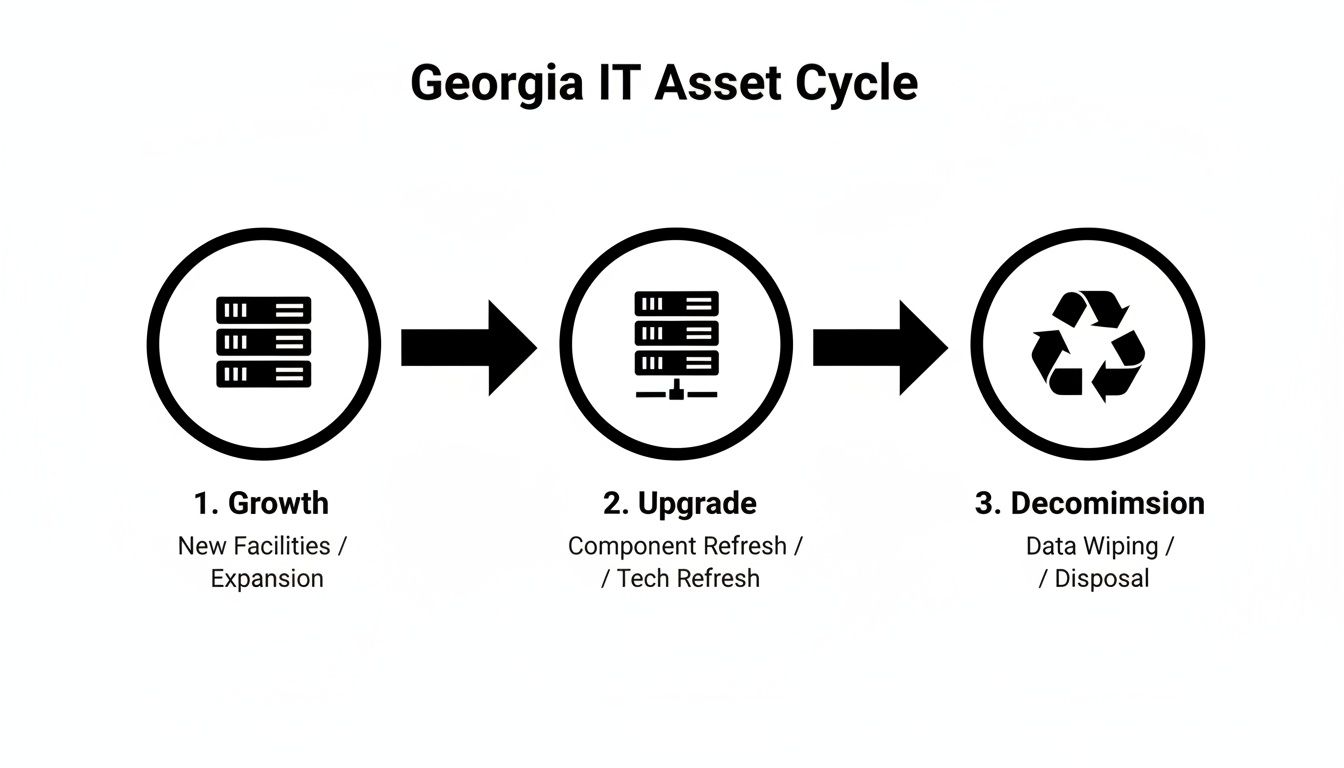
Think of decommissioning as a natural and critical stage. It frees up both the physical space and the capital you need to invest in the next generation of technology, keeping the cycle moving.
Below is a quick overview of what a typical project looks like from start to finish. Each phase has its own set of tasks and goals that build on the last.
Data Center Decommissioning Project Phases
| Phase | Key Activities | Primary Goal |
|---|---|---|
| 1. Planning & Inventory | Create project scope, timeline, budget. Tag and record every asset (serial number, location). | Establish a detailed plan and a single source of truth for all hardware. |
| 2. Physical Decommissioning | Power down equipment, de-rack servers, disassemble racks, and mine all cabling. | Safely and efficiently clear all hardware and infrastructure from the data hall. |
| 3. Logistics & Cleanup | Pack, palletize, and transport all assets. Perform a final site sweep. | Securely move all equipment off-site and return the facility to a broom-clean state. |
This table maps out the journey, but the real work is in the details. Getting each phase right is essential for a smooth and successful project outcome.
Hitting the Books: Project Planning and Asset Inventory
Every solid decommissioning job I've ever seen started with a rock-solid plan, long before a single cable was touched. The first move is always to build out a detailed project plan that defines the scope, timeline, budget, and every person involved.
But the real make-or-break task in this phase? A comprehensive asset inventory. You simply can’t secure, sell, or even properly dispose of what you haven't tracked.
This means getting your hands on every piece of gear. We're talking about:
- Tagging everything: Every server, switch, router, storage array, and even the power strips (PDUs) gets a unique ID.
- Capturing serial numbers: This is non-negotiable for creating a chain of custody and proving data destruction later.
- Mapping it all out: Documenting the exact rack and U-position of each asset. This is a lifesaver when it's time for the physical removal.
A detailed asset inventory is the foundation of your entire project. It's not just for logistics—it's essential for verifying data destruction and squeezing every last dollar of resale value out of your retired hardware.
Boots on the Ground: The Physical Decommissioning Work
With the plan and inventory locked down, it’s time for the on-site work to begin. This is where having a professional team that provides data center decommissioning services in Georgia really pays off, especially if you're dealing with a secure suburban campus or a tricky Atlanta high-rise.
It’s methodical work. First, technicians will power down and disconnect all the target equipment. This is done systematically to make sure no remaining live systems are accidentally taken offline. Once everything is cold, the servers and other devices are carefully un-racked.
Next, the crew tackles the infrastructure itself. Server racks, cabinets, and any containment systems are broken down. This requires the right tools and experience to handle heavy, awkward materials safely and without beating up your facility on the way out. For a much deeper dive, this server decommissioning checklist is a fantastic resource.
One of the grittiest jobs is what we call "cable mining." This is the labor-intensive process of pulling out all the abandoned under-floor and overhead copper and fiber optic cabling. Not only does it clean up the space, but it also recovers valuable materials for recycling and is often a requirement to satisfy your lease agreement.
The Final Mile: Logistics and Site Cleanup
Once the heavy lifting is done, the project shifts to the final logistics and getting the space back to its original condition. Every asset—from servers headed for the resale market to pallets of scrap cable—is professionally packed, palletized, and prepped for secure transport.
A good decommissioning partner handles this entire chain, coordinating secure trucks and providing detailed shipping manifests for your records.
The job isn't done until the data hall is broom-clean. A final sweep and cleanup ensures you can hand the keys back without any issues, closing out the project on a high note.
Achieving Ironclad Data Security and Destruction
When you're tearing down a data center, the hardware is just the shell. The real prize, the part that absolutely cannot fall into the wrong hands, is the data itself. For any organization in Georgia, making sure every byte of customer info, IP, and financial data is gone for good isn't just a best practice—it's your best defense against a catastrophic breach.
Letting a single hard drive leave your facility without certified data erasure is like handing over the keys to your business. The risk is just too great. This is why any professional data center decommissioning service in Georgia will tell you that verifiable data destruction is the most important step, with a secure chain of custody from your data hall to the final report.
Comparing Data Destruction Methods
When it comes to making data truly vanish, you’ve got a few options. The right one really depends on your company's risk profile and the compliance rules you live by.
- Data Wiping (Sanitization): This is a software-based approach where a drive’s data is overwritten with random characters, often multiple times. It works, and it keeps the drive intact for resale, which is a big win for recovering some of your costs.
- Degaussing: This method uses a beast of a magnet to scramble the magnetic field on a drive. The data is gone forever, but so is the drive. It’s fast, but it means zero resale value.
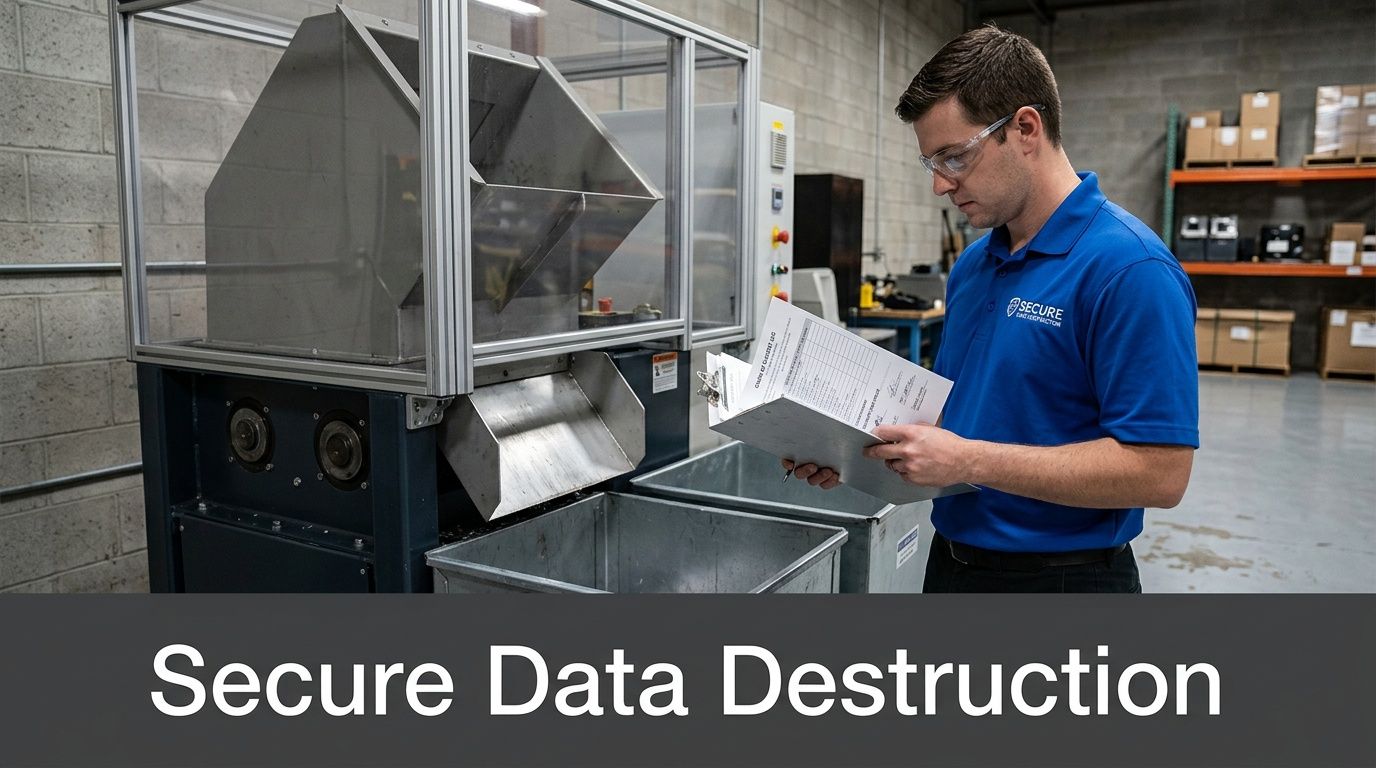
- Physical Shredding: This is exactly what it sounds like. We feed your hard drives into an industrial shredder that turns them into a pile of metal confetti. It's the most final and visually satisfying proof of destruction.
For most businesses we work with, the "gold standard" for wiping is DoD 5220.22-M. This U.S. Department of Defense protocol uses a three-pass overwrite that makes data recovery next to impossible. If you want to sleep at night, you should insist on a vendor that uses this standard.
On-Site vs. Off-Site Destruction: A Tale of Two Scenarios
The next big decision is where the destruction happens. This usually comes down to a balancing act between security paranoia, budget, and simple logistics. Let’s look at two real-world Georgia examples.
Scenario 1: The Buckhead Financial Firm
A wealth management firm in Atlanta's Buckhead district is shutting down a small server room. They handle extremely sensitive client financial data and are under intense regulatory scrutiny. For them, there's no debate: it has to be on-site physical shredding. A mobile shred truck pulls up, and every single drive is scanned and chewed to pieces before that truck even thinks about leaving the parking lot. Their security team watches the whole thing, giving them total peace of mind.
Scenario 2: The Savannah Logistics Company
A massive logistics company down in Savannah is consolidating several data centers. They're dealing with thousands of servers. Shredding everything on-site would be a logistical nightmare and way too expensive. Instead, they choose certified off-site destruction. Their drives are inventoried and taken in a secure, sealed truck to a certified facility. There, every drive undergoes a DoD-compliant wipe. They get a full report and a Certificate of Data Destruction, which satisfies their security requirements at a much more practical cost. You can learn more about how these services work in our guide to server disposal services for businesses in Georgia.
No matter what you choose, the non-negotiable part is proof. Always, always demand a serialized Certificate of Data Destruction. It should list every single drive that was handled. That piece of paper is your evidence of due diligence and compliance.
For companies across Metro Atlanta—whether you're a data center in Alpharetta, a school in Smyrna, or a hospital in Marietta—the right partner can handle everything. This includes on-site removal, DoD 5220.22-M certified wiping, and shredding. These services keep you compliant with Georgia DEP e-waste rules and EPA guidelines, all while helping you get some money back from reusable gear and keeping tons of material out of our landfills. At the end of the day, securing your data is what matters most.
Navigating Georgia's Environmental Regulations
Getting rid of old IT hardware isn't as simple as just clearing out a room. It’s a serious legal and ethical tightrope you have to walk. When you decommission a data center in Georgia, you're dealing with equipment that's legally considered electronic waste (e-waste). That means you’re on the hook for a whole tangle of environmental rules.
And you can't just hope for the best. Fines for getting it wrong are steep, but the hit to your company's reputation can be a knockout blow. That's why any plan for data center decommissioning services in Georgia has to be built on a rock-solid compliance strategy from day one.
State and Federal Rules You Can't Ignore
Here in Georgia, the Georgia Environmental Protection Division (EPD) is the agency watching over environmental safety. While we don't have a single, massive e-waste law like some other states, Georgia still comes down hard on improper disposal. It enforces the federal Resource Conservation and Recovery Act (RCRA), which is the big one from the EPA.
For any business shutting down a data center in Georgia, this means following strict guidelines for safe and responsible hazardous waste disposal. Why? Because a lot of your IT gear—circuit boards, batteries, you name it—is full of nasty stuff like lead, mercury, and cadmium. If that junk ends up in a landfill, it can seep into the ground and our water. That’s a long-term mess you don’t want your company’s name on.
A true ITAD pro knows the ins and outs of this. They make sure your old assets are handled, moved, and processed completely by the book, following both Georgia EPD and federal EPA rules. This is your shield against liability.
Let's be blunt: you are responsible for your e-waste from the moment you decide to get rid of it until its final disposition. Partnering with a certified vendor is the only real way to guarantee your hardware doesn't get illegally dumped, creating a massive headache for your company.
Why R2 Certification Is Your Best Friend
So, how do you know your e-waste is really being handled the right way? You look for R2 certification. The Responsible Recycling (R2) Standard is the gold standard for the electronics recycling industry, and it's not just a fancy sticker.
An R2-certified partner is audited regularly to prove they are top-notch in several key areas:
- Environmental Protection: They use strict methods to stop pollution dead in its tracks during recycling.
- Worker Health and Safety: They protect their team from the hazards of handling e-waste.
- Data Security: They guarantee that every bit of data on your old gear is wiped clean and verified.
- Downstream Accountability: They track every single piece of material to make sure it doesn't get shipped off illegally or dumped.
Hiring an R2-certified vendor is the smartest move you can make for a compliant and ethical project. If you're weighing your options, you can get more details on Georgia electronics recycling and how it works.
Economic and Regulatory Heat is On
The pressure for smart ITAD in Georgia isn't just about rules; it's about economics. The state's data center boom is great for business, but it's putting a huge strain on resources, especially our power grid.
And the people in charge have noticed. There’s a lot of talk about the economic and regulatory trade-offs of Georgia's data center surge, which makes compliant decommissioning a critical part of being a good corporate citizen. The Public Service Commission (PSC) has been holding hearings to get a handle on the explosive energy demand. They’ve even ordered Georgia Power to track data center usage quarterly and have frozen base rates through 2028 to protect residents from price hikes.
All this high-level attention means data center operators are under a microscope. You're expected to be efficient and responsible. A compliant, sustainable decommissioning process that actually recovers money from old assets isn't just a "nice-to-have" anymore. It's a financial necessity that shows you're doing your part in a community that’s paying very close attention.
Turn Retired IT Hardware Into Cash
A data center decommission shouldn't just be an expense on your balance sheet. For smart Georgia businesses, it's a chance to recover a serious amount of cash. The trick is to stop thinking about "disposal" and start thinking about "asset recovery." There's real value still sitting in that retired hardware.
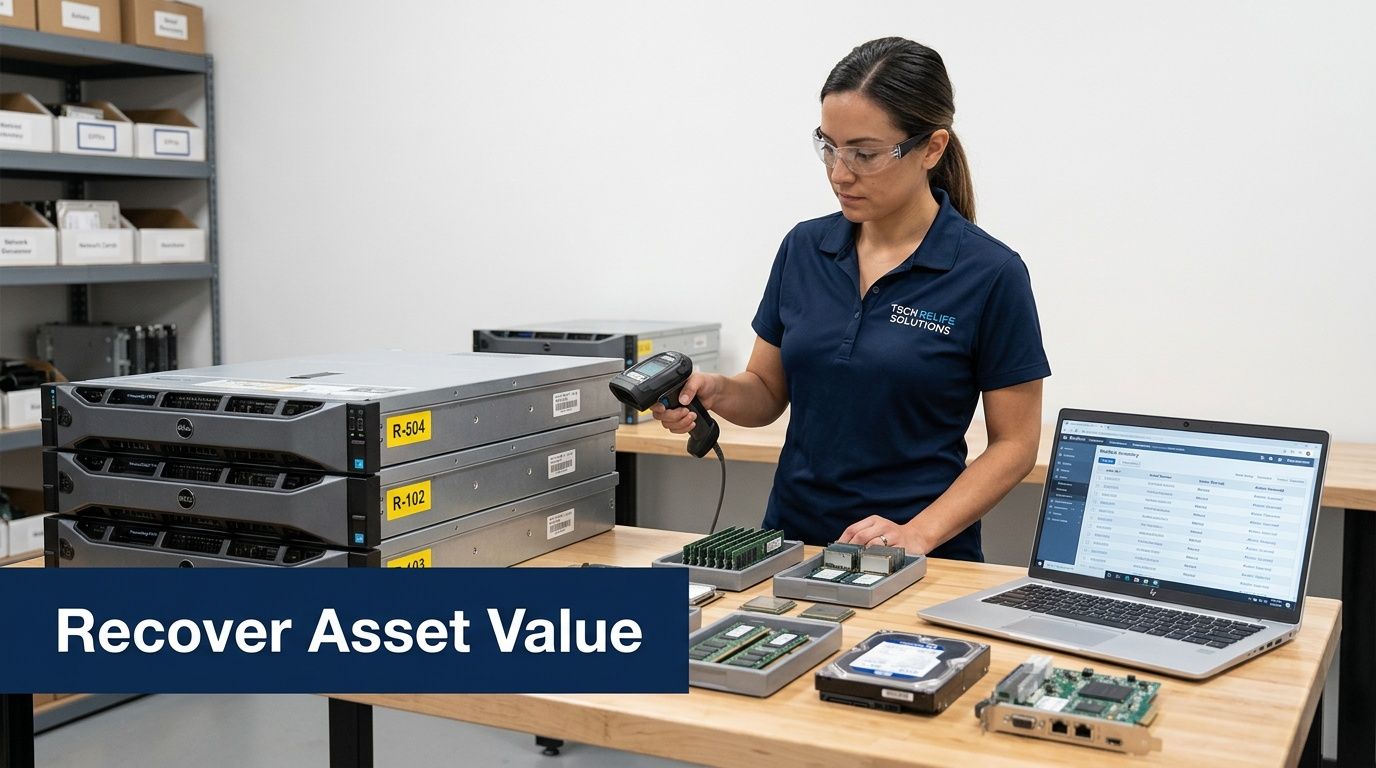
It all begins with a detailed audit before a single plug is pulled. A good IT Asset Disposition (ITAD) partner will create a complete inventory of every server, switch, and storage array. This isn't just for record-keeping; it’s a valuation process to see what your equipment is worth on the secondary market.
How You Get Paid: Recovery Models
After inventory, it's time to turn those assets into revenue. The right approach depends on how quickly you need the cash and how much risk you're willing to take.
A professional provider of data center decommissioning services in Georgia will walk you through two main options:
- Direct Purchase: This is the fastest way to get paid. The ITAD vendor evaluates your gear's market value and cuts you a check. It's simple, you get cash upfront, and they take on all the work of finding a buyer.
- Profit-Sharing: With this model, your partner manages the entire resale process for you—testing, data wiping, and selling the equipment. Once their costs are covered, you split the final revenue. This often means a 60/40 or even 70/30 split in your favor. It takes longer, but the payout can be much higher.
A direct purchase is a sure thing today. Profit-sharing is a bigger potential win tomorrow. We help clients figure out which path best aligns with their financial goals all the time.
What Makes Your Hardware Valuable?
Not all old equipment is a goldmine. A few key things determine if a server is a prime asset or just scrap metal. Knowing these factors helps set realistic expectations for what you'll get back.
Here’s what buyers are looking for:
- Age: Gear under three years old holds the most value. It drops off a cliff after the five-year mark.
- Brand: Enterprise-level names like Dell, HPE, Cisco, and Juniper are always in demand.
- Condition: It’s simple—working, complete units sell for more than broken or incomplete ones.
- Configuration: The specific CPUs, RAM, and drives inside a server make a huge difference in its resale price.
- Market Demand: The IT resale market has its own ups and downs. A good partner knows exactly what's hot right now.
Why Value Recovery Matters in Georgia
Getting the most money back for your old assets isn't just smart; it's practically a financial necessity for data center operators here in Georgia. The state’s generous tax exemptions, meant to attract facilities like yours, also create pressure to find savings and revenue everywhere else.
While data centers have created 8,505 construction jobs and 1,641 operations jobs in a single fiscal year, the state also saw $474 million in tax exemptions. This puts the spotlight on operators to run as efficiently as possible. You can dig into more analysis on Georgia's data center development policies to see how these numbers are shaping the local industry.
By treating your decommission as a revenue opportunity, you can directly offset project costs, fund your recycling programs, and even get a head start on paying for your next technology refresh.
Choosing Your Metro Atlanta Decommissioning Partner
Picking the right IT Asset Disposition (ITAD) partner is probably the most critical choice you'll make for your entire decommissioning project. It's not just about a price quote. The wrong vendor in a busy market like Metro Atlanta can create a nightmare of data breaches, compliance fines, and lost revenue.
Your first move? Vet their certifications. This isn't optional. Look for credentials like R2 (Responsible Recycling) and NAID AAA for data destruction. Think of these as your first line of defense, proving a vendor is serious about environmental safety, security, and has been audited to prove it.
Key Questions for Georgia Vendors
When you're talking to potential partners, don't let them just run through a sales pitch. Go in with a list of direct questions. How they answer will tell you everything you need to know about their competence.
Here’s what you should be asking:
- Data Destruction: Will I get a serialized Certificate of Data Destruction for every single hard drive? Do you offer on-site wiping or shredding services at our facility?
- Chain of Custody: Show me how you track our assets. I want to see your chain of custody documents from the moment your truck leaves our dock to the final stop.
- Value Recovery: What’s your process for remarketing our used equipment? Do you offer a direct buyout, or is it a profit-sharing model? If it's a split, what are the typical percentages?
- Downstream Vendors: Can you give me a full report on where every component goes, especially non-reusable materials? Is your entire downstream recycling chain certified?
If a vendor gets cagey about their downstream process or can't produce sample documentation on the spot, that’s a huge red flag. A legitimate, trustworthy partner will have clear, confident answers ready to go.
A Model for Excellent Service
Georgia’s booming tech scene, especially around hubs like Kennesaw, Norcross, and Sandy Springs, means that certified ITAD services are essential. This is particularly true for organizations in banking, manufacturing, and government.
A top-tier provider won't just pick up your gear; they'll offer a complete package of R2 v3, ISO, and NAID-compliant processes that cover everything. This includes detailed asset audits all the way to environmentally responsible recycling. For instance, free three-pass hard drive wiping should be a standard part of the service, not an expensive add-on.
To see what that kind of comprehensive service looks like in action, check out this local guide to IT asset disposition in Atlanta, GA. And if you want to understand more about the economic policies driving these needs, you can read more about Georgia's data center policies.
Your Georgia Data Center Decommissioning Questions Answered
When you're facing a data center move or shutdown, you're going to have questions. We hear them all the time from businesses right here in Georgia. Let's tackle some of the most common ones we get.
How Long Does a Decommissioning Project Take?
Honestly, it varies. I've seen a small server closet with a dozen racks cleared out in just a few days. On the other hand, a large data hall with hundreds of servers, networking gear, and all the associated infrastructure can be a multi-week project from the initial audit to the final broom-sweep.
A detailed project plan, created upfront with your ITAD partner, is the only way to get a real answer. This roadmap should account for every detail: the inventory audit, on-site labor, logistics, and exactly how data will be destroyed.
Is Data Wiping a Separate Charge?
It really depends on the vendor you're talking to. Some companies will nickel and dime you, treating secure data wiping as an add-on service.
At Montclair Crew, we see it differently. We include DoD 5220.22-M three-pass wiping as a standard part of our data center decommissioning services in Georgia. It's complimentary for any assets that have potential resale value. We believe secure data destruction isn't a luxury; it's a necessity.
What's the One Certification I Absolutely Need to See?
If you look for nothing else, make sure your partner has the R2 (Responsible Recycling) certification. This is non-negotiable.
The R2 standard is your assurance that a vendor follows strict, audited processes for data security, environmental safety, and tracking all materials downstream. It’s what protects your company from future liability and ensures the job is done right.
As you look for the right team for your project in Metro Atlanta, it’s worth understanding the fundamentals of Hiring a Facility Service Company.
Frequently Asked Questions
Here are a few more quick answers to questions we often get from businesses planning a decommissioning project.
| Question | Answer |
|---|---|
| Can you decommission facilities outside of Metro Atlanta? | Yes, our teams provide services for businesses throughout the entire state of Georgia. |
| What happens to equipment that has no resale value? | Non-viable assets are responsibly recycled according to R2 and e-Stewards standards, ensuring zero e-waste goes to landfills. |
| Do I get a certificate of data destruction? | Absolutely. We provide serialized certificates of data destruction and recycling for your compliance and auditing records. |
| Can you work with our existing facilities team? | Of course. We coordinate closely with on-site staff, building managers, and electricians to ensure a smooth and safe process. |
We hope this helps clear things up. Every project is unique, but the principles of security, compliance, and efficiency are always the same.
Ready to start your decommissioning project with a certified, trusted partner? Montclair Crew Recycling provides comprehensive, end-to-end solutions for businesses across Georgia. Get a transparent, secure, and profitable plan for your retired IT assets by visiting https://www.montclaircrew.com.
