

Looking for a Georgia farmers market that works for more than a casual Saturday stroll?
The best markets in this state do two jobs well. They give families an easy place to buy ripe produce, baked goods, flowers, and prepared foods. They also give chefs, caterers, food artisans, and office managers a practical way to meet growers, test product quality, and build local sourcing relationships that hold up week after week.
That distinction matters. Some markets are better for browsing with kids and grabbing breakfast. Others are better for early arrival, bulk produce buys, repeat vendor contact, and tighter control over seasonality. If you run a small food business, the right market can save procurement time and help you spot reliable suppliers before you commit to larger orders.
Georgia’s market scene is broad enough that choosing well makes a real difference. In metro Atlanta alone, shoppers and business buyers can choose from established neighborhood markets, larger producer-focused operations, and seasonal setups that peak when local harvests are strongest. The markets in this guide stand out because they are worth visiting on both fronts. They are enjoyable for personal shopping and useful for serious local sourcing.
If you want to turn a market stop into a larger Atlanta food weekend, pair it with these best food cities to visit in Georgia.
If you're planning a community event, pop-up, or corporate wellness outing tied to a market visit, Ticketsmith's event planning advice is more relevant than it may sound. Markets often sit near parks, churches, and civic spaces that host vendor events, team outings, and neighborhood activations, so event logistics can come up quickly.
1. Peachtree Road Farmers Market
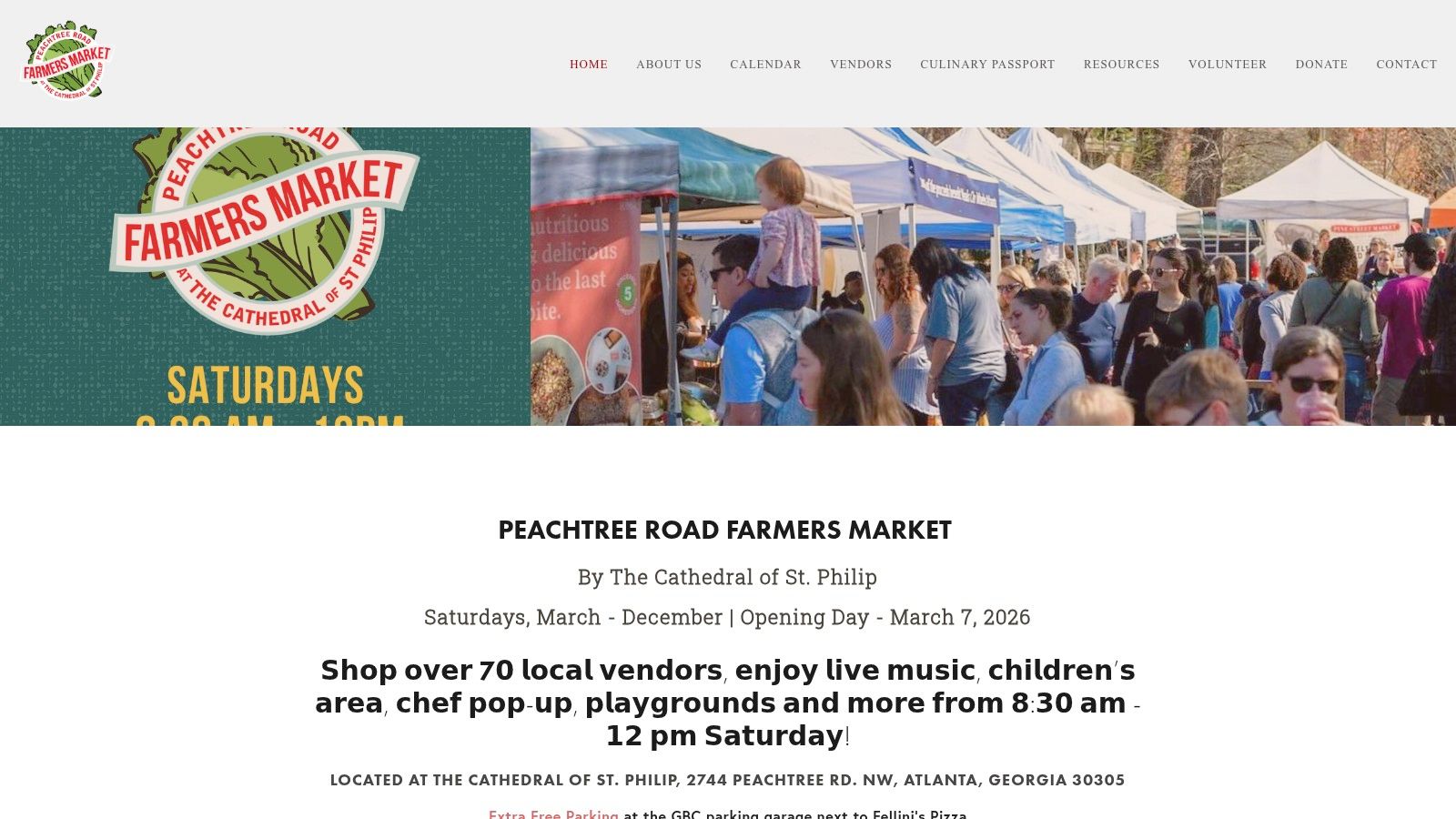
Want one Atlanta market that works for both a Saturday family stop and serious local sourcing? Start with Peachtree Road Farmers Market.
This Buckhead market earns its reputation because it stays producer-only. According to this Atlanta market profile, that means shoppers buy directly from the people growing or making the products. For home cooks, that usually leads to better freshness and clearer answers about how food was raised or prepared. For chefs, caterers, and food artisans, it also makes first-contact vendor screening faster because you are not sorting through as many resale booths.
The market runs on Saturdays from 8:30 AM to 12:00 PM at the Cathedral of St. Philip, and the official Peachtree Road Farmers Market website is the best place to confirm current details before you go.
Why it stands out
Peachtree Road is a strong pick for buyers who care about consistency. The vendor mix is focused, the quality bar is high, and the market is easier to shop with a plan than some of the larger, more sprawling weekend options around metro Atlanta.
That matters for business buyers.
If you run a small restaurant, bakery, meal prep company, or catering operation, this is a useful market for building direct relationships with growers and producers before placing larger recurring orders. Ask practical questions: What is coming in strong next week? What drops off fast in late summer heat? Can they handle repeat volume, or is their best work better suited to specials and limited menus? A short market conversation can save a lot of back-and-forth later.
Families get a different benefit. The shopping experience is straightforward enough to turn into a quick grocery run instead of a half-day outing.
Practical rule: Arrive early for the best produce, easier parking, and more time to talk with vendors before lines build.
Best for and trade-offs
Peachtree Road works especially well for:
- Premium local sourcing: A smart first stop for chefs, caterers, and serious home cooks who want direct producer access.
- Efficient, high-quality shopping: The market feels curated, so it is easier to shop with a list and leave with real meal ingredients.
- Buckhead convenience: The location is practical for many north Atlanta and intown shoppers.
The trade-offs are clear. Crowds build quickly on pleasant Saturdays, and parking can become the slowest part of the trip. It is also better for focused shopping than casual lingering, especially if you arrive during peak hours. For small businesses, that means coming early and treating the visit like a sourcing run, not just a browse.
If you are turning the morning into a fuller city outing, pair the market with other things to do in Atlanta this weekend or keep it food-focused with these best food cities to visit in Georgia.
2. Freedom Farmers Market at the Carter Center
Want a Saturday market that works for both a household grocery run and a professional sourcing stop? Freedom Farmers Market fits that role better than most Atlanta options because it stays approachable even when the vendor mix is broad.
Freedom stands out for consistency. The layout is easy to cover in one pass, which matters if you are shopping with kids, carrying insulated bags, or trying to price ingredients before the rest of your workday starts. You can make a quick loop for produce and staples, or take a slower pass to check prepared foods, breads, and specialty items.
Best for steady weekly buying
This is one of the better Atlanta markets for people who want a repeatable routine. Families can shop without committing half the morning. Chefs, caterers, and food artisans can use it as a practical weekly stop to maintain supplier relationships and fill gaps between larger wholesale orders.
That business angle matters. A compact market saves time, but it also limits how much product you can compare side by side. If you are buying for service, come with a list, a price ceiling, and a backup plan in case a key vendor sells through early.
For visitors turning the stop into part of a fuller intown Saturday, these Atlanta weekend activities make an easy add-on after the market.
Arrive early for the best selection, especially if you need eggs, premium produce, or specialty baked goods.
What works well, and the trade-offs
Freedom is a strong pick for:
- Reliable year-round shopping: A better choice than seasonal markets if you want one habit that holds up across the calendar.
- Fast, efficient browsing: The footprint stays manageable, so you spend more time buying and less time circling.
- Mixed-use shoppers: It serves casual visitors, home cooks, and small businesses well because the trip can be either quick or targeted.
The trade-offs are practical. Parking can slow down the visit, especially if you are buying in volume for a catering job or office kitchen. Popular vendors can sell out early, which makes late arrivals less useful for business buyers who need specific products, not just whatever looks good that morning.
For small businesses, Freedom works best as a working market. It is a dependable place to check quality, talk directly with producers, and cover short-run needs without overcomplicating the morning. The official Freedom Farmers Market website is the best place to confirm the weekly lineup and timing.
3. Grant Park Farmers Market
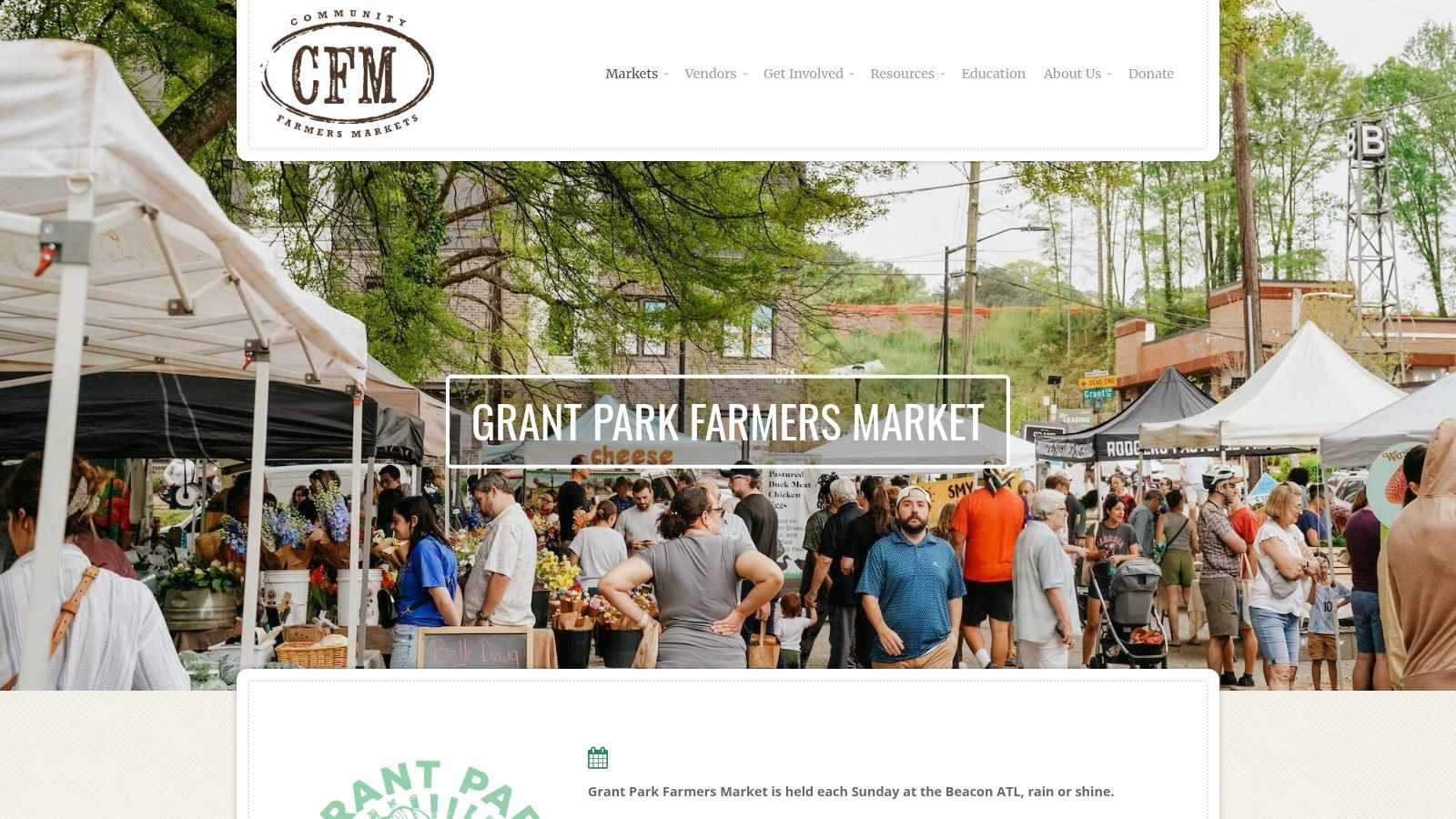
Need a market that works on Sunday, not Saturday? Grant Park fills that gap better than most Atlanta options, and that matters for both local households and food businesses trying to source after a busy weekend service.
Its biggest advantage is timing. A Sunday market gives restaurant teams, caterers, bakers, and specialty food founders another buying window when Saturday prep, events, or production schedules get in the way. For regular shoppers, it also fits the rhythm of a slower neighborhood morning. You can stock up, grab something ready to eat, and keep the rest of the day close to home.
Best for Sunday buying and neighborhood sourcing
Grant Park works well for shoppers who want a market that feels local rather than destination-driven. The mix usually supports a practical grocery run, not just impulse purchases, with enough range to cover produce, baked goods, pantry items, and prepared foods.
That same mix makes it useful for small business buyers, especially those testing local suppliers in smaller volumes. If you run a cafe, meal prep business, or catering operation, this is a good market for relationship-building. Sunday conversations tend to be more useful when you are asking about seasonal availability, future ordering, or whether a producer can handle repeat demand.
What stands out, and what to plan for
- Best for Sunday schedules: Few Atlanta markets give you a reliable neighborhood option at the end of the weekend.
- Best for local feel: The crowd is community-oriented, which makes the experience better for shoppers who want regular vendors and familiar faces.
- Best for scouting suppliers: Small businesses can use the market to compare product quality, packaging, and vendor professionalism in one stop.
The trade-offs are practical. Good-weather Sundays draw heavier crowds by late morning, and parking around The Beacon area can become the slowest part of the trip. If you are shopping for a household, that is usually manageable. If you are buying for an event, office kitchen, or prep list, arrive early and know which vendors you want to hit first.
Seasonality is the other limit. Grant Park is a better warm-season habit than a year-round anchor, so business buyers should avoid building a sourcing plan around it alone.
For current hours, seasonal timing, and market details, check the official Grant Park Farmers Market page.
4. Green Market at Piedmont Park
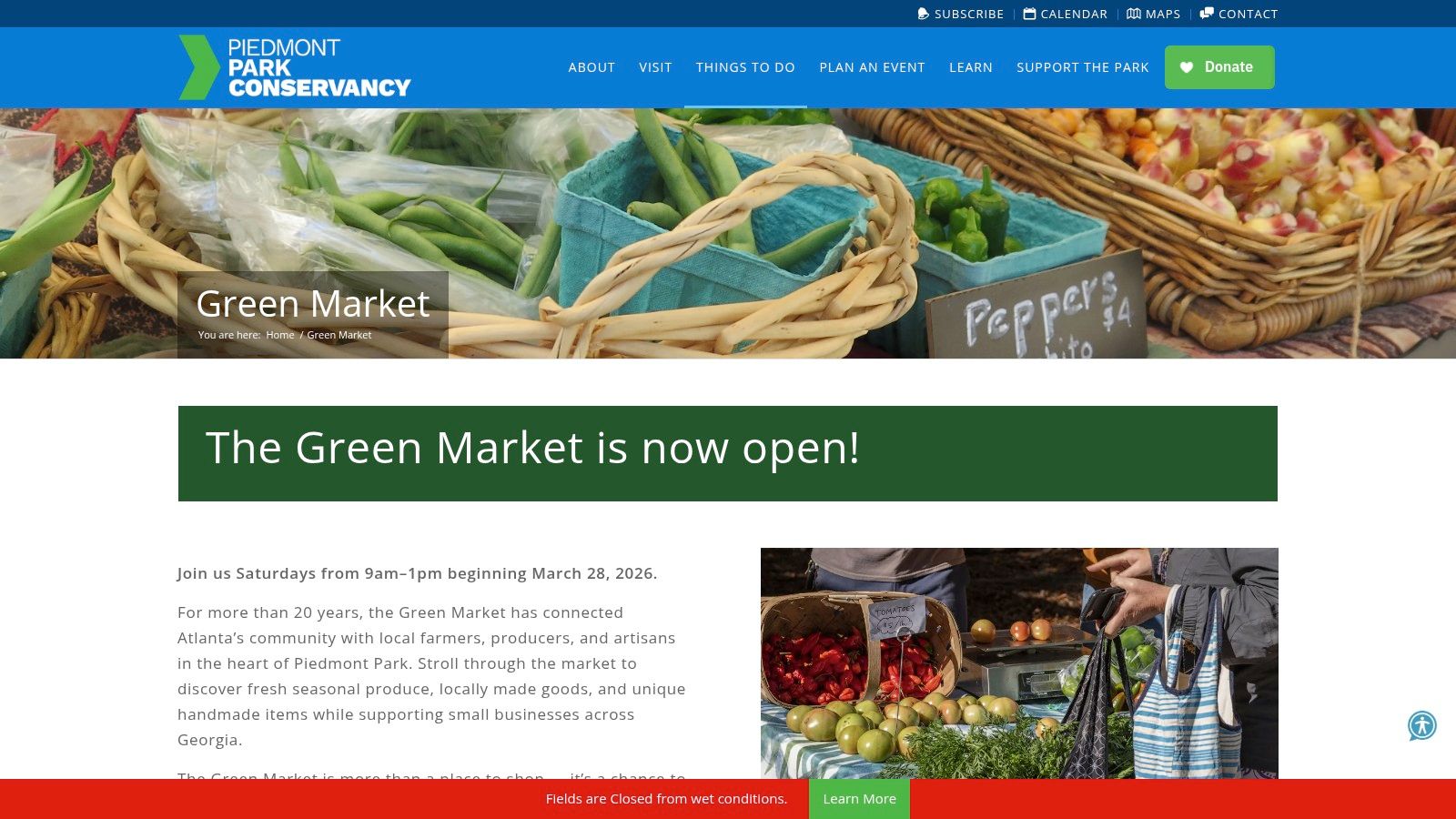
Some markets are about sourcing. Some are about convenience. Green Market at Piedmont Park is about access. If you live in Midtown, use MARTA, or prefer walking or biking, this is one of the most practical market visits in Atlanta.
Its biggest advantage is the setting. You can fold a market stop into a park morning, a BeltLine trip, or a casual meet-up without much friction. That makes it especially useful for people who don’t want a farmers market visit to turn into a full parking exercise.
Best for car-free shoppers and social outings
Green Market is a strong choice for shoppers who like buying produce and ready-to-eat items in the same trip. It also works well for informal business networking. If you’re a local food founder, caterer, or office manager trying to scout vendors while keeping things relaxed, a park setting helps.
The atmosphere is part of the appeal, but it can also distract from the practical question: can you shop efficiently here? Usually, yes. The answer depends on the weekend calendar. Midtown event traffic changes everything.
Worth remembering: A great park market can become a frustrating errand if you ignore festival traffic and parking constraints.
Where it shines and where it doesn’t
Green Market’s strengths are easy to spot:
- Easy without a car: That’s not a small advantage in Atlanta.
- Pleasant setting: Good for families, visitors, and casual shoppers who want a market plus a park day.
- Solid mix of fresh and prepared foods: You can leave with ingredients and lunch.
Its weaknesses are mostly logistical.
- Parking isn’t the draw: If you’re driving in from farther out and buying heavy bags, other markets are easier.
- Peak weekends get crowded: Big park events can change the pace and make a quick stop impossible.
- Seasonal schedule: It doesn’t solve winter access the way a true year-round market does.
For organizations planning a low-pressure community outing, this one is useful. For volume buying, it’s less efficient than markets with easier loading and parking. That’s the trade-off.
See current information on the official Green Market at Piedmont Park page.
5. Marietta Square Farmers Market
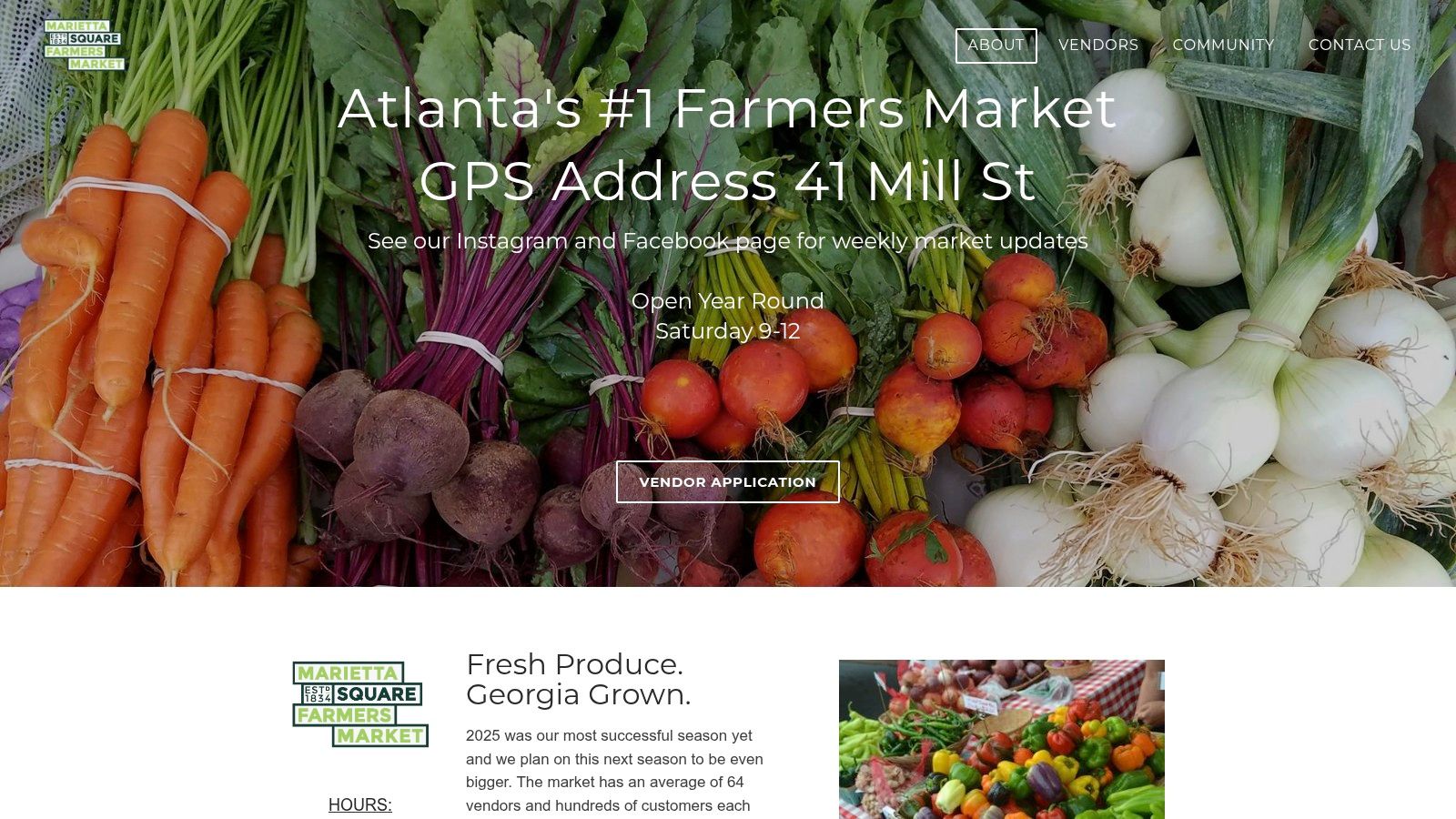
Need a market outside intown Atlanta where you can get your shopping done? Marietta Square Farmers Market is one of the better answers. It gives casual visitors a pleasant Saturday on the square, but it also works well for chefs, caterers, and food artisans who want to compare local suppliers in one stop.
According to the Georgia Farm Bureau market directory, the Historic Marietta Square Farmers Market is one of the larger markets in metro Atlanta during peak season. That scale changes the value of the trip. You can shop produce, baked goods, specialty foods, and pantry items without making three separate stops.
The setting helps, but convenience is the main draw. For Cobb County households, this is an easy default market. For business buyers based in Marietta, Kennesaw, Smyrna, or nearby, it is one of the more practical places to start local sourcing relationships without committing to an intown run.
If you are building a relaxed weekend around the square, Marietta also fits naturally with several college towns to visit in Georgia for a day trip or food-focused stop.
What Marietta does well
Marietta Square Farmers Market stands out for a few practical reasons:
- Strong one-stop selection: A larger vendor mix gives both families and business buyers more room to compare quality and pricing.
- Easy to pair with other errands: Coffee shops, restaurants, and retail around the square make the trip efficient for suburban shoppers.
- Good market for supplier scouting: Caterers and food entrepreneurs can have real conversations with multiple vendors in one morning.
- Approachable for mixed-purpose visits: One person can source ingredients while someone else treats it like a casual weekend outing.
The trade-off is timing. Arrive later, and parking becomes more annoying as the square fills with shoppers who are not there for the market. That matters if you are buying in volume, carrying coolers, or trying to move fast between vendors.
I recommend this market most for early shoppers with a plan. Families get the best experience before the rush. Small businesses should come with a short list, a budget, and a few questions about seasonal availability, lead time, and repeat ordering. Marietta rewards that kind of preparation.
The official Marietta Square Farmers Market website is the best place to confirm current operations.
6. Athens Farmers Market
Athens Farmers Market earns its place on this list because it gives you something most markets don’t: multiple ways to shop in the same community. That’s useful. One market window is easy to miss. Two creates options.
The Saturday market at Bishop Park is the flagship, while the midweek downtown setup gives Athens a more flexible rhythm than many Georgia markets. For regular shoppers, that means fewer excuses. For small food businesses, it means more room to source around prep schedules.
Best for variety in timing and atmosphere
Athens has a strong local food culture, and the market reflects that. It’s a good choice for shoppers who care as much about local character as they do about what ends up in the bag. Expect a lively mix of produce, meats, baked goods, and prepared items, with a strong community feel rather than a polished, high-end one.
That community texture is a real advantage if you’re visiting Athens for more than errands. It also makes the market a natural stop if you’re exploring one of the best college towns to visit in Georgia.
What works especially well
Athens Farmers Market stands out for practical reasons:
- Two shopping windows: Saturday mornings and a downtown weekday option make planning easier.
- Strong local identity: It feels connected to Athens rather than interchangeable with any other market.
- Good for relationship-building: Vendors are often open to conversation, which helps if you’re trying to understand local sourcing possibilities.
The limitations are normal for a community-driven market. Some specialty vendors rotate, so you can’t assume every booth will appear every week. Park rules also shape the experience at the Bishop Park location, which matters if you’re showing up with pets or a large group.
If you’re a chef, café owner, or specialty food operator in or around Athens, this market is worth visiting repeatedly rather than once. Markets with strong community roots tend to reward consistency. The more often you go, the more useful they become.
Find current schedules and details on the official Athens Farmers Market website.
7. Forsyth Farmers’ Market
Want a Georgia market where you can ask direct sourcing questions and get straight answers? Forsyth Farmers’ Market is one of the best options on the coast. Its producer-only, food-only model gives both everyday shoppers and small business buyers a cleaner buying environment than markets that mix in resale goods or heavy craft inventory.
That matters in practice. If you run a café, catering company, inn, or small food brand in Savannah, you need to know who grew the greens, baked the bread, or made the jam. Forsyth makes that easier because the market standards are clear. For families, the benefit is simpler but just as useful. You can shop with more confidence and less guesswork.
If you're building a Savannah weekend around food, parks, and neighborhood stops, this market fits naturally into these top things to do in Savannah for visitors.
Best for direct buying in Savannah
Forsyth is strongest for buyers who care about provenance and repeat purchasing. A casual visitor can come for produce, eggs, baked goods, and prepared staples. A chef or specialty retailer can use the same visit to spot reliable vendors, compare product quality, and start real supplier conversations.
The setting in Forsyth Park adds appeal, but the standards are the primary reason to go. Savannah has no shortage of attractive places to shop. What separates this market is that it rewards buyers who want clarity, consistency, and local food with a traceable source.
What works well, and what to plan for
- Clear producer access: Conversations are usually with the people making or growing the product.
- Useful for repeat sourcing: Business buyers can identify vendors worth following up with outside market hours.
- Strong visitor appeal: The park location makes it easy to pair with a broader Savannah morning itinerary.
There are trade-offs. Parking around the park can tighten up fast on busy Saturdays, and heat becomes a real factor for both shoppers and perishables for much of the year. Go early if you want the best selection and an easier load-out. If you're buying for service, not just for home, bring insulated bags and treat the trip like a sourcing run rather than a stroll.
For coastal businesses, this is one of the more practical first stops for local procurement. You can quickly tell which vendors are worth a second conversation.
Visit the official Forsyth Farmers’ Market website.
Top 7 Georgia Farmers Markets Comparison
| Market | Operational Complexity 🔄 | Resource Requirements ⚡ | Expected Outcomes ⭐📊 | Ideal Use Cases 💡 | Key Advantages |
|---|---|---|---|---|---|
| Peachtree Road Farmers Market (Buckhead) | Seasonal operation (Mar–Dec); curated vendor coordination | Central Buckhead site; moderate parking options but busy mornings | High-quality, chef-driven produce & proteins ⭐⭐ | Weekend specialty shopping, chef pop-ups | Strong farm presence; SNAP/EBT on-site with matching |
| Freedom Farmers Market (Carter Center) | Year‑round, compact layout; token/SNAP system | Limited on-site parking; easy to walk/bike ⚡ | Consistent weekly variety; quick shopping experience ⭐ | Fast Saturday errands, regular weekly staples | Year‑round schedule; dollar‑for‑dollar SNAP match; easy navigation |
| Grant Park Farmers Market (The Beacon) | Large-scale Sunday market; community programming 🔄 | Park-adjacent setting; some parking constraints | Comprehensive grocery selection & brunch options ⭐⭐📊 | Full-week grocery shopping, family outings | Wide vendor variety; family-friendly, operated by CFM |
| Green Market at Piedmont Park (Midtown) | Seasonal Sat market (Mar–Dec); moves indoors in rain | Excellent BeltLine/MARTA access; no market parking ⚡ | Strong mix of produce & ready‑to‑eat items; park ambiance ⭐ | Car-free visits, social/food outings in park | Iconic park setting; live music; SNAP doubling |
| Marietta Square Farmers Market (Marietta) | Year‑round Saturday; large vendor count (60+) | Suburban location; parking tight after 10 a.m. | Reliable heirloom produce, baked goods & staples ⭐ | Suburban morning visits paired with local shops | Broad selection; strong Georgia Grown emphasis |
| Athens Farmers Market (Bishop Park & Downtown) | Two-location model (Sat + Wed); seasonal hours 🔄 | Park and downtown sites; vendor rotation varies | Strong local farm representation; lively community vibe ⭐ | Avoid weekend crowds; evening midweek market visits | Two weekly windows; live music; SNAP doubling token system |
| Forsyth Farmers’ Market (Savannah) | Year‑round, producer-only, food-only standards; token system 🔄 | Historic park under oaks; limited nearby parking; weather sensitive | High-integrity sourcing with 60+ vendors; dependable quality ⭐⭐ | Farmer-focused shopping; high-quality sourcing | Producer-only within 200 mi; clear token payments; SNAP doubling |
Shop Local, Support Georgia
What do you want from a Georgia farmers market. A pleasant Saturday errand, or a reliable local supply line for your kitchen or business?
The strongest markets do both. They give families fresher food and a better way to shop. They also give chefs, caterers, office managers, and food makers direct access to growers and producers they can talk to. That matters when you need clear answers on seasonality, volume, pickup timing, and product consistency.
Choosing the right market is mostly a matter of fit. Peachtree Road and Forsyth stand out if traceability and producer standards are high on your list. Freedom and Marietta Square are easier to build into a routine if you need steadier year-round buying. Grant Park and Piedmont Park work well if the trip is part shopping, part social outing, and you do not mind a little more variability in pace and parking.
Business buyers should treat each market as its own channel. A chef shopping for weekend service needs speed, repeat vendors, and realistic crop availability. A caterer may care more about preorder potential and enough quantity across several categories. A food artisan testing a packaged product needs foot traffic, the right customer mix, and market rules that fit sampling and sales.
Trade-offs decide whether a market is useful.
A smaller market can save time, but it may not cover your full list. A larger one gives you more options and better price comparison, but it can cost you an extra hour once parking, lines, and crowd flow are factored in. Producer-only standards often give buyers better transparency. They can also mean tighter seasonal limits, which matters if your menu or event plan depends on specific items every week.
For households, local shopping keeps more of your food budget closer to the people growing and making it. For small businesses, the upside is often operational. Regular vendor conversations help you plan around harvest windows, avoid overpromising seasonal items, and make smarter substitutions before a busy weekend or client event. That kind of information rarely shows up on a shelf tag.
If you’re selling at markets rather than shopping them, details matter just as much on your side of the table. This guide to optimizing your market booth layout is worth a look before your next event.
Start with simple habits. Go early if you want first pick and easier parking. Bring cash and cards because payment systems vary by vendor. Ask direct questions about growing practices, restock patterns, and whether larger orders can be arranged for a later pickup. Then come back. One visit shows selection. Repeat visits show reliability.
Georgia has plenty of good markets. The smart choice is the one that matches how you cook, shop, source, and work.
If your business is looking for practical local partners beyond food sourcing, Montclair Crew Recycling helps Metro Atlanta organizations responsibly recycle computers, servers, telecom gear, and other IT assets while protecting sensitive data through secure wiping and compliant disposition. It’s a strong fit for schools, healthcare providers, offices, and growing companies that want a cleaner, more organized, sustainability-minded operation.
