

Most Georgia food guides make the same mistake. They chase signature dishes first and the systems behind them second. That’s backwards. If you want to understand the Best Food Cities to Visit in Georgia, pay attention to how each place sources ingredients, moves people through dining districts, reuses space, handles seasonality, and keeps local identity intact while it grows.
That’s why the obvious advice, “just go where the famous restaurants are,” often underdelivers. A city can have a few excellent dining rooms and still offer a weak food travel experience if parking is painful, neighborhoods are disconnected, or the local scene depends too heavily on one tourist season. The strongest food cities build repeatable ecosystems. They make it easy for visitors to eat well across multiple price points and multiple days.
Georgia gives you a strong range of those ecosystems. On the coast, seafood communities show what traceability and stewardship look like when supply is tied directly to natural resources. In college towns, you can see how institutions anchor local demand and talent. In Metro Atlanta, adaptive reuse, dense restaurant clusters, and mixed-use planning show how infrastructure decisions shape where people eat and how often they return.
That operational lens matters beyond travel. Restaurants, markets, food halls, and hospitality groups all manage assets that age fast and need smart replacement cycles. So do schools, clinics, manufacturers, and corporate offices. The same discipline that keeps a kitchen efficient also helps an organization retire servers, point-of-sale hardware, telecom gear, and endpoint devices without losing value or creating compliance risk.
Georgia’s food cities are worth visiting for the meals alone. They’re also useful case studies. Each one shows what works, what breaks under pressure, and what other organizations can borrow from the way successful local food systems run.
1. Savannah Savannah and sustainable sourcing
Savannah works because it doesn’t try to out-volume Atlanta or out-modernize every fast-growing suburb. It leans into what it controls well. Historic setting, strong hospitality habits, coastal access, and a dining culture that rewards thoughtful sourcing over brute scale.
For travelers, that means the city is best enjoyed slowly. Don’t overpack your itinerary with reservation chasing. Savannah is a place for a long lunch, a market stop, a seafood dinner, and one extra coffee or dessert break you didn’t plan. Cities like this reward walkability and patience more than checklist tourism.
Why Savannah feels resilient
Many of Savannah’s strongest food businesses operate like disciplined mid-market firms. They build tight supplier relationships, design menus around what’s available, and avoid the operational trap of trying to be everything at once. That creates a dining scene with more consistency and less gimmick dependency.
From a business strategy angle, that’s the first lesson. Sustainable operations usually look less glamorous than splashy expansion, but they hold up better. The restaurants visitors remember tend to be the ones that match concept, sourcing, and service model instead of forcing a high-maintenance menu into a fragile supply chain.
Practical rule: If your supply is seasonal or variable, design the customer experience around flexibility, not rigid promises.
That logic transfers directly to asset-heavy organizations. Companies that standardize intake, maintenance, retirement, and handoff procedures usually outperform firms that improvise when equipment piles up in closets and storage rooms. Savannah’s food culture shows the value of controlled complexity.
What works and what doesn’t
What works in Savannah is local fit. Coastal ingredients, historic spaces, and hospitality-forward service all reinforce each other. What doesn’t work is visiting with a pure speed mindset. If you want constant turnover, giant parking fields, and frictionless suburb-style convenience, other Georgia food cities will suit you better.
Savannah is strongest when you treat it as a model for careful stewardship. The same discipline that protects a restaurant’s reputation protects an organization’s operational backbone. If you’re pairing food travel with downtime by the water, this guide to relaxing Georgia beaches fits naturally with a Savannah-first trip.
A practical example: think of a boutique hotel group replacing aging front-desk terminals, kitchen printers, and back-office laptops. The smart move isn’t a rushed swap. It’s a phased process with inventory visibility, secure disposition, and reuse opportunities where appropriate. Savannah’s best dining businesses operate with that same measured cadence.
2. Atlanta Atlanta and culinary innovation
Atlanta is the state’s food capital if your definition of a food city includes scale, density, variety, and the ability to support constant experimentation. WalletHub ranked Atlanta the 11th best foodie city in the United States out of 182 cities analyzed, with an overall score of 66.27, and the city placed 1st nationwide in restaurants per capita according to this WalletHub ranking covered by Patch.
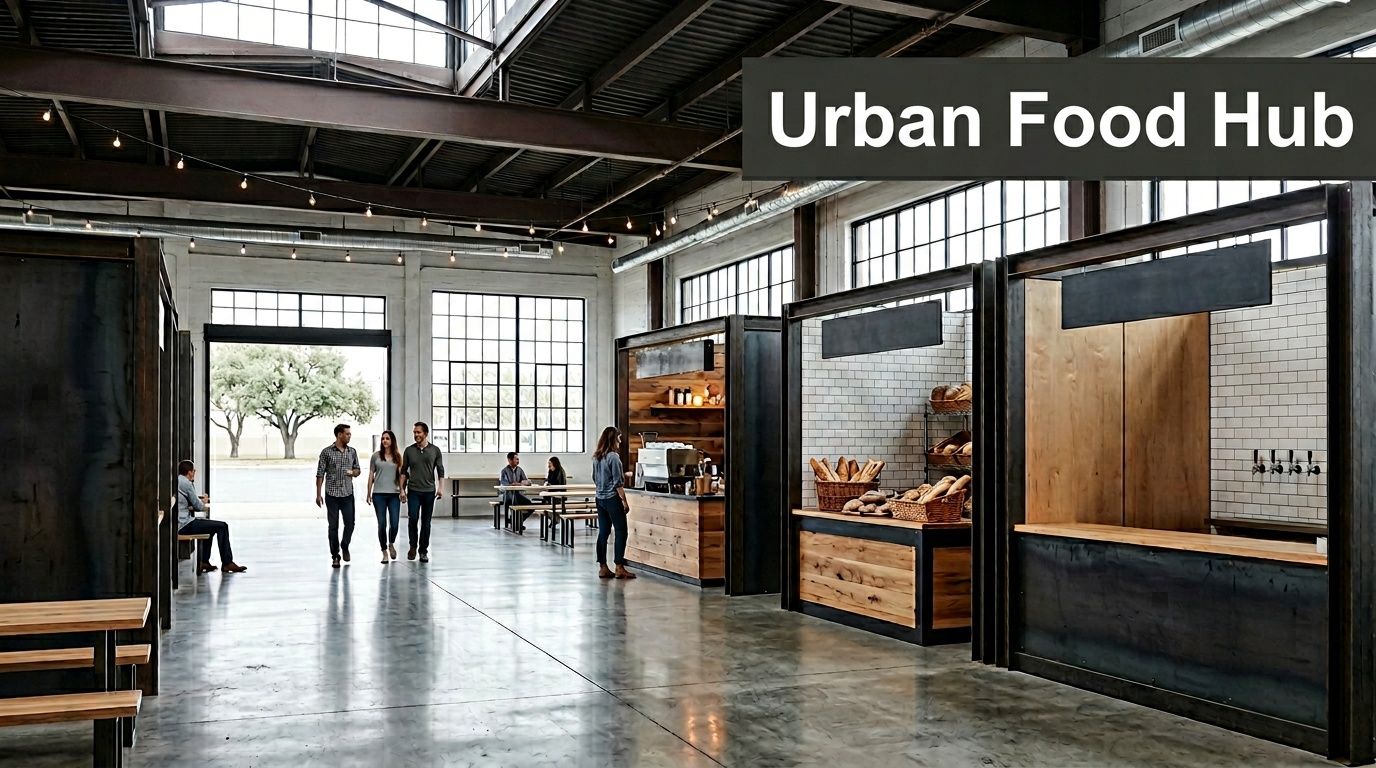
That one fact tells you a lot. Atlanta isn’t just a place with a few famous neighborhoods. It has enough restaurant density to support real exploration. Visitors can move between food halls, chef-driven dining rooms, immigrant food corridors, casual counters, and specialty dessert stops without feeling like they’ve exhausted the city.
Infrastructure is the real differentiator
Atlanta’s food scene benefits from repurposed buildings, mixed-use districts, and a population large enough to sustain niche concepts. Some of the city’s most interesting dining experiences happen in spaces that had a previous life. That matters because adaptive reuse lowers the barrier to creating memorable hospitality environments. It also gives districts texture that new construction often struggles to match.
For operators, the lesson is straightforward. Reuse often beats replacement when the underlying structure still works. In IT asset management, that translates into auditing what still has resale, redeployment, or parts value before defaulting to disposal.
Atlanta’s dining map rewards businesses that can plug strong concepts into existing infrastructure instead of waiting for perfect conditions.
That’s one reason Atlanta feels so alive. The city supports experimentation without requiring every operator to start from a blank slab.
A city built for operational comparison
Atlanta also dominates Georgia’s quick-service restaurant sector, with 1,550 locations in 2026, up from 1,200 in 2020, while other Georgia cities trail behind, according to Actowiz Metrics’ Georgia food chain analysis. You don’t need to romanticize that to learn from it. Dense clustering creates logistical advantages. Deliveries get easier to route. Service vendors can cover more clients efficiently. Equipment support becomes more responsive when many locations sit in the same orbit.
That same hub-and-spoke thinking applies to corporate operations across Metro Atlanta. Companies with multiple offices or retail sites need secure pickup, consolidated audits, data destruction, and clear downstream handling for retired equipment. If you’re turning a food-focused trip into a wider city itinerary, this roundup of things to do in Atlanta this weekend helps fill the gaps between meals.
3. Athens Athens and farm-to-campus culture
Athens has a smaller footprint than Atlanta, but it often delivers a more coherent food experience. That’s the advantage of a city where student demand, local agriculture, independent operators, and cultural identity all feed into one another. You can feel the difference. The scene is less about chasing scale and more about sustaining a local loop.
That matters to visitors because Athens is one of the easiest Georgia cities for building a full day of eating that still feels local by dinner. Coffee, bakery, lunch, market browsing, a music-adjacent dinner spot, and late-night comfort food all fit the city’s rhythm.
The institutional advantage
University towns are often underrated case studies in ecosystem building. A major campus anchors demand, introduces new tastes, and creates a predictable audience for lower-price experimentation. That doesn’t guarantee quality, but it does support turnover, talent flow, and concept testing in a way many similarly sized cities can’t match.
For organizations, the lesson is that anchor institutions matter. When a school system, healthcare network, government center, or major employer creates recurring demand, smaller businesses can invest with more confidence. The same pattern appears in technology planning. A campus or district that standardizes refresh cycles and disposition processes creates more stable service opportunities and less waste.
Here’s where Athens is especially instructive:
- Community alignment: Independent restaurants tend to perform better when they fit the city’s cultural habits instead of importing a concept that ignores local demand.
- Knowledge transfer: Agricultural know-how, student labor, and faculty expertise can shape a better food ecosystem than pure trend following.
- Operational patience: Cities with strong institutional roots often reward businesses that build reputation steadily.
Why Athens works for travelers
Athens is one of the Best Food Cities to Visit in Georgia if you care about authenticity more than polish. That doesn’t mean the city lacks ambition. It means the best meals often come from places that know exactly who they serve.
A healthy local food economy usually depends on repeat customers first and visitors second.
That’s a useful business test. If a concept can’t survive without novelty traffic, it’s structurally fragile. The same is true of hardware fleets and facility systems. If your organization only addresses asset issues when a move, audit, or security scare forces action, your process is weak.
Athens also pairs well with event-driven travel. If your visit overlaps with one of the state’s major celebrations, this guide to popular festivals in Georgia can help you build a broader itinerary around the city.
4. Augusta Augusta and the discipline of legacy
Augusta is often reduced to one annual event and one narrow image of Southern hospitality. That misses the point. The city’s food identity is stronger when you look past the headline season and pay attention to the establishments that keep serving residents year-round.
Legacy cities teach a different kind of operational lesson. In a place like Augusta, consistency matters more than novelty. Restaurants that last tend to understand portioning, staffing rhythms, menu durability, and the practical value of being dependable. They don’t need to reinvent themselves every quarter.
What legacy gets right
A restaurant with a long operating history usually has one quiet advantage. It knows which changes are worth making and which ones only create disruption. That’s a hard-earned discipline, and businesses in other sectors should copy it.
When organizations manage older technology environments, they often swing between two bad extremes. They either cling to outdated equipment too long, or they replace everything at once without a recovery plan. Augusta’s food culture suggests a better model. Keep what still serves the mission, retire what creates drag, and document transitions carefully.
That approach is especially relevant for schools, clinics, municipal offices, and established manufacturers. They often operate across older buildings and mixed hardware environments, which makes clean decommissioning harder. Strong process matters more than shiny tools.
Trade-offs for visitors
Augusta isn’t the place to expect nonstop culinary novelty. It’s the place to appreciate institutions, Southern staples, and the value of a city that still respects repeatability. If your idea of food travel depends on constant spectacle, you may prefer Atlanta or one of the newer suburban dining hubs.
If your idea of food travel is eating where local habits still shape the menu, Augusta is rewarding. You’ll see how a city preserves identity through food without freezing itself in time.
A practical scenario makes the analogy clear. Think about a long-running regional business with aging office servers, retired desktop fleets, and miscellaneous networking gear stored across departments. The smart path looks a lot like a disciplined legacy kitchen. Inventory first. Separate what’s still useful from what creates risk. Handle destruction, recycling, and any resale path with chain-of-custody discipline. Augusta’s dining culture, at its best, reflects that kind of operational memory.
5. The Golden Isles The Golden Isles and seafood stewardship
The Golden Isles are less a single city than a coastal food region with a shared operating reality. Seafood quality depends on timing, handling, weather, local knowledge, and respect for a sensitive resource base. That makes the area one of Georgia’s clearest examples of why great food systems start long before the plate.

For visitors, the appeal is obvious. You get seafood culture with scenic beauty. St. Simons Island, Jekyll Island, Sea Island, and Brunswick all contribute something different. Some stops feel polished and resort-adjacent. Others feel more workmanlike and rooted in local catch traditions.
Traceability is the lesson
Coastal food economies punish sloppy handling. The distance between “fresh and excellent” and “forgettable” is short. That’s why the Golden Isles work best when restaurants, docks, distributors, and kitchens stay aligned on product movement and timing.
Businesses outside hospitality should pay attention to that chain discipline. Asset management fails for the same reasons seafood quality fails. Poor handoffs. Weak documentation. Delays. Unclear ownership. Storage that was supposed to be temporary and became permanent.
A few practical takeaways stand out:
- Stewardship matters: Long-term value depends on how operators treat the underlying resource.
- Chain of custody matters: The handoff points often create the biggest quality risks.
- Local knowledge matters: People closest to the ground usually catch problems earlier.
The more sensitive the asset, the more disciplined the transfer process has to be.
That applies whether you’re dealing with seafood inventory, medical devices awaiting replacement, or server drives scheduled for destruction.
How to visit the region well
The Golden Isles are best for travelers who don’t mind geographic spread. You’ll do better with a regional mindset than a “one downtown solves everything” mindset. Build your eating around where you’re staying and what the water, season, and local recommendations suggest.
Families often get more from this region than single-neighborhood food tourists do, because the experience combines attractions, scenery, and meals without requiring a dense urban schedule. This list of Georgia family attractions for weekend trips fits well if you’re pairing seafood stops with a broader coastal itinerary.
6. Alpharetta Alpharetta and the power of clustering
Alpharetta shows what happens when suburban growth is paired with intentional dining districts instead of scattered one-off development. The result is a food scene that feels more curated than accidental. Visitors get concentration, convenience, and enough quality variation to justify a dedicated trip instead of a single dinner stop on the way elsewhere.

That concentration matters more than people think. Clustering creates a stronger feedback loop. Restaurants benefit from shared foot traffic. Visitors can compare formats in one evening. Operators learn quickly because they’re competing in close proximity instead of in isolated pockets.
Why suburban food hubs can outperform
Well-planned suburban districts often solve problems that urban cores leave messy. Parking is easier. Mixed-use layouts keep people onsite longer. Newer spaces can support modern kitchens, digital ordering setups, and cleaner service logistics. That doesn’t automatically create character, but it does lower friction.
For business strategists, Alpharetta is a useful model for infrastructure-enabled growth. If you put compatible uses close together and support them with workable access, the district becomes more valuable than any single tenant. The same thinking supports efficient IT disposition programs. A concentrated service area lets providers schedule pickups, audits, and downstream processing with less delay and less cost creep.
What visitors should expect
Alpharetta is for travelers who like polished execution. You’ll find date-night restaurants, business-meal settings, group-friendly mixed-use developments, and concepts designed for people who want options without downtown friction.
What it doesn’t do as naturally is rough-edged discovery. If your favorite meals come from wandering older city blocks with no plan, Alpharetta may feel managed. But that management is also its advantage. Businesses and visitors know where things are, how to access them, and what kind of experience to expect.
That predictability has value. In asset management, predictable intake and disposition workflows reduce mistakes. In hospitality, predictable district design increases dwell time and repeat visits. Alpharetta demonstrates that operational polish can be a feature, not a compromise, when it’s backed by real quality.
7. Roswell & Marietta Roswell, Marietta, and main street reinvention
Roswell and Marietta belong together because both show how historic cores can support modern food culture without losing local identity. Their squares and surrounding districts work as human-scale dining environments. You can park, walk, browse, eat, and extend the night without the logistical drag that hurts many larger markets.
These cities are strong examples of small and midsize business revitalization. Independent restaurants, breweries, bakeries, and cafes don’t just fill storefronts. They create economic texture. They also create a distributed model of local resilience. One closure doesn’t define the district if the ecosystem is broad enough.
The SMB lesson
Historic downtowns thrive when operators understand constraints instead of fighting them. Older buildings have quirks. Storage may be limited. Parking can be finite. Buildouts can be more complex than in new suburban shells. Businesses that succeed in Roswell and Marietta usually adapt the concept to the setting instead of trying to force a format that belongs somewhere else.
That’s a sharp lesson for organizations managing mixed asset environments. Not every office, branch, school, or clinic can run the same hardware footprint indefinitely. Standardization matters, but local context matters too. The best disposition plans account for those differences while still preserving security and compliance.
A few patterns stand out:
- Independent density: Multiple smaller operators can create stronger district identity than one dominant tenant.
- Reuse over replacement: Older structures can support modern experiences if upgrades are deliberate.
- Local repeat traffic: A district survives because residents keep coming back, not because tourists visit once.
Older assets aren’t the problem. Unclear plans for maintaining, repurposing, or retiring them are the problem.
That line fits both historic real estate and enterprise hardware.
Why these two cities are worth the trip
Roswell and Marietta are among the Best Food Cities to Visit in Georgia if you value balance. They offer enough charm for leisure travel and enough operational clarity for easy planning. They’re especially good for couples, small groups, and anyone who wants a strong meal without building an entire weekend around one reservation.
If historic districts shape your travel choices, this guide to the best small towns to visit in Georgia complements both destinations well.
8. Macon Macon and the value of cultural reawakening
Macon’s food story works when it stays close to the city’s identity. Music history, soul food traditions, and a renewed sense of place give the dining scene its edge. Reinvention is happening, but the strongest version of Macon doesn’t pretend to be somewhere else.
That’s important because many reawakening cities make the same mistake. They chase generic revitalization formulas and end up flattening the very culture that could have differentiated them. Macon has a better path when restaurants build from local memory and add fresh execution.
Why Macon deserves more attention
Macon often benefits from lower expectation. Visitors arrive curious rather than overhyped, and that’s good for the city. It lets the food scene win on substance. You can feel the connection between the city’s broader cultural history and the kinds of comfort foods, updated Southern plates, and locally rooted concepts that resonate there.
The business lesson is straightforward. Core identity is an asset. Companies often overlook their most defensible strengths because they seem too familiar internally. Macon shows the opposite. What has been there all along may be the best foundation for the next stage of growth.
That same principle shapes smart asset recovery. Before disposing of equipment, organizations should understand what still holds value, what can be redeployed, and what needs secure end-of-life handling. Renewal works best when it begins with an honest inventory.
What works and what doesn’t
Macon works when you treat it as a city with a narrative, not a random stop between larger names. Stay long enough to connect meals with neighborhoods and cultural context. That’s when the city makes sense.
What doesn’t work is expecting a polished copy of Atlanta. Macon’s appeal is different. It’s warmer, more rooted, and often more revealing about Georgia’s food heritage. For travelers and business leaders alike, that’s useful. Reinvention doesn’t have to erase history. Often it succeeds because history was finally used well.
Top 8 Georgia Food Cities Comparison
| Region / Destination | Implementation Complexity 🔄 | Resource Requirements ⚡ | Expected Results / Impact 📊 | Ideal Use Cases 💡 | Key Advantages ⭐ |
|---|---|---|---|---|---|
| Savannah: Coastal Charm Meets Sustainable Sourcing | Moderate 🔄, coordinate local producers & venues | High ⚡, farm partnerships, waste systems | Strong sustainability reputation; resilient supply chain 📊 | Zero‑waste events; sustainability showcases | Established farm‑to‑table network; transparent sourcing ⭐ |
| Atlanta: A Metropolis of Culinary Innovation | High 🔄, multi‑tenant coordination & tech integration | High ⚡, infrastructure, POS/IT, vendor diversity | High economic impact; innovation and scalability 📊 | Large‑scale, tech‑driven food halls and festivals | Diverse offerings; adaptive reuse and scale ⭐ |
| Athens: Indie Spirit and Farm‑to‑Campus Roots | Low‑Moderate 🔄, campus and community coordination | Moderate ⚡, university partnerships, local farms | Community‑led growth; knowledge transfer to partners 📊 | Campus programs; pilot farm‑to‑table initiatives | Strong academic ties; long‑standing local sourcing ⭐ |
| Augusta: Tradition and the Soul of the South | Low‑Moderate 🔄, managing legacy operations | Moderate ⚡, established suppliers, experienced staff | Consistent, legacy‑based reliability and loyalty 📊 | Heritage events; managing long‑running operations | Deep tradition; operational continuity and trust ⭐ |
| The Golden Isles: Coastal Seafood Bounty | Moderate 🔄, traceability and compliance demands | High ⚡, dock logistics, cold chain, vessel sourcing | High provenance and market trust; traceable supply chain 📊 | Seafood traceability models; origin‑certified programs | Exceptional seafood traceability; resource stewardship ⭐ |
| Alpharetta: Suburban Sophistication & Culinary Clusters | Moderate‑High 🔄, centralized tenant management | High ⚡, mixed‑use infrastructure, tenant services | Concentrated economic activity; predictable growth 📊 | Corporate campuses; centralized asset management | Planned developments; reliable, upscale cluster ⭐ |
| Roswell & Marietta: Historic Squares with Modern Tastes | Low 🔄, SMB scale, simpler workflows | Low‑Moderate ⚡, neighborhood resources, SMB staffing | Local economic vitality and strong community ties 📊 | SMB services; historic district revitalization | Walkable squares; SMB‑friendly operations ⭐ |
| Macon: Soul Food, Music History, and a Reawakening | Low‑Moderate 🔄, cultural initiatives and incremental change | Moderate ⚡, heritage venues, local suppliers | Brand revitalization; tourism and cultural uplift 📊 | Culture‑led economic renewal; authenticity branding | Strong cultural identity; culinary heritage ⭐ |
From the Kitchen to the Corporation Your next move
Georgia’s food map offers more than a list of places to eat. It shows how good systems create memorable outcomes. Savannah highlights disciplined sourcing and operational restraint. Atlanta shows what density, infrastructure reuse, and clustering can do when a market supports experimentation. Athens proves that institutions can anchor local ecosystems. Augusta reminds you that consistency and documented history still matter. The Golden Isles make traceability and stewardship impossible to ignore. Alpharetta demonstrates the commercial power of planned concentration. Roswell and Marietta show how smaller operators can revive historic districts. Macon proves that identity is an asset when leaders know how to use it.
Those lessons carry directly into business operations. Every organization manages a version of supply chain complexity, whether the assets are food inventory, kitchen equipment, workstations, laptops, networking hardware, or retired servers. The risks are different by industry, but the pattern is familiar. If intake is messy, storage is inconsistent, ownership is unclear, and retirement happens late, the whole system becomes expensive, insecure, and hard to audit.
That’s why technology lifecycle management deserves the same seriousness that strong food businesses bring to sourcing and service. Decommissioning old equipment isn’t a side task. It affects data security, environmental compliance, storage efficiency, and potential value recovery. A haphazard process creates risk. Devices linger in closets. Drives go untracked. Reusable hardware loses value while waiting for a decision. Teams waste time trying to reconstruct inventory after the fact.
A better approach looks a lot like a well-run hospitality operation. Start with visibility. Know what you have, where it sits, and who owns it. Move assets through a defined chain of custody. Separate reuse, resale, and recycling pathways early. Treat data destruction as an operational requirement, not an afterthought. Work with a partner that can handle pickup, auditing, compliant processing, and downstream disposition without forcing your internal team to improvise.
That’s where Montclair Crew Recycling fits. The company serves organizations across Metro Atlanta and Georgia with B2B IT asset disposition and electronics recycling services built around practical needs. That includes on-site removal, asset audit and logistics, certified data destruction, environmentally compliant disposition, and value recovery or profit-sharing on datacenter equipment when appropriate. For businesses, schools, healthcare providers, manufacturers, financial institutions, and government agencies, that kind of end-to-end support matters because it reduces internal friction while tightening security and compliance.
Montclair Crew Recycling is based in Alpharetta and operates with a local footprint that matches the geography many Georgia organizations manage. The company also offers free DoD 5220.22-M three-pass hard drive wiping and optional on-site shredding, which is particularly relevant for teams handling sensitive records, regulated data, or equipment distributed across multiple locations.
The broader point is simple. Good operators don’t wait until assets become a liability. They build the retirement path into the operating model. Georgia’s best food cities make that visible in different ways. They show how stewardship, logistics, reuse, and disciplined handoffs create better outcomes over time. Organizations should expect the same standard from their own technology lifecycle.
If your business needs a compliant, local partner to retire IT equipment without creating security gaps or landfill problems, Montclair Crew Recycling is a practical next step. They help Metro Atlanta organizations audit assets, remove equipment, wipe or destroy data-bearing devices, recycle responsibly, and recover value where possible, so your operation stays efficient long after the hardware has reached end of life.
