

You're probably in the middle of a refresh, a relocation, or a shutdown of old voice and network gear. The new platform is approved, the old routers and handsets are still sitting in closets or racks, and nobody wants the project to turn into a messy mix of e-waste pickup, unclear bids, and weak chain of custody.
That's why searching for telecom equipment buyers Dallas usually isn't just about finding someone who says “we buy used Cisco.” The actual question is who can handle your specific asset mix, explain how value is calculated, remove equipment without slowing down operations, and document the security side well enough for IT, finance, and compliance to sign off.
Dallas is a useful market for sellers because it sits inside an active telecom and networking ecosystem. Texas telecommunications networking equipment manufacturing has been growing at an average annual rate of 4.9% from 2021 to 2026, according to IBISWorld's Texas telecommunications networking equipment manufacturing industry profile. On the buyer side, Dallas also has a visible used-equipment channel, which matters if you're trying to recover value instead of sending everything straight to scrap.
The stronger practical takeaway is simple. Dallas has enough depth that you can be selective. Some buyers are best for data center switching gear. Others are better for mixed telecom lots, handsets, and decommissioning support.
1. Network Republic
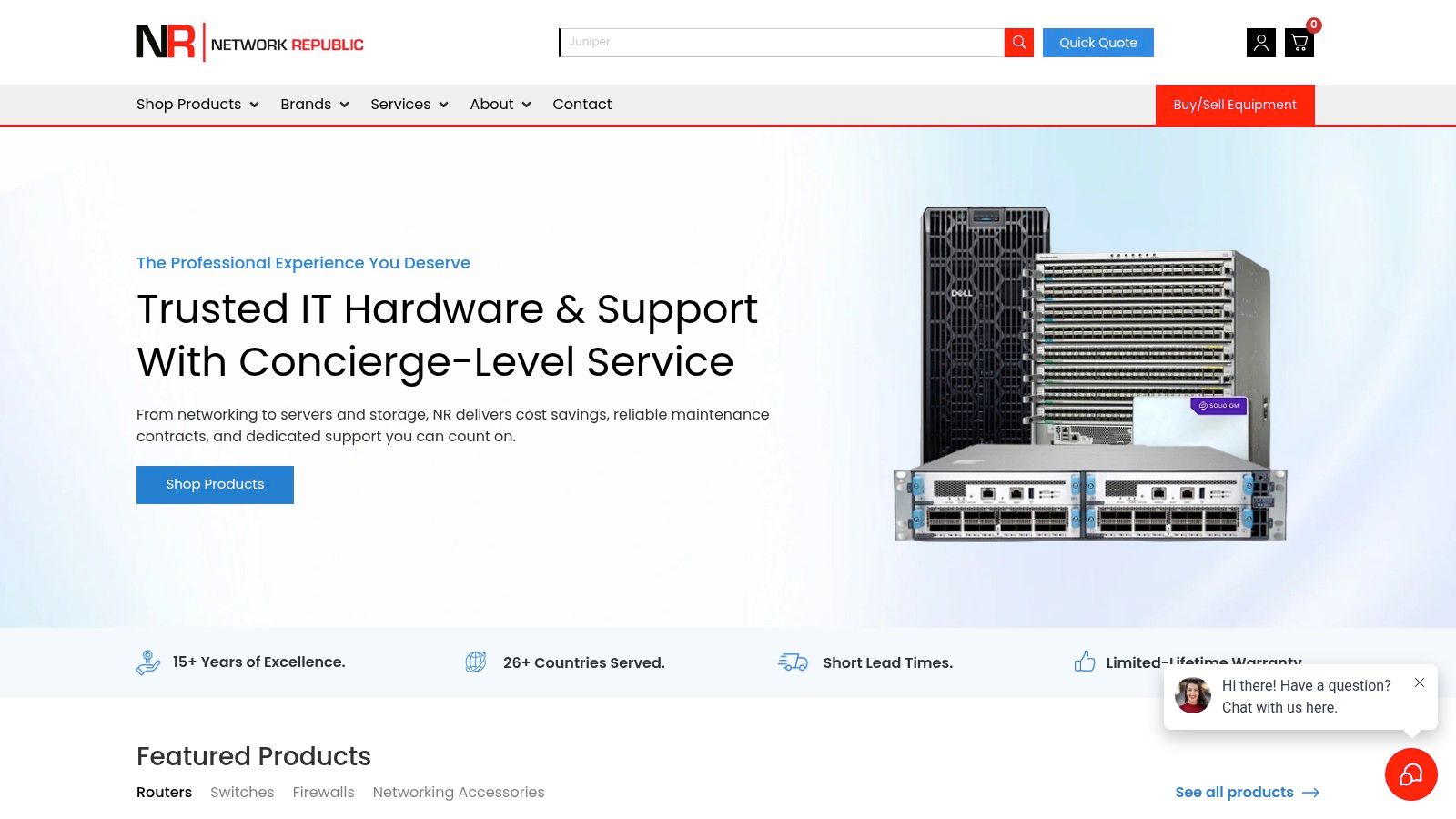
Network Republic makes the most sense when the lot is heavy on enterprise networking hardware and you want a buyer that can also operate like an infrastructure partner. That usually means Cisco, Juniper, Arista, server gear, storage, optics, and other equipment that still has life in secondary channels.
Their “Sell Equipment” positioning is useful for companies that don't want to separate buyback from broader lifecycle work. If you're replacing gear and also need sourcing, logistics, or repair support, one vendor can simplify handoff and reduce internal coordination.
What they buy and how they value it
Network Republic is strongest on enterprise and data center inventory. If you've got a stack of mainstream PBX desk phones from mixed generations, I'd treat them as a secondary fit rather than the main reason to call.
What works well here is the trade-in or cashout model tied to fair-market valuation. That's a practical advantage when your infrastructure team is doing a refresh and wants to offset replacement spend rather than just liquidate old hardware. If your team also needs outside planning help around migration or inventory rationalization, this kind of project often sits next to broader telecom consulting services in Dallas.
Practical rule: Ask whether the quote assumes complete units with rails, power supplies, line cards, and transceivers. Missing accessories change resale value fast.
Data security and logistics
This isn't the buyer I'd choose just because I needed somebody to haul away low-value junk. It's better suited to assets where remarketing value depends on accurate auditing, proper handling, and a channel that understands older enterprise hardware.
A few trade-offs stand out:
- Best fit for core infrastructure: Cisco, Juniper, Arista, servers, storage, and legacy enterprise parts are the sweet spot.
- Good local coordination: A Dallas presence helps when you need site review, pickup planning, or faster communication.
- Quote-only pricing: There's no public buy sheet, so finance teams that want instant benchmarks won't get them.
- Less ideal for handset-heavy lots: Smaller-brand telecom endpoints may not get the same attention as premium network gear.
If your priority is squeezing value out of enterprise networking inventory without splitting the job across multiple vendors, Network Republic is a strong shortlist option.
2. Teladvance
Teladvance is a practical choice when the project is bigger than “sell these switches.” They're built for decommissioning, secure handling, logistics, and enterprise reporting, which matters when old telecom equipment is still distributed across racks, closets, and branch sites.
I'd look at Teladvance first when the seller has networking gear, telecom systems, and storage devices all mixed together. That's common in real office exits and technology refreshes, especially when voice, security, and server assets were replaced at different times.
What they buy and valuation trade-offs
Teladvance lists a wide range of brands typically seen in business telecom and networking environments, including Cisco, Avaya, Nortel, ShoreTel, Polycom, and Mitel. That broad acceptance is useful if your inventory isn't perfectly clean or modern.
The valuation side is where businesses need to slow down and ask better questions. Dallas-facing buyer pages often say they buy used Cisco, phones, routers, and network gear, but many don't explain how offers are built, how mixed-condition lots are treated, or what fees reduce payout. That gap is specifically visible in the market according to GreenTek's Dallas telecom equipment buyer page, which highlights how underexplained pricing methodology remains for sellers.
Data security and logistics
Teladvance is stronger than many pure buyers on project execution. That matters when old equipment is still live in cabinets or when the handoff needs to satisfy both IT and facilities. If your organization is also sorting carrier moves, cutovers, or support contracts, that often overlaps with broader telecommunications services in Dallas.
A few practical points matter more than sales language:
- Decommissioning capability: Good fit for rack removal, packing, freight, and larger office or data room projects.
- Data destruction reporting: Useful when the lot includes drives, appliances, or anything that held configs or user data.
- Trade-in and consignment options: Better flexibility, but settlement timing can vary.
- B2B orientation: Not built for one-off consumer drop-offs or tiny miscellaneous loads.
If you need a buyer that can also run the physical project, Teladvance is one of the more operationally complete options in the Dallas area.
3. GreenTek Solutions Dallas
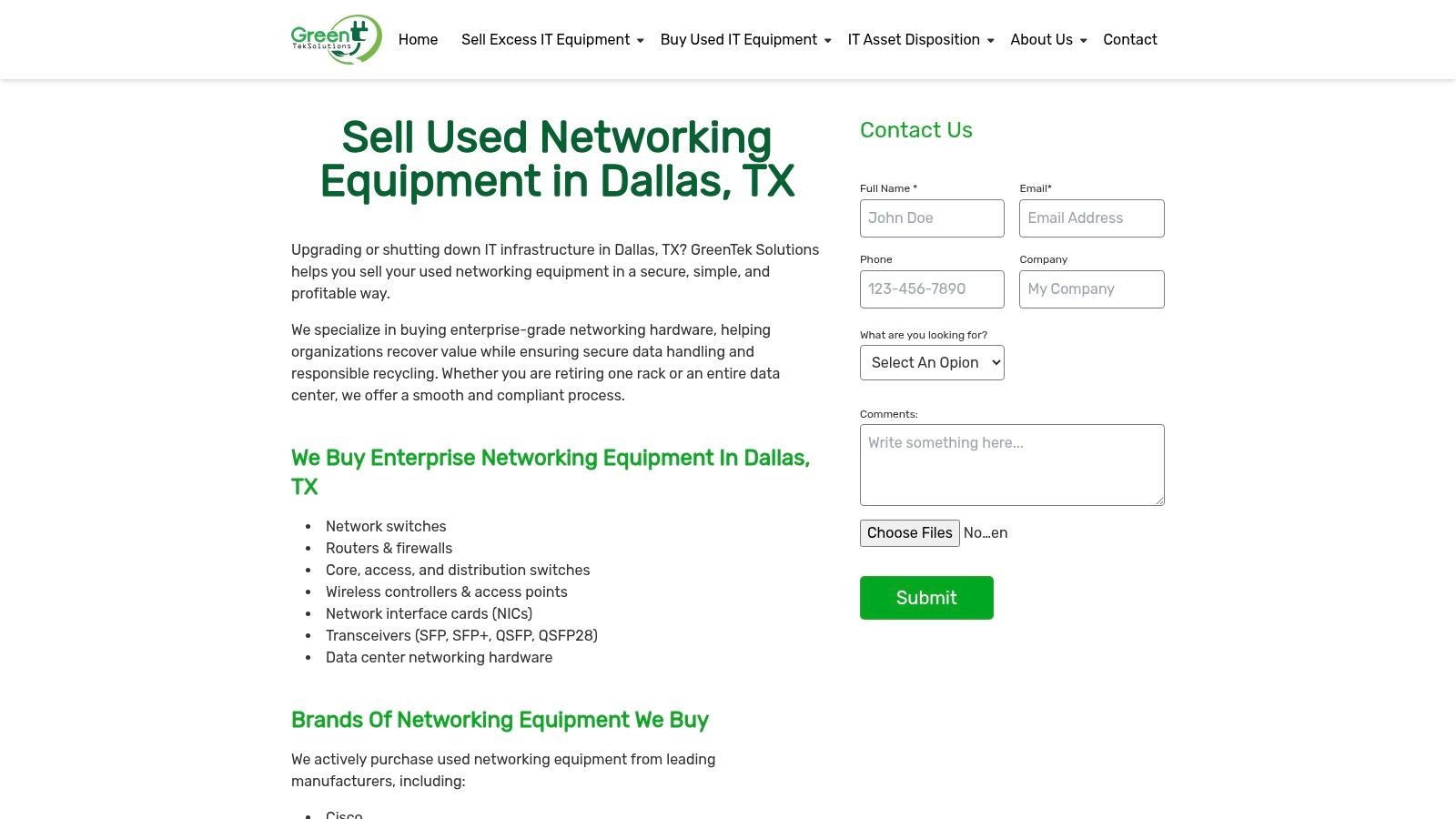
A common Dallas liquidation problem looks like this. The switches still have resale value, the phone system was only partly retired, and a back room holds older handsets, access gear, and spares that no one wants to count twice. GreenTek Solutions Dallas is worth screening for that kind of mixed lot because they present more than one path to disposition instead of forcing everything into a single buyout model.
Their positioning is strongest for businesses clearing out used networking equipment and business phone systems after a migration, consolidation, or site shutdown. If your team is comparing local options and wants a broader telecommunications company near me for equipment recovery planning, GreenTek belongs on the shortlist.
What they buy
GreenTek makes the most sense for standard business telecom and network inventory. That includes VoIP phones, networking gear, related accessories, and common enterprise hardware that shows up in branch offices, MDF closets, and small data rooms. They are less about niche carrier infrastructure and more about the equipment categories many businesses need to clear fast.
That distinction matters. A buyer can look good on paper and still lose interest once a lot includes lower-value handsets, incomplete units, or older gear mixed in with the better hardware. GreenTek appears better suited than many narrow buyers for sorting those blended inventories.
Valuation
The practical point here is deal structure. GreenTek offers both direct purchase and consignment, which gives sellers a real choice instead of a single number with no explanation.
Direct purchase works better when finance wants a clean closeout and predictable timing. Consignment can produce a better return on newer or cleaner equipment, but it also adds delay and more dependence on downstream resale demand. Ask them to break out which items they would buy outright, which they would place into consignment, and which pieces have only scrap or parts value.
I would also press on how they price mixed-condition lots. That answer tells you whether the offer is being built from actual resale assumptions or from a rough bulk estimate.
Data security
Telecom assets are easy to underestimate from a security standpoint. Phones, UC appliances, firewalls, call managers, and network devices can all hold configuration data, credentials, call records, or storage media. GreenTek's broader ITAD orientation is useful here if your lot includes both ordinary telecom hardware and data-bearing devices.
Do not settle for a vague statement that data is handled properly. Ask what gets physically separated, what gets wiped, what gets destroyed, and what documentation you receive at closeout. The right buyer should be able to explain that process clearly.
Logistics
GreenTek is also a practical fit when your team lacks the time to prep every pallet internally. For office closures or refresh projects, pickup support matters almost as much as price because labor costs inside your business can erase a slightly better offer.
Use a consistent screen before you choose them:
- What They Buy: Best for mixed business telecom and networking gear, especially VoIP hardware and common enterprise equipment.
- Valuation: Stronger fit if you want to compare buyout versus consignment instead of accepting one blended offer.
- Data Security: Better candidate when the lot includes phones, appliances, or network gear that may store configs or other data.
- Logistics: Useful for sellers who need pickup and basic project handling, not just a shipping label.
GreenTek is a solid option for Dallas businesses that want flexibility in how assets are sold and tighter alignment between asset type, security handling, and payout model.
4. SunCoast Communications
SunCoast Communications stands out because it feels more like a telecom recovery and remarketing operation than a generic IT buyer. That matters if your inventory includes optical gear, transport equipment, outside plant material, radio equipment, or older carrier-grade platforms alongside mainstream routers and switches.
This is one of the few names on the list that makes sense even when the equipment doesn't fit the standard office-IT mold.
What they buy and where they're strongest
SunCoast covers a broad OEM range and supports buyback and consignment programs. In practice, that makes them worth a look for telecom-heavy inventories where another Dallas buyer might cherry-pick only the Cisco switches and leave the rest.
Repair capability is the key detail. A buyer that can test and repair certain telecom platforms can sometimes recover value from hardware that a pure reseller would downgrade or reject. If your business is retiring specialized network or carrier-adjacent equipment, that capability can change the economics.
Logistics and reporting
Their consignment model won't be right for every seller. If your finance team needs immediate cash and clean closeout, a slower reporting and settlement cycle can feel frustrating.
Still, there are situations where SunCoast is the better fit:
- Broad telecom platform coverage: Useful for wireline, optical, wireless, and transport equipment.
- Consignment visibility: Monthly reporting can help if you want better transparency on remarketing.
- Freight and warehousing support: Helpful when equipment leaves multiple sites or needs staged movement.
- Partnerships for certified recycling and destruction: Important for the non-resellable portion of the lot.
If your team is comparing Dallas vendors and trying to decide whether a telecom specialist or a general ITAD provider is the better route, that choice gets real right here. Sellers looking for nearby support often start broad, then realize they need a firm closer to a true telecommunications company near me profile than a simple recycler.
SunCoast is the buyer I'd put on the list when the inventory is telecom-first and not just enterprise IT with a few phones mixed in.
5. GEM Lifecycle
GEM Lifecycle is one of the more balanced options for companies that need both value recovery and formal process. They're especially relevant when the lot includes reusable telecom devices, lower-value peripherals, and non-resellable equipment that still needs compliant downstream handling.
I'd put GEM in the “good for messy real-world inventories” category. Not glamorous, but useful.
Security first, then remarketing
GEM's telecom vertical focus matters because telecom disposal projects rarely contain just one asset type. You'll often see handsets, conferencing gear, network devices, CPE, accessories, and damaged equipment all mixed together.
Their data erasure language is specific, which is what you want from an ITAD partner. If your team is evaluating destruction methods and trying to understand when wiping is enough versus when physical destruction makes more sense, a quick background read on what a degausser does helps frame the conversation before you approve the disposition method.
Field note: Don't assume telecom gear is non-data-bearing just because it doesn't have a hard drive. Phones, appliances, and network equipment can still store credentials, call data, and configs.
Logistics and practical fit
GEM also benefits from Dallas processing, which usually helps with quoting, pickups, and chain of custody. For business sellers, that local operational footprint often matters more than broad national branding.
What I like and where I'd be cautious:
- Good for mixed lots: Telecom devices, network hardware, and recycle-only material can go through one workflow.
- Clear lifecycle coverage: Audit, erasure, remarketing, harvesting, and recycling can stay under one umbrella.
- Potentially stronger for larger projects: Smaller lots may not move as quickly.
- Cash offers versus consignment reality: Immediate buyouts are convenient, but they may not capture the highest possible resale return.
GEM Lifecycle is a practical fit when your priority is a controlled, documented process without splitting reusable and non-reusable assets across multiple providers.
6. HOBI International

HOBI International is the enterprise-program option on this list. If you've got recurring refresh cycles, multiple locations, mobile devices mixed with networking hardware, or strict reporting requirements, HOBI is built for that sort of structure.
This isn't the buyer I'd call first for a small office with a few shelves of old phones. It's better when the project needs repeatable process and corporate-grade documentation.
What they buy and how the program works
HOBI's Dallas processing presence supports regional pickups and larger North American programs. That matters if your Dallas telecom equipment liquidation is part of a wider refresh rather than a one-site cleanup.
The broader Dallas environment supports this kind of enterprise turnover. Mordor Intelligence estimates the Dallas data center market at 2.09 GW in 2026, up from 2.01 GW in 2025, with a projected 2.55 GW by 2031, and notes that “Massive” facilities held 42.90% share in 2025 while Tier 3 sites held 53.60% share in the same year according to the Dallas data center market report from Mordor Intelligence. For sellers, that means a steady local flow of enterprise-grade switching, routing, servers, load balancers, and adjacent telecom gear keeps secondary channels active.
Security and operational trade-offs
HOBI's value is less about speed and more about discipline. Chain of custody, certified processes, and ESG-style reporting matter if your legal, procurement, or audit teams need a stronger paper trail.
A few practical notes:
- Strong compliance posture: Useful when internal governance is as important as resale.
- Good for recurring programs: Better fit for refresh cycles than one-off cleanouts.
- Heavier onboarding: Small businesses may find the process more formal than necessary.
- Condition-based pricing: Don't expect instant bid-board simplicity.
If your organization already thinks in terms of policy, manifests, destruction certificates, and formal IT asset disposal controls, HOBI will feel familiar.
7. The IT Recycling Company
A common Dallas project looks like this: one office is closing, two branch sites are being consolidated, and the telecom closet contains a mix of usable switches, phones, UPS units, servers, and drives that still need documented destruction. That is the kind of job The IT Recycling Company is built for. Their appeal is practical local execution, especially when the asset mix is broader than pure telecom and the timeline is tight.
This buyer makes the most sense if you want a regional partner that can show up, sort the lot, remove equipment, and separate resale from scrap without turning a mid-sized project into a months-long enterprise program.
How to evaluate their fit
Using the same framework as the rest of this list helps clarify where they belong.
What They Buy: Telecom-adjacent inventory is the key point here. If your lot includes network gear, office IT, servers, storage, peripherals, and drives headed for destruction, they are easier to evaluate than a buyer focused only on high-value core telecom systems.
Valuation: Expect the best outcome on mixed lots where convenience and local handling matter almost as much as top-dollar recovery. Buyers in this category can be a strong fit for branch closures and office decommissions, but you should still ask how they grade equipment condition, whether low-value items are bundled into the offer, and which assets are remarketed.
Data Security: On-site hard drive shredding and chain-of-custody support are useful if the project includes servers, firewalls, call recording systems, or storage appliances alongside telecom hardware. Security should be confirmed at the process level, not assumed from the service menu.
Logistics: Their local footprint is important. Scheduling, on-site labor, pickup coordination, and cleanup often decide whether a project stays on track. For Dallas Fort Worth sellers, a buyer that can handle the physical work well is often more valuable than one with a slightly better headline price and slower execution.
As noted earlier, telecom equipment still moves through an active secondary market. That matters because even a mixed retirement project should be screened for resale value before anything is sent straight to commodity recycling.
Questions worth asking before release
I would press for specifics in four areas:
- Asset scope: Ask which telecom categories they actively resell versus which categories usually go to recycling.
- Valuation method: Confirm whether pricing is based on an itemized audit, bulk lot estimate, or post-sort reconciliation.
- Security paperwork: Request sample chain-of-custody documents and destruction reporting before pickup day.
- Project labor: Clarify rack removal, cable pull, palletizing, and site cleanup in writing.
The trade-off is straightforward. The IT Recycling Company is often a better fit for businesses that need responsive local service on mixed equipment lots than for sellers trying to maximize return on a large block of premium carrier or data center telecom gear. If your priority is a smooth DFW pickup, clear handling of resale versus destruction, and less operational drag on your team, they belong on the shortlist.
Top 7 Dallas Telecom Equipment Buyers Comparison
| Provider | 🔄 Implementation complexity (process/complexity) | ⚡ Speed / Efficiency | 📊 Expected outcomes (results/impact) | 💡 Ideal use cases (insights/tips) | ⭐ Key advantages (effectiveness/quality) |
|---|---|---|---|---|---|
| Network Republic | Moderate, quote‑based valuations, local audits and lifecycle coordination | Fast local coordination and pickups | Good resale value for legacy enterprise networking and servers | Large Cisco/Juniper/Arista lots, server/storage refreshes | Local HQ, lifecycle services and legacy inventory channels |
| Teladvance (Addison/Dallas) | Moderate–high, full project ITAD with consignment vs buy workflows | White‑glove logistics; timing varies by model | Certified data destruction, trade‑in offsets for purchases | Large decommissions, rack removals, enterprise rollouts | Full project capability and established Dallas enterprise refs |
| GreenTek Solutions – Dallas | Low–moderate, R2‑certified workflows with flexible purchase options | Quick quoting and local pickup | Cash buyouts or resale‑split returns (variable) | Dallas sellers who need fast pickup or consignment flexibility | R2 certification and flexible buyout/consignment models |
| SunCoast Communications (Dallas) | Moderate, consignment programs, freight/warehouse coordination, repairs | Moderate, repairs and consignment can extend timelines | Improved resale yield via repair; broad OEM coverage | Legacy telecom platforms and items needing repair to maximize value | Repair capability and wide OEM support |
| GEM Lifecycle | Moderate, end‑to‑end lifecycle (audit, erasure, remarket, recycle) | Local processing but enterprise projects may queue | Certified erasure, remarketing and recycling; component harvesting | Mixed lots (handsets, CPE, network gear) needing full lifecycle services | One‑stop lifecycle with NIST/DoD erasure and recycling |
| HOBI International | High, process‑driven onboarding and compliance workflows | Efficient at scale; heavier for very small lots | Scalable enterprise programs with chain‑of‑custody & ESG reporting | Recurring refresh cycles, multi‑site rollups, mobility programs | Deep compliance certifications and enterprise scalability |
| The IT Recycling Company (Dallas–Fort Worth) | Low–moderate, local DFW scheduling and project support | Fast local pickups and on‑site services | Local buyback, secure destruction, rack removal support | Metro‑DFW businesses with small to medium lots | Local focus, on‑site shredding and compliance documentation |
Final Thoughts
A Dallas office closes a telecom room on Friday and wants it empty by Monday. That is where weak buyer selection gets expensive. The wrong partner strips out the easy resale units, leaves low-demand gear on site, and turns a clean disposition project into a second round of approvals, pickups, and security questions.
The best telecom equipment buyers Dallas serve different needs. Some pay strongest on current enterprise networking gear. Others handle mixed telecom inventories better, especially when the lot includes phones, CPE, legacy hardware, or recycle-only material. Some are buyers first. Some are ITAD operators that buy equipment as part of a controlled retirement process.
Use the same four-part screen for every vendor on this list: What They Buy, Valuation, Data Security, and Logistics. That keeps the decision grounded in asset mix, not sales language.
A practical shortlist looks like this:
- Network Republic fits organizations with resale-heavy network gear where pricing depends on strong secondary market demand and clean testing.
- Teladvance fits projects that need deinstallation, documented data destruction, and coordinated pickups across a larger shutdown or refresh.
- GreenTek Solutions fits mixed business telecom lots when the seller wants to compare an upfront payout against consignment-based returns.
- SunCoast Communications fits telecom-specific inventories, including broader carrier and optical equipment that many general IT buyers price cautiously.
- GEM Lifecycle fits companies that want one provider to sort remarketable assets, low-value gear, and recycling streams under one documented process.
- HOBI International fits compliance-driven enterprise programs with recurring refreshes, formal reporting, and tighter chain-of-custody expectations.
- The IT Recycling Company fits DFW businesses that want local scheduling, straightforward pickup support, and on-site service options.
Before signing anything, ask each buyer four direct questions. What assets are included in the offer? How is value assigned across tested, untested, damaged, and obsolete units? What records prove data destruction and custody control? Who owns deinstall, packing, freight, and final sweep? Clear answers usually signal a buyer that has done this work at scale.
Good liquidation is not just about the highest number on the first quote. It is about net recovery, documented security, and a pickup plan that matches the equipment you have.
If your team needs a practical B2B partner for telecom gear, datacenter hardware, and secure electronics disposition, Montclair Crew Recycling offers IT asset removal, data destruction, resale support, and compliant recycling services for organizations that want a controlled, documented offboarding process.
