
For any Georgia business, getting rid of old servers isn't just a chore—it’s a massive security responsibility. Handling it the right way protects your sensitive data, keeps you compliant, and helps you avoid some serious financial and reputational hits, especially with our state's tech and data center scene exploding.
Why Secure Server Recycling Is Mission-Critical in Georgia
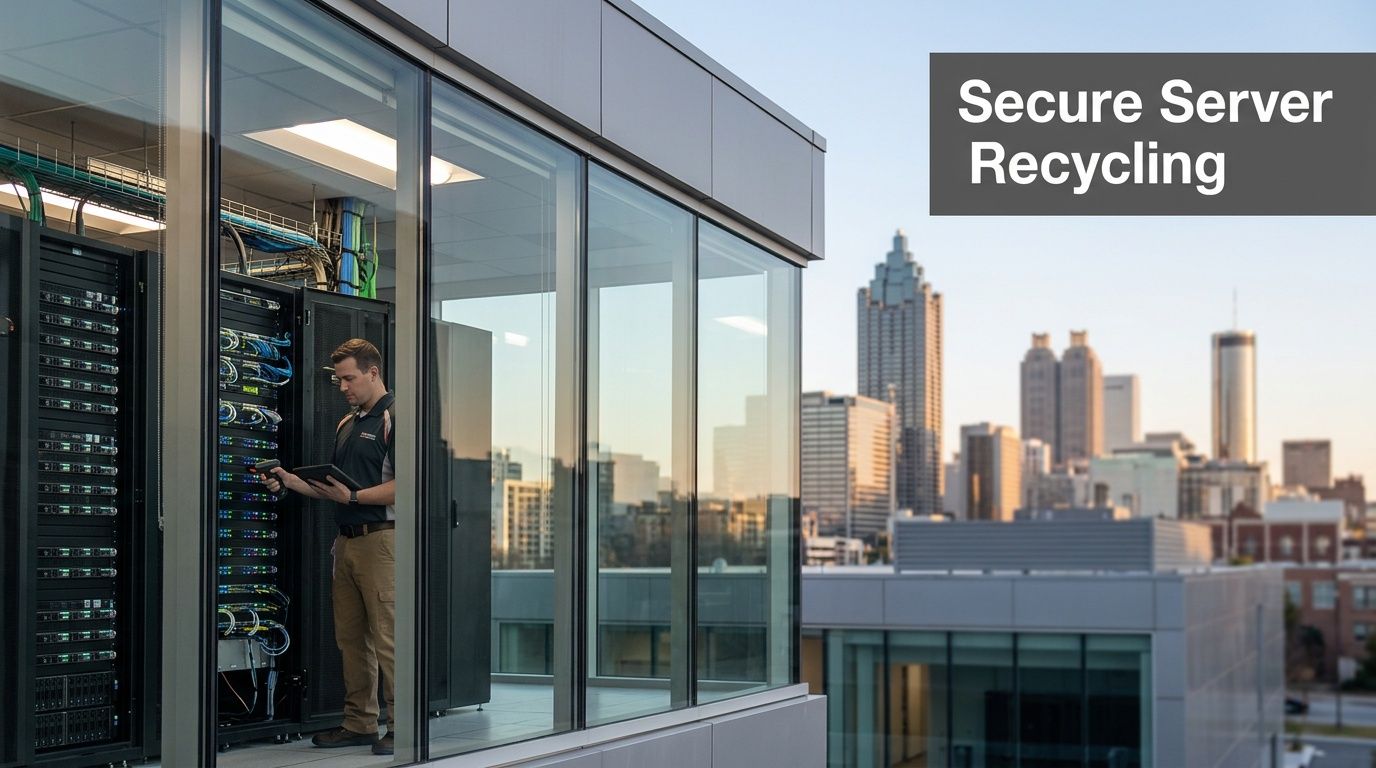
The Metro Atlanta area, and Georgia as a whole, is a powerhouse of tech growth. All this expansion means a constant churn of IT hardware upgrades. Data centers, corporate offices, and hospitals are all left with racks of retired servers they need to deal with. And it’s not as simple as just making room for the new stuff.
Every single one of those old servers is a ticking time bomb. Think about the years of sensitive information packed onto those drives:
- Customer Data: Names, addresses, credit card numbers, and purchase histories.
- Employee Records: Social Security numbers, payroll details, and private HR files.
- Company Secrets: Your trade secrets, business plans, and intellectual property.
One improperly wiped server getting into the wrong hands can trigger a full-blown data breach. The fallout isn't just a bad PR day; we're talking about crippling fines from regulations like HIPAA and FACTA and trust with your customers that you may never get back.
The Stakes for Georgia Businesses
The risk here in Georgia is off the charts. Our state recently snagged the second-largest investments in data centers in the entire country. That incredible growth means hardware refresh cycles are faster than ever.
Data centers all over Metro Atlanta—from Smyrna and Marietta to Norcross—are cycling through thousands of servers every single year.
That pace puts a ton of pressure on IT departments. One simple mistake, like letting an uncertified junk hauler take your servers, can leave your entire organization wide open. All it takes is one hard drive slipping through the cracks to cost you millions.
The real danger isn't just the data still on the drives. It’s the absence of a secure, documented process. Without a certified chain of custody, you have zero proof that your data was properly destroyed, leaving your company completely exposed if something goes wrong.
Beyond Data Security: Environmental Responsibility
On top of the huge security risks, there's the environmental angle. Servers are full of hazardous materials like lead and mercury. You can't just toss them in a dumpster. Not only is it incredibly irresponsible, but you can also face environmental penalties. You can learn more about the environmental impact of electronic waste and why proper recycling is so important.
This is where professional secure server recycling services in Georgia come in. They tackle both problems at once. You get a documented, compliant process that guarantees your data is destroyed, and you get proof that every component is recycled according to strict environmental laws.
For any organization in Georgia managing IT hardware, working with a certified IT Asset Disposition (ITAD) expert isn't just a good idea anymore—it's a core part of managing risk in 2026.
Your Server Decommissioning Project Blueprint
A successful server recycling project kicks off long before a single piece of hardware heads out the door. You need to think of this early stage as creating the blueprint for the entire operation. Getting the prep work right isn’t just about making things run smoothly—it's about preventing huge security mistakes and operational headaches later on. It all starts with a rock-solid inventory.
This is way more than a simple headcount of your machines. Your inventory needs to be a detailed list of every single asset you plan on decommissioning. For each server, you'll want to log its model, serial number, where it physically lives in your data center, and what it was used for. Most importantly, you have to classify the sensitivity of the data it holds.
A server that handled your public website has a totally different risk profile than one that stored sensitive HR files or customer payment info. That data classification single-handedly dictates your entire data destruction and logistics plan.
Assembling Your Decommissioning A-Team
Once your inventory is dialed in, it's time to get the right people in the room. A server decommissioning project touches a lot of different departments, and getting everyone on board early is the only way to avoid hitting roadblocks.
Your core team should have people from:
- IT Operations: These are your folks on the ground. They know the hardware, its dependencies, and the technical steps for a clean shutdown.
- Finance: You'll need them in the loop on potential costs, asset depreciation, and any chance of recovering value through resale.
- Legal & Compliance: This team is your safety net. They make sure the project checks all the boxes for regulations like HIPAA in healthcare or GLBA in finance.
Just imagine a healthcare provider in Sandy Springs planning a big server upgrade. By bringing their compliance officer in from day one, they can build HIPAA’s tough data-handling rules right into the project plan. This kind of proactive approach makes sure every step, from wiping data to transport, is fully compliant. You can use our guide as a launchpad for your own process; check out our complete server decommissioning checklist for more ideas.
Scoping the Job and Setting a Realistic Timeline
With your inventory and team ready, you can finally define the project's true scope. Are you just taking out a single rack of servers, or is this a full data hall refresh with hundreds of units? The scale changes everything—logistics, timelines, and the kind of vendor you'll need.
When you're planning your server decommissioning, it helps to think about the bigger picture of asset management. It's a lot like understanding professional office decommissioning services; the core principles of an organized, secure, and efficient removal process apply to more than just your IT gear.
A realistic timeline is your best defense against disrupting your business. Work backward from the day your new hardware goes live, and make sure you build in enough time for:
- Final Data Backups: Your absolute last chance to recover anything before the data is gone for good.
- System Shutdowns: A planned, phased power-down sequence to avoid chaos.
- On-Site Logistics: The physical work of de-racking, palletizing, and prepping assets for pickup.
- Vendor Scheduling: Coordinating the actual pickup with your chosen ITAD partner.
Secure server recycling in Georgia closes a massive data security gap for local companies. Think about it—industry data shows a shocking 91% of global data breaches come from lost or stolen devices. Here in Georgia's booming data center scene, certified ITAD providers fight this by hitting 100% data destruction certification rates using NIST 800-88 and DoD 5220.22-M standards. This is exactly why your initial planning is so critical. You can learn more about how certified ITAD services protect Georgia businesses at ewasteatl.com. This careful blueprinting is the foundation of a secure and compliant project.
Mastering Data Destruction and Chain of Custody
This is where things get serious. A server recycling project is only as good as its data destruction and chain of custody. If you can't prove that every bit of sensitive data was completely wiped, your organization is still on the hook.
Think about it this way: experts in professional data recovery services can pull information from drives that are damaged or corrupted. Now, imagine what a motivated person could do with a perfectly intact, retired server drive. This is exactly why we, as professional server recyclers in Georgia, leave absolutely nothing to chance.
For any business in Metro Atlanta, especially those in healthcare, finance, or government contracting, this isn't just a good idea—it's a non-negotiable legal and ethical requirement.
Choosing Your Data Destruction Method
You've got two main routes for destroying data on your old server hard drives: software wiping or physical destruction. The right choice really comes down to your industry's compliance rules, your own security policies, and whether you want to try and get some money back from the old drives.
Below is a quick comparison to help you decide which path makes the most sense for your situation.
| Method | Description | Best For | Compliance Level | Key Benefit |
|---|---|---|---|---|
| Software Wiping | Uses specialized software to overwrite the entire drive multiple times with random data, making the original data unrecoverable. | Drives that are still functional and have potential resale value. | Meets DoD 5220.22-M and NIST 800-88 standards. | Value Recovery |
| Physical Destruction | Renders the drive completely inoperable through shredding, degaussing, or crushing. | Highest-security needs, end-of-life drives, or strict compliance mandates (HIPAA, FACTA). | The highest level of security, as the media is physically destroyed. | Absolute Security |
| On-Site Services | A mobile shred truck comes to your location to destroy drives while you watch. | Organizations that cannot let sensitive data leave their premises intact. | Ultimate verification and control. | Peace of Mind |
| Off-Site Services | Drives are securely transported to a certified facility for destruction. | Cost-sensitive projects where a documented chain of custody provides sufficient security. | Strong, but requires trust in the vendor's process. | Cost-Effectiveness |
Ultimately, whether you choose a DoD 5220.22-M three-pass wipe or decide to turn your drives into a pile of metal fragments, the goal is the same: making sure that data is gone for good.
The Big Question: On-Site vs. Off-Site Destruction?
After you've figured out how to destroy the data, you need to decide where it happens. This choice boils down to your company's appetite for risk versus your budget.
On-site destruction is the gold standard for security. A mobile shredding truck comes right to your office in Atlanta, Marietta, or anywhere across Georgia. You can literally stand there and watch your hard drives get turned into confetti before they ever leave your control.
This is the go-to option for hospitals dealing with HIPAA, law firms, and financial institutions. It might cost a bit more, but the absolute certainty it provides is priceless for high-stakes data.
On the other hand, off-site destruction is where your servers are securely packed and transported to a certified facility for processing. This is a very common and secure method, but it puts all the emphasis on the chain of custody. You can learn more about the specifics in our Georgia secure data destruction services guide that digs deeper into these topics.
Your Ironclad Chain of Custody
Chain of custody is simply the unbroken, documented paper trail that follows your equipment from the second it leaves your building. It’s your proof that you did everything right. Any reputable vendor providing secure server recycling in Georgia will build this with a few key components.
This flowchart shows the critical first steps—like inventory and project scoping—that have to happen before your assets even move.
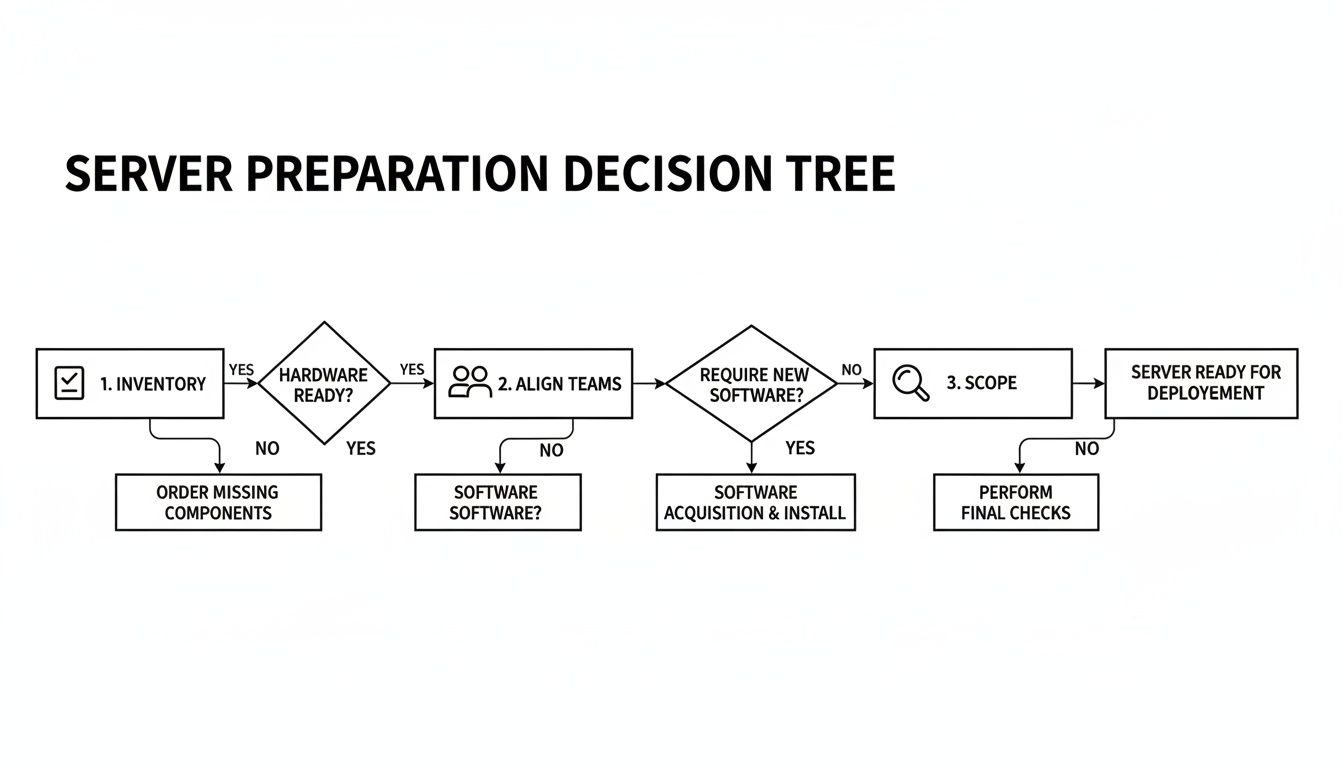
Getting this part right ensures every single server and drive is accounted for from the very beginning.
A rock-solid chain of custody always includes:
- Serialized Asset Lists: Every server and hard drive is tagged and tracked by its unique serial number. No exceptions.
- Secure, GPS-Tracked Trucks: Your equipment travels in locked, sealed vehicles with real-time GPS monitoring from start to finish.
- Vetted and Background-Checked Staff: The drivers and technicians handling your assets are thoroughly vetted.
- Secure Facility: The recycling plant must have controlled access, 24/7 surveillance, and tight security protocols.
The whole process wraps up when you receive a Certificate of Data Destruction. This is the legal document that confirms which drives (by serial number) were destroyed, how they were destroyed, and when. For any compliance audit, this certificate is your definitive proof.
Getting Your Servers Out the Door and Staying Compliant
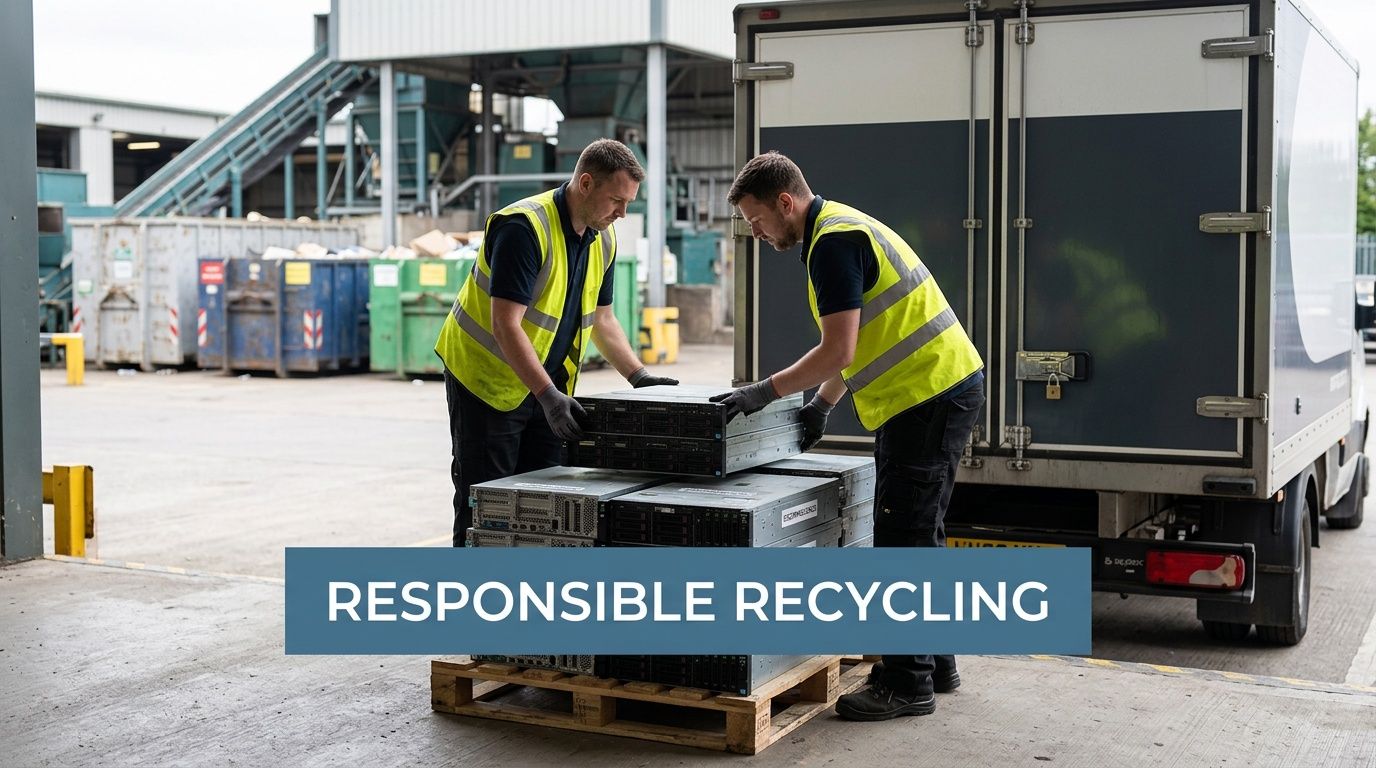
So, your hard drives have been wiped clean and you have the certificates to prove it. What's next? You’re now looking at the physical work of getting dozens, maybe even hundreds, of heavy, awkward servers out of your data center. This is the logistics side of IT asset disposition (ITAD), and frankly, it’s where a professional partner really earns their keep.
Think about it. Pulling this off in-house means tying up your IT staff for days. They’d be stuck unplugging, de-racking, and hauling gear instead of deploying the new systems your business is waiting for. A full-service recycling partner handles all of that heavy lifting—literally.
Whether your data center is in Kennesaw, your office is in Roswell, or you're right in the heart of downtown Atlanta, the process should be seamless. A good crew comes in, dismantles the racks, palletizes the equipment, and gets it on a truck with minimal disruption. Your team stays focused on their actual jobs.
Staying on the Right Side of Environmental Rules in Georgia
Once those servers are on the truck, where are they actually going? This is where environmental compliance becomes a huge deal. Georgia’s e-waste laws for businesses aren't the strictest in the nation, but that’s no excuse for carelessness. The last thing you want is your company's name attached to a story about branded equipment being found in a landfill. The risk to your reputation is massive.
This is exactly why the best ITAD companies in Georgia don't just aim to meet local rules; they hold themselves to a much higher standard with national and global certifications. The two big ones you absolutely need to look for are R2v3 and ISO 14001.
Choosing a vendor with these certifications is your best insurance policy. It guarantees your old hardware will be processed responsibly, with a clear chain of custody, ensuring that absolutely zero e-waste from your project ends up where it shouldn't.
These aren't just logos they stick on a website. They represent a serious, audited commitment to doing things the right way.
What Do These Certifications Actually Mean for You?
When your partner is certified, you’re not just taking their word for it. These standards demand a documented, transparent process for every single component that leaves your facility.
A vendor with the R2v3 (Responsible Recycling) certification promises:
- A Zero-Landfill Policy. Every single piece of your old servers will be reused, refurbished, or broken down into raw commodities for recycling. Nothing gets dumped.
- Safe Handling of Hazardous Materials. Servers have lead, mercury, and other toxic materials. R2v3 dictates exactly how these must be managed to protect people and the environment.
- Built-in Data Security. The R2v3 standard also has strict requirements for data destruction, adding another layer of security to the process.
Likewise, holding an ISO 14001 certification shows a company has a proven environmental management system in place. It means they’re constantly working to reduce their own environmental impact across all their operations. For any Georgia business, working with a certified recycler is a must. You can learn more about how these processes work by exploring data center equipment recycling in Georgia and seeing how it protects your organization.
At the end of the day, logistics and compliance are about much more than just getting old junk out of your building. It’s about managing risk, protecting your company's reputation, and making sure your project is buttoned up from start to finish. By finding the right partner for secure server recycling services in Georgia, you hand off a major headache and get the peace of mind that it’s all being handled correctly.
Maximizing Value Recovery and Choosing Your Partner
Server decommissioning usually feels like just another hit to your IT budget. But it doesn't have to be just another line-item expense. That retired hardware isn't scrap metal—it's a pile of assets that could put real money back into your business.
This is the side of IT Asset Disposition (ITAD) that turns a project from a cost center into a cost-neutral or even profitable one.
The key is tapping into the secondary market. Functional servers, especially from big names like Dell or HP that are only a few generations old, absolutely have a second life. The real money, though, is often hiding inside the case.
Components like RAM, CPUs, and high-capacity hard drives (after being securely wiped, of course) are always in demand. A professional ITAD partner has the network to test, refurbish, and resell this gear. They turn your depreciated assets into a check.
Understanding Your Asset Value
The resale value of your old servers isn't a mystery. It all comes down to a few key factors that your ITAD partner will look at during their initial audit.
- Age and Generation: Any server under five years old is where you'll typically find the most value.
- Brand and Model: Enterprise-level equipment from major manufacturers simply has a stronger, more predictable resale market.
- Condition: It's simple—servers that are functional and look clean will always bring in more than damaged or incomplete units.
- Component Specs: The exact specs of the CPUs, RAM, and storage are what truly drive the final price.
A good partner will give you a completely transparent audit report. It will break down what they can resell versus what must be recycled. This is what leads to profit-sharing agreements, where you get a cut of the revenue. This model is great because it means their goals are your goals—the more money they recover for you, the more they make.
When you're talking to a potential partner, make them walk you through their profit-sharing model step by step. A trustworthy company will be an open book about their process, their fees, and how they calculate your final payout. If you get vague answers, that's a huge red flag.
The Ultimate Vendor Selection Checklist
Picking the right partner is the most critical decision you'll make. You aren't just hiring a moving company; you're trusting them with your sensitive data, your brand's reputation, and your legal compliance. The wrong choice is a simple hauler with zero security. The right choice is a true ITAD professional.
You have to ask the right questions to tell them apart. Use this checklist when you're vetting any potential secure server recycling services in Georgia. For an even deeper look, you can also check out our complete guide on IT asset disposition services in Georgia for more insights.
Here's a simple checklist to help you evaluate ITAD vendors here in Georgia.
ITAD Vendor Selection Checklist for Georgia Businesses
| Evaluation Criteria | What to Look For | Why It Matters |
|---|---|---|
| Industry Certifications | R2v3 and NAID AAA are non-negotiable. Ask for their actual certificate numbers to verify them. | These prove they follow the highest standards for environmental recycling and data destruction, protecting you from massive liability. |
| Data Destruction Methods | They must offer both software wiping (like DoD 5220.22-M) and on-site physical destruction (shredding). | This gives you the flexibility to meet any internal security policy or compliance rule, whether it's HIPAA or financial regulations. |
| Chain of Custody | Look for serialized asset tracking, GPS-monitored trucks, and secure, camera-monitored facilities. | This gives you a complete, unbroken audit trail for every single asset, proving nothing was lost or stolen from pickup to final destruction. |
| Insurance Coverage | Ask to see their Certificate of Insurance. You need to see General Liability, Professional Liability (E&O), and a specific Data Breach/Cyber policy. | This is your financial safety net. If they make a mistake that leads to a data breach, their insurance protects your company from the catastrophic costs. |
| Reporting and Documentation | They must provide a Certificate of Data Destruction and a full reconciliation report that lists every asset by its serial number. | These documents are your legal proof of due diligence. Without them, you have no way to defend your company in an audit or investigation. |
Choosing the right partner is about much more than just the price tag. It's about managing risk. A cheap, uncertified provider might look like a good deal upfront, but the potential cost of just one data breach or compliance fine makes it a gamble you can't afford to take. A real professional partner provides the security and documentation you need to have complete peace of mind.
Common Questions About Server Recycling in Georgia
We get a lot of the same questions from businesses across Metro Atlanta about the server recycling process. When you're dealing with logistics, security, and costs, it's easy to get bogged down in the details. Here are some straightforward answers to the questions we hear most often.
What Happens to Our Servers After Pickup in Atlanta?
Once our insured team loads up your servers, they are securely transported to our controlled-access facility. The first thing we do is a full audit, logging every single asset by its serial number. This creates an unbroken chain of custody, so you know exactly where your equipment is from the moment it leaves your door.
Next up is data destruction. Depending on what you need, hard drives either get a complimentary DoD 5220.22-M standard data wipe or are physically shredded into confetti. You tell us which method fits your security and compliance rules.
After the data is confirmed to be destroyed, we test any functional gear. Working equipment is graded and prepped for resale to get you the most money back. Anything that can't be reused is carefully de-manufactured, and the raw materials are sent to our certified downstream partners for recycling. We guarantee a zero-landfill outcome for everything we handle.
Is On-Site Hard Drive Shredding Available in Marietta or Smyrna?
Yes, absolutely. We offer on-site mobile hard drive shredding throughout the entire Metro Atlanta area, including business centers in Marietta, Smyrna, Alpharetta, and Roswell. This service is the best choice for any company that needs to ensure sensitive data never leaves the building.
Our mobile shredding truck pulls right up to your office or data center. You can watch your hard drives get destroyed with your own eyes, giving you total peace of mind and the strongest possible chain of custody.
This is the go-to option for healthcare organizations needing to meet HIPAA requirements, as well as financial firms and law offices. As soon as the shredding is done, we hand you a Certificate of Destruction on the spot.
How Much Does Server Recycling in Georgia Typically Cost?
This is a big one, and the answer is often surprising: it can be free or even make you money. The final cost—or payment to you—all comes down to the logistics involved and the resale value of your old servers.
If you have a good amount of newer, remarketable servers and parts, our profit-sharing model means you'll likely get a check from us. We handle selling the assets and split the revenue with you.
For projects with older equipment that has little to no resale value, a small fee might be needed to cover secure transport, labor, and responsible recycling. We're always transparent about this and give you a clear quote upfront so there are no hidden fees. You can dig deeper into what happens to recycled electronics to see why this process is so important.
Do We Need to De-Rack the Servers Ourselves?
Nope. Our service is designed to be completely turnkey for you and your team. We provide full, end-to-end secure server recycling services in Georgia, and that includes having our pros come on-site to handle de-installation and removal.
Our trained and insured technicians take care of all the heavy lifting. This means we will:
- Safely power down and unplug everything.
- Carefully pull all servers, switches, and other hardware out of your racks.
- Securely palletize and wrap all assets for safe transport.
- Load everything onto our secure, GPS-tracked trucks.
We take this white-glove approach so your IT staff isn't pulled away from their real jobs. They can focus on getting your new systems online, not breaking down the old ones.
At Montclair Crew Recycling, we make IT asset disposition in Georgia secure, straightforward, and responsible. We have the expertise and provide all the documentation your business needs to protect its data while meeting environmental goals.
Ready to get rid of your old servers the right way? Contact Montclair Crew today for a fast, transparent quote!
