
That growing pile of old IT equipment in the back room? It’s not just a storage headache—it’s a ticking time bomb of risk. Handing it off to a professional electronic waste disposal company isn't just about clearing out space. It's a strategic move to lock down your data, stay on the right side of the law, and uphold your company's reputation.
Why Your Choice of E-Waste Partner Matters
For any business in Metro Atlanta, whether you're a small firm in Marietta or a sprawling data center in Alpharetta, dealing with retired IT assets is a non-negotiable part of operations. Those old computers, servers, and phones gathering dust are more than clutter; they're liabilities.
One wrong move in disposal can trigger steep fines for environmental non-compliance, create a PR nightmare that damages your brand, or worse, lead to a catastrophic data breach.
This is why choosing the right partner is about so much more than just having someone haul away old gear. It's a core part of your risk management strategy. A certified, reputable e-waste disposal company is your shield, providing a secure, documented, and compliant process for every single piece of equipment you hand over.
The Scale of the E-Waste Problem
The sheer volume of electronic waste is staggering and growing fast. In 2022 alone, the world generated an incredible 62 million metric tonnes of e-waste. That's an 82% jump from 2010.
It’s not slowing down, either. Projections show that number swelling to 82 million tonnes by 2030, while documented recycling rates are actually expected to fall. You can read the full research on this global e-waste surge to really grasp the scale of the problem.
This explosive growth puts a huge responsibility on businesses to ensure their retired assets are managed ethically. The right partner helps you become part of the solution, not the problem.
From Cost Center to Strategic Asset
If you're looking at e-waste disposal as just another line-item expense, you're missing the bigger picture. A smart approach turns this necessity into a source of value for your business.
The partner you choose directly impacts:
- Data Security: Absolute certainty that 100% of your sensitive business and customer data is wiped clean and permanently destroyed.
- Legal Compliance: Staying in line with regulations from the EPA to HIPAA to avoid costly penalties and legal headaches.
- Corporate Responsibility: A tangible demonstration of your commitment to the environment, which is something customers and stakeholders increasingly care about.
Understanding what happens to recycled electronics shows you the complex journey your old equipment takes. Taking the time to properly vet a vendor ensures you pick a company that protects your business from every possible angle.
Understanding Key Certifications and Compliance
When you hand over your old electronics to a disposal company, you're doing more than just clearing out closet space. You're entrusting them with your company's data, your legal compliance, and your reputation. Certifications aren't just fancy badges; they're the only real proof you have that a vendor takes this responsibility as seriously as you do.
Think of it this way: you wouldn't hire an unlicensed electrician to rewire your office. Why would you hire an uncertified recycler to handle devices loaded with sensitive data and potential environmental liabilities? Choosing a certified partner is your first and most critical line of defense.

This really breaks down the risks. A mistake in choosing your partner can spiral quickly, leading to a devastating data breach, steep regulatory fines, or permanent damage to your brand's public image. Each one of these is a landmine you want to avoid.
The Gold Standards of E-Waste Recycling
In the world of electronics recycling, two certifications are the undisputed leaders: R2 (Sustainable Electronics Reuse & Recycling) and e-Stewards. These aren't easy to get. Companies that hold them have gone through intensive, ongoing third-party audits to prove they meet the absolute highest industry standards.
R2v3 Certification: This is the latest and most comprehensive version of the R2 standard. It covers the entire lifecycle of a device, mandating incredibly strict protocols for data security, environmental health, and worker safety. Crucially, it also requires a fully vetted downstream vendor chain, so you know your assets are handled responsibly every step of the way.
e-Stewards Certification: Often considered the most stringent certification out there, e-Stewards was developed by the environmental watchdog group Basel Action Network. It has a zero-tolerance policy for exporting hazardous e-waste to developing countries—a practice that is unfortunately still common. It also demands meticulous, transparent tracking of all materials.
Pro Tip: Don't just take a salesperson's word for it. When a vendor claims to be certified, ask for their certificate number. You can—and should—verify it directly on the official R2 or e-Stewards websites. This simple check confirms their certification is active and legitimate.
A quick-reference guide to the most important industry certifications and compliance standards for electronic waste disposal companies.
Key E-Waste Certifications and What They Mean for Your Business
| Certification/Regulation | What It Guarantees | Why It Matters for Atlanta Businesses |
|---|---|---|
| R2v3 | Comprehensive lifecycle management, data security, and a vetted downstream process. | Protects your business from liability by ensuring every component is handled legally and ethically. |
| e-Stewards | The strictest environmental protection, with a ban on exporting hazardous waste. | Aligns with corporate social responsibility goals and prevents your brand from being tied to environmental scandals. |
| EPA Compliance | Proper handling of hazardous materials like lead, mercury, and cadmium found in electronics. | Avoids hefty federal fines for improper disposal of toxic materials common in business electronics. |
| HIPAA Compliance | Secure, documented destruction of Protected Health Information (PHI) on medical devices and servers. | Essential for healthcare providers, insurers, and their business associates in the Metro Atlanta area to avoid massive data breach penalties. |
These credentials provide a crucial layer of assurance, confirming that a recycler’s processes are independently verified and held to the highest possible standard.
Navigating Critical Compliance Regulations
Beyond the big industry certifications, a top-tier e-waste partner must be fluent in the language of government and industry-specific regulations. They should be able to guide you through the compliance maze, not just pick up your equipment.
The Environmental Protection Agency (EPA), for instance, has very clear rules about managing hazardous materials found in electronics. A certified recycler knows exactly how to process things like leaded glass from old CRT monitors or mercury from LCD backlights, protecting you from six-figure fines.
If you're in healthcare, law, or finance, the stakes are even higher. HIPAA (Health Insurance Portability and Accountability Act) isn't just a suggestion. Any retired device that ever held patient data (PHI) requires an ironclad, auditable destruction process. Your vendor must be willing to sign a Business Associate Agreement (BAA) and provide documentation proving their methods meet HIPAA's stringent requirements.
This all comes down to the paperwork. A proper certificate of destruction is more than just a receipt—it's your legal proof that you did your due diligence and that your data was verifiably destroyed.
Ultimately, this is all about building a chain of custody you can trust from start to finish. It’s the guarantee that from your office park in Sandy Springs to the final processing facility, your assets are managed securely, responsibly, and in full compliance with the law.
Making Data Security Your Top Priority
When you're looking at different electronic waste disposal companies, you have to get one thing straight: the data on your old devices is infinitely more valuable—and potentially more damaging—than the hardware it's stored on.
Think about it. A single server or a box of old company laptops can hold a treasure trove of sensitive information. We're talking financial records, employee files, and customer lists. A data breach doesn't just cost money; it can absolutely shatter the trust you've spent years building with your clients.
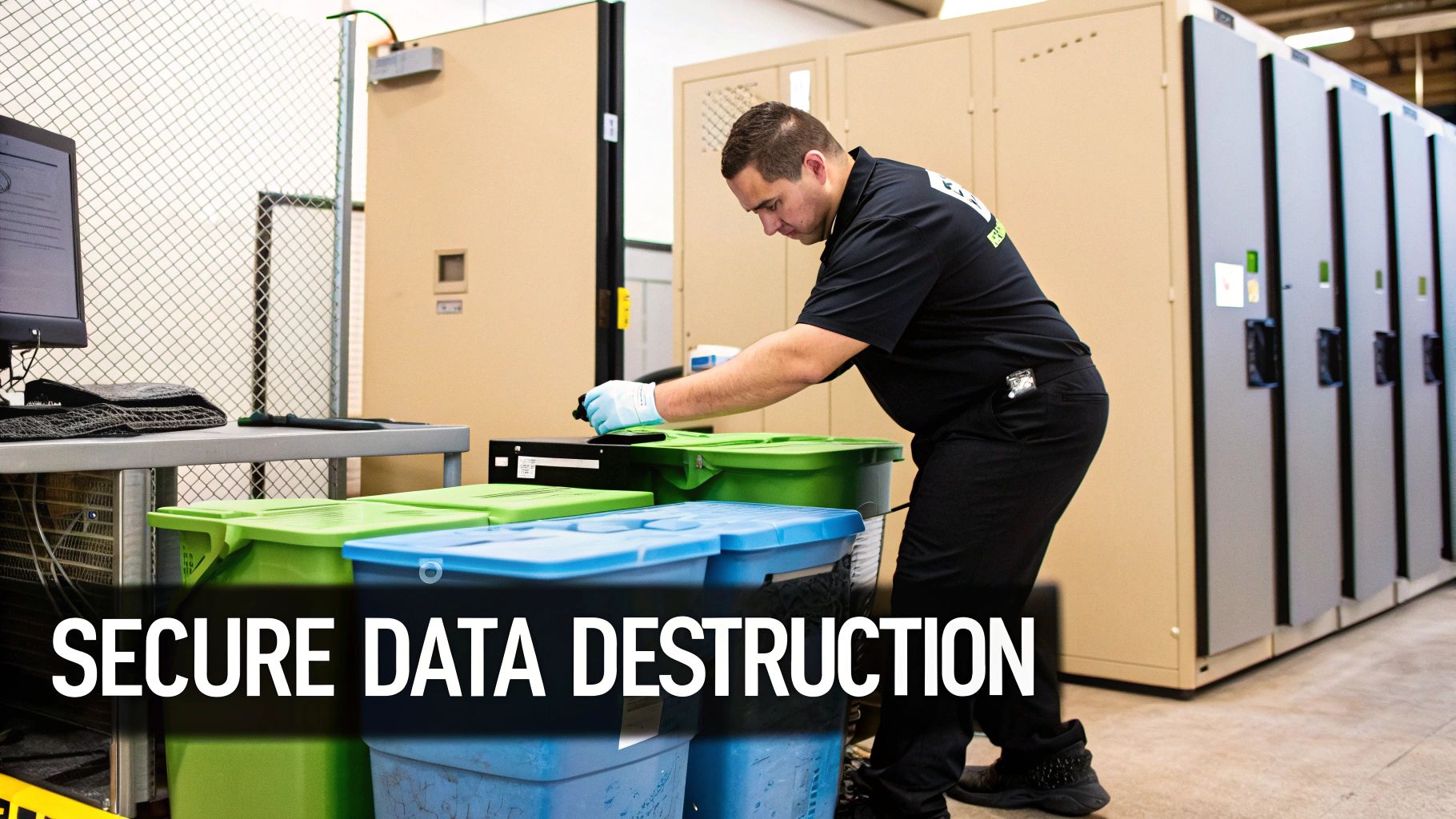
This is exactly why a professional e-waste partner sees themselves as a security vendor first and a recycler second. Their most important job is to guarantee the complete, irreversible destruction of your data. This eliminates any chance of a breach from your discarded IT assets.
Software Wiping vs. Physical Destruction
There are two main ways to handle data sanitization. The right choice really hinges on your company's security needs and what kind of equipment you're getting rid of.
Software-based data wiping uses specialized programs to completely overwrite a hard drive with random characters. The gold standard here is DoD 5220.22-M, a method that performs three separate "passes" over the drive, essentially burying the original data so deep it's impossible to recover.
- Best for: Newer, working drives that you might want to resell or redeploy. This approach keeps the hardware's value intact while making sure the data is gone for good.
- Key Consideration: This only works if the drive is fully functional. You can't use software wiping on damaged or dead hard drives.
On the flip side, physical destruction is as direct as it sounds. This means shredding, crushing, or degaussing (using incredibly powerful magnets) to physically demolish the drive. The data platters are destroyed, making the drive completely useless and the data unreadable. Forever. To truly make data security a priority when retiring old electronics, understanding and using strategies like Data Loss Prevention is a must.
Take a financial services firm in Buckhead, for example. They might need to decommission a server rack loaded with sensitive client data. For them, on-site hard drive shredding is the only option that offers total peace of mind. Their own staff can witness the destruction, providing an unbroken chain of custody and undeniable proof before the shredded materials even leave their building.
The Non-Negotiable Certificate of Data Destruction
No matter which method you choose, the process absolutely must end with one critical piece of paper: a Certificate of Data Destruction (CoDD). This isn't just a receipt—it's your legal proof and audit trail.
A proper CoDD should spell out:
- The exact method of destruction used (e.g., DoD 5220.22-M wipe, on-site shredding).
- A serialized inventory of every single hard drive or device that was destroyed.
- The date and location where the destruction took place.
- A statement of indemnification from the vendor, which legally transfers liability over to them.
This document is your shield if you're ever faced with an audit or a security inquiry. Any reputable IT asset disposal partner will provide this documentation promptly and without you even having to ask. In fact, if you want to see what a compliant process entails, you can learn more about professional IT asset destruction services.
If a company hesitates or gets squirrely about providing a detailed CoDD, consider it an immediate red flag and walk away.
Evaluating Logistics and Value Recovery
Once you’ve confirmed a vendor has the right certifications and secure data destruction methods, it’s time to look at the practical side of things. How will they actually get the equipment out of your building? The logistics of removing IT assets—especially from a busy Alpharetta office or a high-security data center—are just as important as the compliance paperwork.
A smooth, professional pickup process means minimal disruption to your daily operations. That's a big deal.
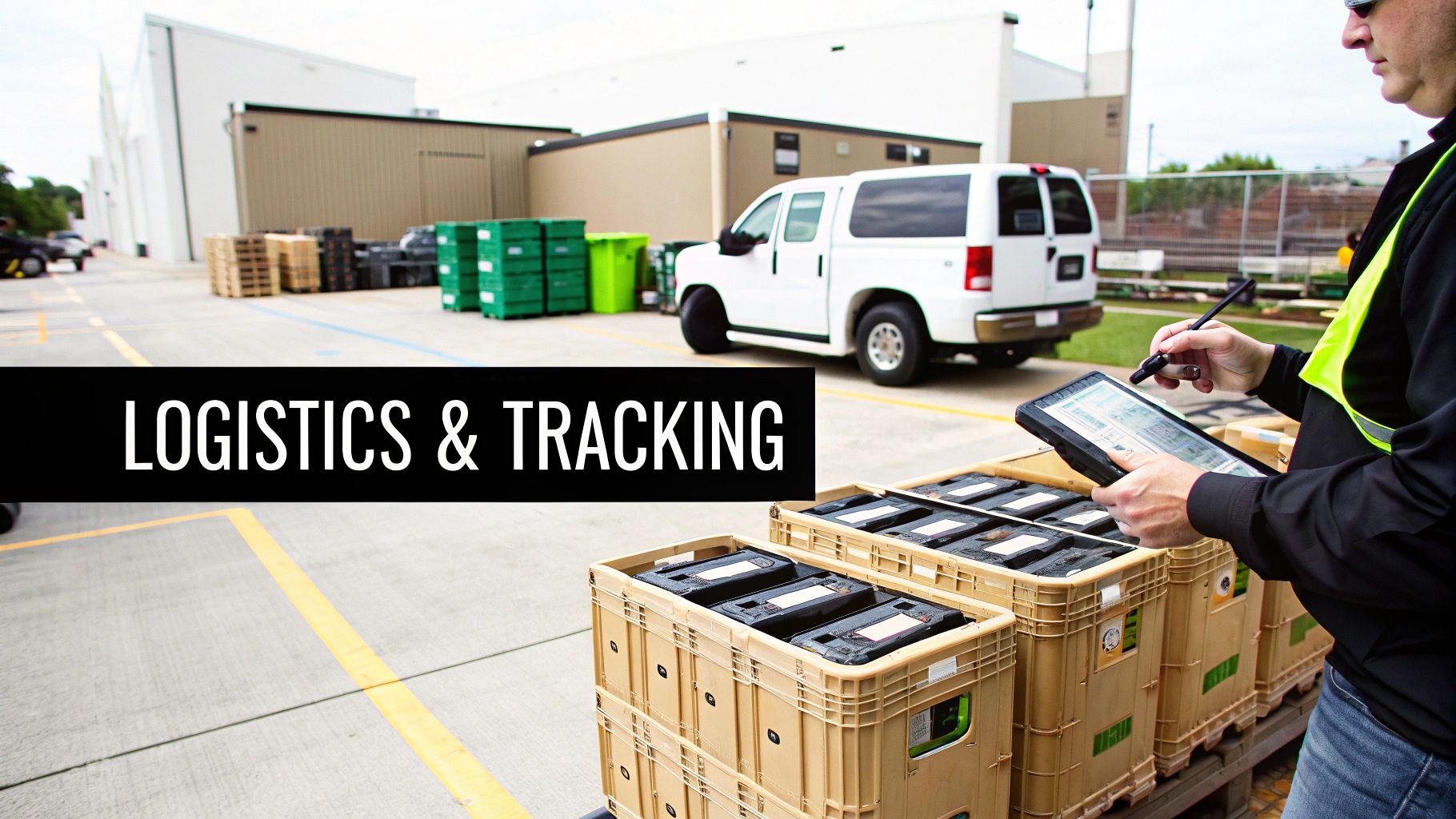
This all starts with their on-site capabilities. You need an electronic waste disposal company that offers scheduled, secure pickups handled by their own trained crew. They should show up with the right dollies, packing materials, and vehicles to safely handle everything from a pallet of laptops to heavy-duty server racks. The goal is to get everything out efficiently without anything getting damaged or misplaced.
The Importance of a Clear Chain of Custody
The moment your gear leaves your building, you need a rock-solid audit trail. This is non-negotiable. A detailed chain-of-custody document is the formal record that tracks every single asset from your door to its final destination, whether that's resale or recycling.
This paperwork should be meticulous, listing serialized asset tags and inventory reports, and confirming each step of the journey. Think of it as your proof. If an auditor ever asks what happened to a specific server or hard drive, this document provides the definitive, documented answer.
Unlocking the Value in Your Retired IT Assets
Getting rid of old IT equipment shouldn't just be an expense. It can, and often should be, a revenue stream. The best IT Asset Disposition (ITAD) partners have established programs specifically for value recovery, turning your retired hardware into a check for your business. This is especially true if you're retiring equipment that's only a few years old.
The opportunity here is much bigger than most companies think. The global e-waste management market was valued at a staggering $70 billion in 2024 and is on track to nearly double. A huge chunk of that value comes from components and materials that can be remarketed or recovered.
A professional partner will assess your equipment and figure out the smartest path forward:
- Resale and Remarketing: Functional, recent-model laptops, servers, or networking gear can be tested, wiped clean, and sold through secondary market channels.
- Component Harvesting: Even if a desktop is too old to sell whole, valuable parts like RAM, CPUs, and power supplies can often be salvaged and sold individually.
- Materials Recovery: For gear that's truly at the end of its life, the value is in the raw materials. Responsible recycling recovers precious metals, copper, and aluminum.
When you're talking contracts, make sure to ask about their profit-sharing or buyback models. A transparent partner won't hesitate to give you a clear agreement that spells out their fees and how any recovered value will be split. This can seriously reduce—or sometimes even eliminate—the cost of the disposal service.
The right partner turns the complex process of disposal of IT assets from a simple chore into a smart financial move. By focusing on both secure logistics and aggressive value recovery, you protect your company while squeezing every last drop of value from your original technology investment.
Your Checklist for Vetting Disposal Companies
Alright, let's turn theory into action. This is where the rubber meets the road. When you start talking to potential electronic waste disposal companies in Atlanta, you need a game plan. A structured approach ensures you cover all the bases and make a choice that actually protects your business. Think of this checklist as your secret weapon for a thorough and confident evaluation.
A solid vetting process should always include a practical vendor risk management assessment framework to weigh your options and minimize the risks that come with bringing on any new partner. The questions below are the perfect starting point to build your own assessment and compare vendors apples-to-apples.
Compliance and Certifications
This is your starting line. Always. If a potential partner gets cagey or can't give you straight answers here, they're not a serious contender. These questions cut right to their commitment to doing things legally and ethically.
- Are you R2v3 or e-Stewards certified? Can I get your certificate number to verify it?
- How do you handle EPA regulations for hazardous materials?
- Do you carry pollution liability and data breach insurance? I'll need to see a certificate of insurance.
- Walk me through your downstream vendor audit process. How do you make sure your partners are held to the same high standards?
Data Security Protocols
Now we're digging into the heart of their operation: security. Vague answers are a massive red flag. You absolutely need a partner who can clearly and confidently explain their process for guaranteeing 100% data destruction.
Ask them directly:
- What specific data wiping standards do you follow? Are we talking DoD 5220.22-M, NIST 800-88, or something else?
- Do you offer on-site hard drive shredding? If you do, what's your process for letting us witness it?
- What happens with failed or non-functional drives that can't be wiped? What's your procedure for those?
- Can I see a sample Certificate of Data Destruction? I want to review the level of detail you provide.
Key Takeaway: A vendor who knows their stuff will welcome these detailed security questions. If you sense hesitation or they try to deflect, it's often a sign of a weak link in their process—a weakness that could easily become your liability.
Logistics and Reporting
The day-to-day details of pickup, tracking, and paperwork can make or break the entire experience. A professional computer disposal company should have their logistics completely dialed in, making the process seamless and accountable from the moment they arrive until the final report is in your hands.
Use these questions to gauge just how mature their operations really are:
- On-Site Process: Can you describe your on-site pickup procedure? Will your employees be uniformed? Have they been background-checked?
- Asset Tracking: How do you create and manage the chain-of-custody documentation? Do you provide serialized asset reports for every single item?
- Value Recovery: What's your process for evaluating assets for potential resale? How is the profit-sharing or buyback value calculated and shown in your reporting?
- Service Agreement: Could you send over a sample Master Service Agreement (MSA) for our legal team to review?
Asking the right questions upfront saves you from major headaches down the road. It ensures the vendor you choose isn't just a pickup service, but a true security and compliance partner ready to handle the immense responsibility of managing your retired IT assets.
Common Questions About E-Waste Disposal
When you're getting close to a decision, a few specific questions always seem to pop up. Let's clear up some of the most common things Atlanta businesses ask when picking an electronic waste disposal partner. Getting these answers straight can make all the difference before you sign on the dotted line.
What’s the Difference Between E-Waste Recycling and ITAD?
This is a big one, and it's a crucial distinction. Think of standard e-waste recycling as being focused on the end-of-life processing of electronics. The main goal is to safely break down devices and recover raw materials like metals and plastics, keeping all that hazardous stuff out of our landfills.
IT Asset Disposition (ITAD) is the whole package. An ITAD service includes that core recycling component, but it's a much bigger umbrella. It covers secure data destruction, logistics, detailed chain-of-custody tracking, and—here's the key part—evaluating your old gear for potential resale to get some money back in your pocket. A good ITAD partner handles the entire retirement lifecycle for your assets, not just the final disposal.
How Much Is This Going to Cost?
The honest answer? It varies quite a bit, which is why a detailed, line-item quote is non-negotiable. The price really comes down to a few key factors.
- Your Equipment: A pallet of old laptops is a lot easier (and cheaper) to handle than a row of heavy, bulky server racks.
- Logistics: Are we picking up from a ground-floor office in Marietta or coordinating with building security to remove equipment from a downtown Atlanta high-rise? The complexity of the pickup matters.
- Data Destruction: On-site hard drive shredding, where we bring a shredding truck to your door, is going to cost more than software-based wiping at our facility because of the specialized machinery and labor involved.
A lot of businesses are surprised to find out that proper disposal can sometimes actually make them money. If your equipment is still fairly new and functional, a good vendor’s profit-sharing program can often offset the service fees, and in some cases, you might even get a check back. Always ask if value recovery is an option.
What Kind of Stuff Can We Actually Recycle?
Most professional electronic waste disposal companies are equipped to handle just about any IT equipment a business uses. You should always double-check with your provider, but you can be confident this list is usually covered:
- Computers, from desktops and laptops to servers
- Monitors of all types (LCD, LED, and even old CRTs)
- Networking gear like routers, switches, and firewalls
- Office machines like printers, scanners, and copiers
- Phones, from old telecom systems to modern smartphones and tablets
- Keyboards, mice, cables, and other peripherals
If you have something more specialized, like certain types of lab or medical equipment, just be sure to bring it up early in the conversation. A reliable recycler will either have a process for it or point you to a trusted partner who does.
Ready to make your IT asset disposition simple and secure with a partner you can count on? Montclair Crew Recycling provides certified, responsible electronics recycling for businesses all across Metro Atlanta. Contact us today for a free quote and find out how we can protect your data and recover value from your retired IT gear.
