

When a business decides to decommission an old office building, they don't just swing a wrecking ball and haul everything to the dump. That would be incredibly wasteful. Instead, a demolition crew carefully deconstructs the building, salvaging valuable materials like steel beams, copper wiring, and glass for reuse. IT asset recycling applies that same smart, sustainable logic to your company's retired servers, laptops, and networking gear.
What Is IT Asset Recycling and Why It Matters Now
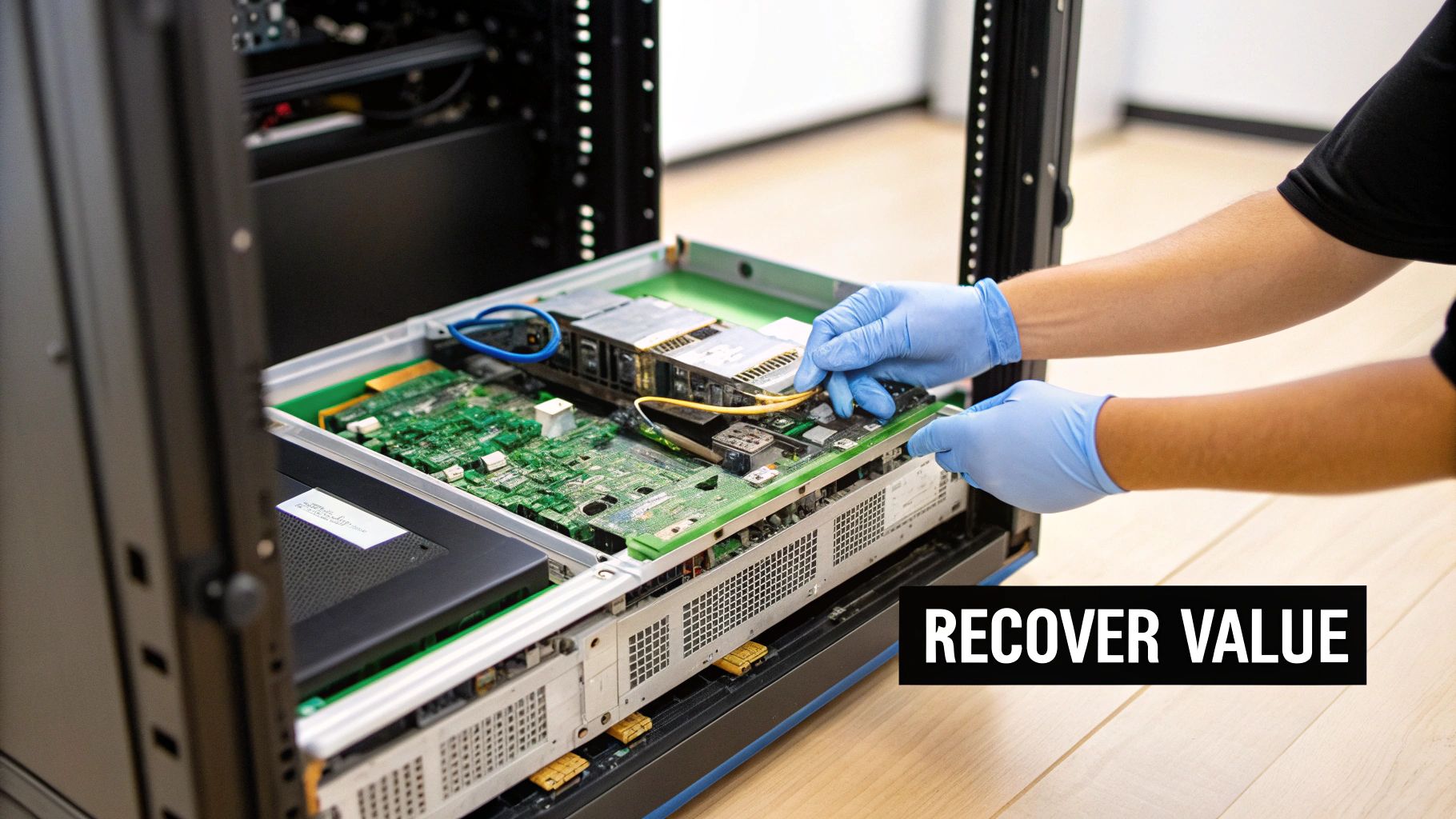
This isn't about just tossing old computers into a designated bin. It's a precise, multi-stage process that guarantees every single component is handled securely and responsibly. The goal is to shift your business away from the outdated "dispose" mentality and into a modern framework built on corporate responsibility and savvy resource management.
The Urban Mining Analogy
At its core, IT asset recycling is a form of "urban mining." Your obsolete electronics are actually treasure troves of valuable materials just waiting to be reclaimed and funneled back into the manufacturing supply chain.
Think about what's inside that old server rack:
- Precious Metals: Gold, silver, platinum, and palladium are used in tiny amounts on circuit boards and in connectors.
- Base Metals: Copper, aluminum, and steel make up a huge portion of electronic hardware.
- Plastics and Glass: These materials can be meticulously sorted and recycled for use in brand-new products.
By recovering these elements, your company directly reduces the need for destructive environmental mining, conserves precious natural resources, and contributes to a circular economy. It’s a powerful way to turn electronic waste into a real, tangible asset.
IT asset recycling is an essential business strategy. It’s a function that simultaneously mitigates risk, protects your brand’s reputation, and demonstrates a tangible commitment to environmental stewardship in a world that demands greater accountability from corporations.
More Than Just Environmental Goodwill
While the green benefits are huge, the real drivers behind this practice are just as much about security and finance. Improperly disposing of IT equipment is one of the biggest data security vulnerabilities a company can have. All it takes is a single hard drive turning up in a landfill with sensitive data still on it to trigger catastrophic financial penalties and do irreparable damage to your brand.
The sheer scale of this industry highlights its growing importance. The global IT asset recycling market was valued at around $10 billion in 2023 and is projected to keep growing. This boom is fueled by ever-increasing piles of e-waste, stricter environmental laws, and the rising economic value of the materials being pulled from old devices.
A formal recycling program is just one piece of a much larger strategy known as IT Asset Disposition (ITAD). To see the full picture of how recycling fits into your equipment’s lifecycle, you should check out our guide on what IT asset disposition is and why it's a vital process for every organization. This foundational knowledge helps frame recycling not as a final, forgotten step, but as an integrated part of managing technology from the moment you buy it to its end-of-life.
The Real Payoff of a Formal Recycling Program
Putting a structured IT asset recycling program in place does a lot more than just check an environmental box; it actually builds a stronger, more secure business from the inside out. The benefits ripple across three key areas—Security, Financial, and Environmental—turning what looks like a pile of old junk into a genuine strategic advantage. Think of it less as an operational cost and more as a direct investment in your company's stability and reputation.
A formal program gets you out of the reactive, "what do we do with this old server?" mindset. Instead, you get a proactive, predictable process that protects your business on every front.
Bolster Your Security and Protect Your Brand
Let's be blunt: the biggest and most immediate win from a formal recycling program is ironclad data security. Every single retired laptop, server, and smartphone is a potential data breach just waiting to happen. And no, simply deleting files or reformatting a hard drive is not nearly enough to permanently wipe sensitive information. It’s child's play for a determined data thief to recover that data.
Professional IT asset recycling partners use certified data destruction methods, like multi-pass wiping that meets strict Department of Defense standards or, even better, physical shredding. This isn't just deleting data; it's completely obliterating it, making it absolutely unrecoverable.
By locking down your data this way, you're doing a few critical things:
- Preventing Costly Breaches: You slam the door on the risk of sensitive customer data, intellectual property, or financial records falling into the wrong hands.
- Protecting Brand Trust: A single data breach can shatter the customer confidence you've spent years building. Certified destruction is your proof that you took every precaution.
- Maintaining Regulatory Compliance: Laws like HIPAA and GDPR come with staggering penalties for mishandling data. Certified destruction isn't just a good idea; it's non-negotiable for compliance.
A Certificate of Destruction isn't just a piece of paper. It’s a legal document that gives you a clear, auditable trail, proving you've met your data security duties and shielding your organization from devastating fines and public backlash.
Unlock Financial Returns and Avoid Hefty Penalties
Beyond security, a well-run program can actually put money back into your budget. Too many businesses look at old IT equipment and see worthless junk, but there's often still value locked inside. Your recycling partner can assess your assets to see if they can be refurbished and resold on the secondary market.
This process, known as value recovery, can bring in revenue that helps offset—or even exceed—the cost of the recycling service. For instance, a data center decommissioning hundreds of servers could see a significant return by remarketing the components that are still perfectly functional. On the flip side, proper recycling helps you dodge massive fines. Dumping e-waste is illegal, and getting caught can lead to financial penalties that make recycling costs look tiny.
The e-waste management world is booming, with a projected market value jumping from $70 billion in 2024 to about $81.27 billion in 2025. A related field, the IT Asset Disposition (ITAD) market, is expected to hit $36.4 billion by 2034. This explosive growth shows just how much economic and regulatory pressure is building for businesses to handle e-waste the right way.
Achieve Environmental Goals and Boost Your Public Image
Finally, a formal IT asset recycling program is one of the most powerful ways to show you're serious about corporate responsibility. Customers, partners, and even your own employees are paying more attention to sustainability than ever before. A documented recycling program strengthens your brand and aligns perfectly with modern Environmental, Social, and Governance (ESG) goals.
By keeping hazardous materials like lead and mercury out of our landfills, you're making a direct contribution to a healthier community. The environmental impact of electronic waste is massive, and taking real, measurable steps to reduce it shows your company is committed to being a good corporate citizen. This doesn't just look good to the public; it resonates with talented people who want to work for a company that cares.
Navigating the Maze of Compliance and Regulations
When it comes to IT asset recycling, what you don’t know can absolutely hurt you. Getting rid of old electronics isn't just about clearing out space; it's a move that's watched over by a complicated web of environmental and data privacy laws.
Simply handing over your retired equipment to the first recycler you find is a massive gamble. It can leave your company facing crippling fines, legal trouble, and a public relations nightmare. It's better to think of these rules not as roadblocks, but as guardrails that protect your business, your customers, and the environment.
Unpacking Key Data Privacy Laws
Data privacy laws are front and center in this process. They don't just suggest—they demand—the complete destruction of any sensitive information on your old devices. Different industries and regions have their own specific rules, and claiming ignorance won't get you off the hook.
Here are a few of the big ones you need to know:
- GDPR (General Data Protection Regulation): This EU law has become the global benchmark for data privacy. If your company handles data belonging to any EU citizen, you are legally required to make sure that data is permanently wiped when the device is retired. The penalties for messing this up are severe.
- HIPAA (Health Insurance Portability and Accountability Act): For anyone in the healthcare world—from hospitals to insurance companies—HIPAA requires incredibly strict handling of patient health information. Improperly disposing of a device with this kind of data is a major violation.
- SOX (Sarbanes-Oxley Act): If you're a publicly traded company, SOX is your rulebook. It includes regulations for protecting the integrity of financial records, and that protection extends all the way to securely disposing of the hardware those records were stored on.
These aren't just friendly suggestions; they're legally binding requirements with serious consequences.
The main idea behind all data privacy laws is straightforward: if you collected and stored sensitive data, you are on the hook for its secure destruction. Your responsibility doesn't just vanish when an asset is picked up. It only ends when you have a certificate in hand proving it was destroyed.
The Role of Industry Certifications
So, how can you be sure a recycling partner is actually up to the task? The answer is third-party certifications. These aren't just logos for a website; they are hard-earned credentials proving a vendor has passed rigorous audits and meets the highest industry standards.
While a general understanding asset disposition laws is useful in many contexts, the world of IT recycling has its own set of critical benchmarks. Certifications are your best guide.
Make sure any potential partner has these non-negotiable credentials:
- R2 (Responsible Recycling): The R2 standard is a comprehensive certification covering environmental safety, worker health, and data security. The newest version, R2v3, puts an even stronger focus on data protection and making sure all downstream partners are also compliant.
- e-Stewards: This is another globally respected certification, known for being especially tough on preventing the illegal export of hazardous e-waste to developing nations. It’s your guarantee that your old electronics won’t end up poisoning a community overseas.
- NAID AAA Certification: This one is all about data destruction. A NAID AAA certification verifies that a recycler’s process for shredding and wiping data is secure, regularly audited, and compliant with all known data protection laws. It's the gold standard for data security.
Why Documentation Is Your Legal Shield
When it's all said and done, compliance boils down to one thing: proof. Without a clear paper trail that can stand up to an audit, you have no way to defend your company if something goes wrong. This is where solid documentation becomes your best friend.
The single most important document you'll receive is the Certificate of Destruction. This is much more than a receipt. It's a legally binding record that serves as official proof that your data was completely destroyed. Our guide on why a certificate of destruction is an essential legal document dives deeper into its importance.
A proper certificate lists every single asset by its serial number, confirms the exact method of destruction, and officially transfers liability from your company to the certified recycler. It’s the final step that closes the compliance loop and protects your business down the road.
The Complete IT Asset Recycling Process Step by Step
So, what really happens after your old IT assets are hauled away? A professional IT asset recycling process isn’t some mysterious black box. It's a transparent, meticulously documented journey designed to protect your data, extract maximum value, and keep you compliant.
Think of it as a secure chain of custody, where every single device is accounted for from the moment it leaves your door until its final destination. Let's walk through exactly how a reputable partner turns a potential risk into a well-managed, responsible process.
Step 1: Secure Logistics and On-Site Services
This first step is arguably the most important because it's where security begins. A true recycling partner doesn’t just show up with a truck and start grabbing gear. The process starts with careful planning and on-site services that fit your specific needs.
This usually includes:
- Asset Inventory: Technicians create a detailed log of every device being removed, capturing serial numbers and your company's asset tags. This creates the initial record that’s tracked through the entire process.
- Secure Transport: Your assets are carefully packed into sealed, GPS-tracked vehicles. From the second they leave your facility, their location is monitored, slashing the risk of theft or loss.
- On-Site Shredding: For the ultimate peace of mind, many businesses choose on-site hard drive shredding. You get to witness the physical destruction of your data-bearing devices before they even leave your property.
Step 2: Certified Data Destruction
Once your assets reach a secure facility, the number one priority is wiping out every last bit of data. Just hitting 'delete' on a file does absolutely nothing—that data is easily recoverable. Certified data destruction uses methods that make information completely irretrievable, giving you both peace of mind and legal protection.
Data Destruction Methods Compared
Not all data destruction methods are created equal. Depending on the sensitivity of your data and the future use of the asset, you'll want to choose the right approach. Here’s a quick breakdown of the most common methods.
| Method | Description | Security Level | Best For |
|---|---|---|---|
| Data Wiping | Software overwrites the drive with random characters (0s and 1s) multiple times, following DoD standards. | High | Assets that will be refurbished and resold, preserving the hardware's value. |
| Degaussing | A powerful magnet scrambles the magnetic field on hard disk drives (HDDs), instantly erasing data. | Very High | Quickly destroying data on large quantities of magnetic media. Not effective on SSDs. |
| Shredding/Crushing | The physical destruction of the storage device, grinding it into small, unrecognizable pieces of metal. | Maximum | End-of-life drives, damaged media, or when absolute, verifiable destruction is required. |
Each method serves a specific purpose, from preserving an asset's value through wiping to ensuring total data elimination with shredding. A good partner will help you decide which is right for your needs.
Want to get into the technical weeds? You can learn more about how to properly wipe a computer before recycling to see what goes on behind the scenes.
This infographic gives a great visual of how the whole compliance journey comes together.
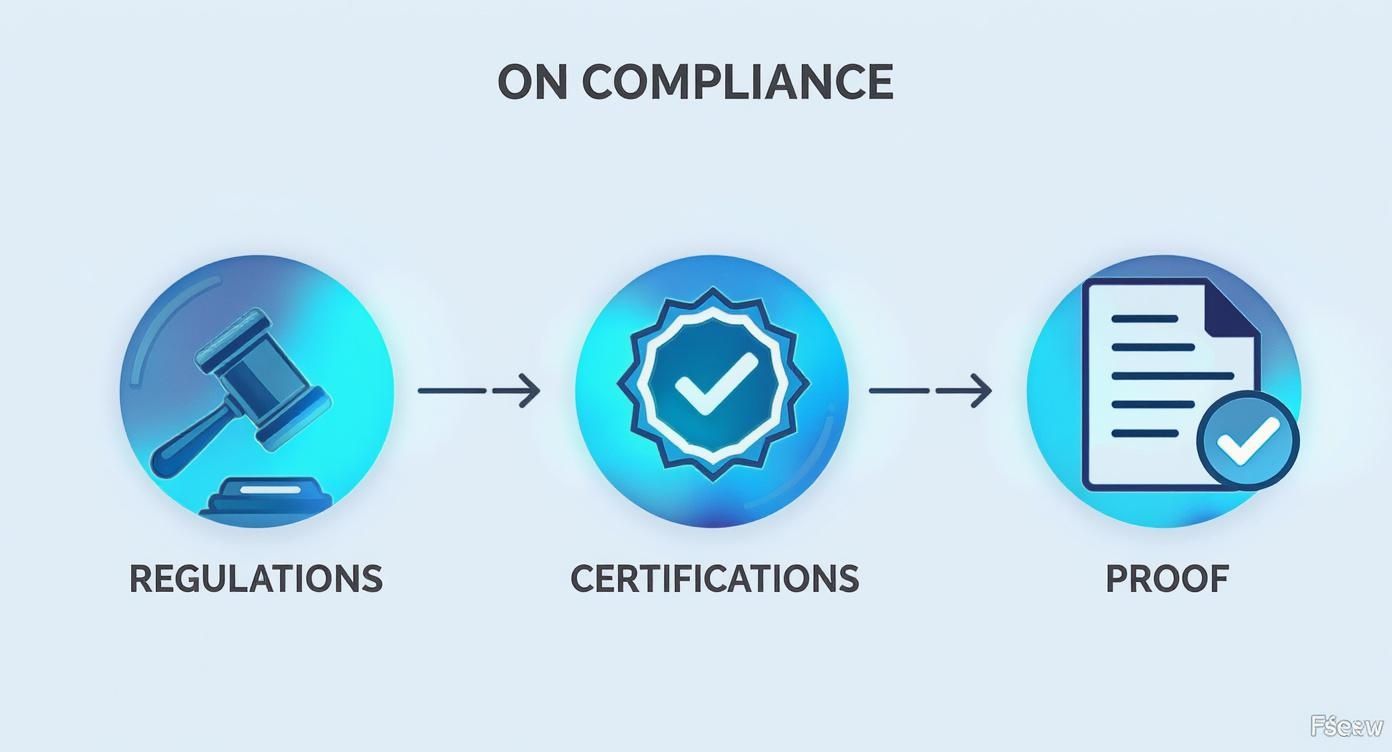
As you can see, following regulations and getting certified proof of destruction is what creates a protective shield for your organization.
Step 3: Triage for Reuse or Recycling
With all data securely destroyed, each asset goes through a process called triage. Not every piece of equipment is destined for the shredder! The goal here is to figure out the best path forward for each component to maximize its value and minimize its environmental footprint.
Technicians will assess every item to see if it can be repaired, refurbished, and sold. A newer server or a fleet of recent-model laptops might still have plenty of life left and significant resale value. This is the value recovery stage, where functional tech is given a second life, often generating a financial return for your company.
Assets that are too old, broken, or simply obsolete are then flagged for de-manufacturing and materials recycling. This critical decision ensures that perfectly good technology isn't destroyed prematurely.
Step 4: Responsible Material Separation
For assets that are marked for recycling, the final step is de-manufacturing. This is where the idea of "urban mining" really comes to life. Skilled technicians get to work carefully dismantling each device and separating it into its core materials.
It's a surprisingly detailed process:
- Manual Disassembly: Components are broken down by hand to separate plastics, metals, glass, and circuit boards into clean streams.
- Hazardous Waste Removal: Things like batteries, mercury-containing lamps from older monitors, and capacitors are carefully removed and handled according to strict environmental rules.
- Material Recovery: The sorted materials—steel, aluminum, copper, and precious metals from circuit boards—are then sent to certified downstream partners. These specialists smelt and refine them back into raw commodities that can be used to make brand-new products.
This last stage is what closes the loop. It ensures every last part of your old IT equipment is handled responsibly, completing the circular economy and keeping hazardous materials out of our landfills.
How to Choose the Right Recycling Partner

Picking an IT asset recycling partner is easily one of the most critical security decisions your company will ever make. This isn't like hiring a cleaning crew or an office supply vendor. The company you choose has a direct impact on your data security, your legal compliance, and even your public reputation.
Think of the right partner as a shield—they protect you from massive risk. The wrong one? They can leave you wide open to devastating data breaches, crippling fines, and a PR nightmare. To make the right call, you have to look beyond the flashy marketing and dig into the nitty-gritty details of how they actually operate.
Verify Non-Negotiable Certifications
Want the fastest way to weed out the pretenders? Check their certifications. These aren't just fancy logos for a website; they are hard-earned proof that a company has passed rigorous, independent audits covering everything from security to environmental responsibility.
No certifications should be an immediate deal-breaker. When you're vetting a potential partner, make sure they can show you proof of these two, at a minimum:
- R2v3 (Responsible Recycling): This is the gold standard for electronics recycling. It covers data security, environmental safety, and even worker health. The "v3" is the latest and most demanding version, so make sure that's what they have.
- NAID AAA Certification: This one is all about data destruction. It's a third-party verification that a vendor's methods for wiping, degaussing, or physically shredding drives meet every known data privacy law.
These two certifications are the foundation of trust. Without them, you’re basically just taking a company at its word—and that’s a huge gamble with your sensitive data.
Scrutinize Their Data Security Protocols
Certifications are a great start, but you need to go deeper and understand exactly how a vendor handles data security. Any company can claim they take security seriously, but you need to see the proof in their process. Don't be shy about asking tough questions.
A truly secure IT asset recycling partner will welcome deep scrutiny of their processes. They should be able to clearly articulate every step they take to protect your data, from the moment an asset leaves your facility to its final destruction.
A reliable partner should offer different data destruction methods, like on-site shredding if you need absolute peace of mind, or certified data wiping to keep the hardware valuable for resale. They should also be able to provide a sample Certificate of Destruction that lists every single serial number. That document is your legal proof that the job was done right.
Evaluate Downstream Transparency and Reporting
It's also crucial to ask: what happens to your assets after they're processed? Where do all the shredded plastics, metals, and glass actually end up? This is where the concept of downstream transparency comes in.
A reputable recycler will have a fully vetted network of downstream partners and be able to show you their audit trail. Ask them how they vet these partners and if they can guarantee that none of your e-waste will be illegally shipped overseas or dumped in a landfill. Strong reporting that tracks every asset to its final destination is the mark of a truly professional operation. Our list of top-rated e-waste disposal companies is a great place to find partners who check all these boxes.
Common Mistakes to Avoid in Your IT Recycling Program
A successful IT asset recycling program isn't just about what you do right—it's about the pitfalls you sidestep. So many well-meaning businesses stumble into simple mistakes that expose them to massive financial and reputational risks. Knowing what these tripwires are is the first step to building a program that's truly bulletproof from day one.
Let's walk through the most common—and costly—errors we see companies make, and more importantly, how you can avoid them entirely.
Mistake 1: Choosing a Vendor on Price Alone
It’s always tempting to go with the lowest bidder. We get it. But in the world of IT asset disposal, the cheapest quote often turns into the most expensive mistake you can make. An unusually low price is a giant red flag, a signal that a vendor is likely cutting corners on things that matter, like data security, environmental compliance, or even worker safety.
These "bargain" recyclers might be skipping certified data destruction, illegally shipping your e-waste overseas, or failing to give you the paperwork you need to survive an audit. The potential fallout from a data breach or an environmental fine will make any initial savings look tiny. In one famous case, a major financial institution was hit with a $60 million fine for botching its IT asset disposition—a harsh reminder of just how high the stakes are.
Solution: Look for certifications and security credentials first, price second. You should only partner with a vendor holding verifiable credentials like R2v3 and NAID AAA Certification. Think of these certifications as your insurance policy; they prove the vendor meets the highest industry standards for data destruction and responsible recycling, giving you a solid, defensible position if something goes wrong.
Mistake 2: Accepting a Vague Chain of Custody
So, what happens to your old equipment the second it leaves your building? If you can't answer that question with absolute certainty, you have a serious security problem. A broken or poorly documented chain of custody is a gaping hole in your defenses. Every time a device changes hands without a record, you create an opportunity for it to be lost, stolen, or mishandled—along with all the sensitive data on it.
Without a detailed, serialized report that tracks every single asset from your door to its final destruction, you have zero proof that you met your compliance duties. This lack of documentation leaves you completely exposed if an auditor shows up or, even worse, if one of your old hard drives is found in a dumpster.
Mistake 3: Failing to Get Documented Proof of Destruction
This is perhaps the single most dangerous mistake a business can make: not getting a formal Certificate of Destruction. Too many companies just take their vendor's word for it, but "trust" isn't a compliance strategy. Without that official document in your hands, you have absolutely no legal proof that your company's sensitive information was actually destroyed.
This certificate is your legal shield. It needs to be detailed and specific, including:
- Serialized Inventory: A complete manifest of every single asset that was processed, identified by its unique serial number.
- Method of Destruction: A clear statement confirming how the data was destroyed—whether through wiping, degaussing, or physical shredding.
- Transfer of Liability: Official language that transfers legal custody and responsibility from your company to the certified vendor.
If a vendor hesitates or refuses to provide this level of documentation, it's time to walk away. A handshake agreement offers zero protection against regulatory fines. A truly effective IT asset recycling program is built on verifiable proof, not just promises.
Your Questions About IT Asset Recycling Answered
When it's time to get rid of old tech, a lot of questions pop up. It's totally normal. Getting the right answers is the first step to making sure your company doesn't face any unnecessary risks. We hear these questions all the time, so let's clear things up.
What’s the Difference Between ITAD and IT Asset Recycling?
This is a common point of confusion, but it's pretty simple when you break it down. Think of IT Asset Disposition (ITAD) as the entire playbook for what happens to your old gear. It's the big picture that covers everything from reselling equipment to get some money back, donating it, or, you guessed it, recycling it.
IT asset recycling is just one important play within that ITAD playbook. It's the specific process of breaking down electronics to their base materials—metals, plastics, and glass—so they can be used again in new products.
Can We Actually Get Paid for Our Old IT Equipment?
Yes, you sure can. If your equipment isn't ancient and still has some life left in it, you can cash in through a process called value recovery.
A good recycling partner will check out your gear to see if it can be refurbished and sold. If it can, they'll give your company a cut of the profits. This is a great way to help pay for your entire disposal program.
How Can We Be 100% Sure Our Data Is Gone for Good?
The only way to be absolutely certain is to get it in writing. You should always insist on a Certificate of Destruction from a certified vendor, especially one with a credential like the NAID AAA Certification.
This isn't just a piece of paper; it's a legal document. It lists out the specific devices and serial numbers that were wiped clean or physically shredded, giving you undeniable proof that you've handled your data security obligations correctly.
Ready to put a secure and compliant IT asset recycling plan in place for your Atlanta-area business? The team at Montclair Crew Recycling specializes in certified data destruction, responsible e-recycling, and value recovery services that protect both your company and the environment. Head over to https://www.montclaircrew.com to book a free consultation today.
