
Think about every old computer, server, and phone piled up in your storage closet. Each one is a small box holding two things: valuable materials and serious risks. This is where e-scrap recycling comes in—it’s the professional process of taking apart old electronics to recover what’s valuable and, just as importantly, to completely destroy any sensitive data left behind.
It’s about turning a potential business liability into a secure, compliant, and manageable asset.
What Is E Scrap and Why Does It Matter for Your Business?
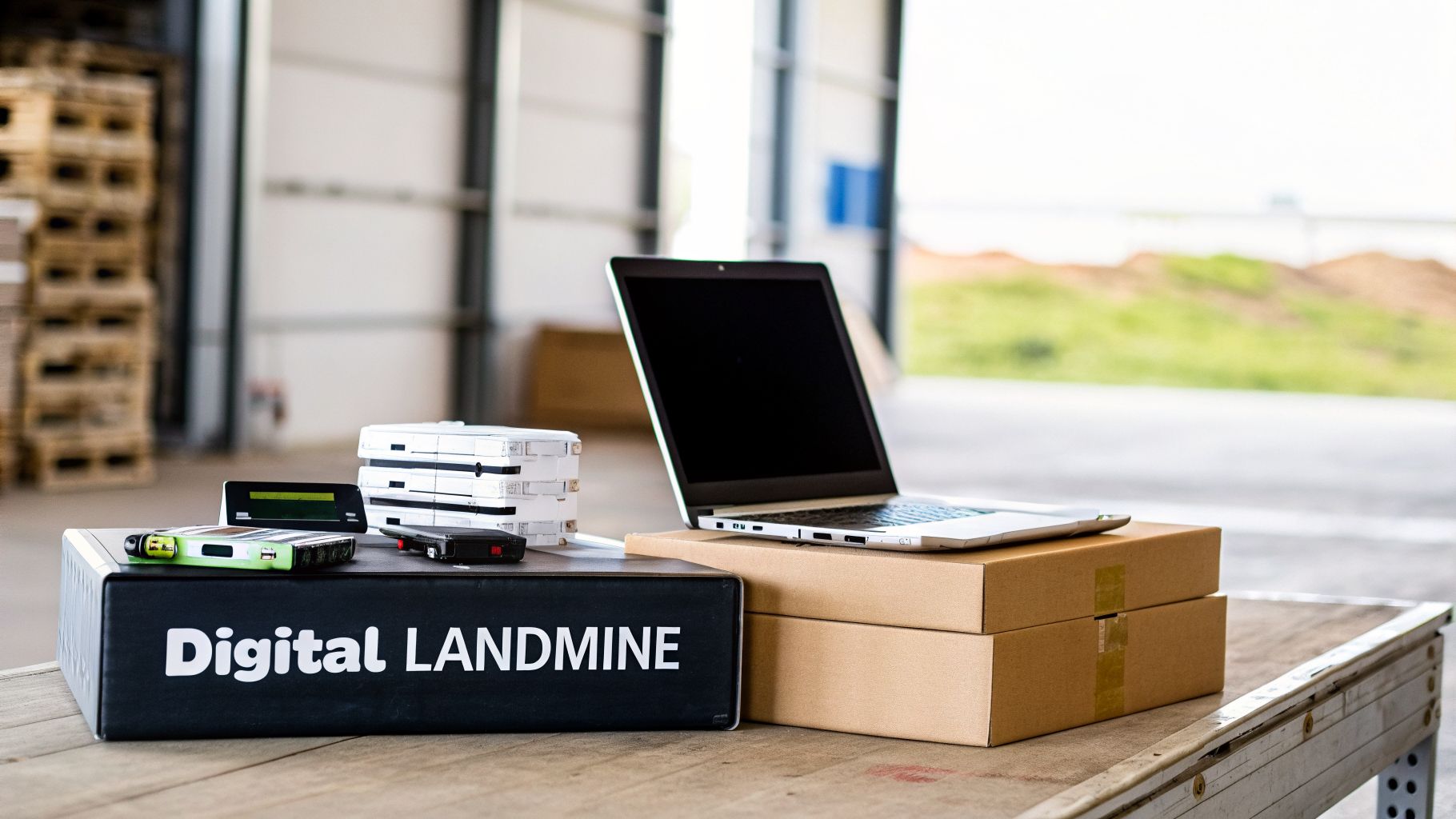
Every piece of outdated IT equipment in your office is more than just junk. It’s a “digital landmine” waiting for someone to trip over it. On one hand, it’s filled with hazardous materials like lead, mercury, and cadmium that can poison the local environment if it ends up in a landfill.
On the other hand, its hard drives could still contain a treasure trove of confidential company files, customer lists, or financial records. That’s a massive security risk just sitting there.
E-scrap, or electronic waste, isn't just regular trash. It’s one of the fastest-growing waste streams on the entire planet. The problem is only getting worse. Global e-waste generation hit a staggering 62 million tonnes in 2022 and is on track to reach 82 million tonnes by 2030. That’s an increase of about 2.6 million tonnes every single year, highlighting just how urgently we need real recycling solutions.
The Two Big Reasons for E-Scrap Recycling
For businesses in Metro Atlanta and across the country, dealing with e-scrap isn't optional anymore. It's a critical task driven by two powerful forces: environmental regulations and sheer business necessity. Let's be clear—improperly disposing of just one server could trigger both a hefty environmental fine and a devastating data breach.
E-scrap recycling is where corporate responsibility and risk management meet. It’s about protecting your brand from the bad press of pollution while also protecting your bottom line by securing your data.
This dual focus is exactly why a formal e-scrap program is so crucial. It’s not about just getting rid of junk; it’s a strategic move to handle complex compliance rules while turning old gear into something you can safely manage. Whether you’re running a small business in Smyrna or a major corporation in Alpharetta, you absolutely need a plan.
To get a deeper look at this, check out our complete guide to electronic waste recycling.
The table below breaks down the very real consequences of ignoring your old electronics. It’s not just about "what-ifs"—these are the hidden costs that can sink a business that isn't prepared.
The Hidden Costs of Improper E-Waste Disposal
| Risk Category | Description of Consequence | Business Impact Example |
|---|---|---|
| Financial Penalties | Fines from environmental agencies (like the EPA) for illegal dumping of hazardous electronic waste. | A mid-sized company is fined $50,000 for tossing old computers in a standard dumpster, violating hazardous waste laws. |
| Data Breach Liability | Lawsuits, regulatory fines (under laws like HIPAA or GDPR), and notification costs if data is recovered from discarded devices. | A healthcare provider faces a $1.5 million settlement after patient records were found on hard drives sold for scrap. |
| Reputational Damage | Negative publicity, loss of customer trust, and brand erosion if your company is linked to pollution or a data leak. | A tech firm loses a major contract after a news story reveals their old equipment was found in an overseas dumpsite. |
| Loss of Resources | Valuable materials like gold, copper, and aluminum are thrown away instead of being recovered and sold for revenue. | A business discards 200 old servers, missing out on thousands of dollars in potential revenue from asset recovery. |
As you can see, simply "throwing it out" is the most expensive option of all. A proper e-scrap strategy isn't a cost center; it's a vital form of insurance for your entire operation.
So, what exactly are we dealing with inside that old equipment?
- Recoverable Assets: These are the good parts. We're talking precious metals like gold, silver, copper, and platinum, along with plenty of aluminum and steel that can be extracted and sold back into the supply chain.
- Hazardous Materials: This is the nasty stuff. Think lead from old CRT monitors, mercury in screen backlights, and brominated flame retardants in plastic casings. All of it requires certified, special handling to keep it out of our soil and water.
- Data-Bearing Devices: This is the most critical part for your business's security. Hard drives, solid-state drives (SSDs), smartphones, and servers all hold information that must be permanently and verifiably destroyed to comply with privacy laws and protect your reputation.
At the end of the day, smart e-scrap management goes way beyond a simple pickup. It requires a secure chain of custody, certified data destruction methods, and transparent recycling reports. This is how you ensure your business not only meets its legal duties but also stands out as a responsible leader in the community.
The Business Case for Certified E Scrap Recycling
Let's be honest. Recycling your company's old electronics isn't just about "going green" anymore. It's a critical business decision. Handling e-scrap the right way is a smart, strategic move that protects your brand, keeps you on the right side of the law, and can even put money back in your pocket.
For any business, one wrong step in getting rid of old computers or servers can cause a world of hurt. This is where a certified recycling program stops being a chore and becomes a serious competitive advantage.
Protecting Your Brand and Reputation
In today's world, your company's reputation is everything. A single photo of a monitor with your logo on it sitting in an illegal dump can destroy the trust you've spent years building. Old electronics are packed with nasty stuff like lead, mercury, and cadmium that can poison local soil and water if they hit a landfill.
If that happens, and your brand is tied to it, the backlash can be immediate. Customers, and even your own employees, don't want to be associated with a company that seems careless about the environment.
Think of a certified e-scrap partner as an insurance policy for your brand. They give you a documented, transparent paper trail that proves you handled your old electronics responsibly, protecting your public image from any nasty surprises.
Beyond just avoiding bad press, having a solid recycling plan is a key part of bigger efforts to transform your small business and go green. It's also a practical way to meet your company's own corporate sustainability goals.
Ensuring Bulletproof Regulatory Compliance
The rules around data security are getting tougher every day. Laws like the Health Insurance Portability and Accountability Act (HIPAA) and the Fair and Accurate Credit Transactions Act (FACTA) come with massive penalties for data breaches. And just dragging files to the trash bin won't cut it.
Every single retired server, laptop, and company phone is a data breach waiting to happen. If someone recovers sensitive customer or patient data from a hard drive you thought was wiped clean, your business could be on the hook for millions in fines and legal battles. The liability lands squarely on you.
A certified partner removes this risk completely. They offer:
- Auditable Data Destruction: Using methods like DoD 5220.22-M wiping or physical shredding, they make sure your data is 100% unrecoverable.
- Chain of Custody Documentation: You get a detailed paper trail that tracks every single device from the moment it leaves your office to its final disposal. This is your proof of a secure process.
- Certificates of Destruction: This is the legal document that serves as official proof your data is gone for good, protecting you if you ever face an audit.
Unlocking Financial Value from Old IT Assets
Too many businesses see old IT gear as a sunk cost—just another expense to write off. But a smart IT Asset Disposition (ITAD) program can flip that script and turn a cost center into a new revenue stream. Your outdated electronics are often full of components that can be fixed up and sold.
This is especially true for data center hardware, business-class laptops, and networking equipment. A professional ITAD partner knows how to assess your assets, wipe them securely, and sell them for the best possible price. The cash you get back can easily cover your recycling costs and, in many cases, even generate a profit.
The demand here is exploding. The global e-scrap market was valued at USD 43.2 billion in 2025 and is projected to hit an incredible USD 147.9 billion by 2035. And get this—personal computers and laptops make up 45.0% of that market. Those numbers show just how much value is hiding in your old equipment. By working with a certified vendor, your business can tap into this cash flow and turn a headache into a financial win.
What Happens After We Pick Up Your E-Scrap? The Step-by-Step Journey
Ever wonder what really happens to your outdated office equipment after it’s hauled away? It's a lot more involved than just a simple pickup and drop-off. A professional e-scrap recycling process is a secure, multi-stage journey designed to protect your data, recover any remaining value, and guarantee environmental compliance.
Think of it as turning a potential business liability into a verified, risk-free asset. Let's walk through the path your old IT gear takes, from your front door to its final destination.
This graphic shows how a certified process works, protecting your brand, ensuring compliance, and recovering value all at once.
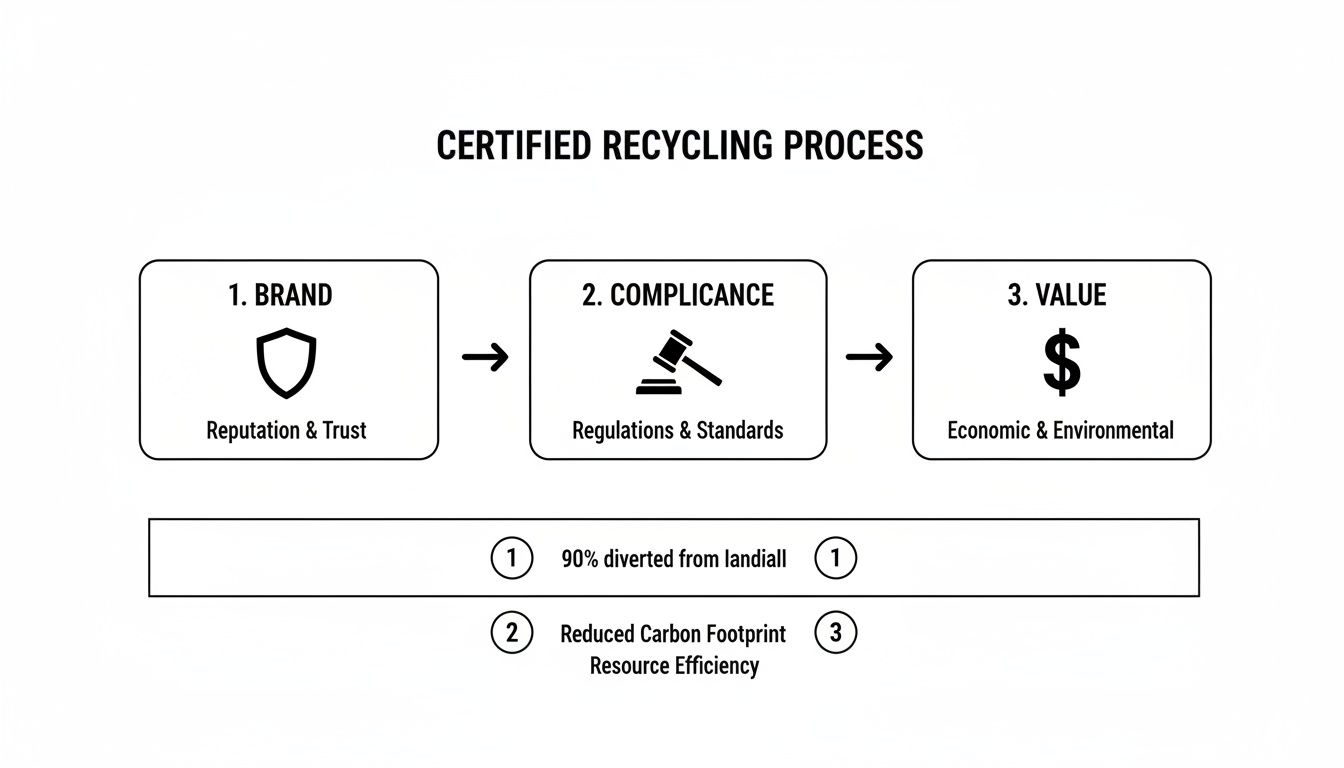
As you can see, this isn't just about getting rid of junk. It's a strategic service that protects your business from every angle.
It Starts With Secure Pickup and Tracking
The whole process kicks off with secure logistics. This isn’t the same as hiring a standard moving crew. Certified e-scrap recyclers use trained technicians who know how to handle sensitive IT assets. They show up at your office, whether you're in downtown Atlanta or a suburb like Roswell, ready to manage everything from heavy data center servers to pallets of old laptops.
The moment we collect your gear, every single device is inventoried and given a unique serial number. This establishes a chain of custody—a documented paper trail that follows each item through the entire process. That meticulous tracking is your proof that nothing gets lost, stolen, or diverted along the way.
While you might look into affordable junk hauling services for old office furniture, electronics demand a specialized, secure service. It's simply not negotiable.
Making Sure Your Data is Gone for Good
Once your equipment reaches a secure facility, the first and most important job is absolute data destruction. Just hitting "delete" on a file doesn't cut it; that data can often be recovered. A true recycling partner will use one of two verifiable methods to make sure your information is wiped out permanently.
- Software Wiping: We use specialized software to write over the entire hard drive with random data, again and again. The gold standard is DoD 5220.22-M, which involves a three-pass overwrite that makes the original data impossible to get back. This is perfect for newer, working drives that could be resold.
- Physical Shredding: For older drives, or for any business that needs the absolute highest level of security, we physically destroy them. The hard drives are fed into a powerful industrial shredder that grinds them into tiny, mangled pieces of metal. There is zero chance of data recovery from a shredded drive.
After the job is done, you get a Certificate of Destruction. This is a legal document that confirms your data has been completely and permanently destroyed, serving as your ultimate proof of compliance.
Sorting: What to Reuse, What to Recycle
With your data securely eliminated, the next phase is manual sorting and triage. Our technicians inspect every single piece of equipment to figure out its best path forward. This is where the e-scrap journey splits.
Not everything gets ground into dust. The goal is always to maximize the life of every component, which is better for the environment and your bottom line.
The rule we follow is "Reuse, Recover, Recycle." Reusing a whole, functional device is always the most sustainable choice. It saves all the energy and raw materials that would have gone into manufacturing a brand new one.
Assets are sorted into two main piles:
- Gear for Refurbishment: These are devices that still work or can be easily fixed, like recent-model laptops, servers, or networking equipment.
- Gear for Materials Recovery: This is the stuff that's too old, broken, or obsolete to be resold. These items are broken down for their raw materials.
Giving Old Tech a Second Life Through Refurbishment
For the equipment flagged for reuse, our technicians get to work. They test, repair, clean, and restore the devices, getting them ready for the secondary market. We might even harvest working parts like RAM, CPUs, or power supplies from broken units to fix up others.
These refurbished devices are then sold. This is a key part of any smart IT Asset Disposition (ITAD) strategy because it generates revenue that can help offset—or even exceed—your recycling costs. Many certified recyclers like Montclair Crew offer profit-sharing, letting your business get cash back from its old gear. If you're curious about where it all goes, you can learn more about what happens to recycled electronics in our detailed guide.
The Final Step: Responsible Materials Recovery
Finally, for the electronics that have truly reached the end of the road, the journey concludes with responsible materials recovery. These items are fed into massive shredders that break them down into small fragments.
From there, a combination of powerful magnets, eddy currents, and advanced optical scanners separates the shredded material into clean streams of steel, aluminum, copper, plastic, and precious metals. These raw commodities are then sold back to manufacturers to be used in new products. This creates a closed-loop system and brings the e-scrap recycling lifecycle full circle.
Your Action Plan for Compliant E Scrap Recycling
So you've got a pile of old IT gear. Is it a liability waiting to happen, or an asset you can securely manage? For any business, especially here in Metro Atlanta, turning that question into a clear action plan is what keeps you compliant and your data safe.
This is your playbook. Follow these steps to build a solid e-scrap recycling program from the ground up, no guesswork involved.
Step 1: Start with a Full IT Asset Inventory
Before you recycle a single thing, you have to know exactly what you have. The first move is always a thorough IT asset inventory. This isn’t just about counting old laptops. It's about creating a master list of every piece of equipment your company owns.
We’re talking servers, desktops, monitors, networking gear, and even company mobile phones.
For every single asset, you need to log:
- The device type (e.g., Dell Latitude 7420 Laptop, Cisco Catalyst Switch)
- Its unique serial number and any internal asset tags
- Where it’s physically located
- And most importantly: Does it store sensitive data?
This inventory is the foundation for everything else. It’s your single source of truth that guarantees no device gets left behind. Without it, you’re vulnerable to "ghost assets"—that forgotten server in a closet, still loaded with confidential company or customer information.
Step 2: Define Your Data Destruction Policy
Once you know what you have, the next priority is the data on it. You need a formal data destruction policy. This isn't optional; it's a requirement for staying compliant with laws like HIPAA and FACTA.
This policy needs to be crystal clear about how data will be permanently wiped from every storage device. It should specify the destruction method—like software wiping or physical shredding—for different types of data. A written policy removes all ambiguity for your team and your recycling vendor.
A documented data destruction policy is your first line of defense in a compliance audit. It demonstrates that your organization has a proactive, systematic approach to safeguarding information, moving beyond simple verbal agreements to a concrete, enforceable standard.
Now is the time to decide what level of security you need for different types of equipment. Here’s a quick breakdown of the common methods:
Data Destruction Methods Compared
| Method | Process | Security Level | Best For |
|---|---|---|---|
| Software Wiping | Overwrites the entire drive with random 1s and 0s multiple times using specialized software. The drive remains physically intact. | High | Reselling or reusing drives and devices where preserving the hardware's value is important. Compliant with most regulations when done correctly. |
| Degaussing | Exposes the drive to a powerful magnetic field, which instantly and permanently erases the data by scrambling the magnetic domains. | Very High | Quickly sanitizing large volumes of magnetic media (like hard drives and tapes) that will not be reused. Renders the drive inoperable. |
| Shredding | The drive is physically fed into an industrial shredder that grinds it into small, unrecognizable metal fragments. | Highest / Absolute | Destroying devices with highly sensitive data, damaged drives that can't be wiped, or meeting the strictest compliance standards (e.g., NSA, DoD). |
Choosing the right method comes down to your risk tolerance, budget, and whether you plan to recover any value from the old hardware.
Step 3: Document the Chain of Custody
The moment a piece of equipment leaves your office, you need an unbroken paper trail. This is your chain of custody. A reputable recycling partner will provide detailed documentation that tracks every single asset by serial number, from the moment they pick it up to its final destruction.
This documentation isn't just a "nice to have"—it's proof. It's your official record confirming that your assets were handled securely and recycled responsibly, not dumped in a landfill or sold on the black market. For more on this, see our guide on using a certificate of destruction template to formalize the process.
Following these three key steps—inventory, data policy, and chain of custody—is how you turn a complex problem into a secure and compliant business process. It’s the single most effective way to protect your Atlanta business from the massive financial and reputational fallout of getting electronics disposal wrong.
How to Choose the Right E Scrap Recycling Partner
Choosing who handles your e-scrap recycling is one of the biggest decisions you'll make when managing your company’s old IT gear. The right partner is a shield, protecting you from data breaches, steep environmental fines, and a damaged reputation. The wrong one? They can expose you to all three.
This isn't like calling your regular trash removal service. Your e-scrap partner holds your company's security and legal standing in their hands. Vetting them properly isn't just good practice—it's essential risk management.
Decoding Key Certifications
When you start searching for a partner, you’ll run into a wall of acronyms and certifications. These aren't just fancy badges; they're proof that a vendor is committed to doing things the right way. The two most important ones to look for are R2v3 and e-Stewards.
Think of these certifications like a CPA for an accountant. They mean an independent auditor has dug through the recycler’s facility and processes, making sure they meet strict standards for data security, environmental safety, and worker protection.
- R2v3 (Responsible Recycling): This is the top global standard for our industry. An R2v3 certified partner has proven they follow the best practices for destroying data, tracking all materials, and keeping their operations environmentally compliant.
- e-Stewards: This certification is famous for its zero-tolerance policy on exporting hazardous electronic waste to developing countries. If you choose an e-Stewards certified recycler, you have a guarantee your old equipment will never become part of the global e-waste problem.
A vendor without at least one of these is a huge red flag. It means they haven’t let an independent third party audit their work, so you're just taking them at their word.
Choosing a certified partner turns your e-scrap program from a compliance headache into a documented, auditable process. It's the single best way to know a vendor is legitimate and protect your business from what happens to your equipment downstream.
Critical Questions to Ask Potential Vendors
Once you have a shortlist of certified recyclers, it's time to ask the tough questions. Their answers will tell you everything you need to know about the quality of their service.
Can you provide a certificate of data destruction for every single asset? The only acceptable answer is "yes." A real partner will give you a serialized certificate that proves every single hard drive was properly destroyed.
What’s your downstream vendor policy? No recycler processes every commodity in-house. You need to ask where the separated materials—like plastics, circuit boards, and glass—actually go. A certified partner will have a transparent, fully audited chain of downstream vendors.
Do you offer on-site services like hard drive shredding? If your security needs are high, on-site shredding is the ultimate peace of mind. Watching your drives get physically destroyed before they even leave your building is a premium service worth asking about.
Can you provide a full audit trail and chain of custody? You need a paper trail that tracks every device by its serial number, from the moment it leaves your office to its final disposal. This paperwork is your proof of due diligence. You can check our list of top electronic waste disposal companies to see what leading vendors offer.
The market for this is huge and growing. The U.S. market for e-scrap recycling was valued at USD 5,145.43 million in 2025 and is projected to grow at a rate of 13.2%. This growth is fueled by strict e-waste laws and big investments in recycling infrastructure, making it easier than ever to find a qualified partner. For more data, check out the e-scrap market report on cognitivemarketresearch.com.
Red Flags That Signal a Risky Partner
Finally, keep an eye out for these warning signs. They often point to a vendor that cuts corners, putting your business at risk.
- Unclear or "Per-Pound" Pricing: Vague pricing can hide surprise fees. "Per-pound" models often encourage vendors to shred everything for weight, skipping the careful work of sorting and data destruction.
- No Certifications: A lack of R2 or e-Stewards certification is a deal-breaker. Period.
- Can't Provide Sample Documentation: If they won't show you a sample Certificate of Destruction or chain of custody report, it’s because they don’t have a solid process.
- Hesitation to Allow a Facility Tour: A legitimate partner will be proud to show you their secure and organized facility. If they make excuses, they're hiding something.
E Scrap Recycling Solutions for Metro Atlanta
For any business in Metro Atlanta, handling old IT equipment is more than just spring cleaning—it’s a minefield of data security risks, environmental rules, and logistical headaches. Getting it wrong is a liability. That’s why finding a local partner who gets the lay of the land is the only way to build a successful e scrap recycling program.
Montclair Crew provides end-to-end services built specifically for the Atlanta business community. We take the guesswork out of retiring your old assets, making sure they’re handled securely and responsibly. We turn that pile of old equipment from a problem into a documented, risk-free solution.
Local Expertise for Your Business
Let’s be honest, figuring out the logistics of electronics disposal is a pain. That’s why we offer on-site pickups across the entire Metro Atlanta area. Whether your office is downtown or out in Alpharetta, Marietta, or Smyrna, our crew comes right to your door.
This isn’t just about convenience; it’s about making the process work for you. Here’s what our local approach means for your business:
- No Heavy Lifting: We do it all. From palletizing servers in a busy data center to collecting desktops from a school, we work around your schedule to keep disruptions to a minimum.
- Faster Service: Being local means we can offer quick response times and flexible scheduling that the big national companies just can't compete with.
- We Know Atlanta: We understand the compliance pressures facing different local industries, whether it's healthcare in Sandy Springs or manufacturing over in Norcross.
When you work with a local e scrap recycling expert, you’re not just hiring another vendor. You're getting a responsive team that’s invested in the Atlanta community and understands exactly what you need.
Our entire process is built to be simple. You focus on running your business, and we’ll handle all the complexities of getting your old IT assets off your books for good.
A Commitment to Security and Value
For any business, protecting your data is everything. Montclair Crew gives you total peace of mind by providing certified data destruction for every single asset we process. Our standard service includes free DoD 5220.22-M three-pass hard drive wiping at no extra cost, making sure your sensitive information is gone forever. For those who need absolute certainty, we can even bring our shredder to you for on-site hard drive destruction.
But it’s not just about security—it's about getting value back. We can help you find the money hidden in your old equipment. Through our profit-sharing program, you can get a return on valuable assets like servers, laptops, and networking gear. This changes e scrap recycling from just another expense into a potential source of revenue.
If your business, school, or medical facility in Metro Atlanta needs a partner you can trust for IT disposal, Montclair Crew is here to help. We have the local know-how, commitment to security, and focus on sustainability you need to manage your electronic waste with confidence.
Frequently Asked Questions About E Scrap Recycling
When it comes to e-scrap recycling, businesses in the Atlanta area often have a lot of the same questions. We get it. Here are some quick, straightforward answers to the most common concerns we hear.
Can We Just Wipe Hard Drives Ourselves?
You can, but the real question is, should you? Wiping a drive yourself is one thing, but proving it was done correctly is another challenge entirely. Professional data destruction is all about verification and liability.
A certified recycler provides a Certificate of Destruction. This isn't just a receipt; it's a legal document proving your data was permanently destroyed according to strict standards like DoD 5220.22-M. This auditable proof is your shield against compliance issues and future liability. Without that official paper trail, all the risk of a data breach stays right on your shoulders.
What Happens If My Old Equipment Has No Resale Value?
Don't worry, even if your equipment is too old or broken to be refurbished, it still has value. It just shifts from being a functional asset to being a source of raw commodities. This is where responsible materials recovery comes in.
The process is pretty thorough:
- Secure Shredding: First, the equipment is physically destroyed and shredded into small, unrecognizable pieces.
- Material Separation: From there, powerful magnets, currents, and advanced scanners go to work, sorting the fragments into clean streams of steel, aluminum, copper, and plastic.
- Commodity Recovery: These raw materials are then sold back to manufacturers to create new products, closing the loop and supporting a circular economy.
How Much Does E Scrap Recycling Cost?
The honest answer is: it depends. The cost can vary based on what you have, how much of it there is, and whether you need on-site services like hard drive shredding. But many businesses are surprised to find the costs are minimal—or even zero.
Professional IT Asset Disposition (ITAD) isn't just a cost—it's an opportunity. By reselling valuable equipment, many companies generate enough revenue to cover all their recycling fees and even turn a profit. Ask your vendor about profit-sharing options.
Ready to create a secure, compliant, and hassle-free e scrap recycling plan for your Atlanta business? Montclair Crew Recycling offers certified, end-to-end solutions that protect your data and your brand. Contact us today for a free consultation and see how easy it can be.
