

Ready to trade Atlanta traffic for a campfire, but not sure which park fits your trip? That question matters more than the usual “best of” rankings, because the right campsite for a quick couple’s reset is often the wrong one for a family with young kids or a group that wants long hikes by day and a reliable shower at night.
This guide sorts Georgia state park camping by trip persona. Each park gets a clear best-fit traveler, the trade-offs you should know before booking, and a simple mini-itinerary you can put to work right away. That makes it easier to choose between mountain scenery, lake access, coastal marsh, or true dark-sky remoteness without guessing.
Fit matters. A great park can still frustrate your group if the trails are steeper than expected, the campground stays busy late into the evening, or the drive only makes sense for a three-day weekend. If you are still deciding which parks belong on your broader Georgia list, this roundup of the most beautiful state parks in Georgia to explore is a useful companion.
I’m keeping the advice practical. You’ll see where booking pressure tends to hit first, which parks work best for a fast escape from Metro Atlanta, and where the extra drive pays off. You’ll also get a realistic sense of trail difficulty, campground feel, and who each park serves best, from the quick weekend escape artist to the stargazing paddler.
One small planning note before the list. Gear choice matters more than people think, especially on windy mountain sites and damp coastal mornings. If your current cook setup is unreliable, this 2026 camping stove buyer's guide is a useful pre-trip read.
1. Cloudland Canyon State Park
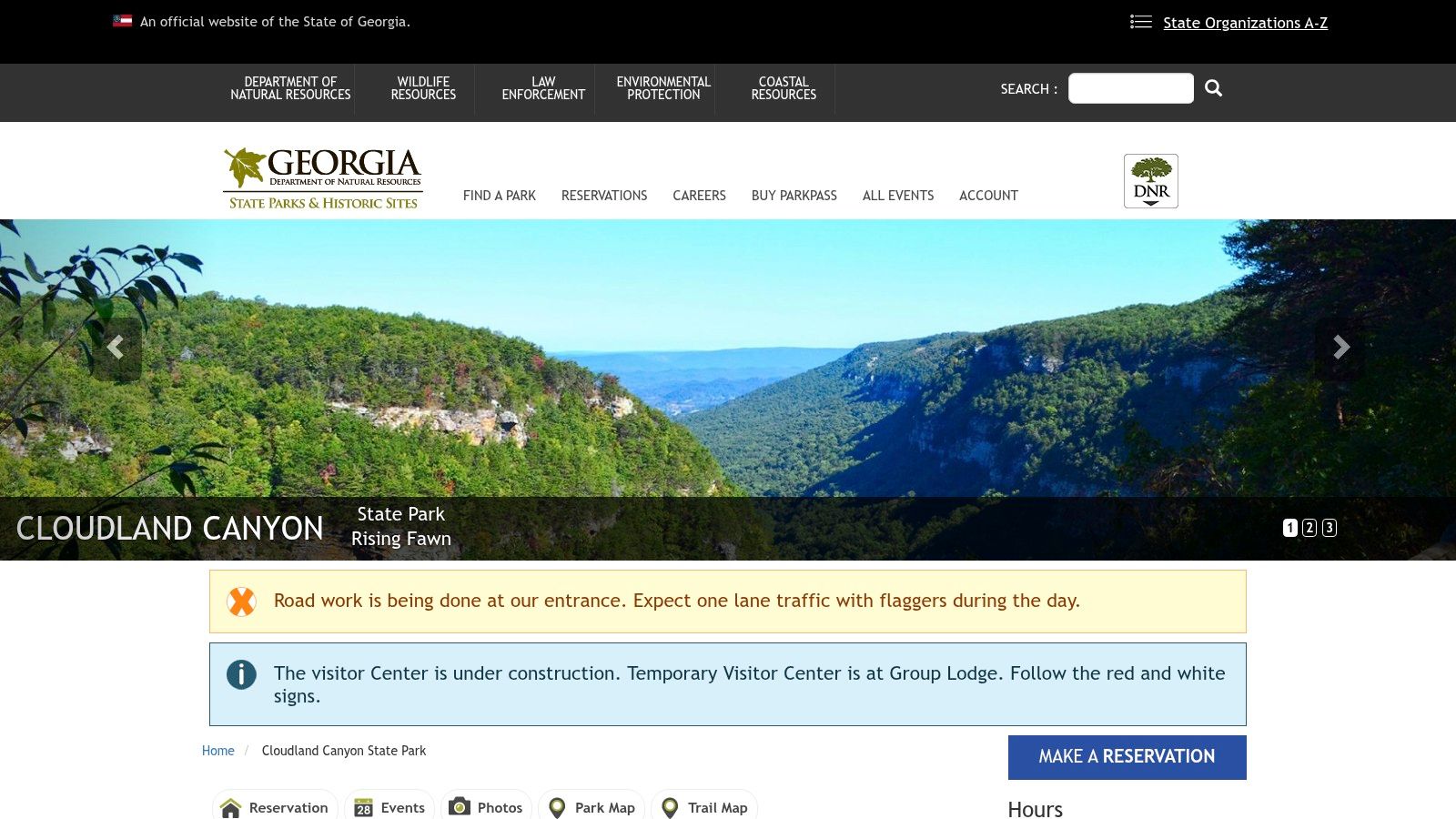
Want one park that can satisfy the hiker, the comfort-first camper, and the family member who mainly wants a great view without a long drive between activities? Cloudland Canyon is usually my answer.
This is one of the safest picks in Georgia for a mixed group because the park gives you real range. You can stay in a standard campground, book something with a little more comfort, or choose a more stripped-down camping style if the trip is about trail time. The scenery feels big right away, which matters on a two-night trip when nobody wants to spend half the weekend commuting inside the park.
Best for the adventure-seeking family
Cloudland fits the family or friend group that wants a trip to feel active, but not chaotic. One person can take on the harder stair-heavy routes to the waterfalls while someone else sticks to overlooks, shorter walks, or camp time. That split-plan flexibility is the park’s biggest strength.
The park also stands out for accessibility details that many roundups skip. Its accessibility information is worth checking before you book, especially if your group includes someone who needs adaptive equipment or more predictable terrain.
My practical read is simple. Sell Cloudland for canyon views, variety, and a strong weekend structure. Do not sell it as an easy waterfall park. The signature waterfall routes demand effort on the return climb, and tired kids or first-time campers feel those stairs more than they expect.
The trade-offs you should know before booking
Cloudland rewards good planning. It also punishes vague planning.
Sites and specialty lodging can get tight on peak weekends, especially when leaves are turning or temperatures are finally reasonable after a hot stretch. If this is a Friday-after-work run from Metro Atlanta, book early and keep arrival expectations realistic. You may not have much daylight left for a major hike.
Terrain is the other real trade-off. Distances can look manageable on paper, but the elevation change is what gets people. If your group wants more mountain mileage after the main park trails, this guide to the best hiking trails in the North Georgia mountains helps you compare options before adding extra hiking to the weekend.
Cloudland still earns its place on any serious list of the most beautiful state parks in Georgia to explore. Just go in with honest expectations about effort, crowds, and how much your group wants to do.
A simple two-night game plan
Arrive, set camp, and use the first evening for overlooks and a short walk. That gives everyone an early payoff without burning legs on arrival day. Mountain sites can get breezy, so keep dinner easy and secure loose gear before dark.
On day two, start early and make the waterfall hike the main event. Morning is better for cooler temperatures, lighter trail traffic, and stronger moods on the climb back out. Build in a slow afternoon afterward. This is a good park for intentionally splitting up, with stronger hikers taking extra mileage while everyone else resets at camp.
On the final morning, keep it short. Coffee, one more overlook, and an easy pack-out works better here than cramming in another hard descent before the drive home.
2. Tallulah Gorge State Park
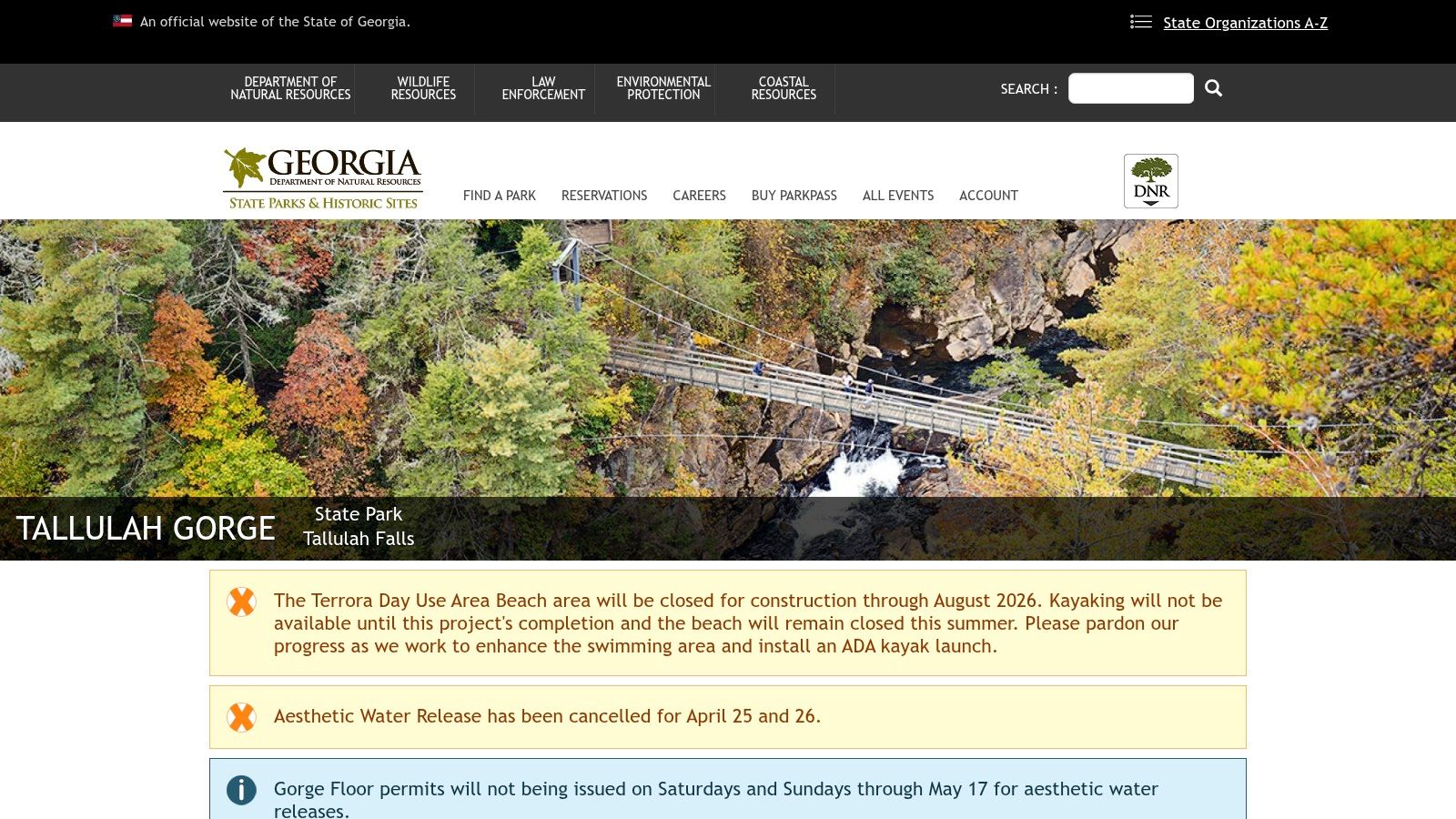
Want a camping weekend that feels bigger than the drive time? Tallulah Gorge is one of the strongest picks in Georgia for campers who want a high-impact trip built around overlooks, steep terrain, and a trail plan that benefits from an early start.
Best for the overlook chaser with a plan
This park fits couples, photographers, and fit friend groups who want a dramatic setting without doing a full backcountry trip. The rim trails give you fast payoff, and the suspension bridge adds that classic Tallulah moment, but the best version of this park usually goes to campers who arrive with a schedule.
The main trade-off is structure. Gorge floor access is controlled by free same-day permits with limited availability, so spontaneity does not work in your favor here. If the floor hike is the reason you booked the trip, make permit pickup part of your arrival strategy, not a maybe-later errand.
Tallulah also asks for honest self-assessment. Trail mileage may not look extreme, but the stairs, elevation change, and heat can wear people down faster than expected.
What catches first-timers off guard
The campground makes the park accessible, but this is not the best choice for campers who want a loose, lazy weekend built around water play and long stretches at the site. Tallulah is more excursion-focused. You camp here to spend time at overlooks, on trails, and moving between key points of interest.
Water access can also shift with park operations. As of early 2026, the park has noted that some water access areas, including the Terrora Day-Use beach and kayaking area, are scheduled for construction-related closure through August 2026. Verify current conditions before you plan the weekend around swimming or paddling.
If your group decides Tallulah’s water access is too limited for this trip, it helps to compare Georgia lakes that are better for boating and fishing weekends. If you want more trail time before heading home, the best hiking trails in North Georgia mountains gives you stronger add-on options than trying to force every activity into one park.
Go to Tallulah for the gorge, the views, and the feeling that the day had a clear objective. Pick somewhere else if your group wants maximum flexibility.
Mini-itinerary for the weekend challenge camper
Arrive on day one with enough daylight to set camp and head straight to the interpretive area and rim overlooks. That gives you the visual payoff early and helps you learn the trail layout before the next morning. Save your legs. The stairs add up.
Make day two your big effort day. Get moving early, secure a permit if the gorge floor is your priority, and carry more water than you think you need. If permits are gone, shift the plan instead of forcing a bad mood into the weekend. Tallulah still works well as an overlook-and-rim-trail trip, especially for campers who like photography, short bursts of hiking, and a strong scenic return on effort.
- Best fit: Couples, photographers, strong casual hikers, and friend groups who do well with a timed plan.
- Less ideal for: Families expecting easy swimming, campers who want privacy at camp all day, or anyone who dislikes permit logistics.
3. Red Top Mountain State Park
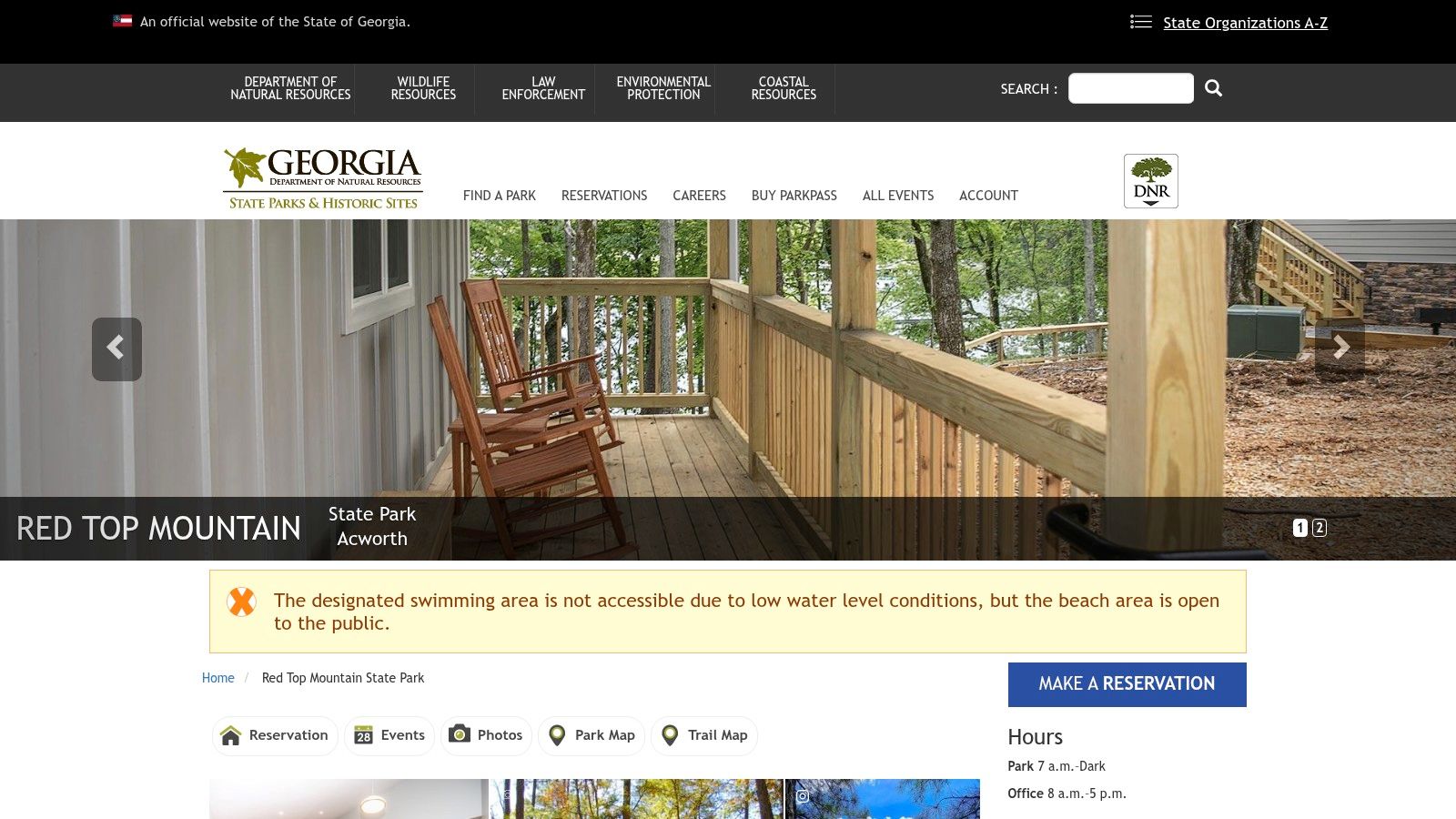
Need a camp trip that starts after work instead of at dawn? Red Top Mountain is one of the best answers in Georgia, especially for Metro Atlanta campers who want lake time without spending half the weekend on the road.
You can check current campground details, site types, and reservations at Red Top Mountain State Park. Demand stays high here for a reason. The park is close, easy to understand, and built around the kind of weekend many groups can pull off.
Best for the quick weekend escape artist
Red Top fits the camper who wants a short drive, a straightforward setup, and enough activity to keep everyone happy for one night or two. That includes young families, newer campers, and friend groups that do better with flexible plans than hard goals.
Lake Allatoona does most of the work. You get water access, fishing, paddling, boating, and trails that are manageable for a wide range of ages and energy levels. For travelers comparing nearby lake destinations, this guide to the best lakes in Georgia for boating and fishing gives helpful context on why this area stays popular.
Red Top also works well for mixed-interest groups. One person can take a shoreline walk, another can fish, and someone else can stay at camp without feeling like they picked the wrong park.
The real trade-off at Red Top
Convenience is the selling point. Solitude is not.
That matters when you book. On a spring or fall weekend, Red Top can feel busy in the campground, on the water, and around the most accessible trail sections. If your ideal trip involves quiet campsites, long buffers between neighbors, and a backcountry mood, choose a different park. If your group wants an easy lake weekend with low planning friction, Red Top is a strong pick.
I recommend this park most often to people who ask for a “worth it even for one night” trip. That is a narrower category than it sounds, and Red Top fills it well.
Booking mindset: Reserve Red Top for speed, convenience, and lake access. Book another park if privacy is the main goal.
Mini-itinerary for the short-drive lake camper
Arrive Friday with camp dinner already planned. This is not the park for a complicated first night. Set up, take a short walk before dark, and save the main activity for the next morning.
Start Saturday early if you want the park at its best. Walk a trail before the heat builds, then shift to paddling, fishing, or boat time on Lake Allatoona. Keep the afternoon loose. Red Top rewards groups that want options more than groups chasing one headline experience.
Sunday should stay simple. Easy breakfast, break camp, and head out before the roads and boat traffic start to drag.
- Best fit: Atlanta-area families, beginner campers, casual paddlers, and friend groups planning a short, low-stress trip.
- Less ideal for: Campers who want remote scenery, very quiet camp loops, or a weekend built around strenuous hiking.
4. Fort Yargo State Park
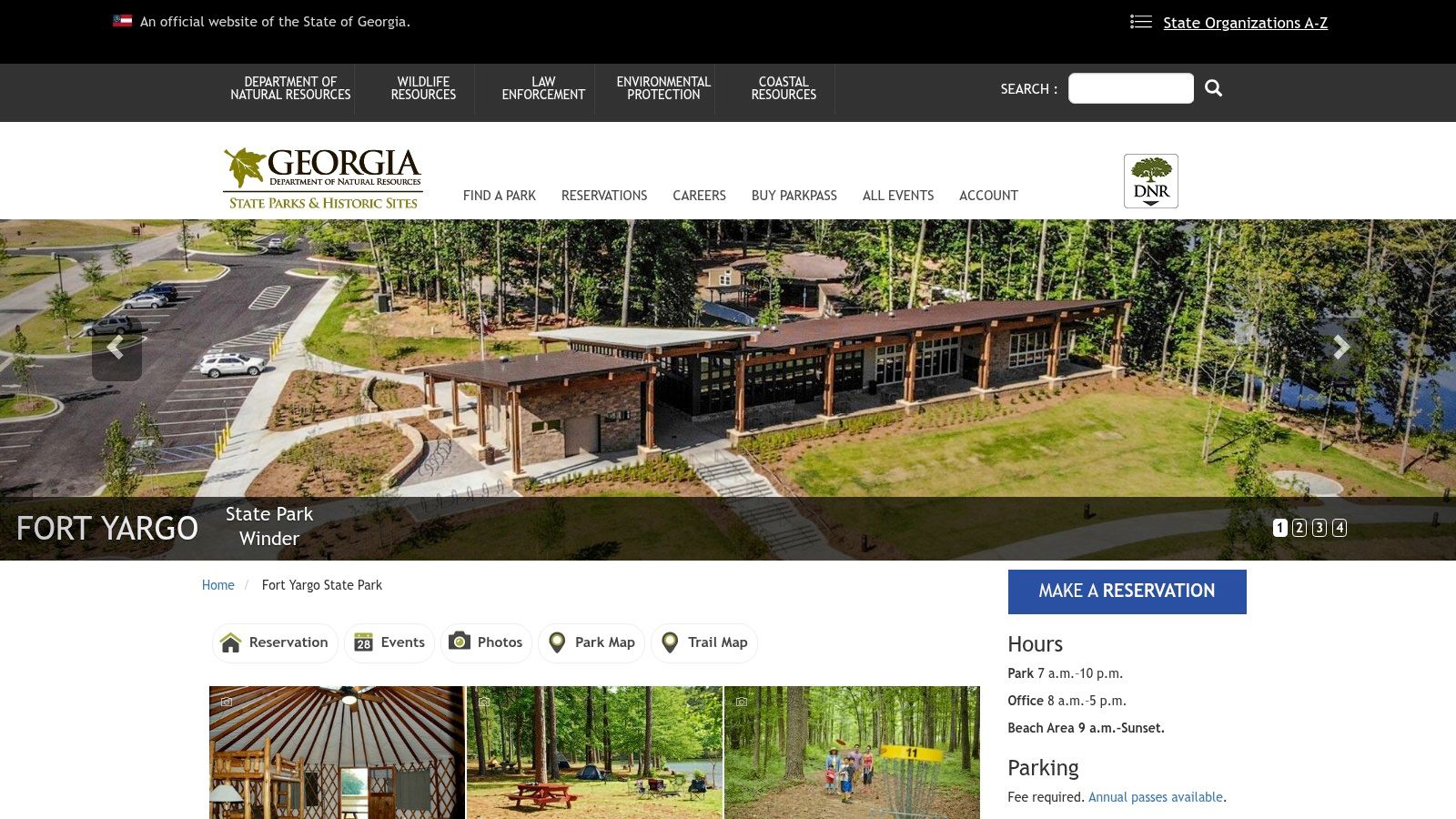
Fort Yargo is the practical planner’s park. It doesn’t always get the same buzz as the mountain heavyweights, but it does a lot of things well for real-world camping groups. That matters more than hype when you’re organizing a trip with beginners, kids, cyclists, and one person who asked if there are actual bathrooms.
You can book and review details at Fort Yargo State Park. This is one of the better “everyone can find their lane” parks near the Atlanta side of the state.
Best for the easy-logistics group organizer
Fort Yargo is ideal when you’re the one coordinating the trip and want fewer variables. There are RV and tent sites, walk-in tent options, yurts, cottages, a lake, trails, and group-friendly facilities. That range gives you room to build a weekend for people with different comfort levels.
One feature that deserves more attention is the on-site EV charger listed at the park. That aligns with a broader shift in Georgia travel, since the state has over 1,500 public EV stations statewide as of 2025 according to the verified trend note provided in the brief. What still doesn’t exist is a clean state-park-wide way to filter for EV-ready camping, so parks like Fort Yargo stand out when that detail matters.
What works in practice
The walk-in sites are the sweet spot if you want a more campy feel without going fully primitive. They give newer campers a step away from the parking-lot atmosphere while keeping logistics manageable. The lake and trail system also help spread people out. You’re not relying on one signature attraction to carry the whole weekend.
The trade-off is that fair-weather weekends can bring a lot of day use. You’ll notice it on trails and around popular recreation areas.
- Strong use case: Mixed-skill group trips, youth groups, and casual cyclists.
- Less compelling use case: People chasing a striking natural environment or a remote-feeling campsite.
- Good planning move: Decide early whether your group values convenience or privacy more. At Fort Yargo, convenience wins.
Mini-itinerary for a low-friction weekend
Set up on arrival and get straight to the lake or an easy trail loop. This isn’t a park where you need to overprogram the first evening. Let people settle in.
Use the full day for a split schedule. One group can ride or hike while another stays near the water or camp. Reconnect for dinner and keep the evening social. Fort Yargo is one of the easiest places to run a successful group trip because it gives people room to enjoy the same park in different ways.
5. Stephen C. Foster State Park
Want a Georgia camping trip that feels remote instead of merely out of town? Stephen C. Foster is the pick for campers willing to trade convenience for access to the Okefenokee, better wildlife viewing, and some of the darkest skies in the state.
The official park site is Stephen C. Foster State Park. For many campers, especially those coming from metro Atlanta, this works better as a committed two-night or three-night trip than a quick overnight. The drive is part of the cost. The payoff is a setting that feels completely different from the mountain, lake, and suburban-access parks higher on this list.
Best for the stargazing paddler
Stephen C. Foster suits the camper who wants quiet water, bird activity, and a night sky worth planning around. This is the park for people who enjoy being on the water at first light, moving slowly, and treating sunset as an event instead of the end of the day.
Flat water and open sky shape the trip here. You are not chasing big elevation or signature overlooks. You are watching for gators, listening for birds, and timing your day around the light.
That makes this park especially good for couples, solo campers, and small groups who do not need a packed activity list to have a strong weekend.
What works in practice
The best trips here are organized before you arrive. Bring groceries, ice, and any small gear you might normally plan to grab on the way. Late arrivals are harder to recover from at remote parks, and flexible in-and-out habits do not fit this park well.
Night matters here as much as daytime. Campers who turn in right after dinner miss part of what makes Stephen C. Foster different. If your ideal evening is a bright campground with lots of neighboring activity, choose another park. If you want stillness, stars, and the sound of the swamp settling down, this one earns the drive.
It also works well as part of a longer south Georgia trip. If you want to add a coastal stop after your swamp days, this guide to Georgia beaches for a relaxing vacation gives you a few easy next-step options.
The trade-offs to plan for
Remote parks are less forgiving. Arrival timing matters. Supplies matter. Gate hours matter.
That can frustrate groups that like to improvise. It is much better for campers who are happy to commit to the setting once they are there and let the park set the pace a little.
The other trade-off is activity style. Stephen C. Foster rewards patience more than mileage. If your group measures a good trip by how many trails, overlooks, or attractions you can stack into one day, this park may feel too quiet. If your group likes paddling, photography, wildlife watching, or sitting out after dark, it lands much better.
Mini-itinerary for a dark-sky weekend
Arrive with camp food already sorted and set up before you lose daylight. Take a short evening walk, eat early, and stay up. The first night should be about the sky.
Use the full next day for paddling. Start early, move slowly, and leave room for stops instead of treating it like a workout. Midday is fine for a rest back at camp, but dawn and dusk are the hours to protect on your schedule.
On the final morning, keep it simple. Coffee, one more quiet look at the water, then break camp without rushing. Stephen C. Foster is at its best when you stop trying to fill every hour.
6. Skidaway Island State Park
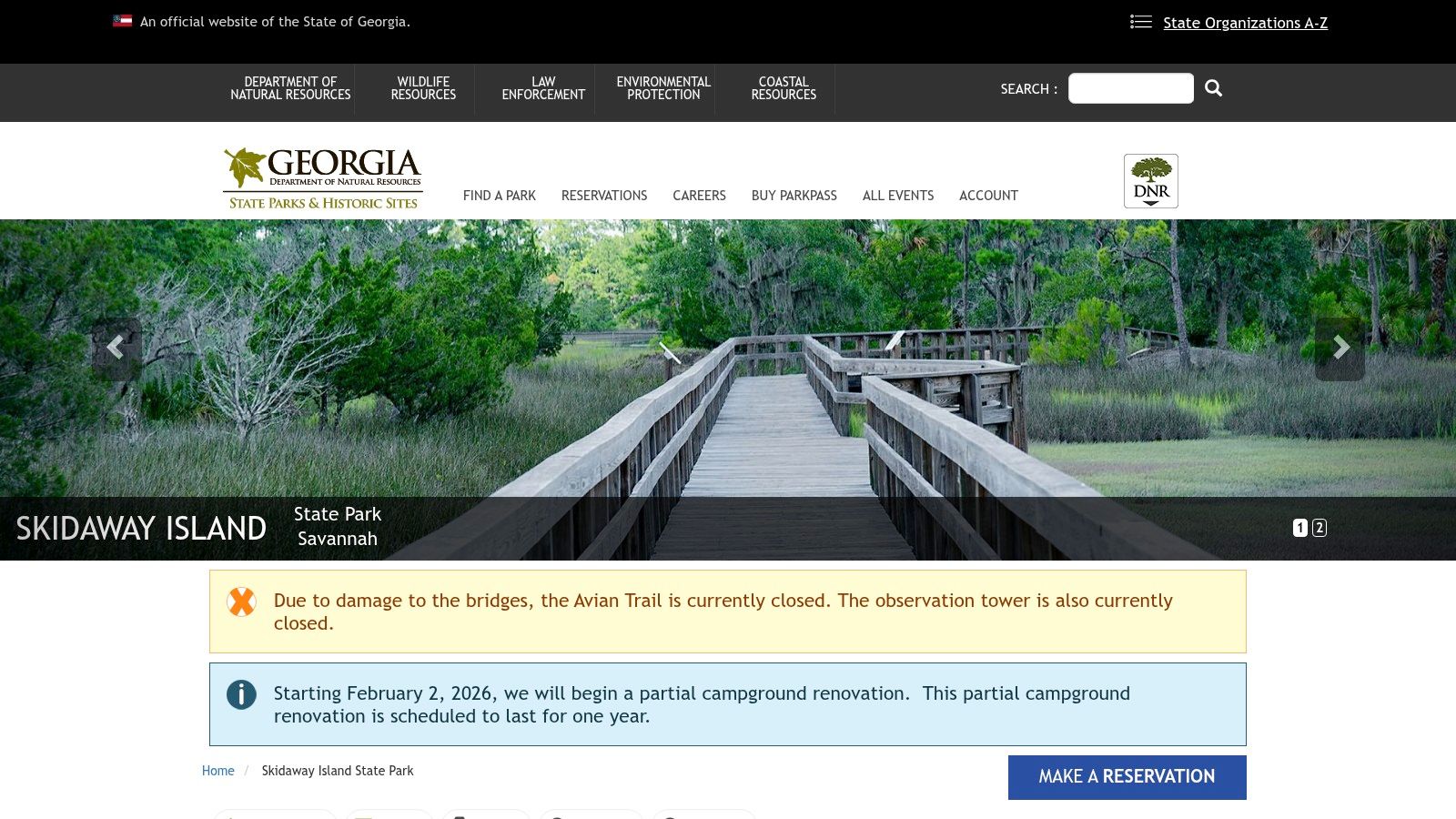
Want a coastal camping trip where one person wants marsh trails, another wants Savannah, and nobody wants a rough campground? Skidaway is one of the best answers in the state.
It works best as a low-friction coastal basecamp. You get live oaks, salt-marsh views, boardwalk walking, and an easy drive to the city when the group wants a meal out or a half-day off the campsite. The official park page is Skidaway Island State Park.
Best for the comfort-first coastal explorer
This park fits campers who want nature without committing to a fully rustic weekend. The campground is shaded, the setting feels distinctly coastal, and the cabins help when your group has mixed tolerance for heat, bugs, or sleeping on the ground. For couples, families, and friend groups with one serious camper and one comfort-first traveler, that matters.
Skidaway also suits the trip planner who likes options. You can spend the morning on short trails and boardwalks, then leave the park for part of the afternoon without feeling like you are wasting the campsite. If you want to tack on a shoreline day, this guide to the best beaches in Georgia for a relaxing vacation helps you choose a sensible add-on.
What to watch before you book
This is a park where current conditions can change the trip more than the brochure suggests. Trail closures, boardwalk repairs, weather impacts, and campground work all shape which sites feel best and which parts of the park are open.
As of early 2026, a partial campground renovation is scheduled to begin, which may affect site selection. The park has also noted closures affecting some trails and structures, including the Avian Trail bridges and observation tower. Check current conditions before you lock in a site, especially if your trip depends on easy walking access or specific trail segments.
The trade-off is straightforward. Skidaway gives you flexibility and comfort, but it does not deliver the secluded, all-day wilderness feel that some campers want.
- Best move: Book it as a park-first trip with Savannah or the beach as an optional extra.
- Works well for: Couples, families with mixed camping experience, birders, and weekend campers who want easy logistics.
- Less ideal for: Campers who want long trail mileage, deep quiet, or a campsite that feels far from town.
Mini-itinerary for a blended coastal weekend
Arrive early enough to enjoy the park before dinner. Set up, walk a boardwalk or short trail, and stay put that first evening. Skidaway earns its keep when you slow down and use the marsh setting instead of treating the campground like a hotel parking lot.
On the full day, use the cool morning for the park. Midday can go either way. Stay in camp if your group wants a quiet reset, or head into Savannah for food and sightseeing once the trails heat up.
On the last morning, keep it simple. Coffee under the oaks, one more short walk, then break camp without rushing. This park is best for campers who want a coastal weekend with room to adjust on the fly.
7. Mistletoe State Park
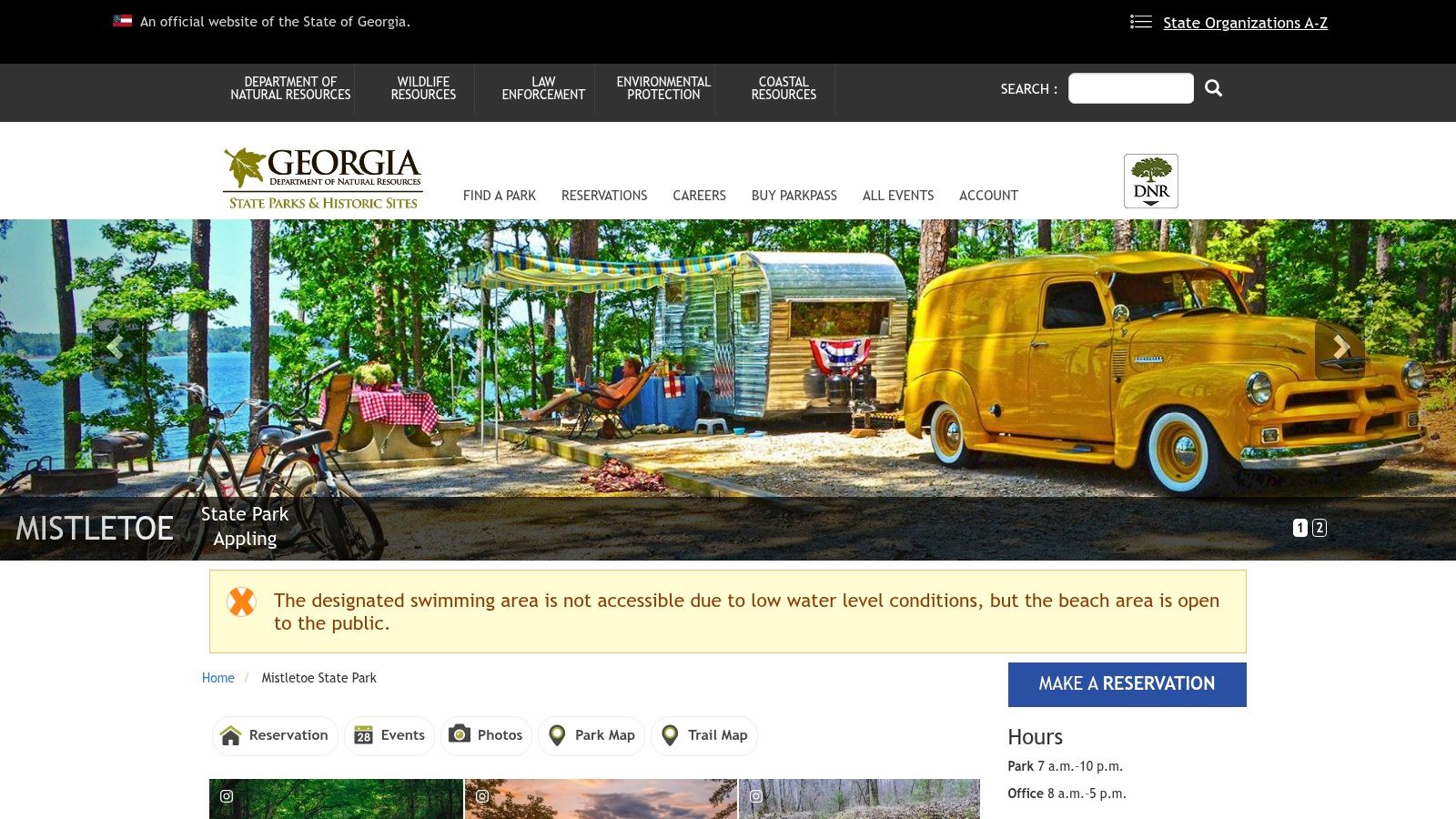
Want a park where the day starts at the boat ramp instead of the trailhead? Mistletoe fits the camper who plans the weekend around first light on Clarks Hill Lake, then builds everything else around the weather, the bite, and how much time the group wants to spend on the water.
Mistletoe State Park is best for The Sunrise Angler. It also suits paddlers, easygoing lake families, and friend groups who want an active campsite without the heavier traffic and tighter feel you get at some parks closer to Atlanta. The setting helps. Water stays in view, access is straightforward, and the whole place has a practical lake-camping rhythm.
The site options matter here. Standard campsites work well for a simple fishing weekend. Walk-in sites give the trip a quieter, more tucked-away feel if your group wants less campground bustle. That flexibility is useful when half the group wants comfort and the other half wants something closer to roughing it.
The trade-off is simple. Mistletoe is strongest as a water-first park. If your trip depends on long trail mileage, broad beach time, or every recreation area being open on a fixed schedule, check current conditions before booking. Weather, water levels, and seasonal operations affect this park more than polished brochure language suggests.
Best for The Sunrise Angler
Book Mistletoe if your ideal camp routine is coffee at dawn, a rod in the water early, and a slower afternoon once the lake heats up. This park rewards campers who make use of the shoreline, not campers who just want a scenic background behind the picnic table.
It also works for The Laid-Back Lake Family. Kids can split time between camp and the water, and adults do not need a complicated plan to fill the day. Bring a kayak or fishing gear if you have it. If not, keep expectations centered on a relaxed lake weekend rather than a packed activity list.
Mini-itinerary for a fishing-first weekend
Arrive early on day one and set up fast. Save the longer camp chores for later and get on the water while you still have a good evening window. Dinner should be simple and easy to clean up.
Day two is the reason to come. Start at first light, fish or paddle through the calmest part of the morning, then head back for a late breakfast. Midday is for shade, swimming, or a reset at camp. Go back out in the evening when the lake settles down again.
On the last morning, keep it short and useful. One more cast, one quiet paddle, then break camp before the heat and boat traffic build. Mistletoe is at its best for campers who want a clear plan, easy water access, and a weekend that feels full without being overprogrammed.
Top 7 Georgia State Park Camping Spots Comparison
| Park | 🔄 Logistics / Complexity | ⚡ Access / Travel time | Reservations & Facilities | ⭐ Experience quality / 📊 Impact | Ideal use cases & 💡 Key advantage |
|---|---|---|---|---|---|
| Cloudland Canyon State Park | High, popular weekends; some strenuous trails and many stairs | Moderate, Lookout Mountain (Rising Fawn); crowds on peak days | 75+ sites, 10 yurts, trading post, on‑site amenities; trails & MTB area | ⭐⭐⭐⭐, signature canyon overlooks and waterfalls; strong group appeal | Groups with mixed preferences; canyon views & waterfalls; 💡 reserve well ahead |
| Tallulah Gorge State Park | High, gorge‑floor access requires same‑day, limited permits; plan early | Moderate, rim overlooks and suspension bridge are easily reached | 50+ sites, interpretive center, modern facilities; gorge permits limited (100/day) | ⭐⭐⭐⭐⭐, dramatic 1,000‑ft gorge and iconic overlooks | Scenic day hikes and permit‑only gorge hikes; 💡 arrive early for permits |
| Red Top Mountain State Park | Low–Moderate, busy during peak season | Short, convenient drive from Atlanta metro for weekend trips | 90+ sites, 6 yurts, swimming beach, marina access, 15+ miles of trails | ⭐⭐⭐⭐, strong lake recreation and family‑friendly trails | Weekend getaways and water recreation; 💡 bring or rent boating gear |
| Fort Yargo State Park | Low–Moderate, versatile site types; fair‑weather crowds on weekends | Convenient, between Atlanta and Athens; easy group logistics | 47 RV/tent, 12 walk‑in, 6 yurts, 17 cottages, 260‑acre lake, EV charger | ⭐⭐⭐⭐, solid basecamp with extensive trails and group facilities | Group outings, biking and family trips; 💡 reserve pavilions for events |
| Stephen C. Foster State Park | High, remote access, gated nights and separate refuge fee | Longer, remote Okefenokee gateway with limited services | 50+ renovated sites, trading post, boat basin with rentals, ranger programs | ⭐⭐⭐⭐⭐, unique swamp wildlife and certified dark‑sky stargazing | Paddling, wildlife viewing and stargazing; 💡 plan logistics and fees in advance |
| Skidaway Island State Park | Low–Moderate, near Savannah; partial renovations may affect site choice | Easy, close to Savannah and Tybee Island | RV/tent sites (some sewer), 3 camper cabins, boardwalks, nature center | ⭐⭐⭐, shaded coastal/marsh experience; comfortable cabin option | Coastal birding, easy Savannah access, cabins for non‑campers; 💡 check renovation impacts |
| Mistletoe State Park | Moderate, peninsular campsites; storm impacts can affect trails | Moderate, on Clarks Hill (Lake Strom Thurmond) with multiple boat ramps | 90+ sites, lakeside tent cabin, boat ramps, canoe rentals, beach area | ⭐⭐⭐⭐, big‑water setting with excellent fishing and shoreline access | Fishing and waterfront group trips; 💡 verify trail/seasonal conditions before visiting |
Your Georgia Adventure Awaits
Which Georgia state park fits the trip you want to take next month?
That is the question that matters. The best park depends on your trip persona, your drive tolerance, and how much work your group is willing to do once you get there.
For the Quick Weekend Escape Artist, Red Top Mountain makes the most sense. You can leave after work, get camp set up before it gets too late, spend a full day on the lake or trails, and still be home at a reasonable hour on Sunday. For the Adventure-Seeking Hiker, Cloudland Canyon and Tallulah Gorge sit at the top for different reasons. Cloudland gives you a broader menu of camping styles and scenery. Tallulah asks more from you in planning and trail readiness, but it pays off if your group wants a trip with a sharper edge.
For the Group Organizer, Fort Yargo is usually the safer call. It is easier to sell to mixed-skill campers, cyclists, and families who all want something different. For the Stargazing Paddler, Stephen C. Foster stands apart. It takes more commitment to reach, and that is part of the point. You go there for dark skies, swamp water, wildlife, and a trip pace that feels far removed from metro life. For the Coastal Basecamper, Skidaway Island works well because you can mix marsh trails and campground time with Savannah or Tybee plans. For the Lake-Focused Angler, Mistletoe is the practical choice, especially if boat access and shoreline time matter more than hiking mileage.
A simple way to choose is to picture the first full day of the trip. If your ideal morning starts with steep trail work and big overlooks, book a mountain park. If it starts with coffee by the water and a slow launch from camp, book a lake or swamp park. If your group wants a little of everything without too much friction, Fort Yargo or Red Top usually gives you the easiest win.
A few habits save headaches across all seven parks:
- Reserve early for high-demand dates: Fall weekends, spring breaks, and holiday periods go fast, especially at parks close to Atlanta or with standout scenery.
- Match the park to the least-capable hiker in the group: Gorge stairs, exposed trails, heat, and elevation changes can turn a short outing into a grind.
- Build a backup version of the trip: Have a second hike, paddle plan, or sightseeing option ready in case of weather, closures, or permit limits.
- Check alerts before you leave home: Trail repairs, storm cleanup, boat ramp conditions, and renovation work can change how the park functions that week.
- Be honest about the trip style you want: Remote parks reward planning. Convenient parks bring more people. Scenic parks often ask more from your legs.
Georgia's state park system works well because it covers very different camping personalities without forcing every trip into the same mold. You can book a mountain weekend, a dark-sky paddle trip, a coastal stay with city access, or a straightforward lake escape based on what your group will enjoy.
Pick the park that fits your people. Then plan one good day, not ten perfect ideas. That approach usually leads to the better trip.
If your business is cleaning out old laptops, servers, networking gear, or office electronics before your next team retreat or facility refresh, Montclair Crew Recycling is a reliable Atlanta-area partner for secure, responsible IT asset disposal. They help organizations across Metro Atlanta recycle equipment, protect data with hard drive wiping and destruction options, and keep reusable tech out of landfills without turning the process into a project for your staff.
