
Got a drawer full of old phones? Figuring out how to recycle old cell phones is easier than you might think. It really just boils down to a few key actions: doing a quick check to see if it has any resale value, backing up your data, and then wiping the device completely clean. Don't forget to pop out the SIM and SD cards, too.
Taking these steps gets your old phone ready for its next chapter, whether that means donating it, trading it in, or sending it to a certified recycler.
Why Responsible Phone Recycling Matters
Deciding what to do with that old smartphone is about more than just clearing out some clutter. It's a huge deal for both your personal security and for the environment. Think about it—old phones are treasure troves of your personal data. We're talking contacts, text messages, photos, and even banking information. Just tossing a phone in the trash is like leaving your front door wide open for a data breach.
On top of the security risk, the environmental impact is massive. Cell phones are packed with valuable resources that are hard to come by—gold, silver, copper, and palladium, just to name a few. But they also contain some nasty stuff like lead, mercury, and cadmium. When a phone ends up in a landfill, those toxic materials can seep into the soil and our water supply, causing some serious and long-lasting damage.
The Two Pillars of Smart Recycling
When you handle phone recycling the right way, you're tackling both of these problems at once. The whole process is built on two simple but powerful ideas that help everyone involved:
- Protecting Your Privacy: The absolute first priority is always securing your data. A simple factory reset often isn't enough. You need to be sure all your personal information is gone for good and can't be recovered before that device is out of your hands.
- Conserving Natural Resources: Recycling pulls out all those precious materials, which means we don't have to rely as much on destructive mining operations. It’s a huge part of creating a circular economy, where today's old products become the raw materials for tomorrow's new ones. You can get a better sense of the big picture by understanding what is electronic waste recycling.
By taking a few careful steps, you ensure your old technology doesn't become a new liability. It's a small action with a significant positive ripple effect on both digital security and environmental health.
If you're looking for a full rundown of what's involved, this simple guide to mobile phone recycling offers some great additional perspective. At the end of the day, knowing how to properly handle an old device is a modern responsibility that protects both your data and our planet.
Securing Your Data Before You Let Go
Before any old cell phone leaves your hands, the single most critical step is making sure your data doesn't go along for the ride. It's shocking how many devices are turned in with sensitive information still easily accessible, turning a responsible recycling effort into a massive security risk. Just hitting "delete" or doing a quick factory reset might not be enough to truly scrub your digital footprint, especially on older models.
Real peace of mind comes from a deliberate, multi-step process. This isn't just about wiping the device; it's about methodically signing out of every connected cloud account and physically pulling out any components that can store your personal details.
This flow chart nails the core preparation process: check, backup, wipe, and remove.
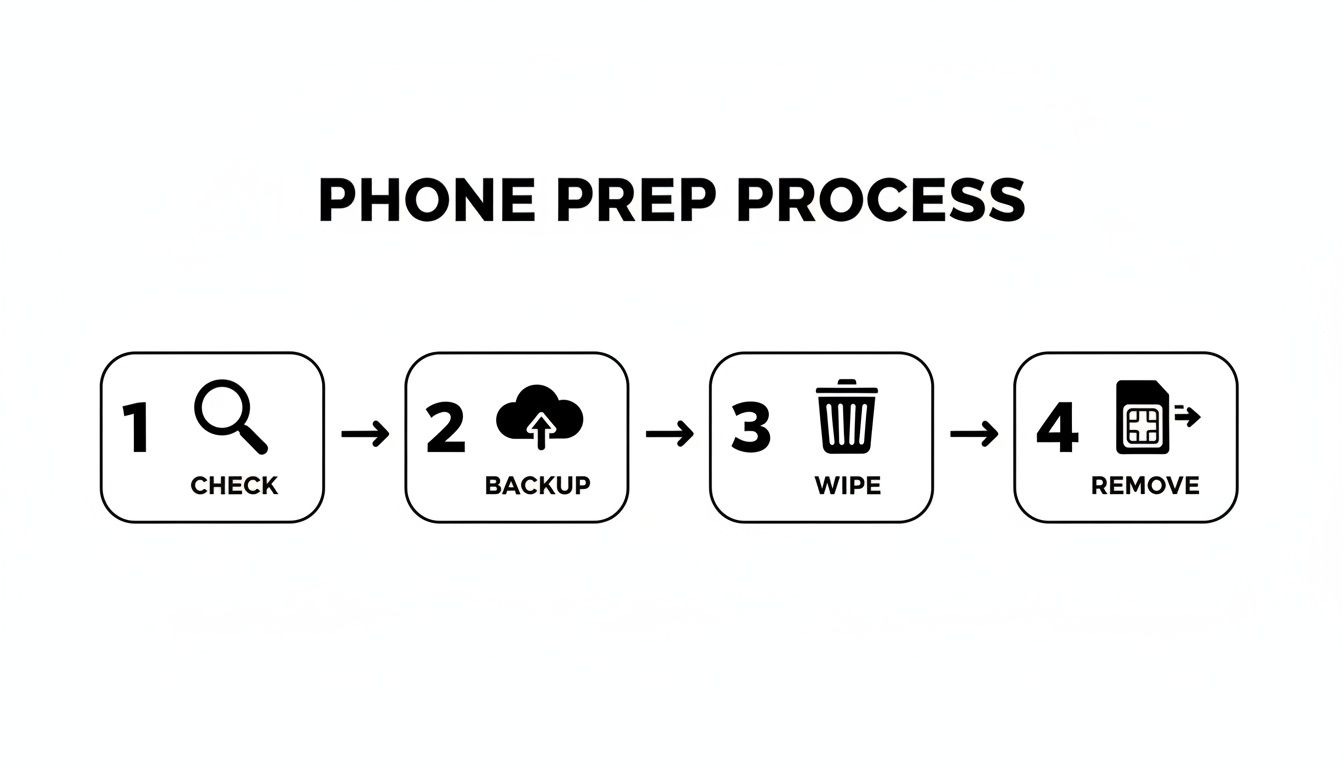
Think of each icon as a non-negotiable stage in sanitizing your phone. You want to be absolutely certain your personal information is safe before that device is gone for good.
The Essential Steps for iOS and Android
While both iPhones and Androids have built-in reset features, the prep work you do beforehand is what really counts. No matter which platform you're on, always start by backing up the data you want to keep—photos, contacts, important files—to a cloud service like iCloud or Google One.
Next, and this is a big one, you must sign out of all your accounts.
- For iPhones: Head to Settings, tap your name right at the top, and sign out of your iCloud account. This is crucial because it deactivates Find My iPhone and completely severs the phone's connection to your Apple ID.
- For Android phones: Go into Settings, find the "Accounts" section, and manually remove your Google account. Don't stop there; remove every other account logged in, from social media to work email.
Only after you've backed up and signed out should you even think about the factory reset. Modern smartphones use strong encryption, so a reset effectively throws away the encryption key, turning all your old data into unreadable gibberish.
Going Beyond the Factory Reset
For any business or even an individual dealing with highly sensitive information, a standard reset just doesn't cut it for compliance or security. That's where certified data destruction comes in. Before you even consider getting rid of an old phone, getting familiar with broader strategies on how to prevent data loss is a smart move to protect your information across its entire lifecycle.
When it comes to certified destruction, you have two main routes:
- Software Wiping: This is a much more intense process that uses specialized software to overwrite the phone's storage again and again with random data. It follows strict protocols like the DoD 5220.22-M three-pass method to ensure nothing is recoverable. You can get a deeper understanding of this by reading our guide on what is data sanitization.
- Physical Destruction: When you need 100% certainty, nothing beats shredding. Industrial shredders pulverize the entire phone—memory chips and all—into tiny fragments that are impossible to recover data from.
The sheer volume of discarded electronics is hard to wrap your head around. In 2022 alone, more than 5.3 billion cell phones were tossed aside, becoming e-waste. Worse yet, it's estimated that only about 20% of these devices are ever properly recycled, leaving the rest to leak toxic materials into our soil and water.
One last thing: always, always physically remove your SIM card and any microSD memory cards. A factory reset won't touch your SIM card, but it can still hold contact info and other personal identifiers. Treating your old phone's data with this level of care ensures your recycling efforts are both environmentally sound and completely secure.
Finding Certified Recyclers in Metro Atlanta
Once your old phones are wiped clean and ready to go, the big question is: where do they go now? Finding a trustworthy partner in the Metro Atlanta area is absolutely critical to make sure your devices are handled responsibly. The right choice really comes down to what you're trying to achieve—whether that's supporting a local cause, guaranteeing data security, or just finding the most convenient drop-off spot.
It's important to know that not all recycling programs are created equal. You’ll run into a mix of everything from non-profits that refurbish devices for those in need, to big-box retail take-back programs, to fully certified e-waste vendors. For any organization with security obligations, focusing on certified recyclers isn't just a good idea, it's non-negotiable.
The Gold Standard Certifications
When you see a recycler with an R2 (Responsible Recycling) or e-Stewards certification, that’s your signal they mean business. It means they’ve been audited by a third party and have proven they meet the highest industry standards for security and environmental safety. These certifications are your peace of mind, an assurance that the vendor handles data destruction and compliance with extreme care.
An uncertified recycler might just ship old electronics overseas, where they could be dismantled in unsafe conditions, polluting local communities and opening up massive data security risks. Certified partners, on the other hand, guarantee a secure and documented chain of custody from the moment your devices leave your hands.
Choosing a certified recycler isn't just about following best practices; it's about mitigating risk. It ensures your organization's data is verifiably destroyed and that you're contributing to a responsible, ethical electronics lifecycle.
The market for this is huge and growing. The industry for recycled phone components is projected to jump from $8.38 billion in 2024 to a staggering $22.78 billion by 2031. With nearly 98% of US adults now owning a cell phone, there's a constant stream of retired devices feeding this ecosystem.
Local Options for Individuals and Businesses
For Metro Atlanta residents just looking to get rid of one or two old phones, you have plenty of easy options. Most major electronics retailers and mobile carriers have in-store drop-off bins. You should also keep an eye out for municipal collection events hosted by counties like Fulton, DeKalb, and Gwinnett, which usually pop up in the spring and fall.
Now, for businesses dealing with a larger inventory of devices, the logistics change completely. While you could drop off a few dozen phones, it’s far more efficient to work with a local partner who offers scheduled pickups. This is where a company specializing in IT asset disposition becomes invaluable. Our guide on how to recycle electronics in Atlanta dives deep into business-focused services that handle the entire process, from on-site collection to providing certified data destruction reports.
Comparing Phone Recycling Options in Metro Atlanta
To help you decide on the best path forward, here’s a quick comparison of the different recycling avenues available right here in Metro Atlanta for both businesses and individuals.
| Recycling Option | Best For | Data Security Level | Potential for Payout | Local Example |
|---|---|---|---|---|
| Certified ITAD Vendor | Businesses with bulk devices, data centers, organizations requiring full compliance. | Very High (Certified data destruction with documentation) | High (Profit-sharing or buyback on valuable assets) | Montclair Crew Recycling |
| Retailer Take-Back | Individuals with 1-2 phones looking for convenience. | Low to Medium (Often wiped, but not certified) | Low (Usually store credit or a small discount) | Best Buy, Apple Trade In |
| Non-Profit Donations | Individuals or small businesses wanting to support a cause. | Low (Basic wiping, focused on refurbishment) | None (Tax deduction may be possible) | Cell Phones for Soldiers |
| Municipal E-Waste Events | Residents looking to dispose of various electronics at once. | Low (Primarily focused on environmental disposal) | None | Keep North Fulton Beautiful |
This table should give you a clear picture of which option aligns best with your needs, whether you're a C-suite executive managing a corporate refresh or a homeowner cleaning out a junk drawer.
Before you commit to any recycler, make sure you get clear answers to a few key questions:
- Can you provide a copy of your R2 or e-Stewards certification?
- What is your data destruction process, and will I receive a certificate of destruction?
- Do you offer on-site pickups for bulk quantities?
- What kind of chain-of-custody documentation do you provide?
Getting these questions answered upfront is the best way to ensure your old cell phones are recycled both securely and responsibly.
What's That Old Phone in Your Drawer Really Worth?
Before you toss that old phone in a recycling bin, hold on a second. Recycling doesn't automatically mean writing it off as worthless. Many devices, even those that are a few generations old, still have some cash value you can recover through trade-ins, resale, or professional asset recovery programs. It turns a chore into a chance to get back some of your original investment.
For most people, the simplest routes are the trade-in programs offered by carriers and manufacturers. Companies like Apple, Verizon, and AT&T are always running promotions that give you credit toward a new device when you hand over your old one. The value you get depends entirely on the model, age, and condition, but don't discount it—even a phone with a cracked screen can sometimes net you a decent credit.
If you're willing to put in a little more effort for a bigger payout, there's the direct resale market. Websites like Swappa or Gazelle are built for selling used electronics, and they often give you a higher cash return than a standard trade-in. This is especially true for phones in good cosmetic and working shape. The trick is to be honest about your device's condition.
Can Your Old Phone Actually Be Resold?
So, how do you know if your phone is a candidate for resale or just a high-tech paperweight? A quick evaluation can tell you whether it's better suited for a new owner or the recycling stream.
A phone with real resale potential usually checks these boxes:
- It powers on and works properly. The phone should turn on, hold a decent charge, and have a responsive touch screen.
- The screen and body are intact. Minor scuffs are one thing, but deep cracks in the glass or major dents in the frame will kill its value.
- There’s no water damage. You can check the Liquid Contact Indicator (LCI), which is a tiny sticker that turns red if it gets wet. It's usually tucked inside the SIM card slot.
If your phone meets all this criteria, you should absolutely look into selling it. If it’s got some serious issues or physical damage, a certified recycling partner or a trade-in program is probably the smarter move.
At the end of the day, it's a simple cost-benefit analysis. If the cash you can get outweighs the convenience of just dropping it off, selling it is a no-brainer. You make some money and give the device a second life.
For Businesses: This is an ITAD Job
Now, if you're a business with dozens—or hundreds—of old company phones, the game changes completely. This is where you bring in an IT Asset Disposition (ITAD) partner. These are specialized firms that manage the entire end-of-life process for corporate electronics, from secure pickup to data destruction and, most importantly, value recovery.
We cover this in much more detail in our complete guide on disposing of old cell phones.
An ITAD partner doesn't just recycle. They audit your entire inventory, securely wipe every device to meet strict data compliance standards, and then figure out which phones can be refurbished and resold. Your organization then gets a cut of the profits, turning a pile of obsolete tech into an unexpected revenue stream while guaranteeing you're compliant and secure.
The Environmental and Business Case for Recycling
So, why bother with a formal process for recycling old company phones? It might seem like a small task, but keeping even one device out of a landfill is a huge deal. That simple action connects your organization to a much bigger global effort, turning a routine disposal job into a real statement of corporate responsibility.
Every single phone tossed in the trash contributes to a growing e-waste crisis. These devices are packed with heavy metals like lead, mercury, and cadmium. When they sit in a landfill, those toxins can eventually leach into the soil and contaminate groundwater, creating a direct threat to local ecosystems and public health. This isn't just a "what if" scenario; it's the reality of improper e-waste disposal.
It’s More Than Just Preventing Pollution
Beyond the obvious environmental hazards, throwing away old phones is an incredible waste of valuable, finite resources. Think of these devices as miniature treasure troves, full of precious metals that were extracted from the earth through destructive mining operations. Recycling completely flips that script.
The numbers are staggering. Processing just one million phones can recover approximately 35,000 pounds of copper, 772 pounds of silver, 75 pounds of gold, and 33 pounds of palladium. These are highly valuable materials that go right back into the manufacturing supply chain, cutting down the need for new mining. If you want to dive deeper, you can find more insights on this process and the global fight against e-waste—a problem expected to hit 74.7 million metric tons by 2030—over at Archive Market Research.
When you recycle old cell phones, you're not just decluttering a drawer. You are actively participating in urban mining—reclaiming valuable resources and preventing toxic pollution with one responsible decision.
Why It's a Smart Business Decision
For any organization, the benefits go way beyond just "being green." Proper e-waste management is a critical piece of modern corporate social responsibility (CSR) and a straightforward win for your risk management strategy. Let's be honest, in today's market, customers and partners want to work with businesses that have solid ethical and environmental credentials.
A documented, certified recycling program shows a real commitment to sustainability, boosting your brand's reputation as a company that cares.
More importantly, it’s a crucial compliance step. Working with a certified recycler gives you an auditable paper trail, including certificates of data destruction. This documentation is your shield, protecting your company from the massive legal and financial fallout that can come from a data breach on improperly discarded equipment. It’s not just good for the planet; it’s a smart, protective, and reputable business practice.
Common Questions About Recycling Old Phones
Even with a solid plan, a few lingering questions always seem to pop up right before you’re ready to recycle a batch of old cell phones. We hear them all the time. Let's clear up some of the most common ones so you can move forward with total confidence.
What About Phones With Cracked Screens?
A cracked screen is not a death sentence for a phone. Don't just toss it in a drawer. While a shattered screen tanks its resale value, the guts of the phone—the logic board, processor, and precious metals—are still incredibly valuable for recovery.
A reseller probably won't offer you any cash for a phone with a busted screen, but a certified recycler can still safely harvest the gold, silver, and copper from its internal circuitry. The bottom line: don't let cosmetic damage stop you. That device is still a rich source of reclaimable materials.
Should I Include Chargers and Cables?
This is a classic point of confusion. The short answer is: it’s helpful, but not a dealbreaker. If you're trading in a phone for credit, including the original charger and cable in good shape might bump up the value slightly. For straightforward recycling, however, the phone itself is what really matters.
Recyclers are focused on the device, since that’s where the valuable and hazardous materials are. Most partners will happily take the accessories off your hands, but your main job is making sure the phone itself is securely wiped and ready to go.
Key Takeaway: Put your energy into prepping the phone. Accessories are a nice-to-have, but their absence won't stop your device from being responsibly recycled. Your top priorities should always be backing up your data and then securely wiping it clean.
Can I Recycle the Battery Separately?
You should never throw a lithium-ion battery in the regular trash. Seriously. These batteries are a notorious fire hazard in waste facilities and are packed with materials that shouldn't be in a landfill.
If your phone has a removable battery, it’s always best to recycle it along with the device. Certified e-waste recyclers have the right processes to handle them safely. If you happen to have a pile of loose cell phone batteries, many big-box electronics stores or local recycling centers have dedicated collection bins just for them.
What If I Want to Donate My Phone Instead?
Donating is a fantastic way to give your old phone a second act. Plenty of non-profits refurbish donated phones and get them into the hands of people who need them, like soldiers, domestic violence survivors, or communities in developing countries.
Just remember to perform the exact same data-wiping steps to protect your privacy before you hand it over. If you're leaning this way, our guide on where you can donate an old cell phone is a great place to find reputable organizations. Keep in mind that most charities aren't set up for certified data destruction, so wiping the data clean beforehand is 100% on you.
Ready to create a secure and compliant e-waste program for your organization? Montclair Crew Recycling provides certified data destruction and responsible electronics recycling for businesses across Metro Atlanta. Contact us today for a free consultation.
