

For any business, electrical waste collection is so much more than just getting rid of old equipment. It’s a process that involves certified data destruction, responsible recycling, and even recovering money from your old assets. Done right, it turns a major compliance headache into a real strategic advantage that protects your company, unlocks hidden value, and shows you’re serious about your environmental commitments.
E-Waste Isn't Just Trash—It's a Business Risk and Opportunity
If you’re running a business in Metro Atlanta, you know the pile of outdated electronics is growing fast. This isn't just an environmental problem; it’s a direct threat to your company's data security, bottom line, and legal standing. The whole conversation around e-waste has changed. It's no longer about just tossing old gear. It's about being smart and secure.
This means you have to ditch the old "out of sight, out of mind" attitude. A modern approach treats retired IT assets like a portfolio that needs careful management. When you start thinking this way, you'll see how to protect your business from some serious risks while uncovering new opportunities.
The Global E-Waste Problem Is an Atlanta Problem
The numbers are pretty shocking. Globally, a record 62 million tonnes of e-waste was produced in 2022, but a tiny 22.3% was actually collected and recycled properly. Think about that. This failure means an estimated $91 billion in valuable, recoverable metals was just thrown away.
For organizations here in Metro Atlanta, this global mess brings the issue right to our doorstep. It highlights the urgent need to work with local experts who can manage your IT assets the right way. A smart partnership ensures hazardous materials stay out of our landfills, your sensitive data is completely destroyed, and your company meets its sustainability goals.
Every retired server, laptop, and phone represents a choice. It can be a potential data breach, a compliance failure, or a missed chance to recover value. Smart electrical waste collection deals with all three.
More Than Just Disposal—It's a Strategic Move
Too many businesses see e-waste as just another expense. That’s a mistake. A well-planned program delivers benefits across the board:
- Protecting Your Data: Those old hard drives are full of sensitive client data, company financials, and trade secrets. Certified data destruction isn't optional—it's your best defense against a breach that could ruin your finances and reputation.
- Staying Compliant: The laws around data privacy and environmental disposal are getting stricter every year. Having a documented, compliant electrical waste collection process gives you a bulletproof audit trail, saving you from huge fines and legal battles.
- Recovering Value: Not all of your old tech is junk. Enterprise-grade servers, networking equipment, and newer-model laptops often have real resale value. A professional partner can test, refurbish, and resell these items, often sharing the profits back with your company.
- Being a Good Corporate Citizen: Showing a real commitment to sustainability is a big part of corporate social responsibility (CSR) now. Properly recycling your electronics tells your customers, employees, and investors that you care about your impact. You can learn more about the specific environmental impact of electronic waste and see how much your choices matter.
To make this simple, here's a quick overview of what a solid program looks like.
Your E-Waste Program at a Glance
This table breaks down the key stages of building an effective e-waste management plan. Think of it as a quick-reference guide for getting started on the right foot.
| Program Stage | Key Action | Primary Goal |
|---|---|---|
| Initial Assessment | Inventory all retired or obsolete electronics. | Understand the volume and type of assets you have. |
| Data Security | Choose a certified data destruction method. | Eliminate the risk of a data breach from old devices. |
| Logistics | Schedule a pickup with a certified recycler. | Ensure secure and efficient transportation of assets. |
| Processing | Assets are tested, sorted, and recycled/resold. | Maximize value recovery and responsible recycling. |
| Reporting | Receive Certificates of Destruction & Recycling. | Maintain a clear audit trail for compliance. |
Ultimately, a structured program isn't just about disposal; it's about turning a liability into an asset, protecting your brand, and operating responsibly.
Building Your E-Waste Inventory and Plan
Before you can even think about scheduling an electrical waste collection, you have to know exactly what you have. A clear, detailed inventory is the bedrock of any solid IT asset disposition plan. It's what turns that chaotic pile of old tech in the storage closet into a manageable list.
Think about it. A law firm decommissioning a server room or a marketing agency upgrading all its workstations can't just call for a truck. The first real step is always auditing the assets. Flying blind means you can't spot potential resale value, identify security risks, or plan the logistics. A good inventory is your roadmap.
This initial audit dictates everything that comes next, from the data security methods you'll need to the scheduling itself. It gives your collection partner a clear picture of the job, whether it's a one-time cleanout or the start of an ongoing program.
Cataloging Your Electronic Assets
Creating your inventory doesn't have to be a massive headache. Just start by walking through your office, storage areas, and server rooms. A simple spreadsheet is all you need to get going.
The idea is to capture enough detail to make smart decisions. For each piece of equipment, try to document these key points:
- Asset Type: Is it a desktop, laptop, server, monitor, printer, or a network switch?
- Manufacturer and Model: Be specific, like "Dell Latitude 7420" or "Cisco Catalyst 9300."
- Approximate Age: This is a big clue for potential resale or reuse value.
- Condition: Be honest. Is it working, needs a fix, or is it just scrap?
- Location: Note where it is—"Storage Closet B," "Server Room," "Desk 14."
This simple process brings order to the chaos. An accurate list is also a critical piece of proper enterprise IT asset management, giving you a clear view of your tech's entire lifecycle.
Categorizing for Value and Risk
Once your basic list is ready, the next move is to categorize everything. This is where you separate the equipment that can make you money from the items that are strictly for recycling. Grouping your assets streamlines the whole electrical waste collection process.
Try sorting your inventory into these buckets:
- High-Value Assets: This is your newer, functional gear. Think enterprise-grade servers, networking equipment, and recent-model laptops. These items might qualify for a profit-sharing deal or even a direct buyout.
- Reusable Equipment: This includes older but still working desktops, monitors, and accessories that could be refurbished for donation or resold at a lower price point.
- Recycling-Only Items: Here you'll put the broken equipment, truly obsolete devices (like old CRT monitors), and all those miscellaneous cables that have no resale value but are full of recoverable materials.
- Data-Bearing Devices: Pay special attention to anything that stores data—hard drives, SSDs, smartphones, and servers. These need certified data destruction, period.
A well-categorized inventory is much more than a list; it’s a strategic tool. It lets a recycling partner give you a precise quote and a plan that gets you the best financial return while guaranteeing total data security.
As you build out your inventory, it's vital to flag any hazardous components. Keeping a good hazardous substance register can help you manage these materials correctly and stay compliant.
The flowchart below shows the typical journey your equipment takes after you've inventoried it and scheduled a pickup.
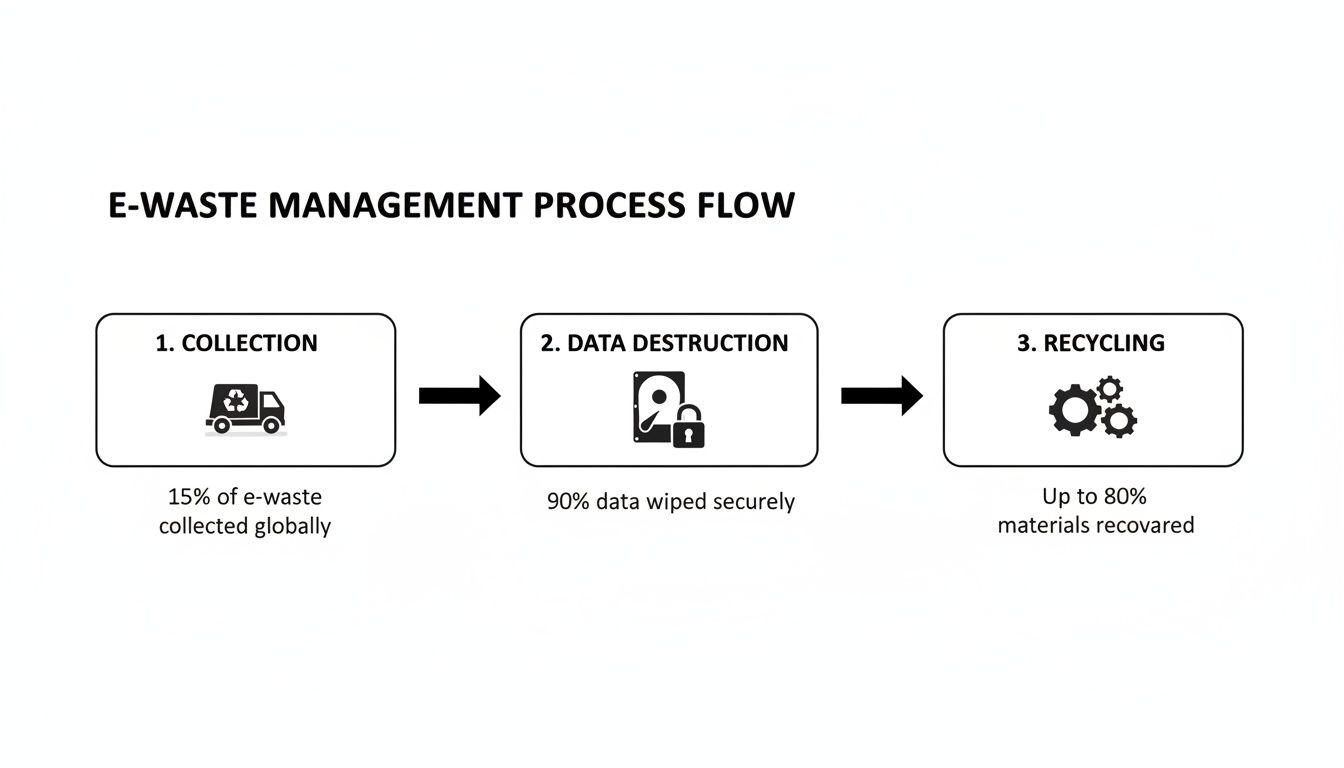
As you can see, the process flows from secure collection to certified data destruction before anything gets recycled. By creating a detailed inventory first, you set this entire secure and compliant process in motion. This level of planning is what separates professional IT asset disposition from a simple junk removal service.
Preparing Equipment for Secure and Compliant Collection
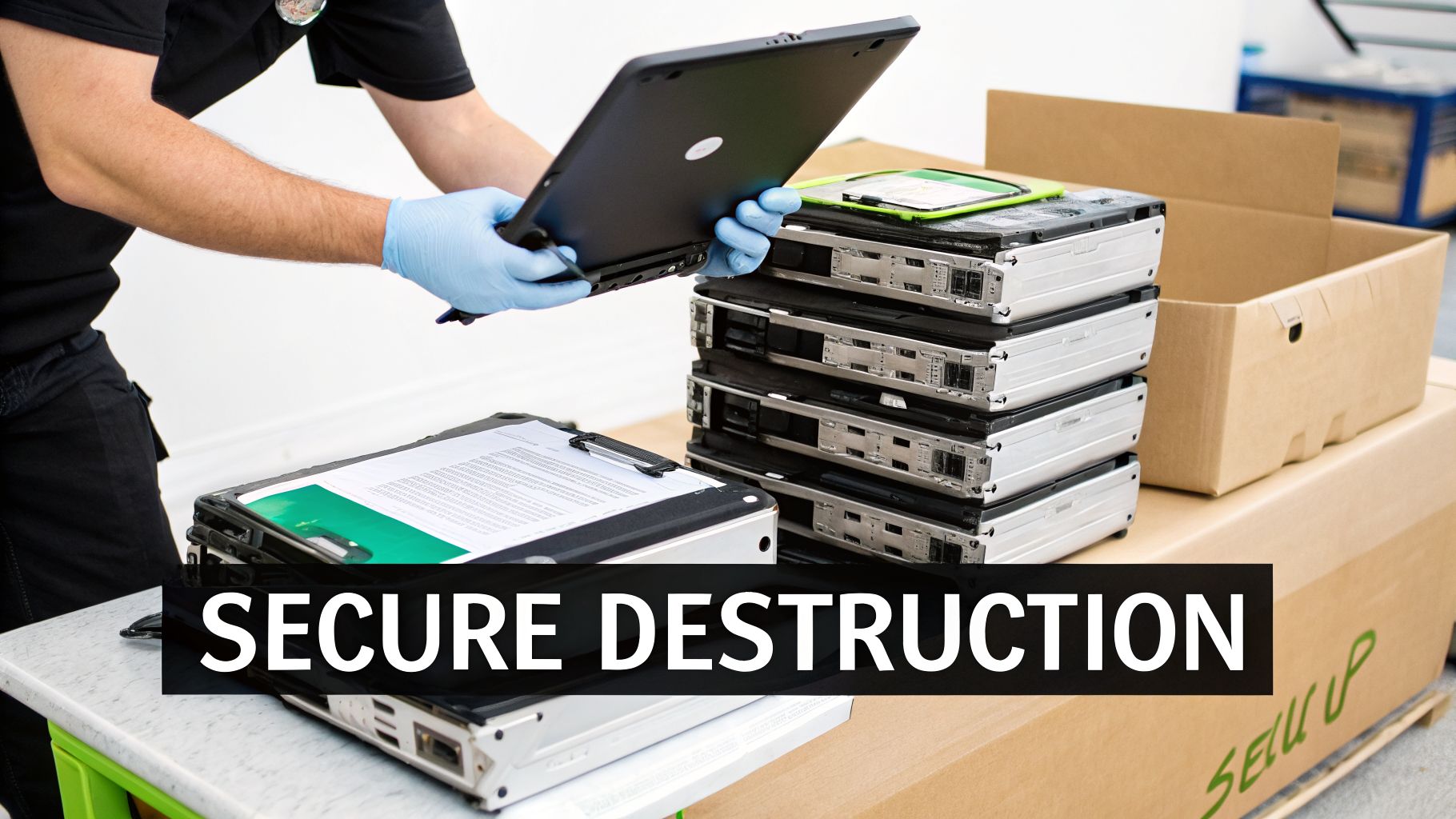
Alright, you've got your IT asset inventory sorted. Now for the most important part: getting that equipment ready for a secure and compliant electrical waste collection. This is much more than just piling old electronics in a spare room.
Think about it. Your old devices are treasure troves of sensitive data—customer lists, financial statements, trade secrets. One misplaced hard drive can turn into a full-blown data breach, leading to massive fines and destroying the trust you've built with your clients.
Before a single piece of equipment leaves your sight, you need a rock-solid plan to make sure every byte of data is gone for good. This isn't optional; it's your first line of defense against serious digital risk.
Choosing Your Data Destruction Method
When it comes to wiping data clean, you've got a couple of industry-standard choices. The right one for your business depends on your security protocols, compliance needs (like HIPAA in healthcare or GLBA in finance), and whether the old hardware has any resale value.
Certified data destruction isn't a premium add-on; it's a core part of risk management. For any business handling sensitive info, skipping proper data sanitization is asking for trouble.
A popular and effective method is software-based data wiping. We use specialized software to overwrite every sector of a hard drive with random data, making the original information impossible to recover. The gold standard here is the DoD 5220.22-M three-pass standard, which overwrites the data three separate times to ensure nothing is left behind.
The other route is physical destruction. It’s exactly what it sounds like: we physically demolish the storage device. The most secure way to do this is with on-site hard drive shredding. A mobile shredding truck comes right to your facility, and you can watch your hard drives get turned into small, useless shards of metal. For a deeper dive, check out our guide on how to wipe a computer before recycling.
Data Destruction Methods Compared
Deciding between wiping and shredding often comes down to balancing security, cost, and asset value. Here's a straightforward comparison to help you figure out the best fit for your electrical waste collection program.
| Method | Best For | Security Level | Key Benefit |
|---|---|---|---|
| DoD 5220.22-M Wiping | Devices with resale value; standard business needs. | High (Data is unrecoverable by software methods). | Preserves the hard drive, allowing the computer to be refurbished and resold. |
| On-Site Shredding | Highest-security needs; compliance mandates; damaged or non-functional drives. | Absolute (Physical destruction makes data recovery impossible). | Provides ultimate peace of mind with visual verification of destruction. |
In our experience, many Metro Atlanta businesses end up using a mix of both. They'll wipe newer, more valuable equipment to capture some resale value, but they'll shred older drives or those containing highly confidential information to ensure total data elimination.
Staging and Logistics for a Smooth Pickup
Once you have the data security figured out, the last piece is the physical prep for your electrical waste collection day. Staging your equipment properly makes the pickup fast, safe, and efficient for everyone involved. It’s like getting your house ready for movers—the more organized you are upfront, the smoother everything goes.
Start by getting all the inventoried equipment into one spot. A ground-floor loading dock or an empty conference room works perfectly. This saves the collection crew from having to search through different floors and storage closets.
Here are a few tips from the field to make staging a breeze:
- Group Like Items: Put laptops with laptops, servers with servers, and all the loose cables and keyboards in their own boxes. This makes the auditing process on our end much faster.
- Palletize Heavy Equipment: If you have a large number of desktops, servers, or other heavy gear, stack them securely on pallets. Use shrink wrap to keep everything stable and prevent anything from tipping over during transport.
- Isolate Data-Sensitive Devices: Keep any hard drives or devices you've marked for on-site shredding separate and clearly labeled. This ensures they get the special handling they require as soon as the crew arrives.
The need for these secure practices is only growing. Globally, while Europe leads with a 46% e-waste recycling rate, the worldwide average is sadly expected to drop to just 20% by 2030. In the U.S., where only some states mandate e-waste laws, partnering with a compliant local recycler is absolutely critical. A well-prepared, secure pickup isn't just good business—it's a key part of your responsibility to both the environment and your own security.
Finding the Right Electrical Waste Collection Partner
Choosing your partner for electrical waste collection is without a doubt the most important decision you'll make. All the work you put into inventorying your assets and wiping data can be completely worthless if your vendor cuts corners. A great partner means guaranteed compliance and security; a bad one leaves you wide open to data breaches, hefty fines, and environmental trouble.
For any business here in Metro Atlanta, this means finding someone local. You need a provider who gets the unique challenges of the area—from fighting Downtown traffic to coordinating pickups at sprawling office parks in Alpharetta or Marietta—and who also has the right credentials. You're not just looking for a pickup service; you're looking for a real partner.
Vetting Your Vendor on Certifications
The very first thing you need to check is certifications. These aren't just for show. They're hard proof that a vendor meets strict, third-party audited standards for keeping the environment safe, your data secure, and their workers protected.
In the world of electronics recycling, two certifications really matter:
- R2 (Responsible Recycling): This is a globally recognized standard covering the entire lifecycle of electronics. An R2-certified facility is held to strict rules for testing, repairing, and recycling gear. It also requires them to track where all your materials end up, holding everyone downstream accountable.
- e-Stewards: Often seen as the gold standard, e-Stewards was developed by the Basel Action Network. It has a zero-tolerance policy against exporting hazardous e-waste to developing nations and using prison labor.
A vendor that doesn't have an R2 or e-Stewards certification is a huge red flag. It tells you they haven't put in the money or effort to build a transparent, secure, and compliant electrical waste collection process. Always ask to see their certificates upfront.
This kind of due diligence is essential. While e-waste is a specialized field, the basics of choosing a solid partner are the same as they are for other disposal services, like when you're Finding a Great Junk Removal Company. Always verify before you commit.
Questions to Ask Every Potential Partner
Once you've confirmed they're certified, it's time to dig in with some direct questions. A good vendor won't hesitate to give you clear, straightforward answers. Think of it like you're interviewing them for a critical role in managing your company's risk.
Here’s a simple checklist to run through during your conversations:
- Can I get full chain of custody documentation? This paperwork is your proof, showing every single person who handles your assets from your office to their final processing.
- How do you audit your downstream partners? A good recycler vets their own vendors to make sure nothing ends up where it shouldn't. Ask them to explain their process.
- What are my data destruction options and will I get a Certificate of Destruction? You should see options for both DoD-compliant software wiping and physical shredding. That certificate is non-negotiable proof your data is gone for good.
- Do you offer on-site services? This is crucial if you have high-security needs, like watching them shred hard drives right at your facility before the equipment ever leaves.
- What's your process for asset value recovery? If you've got newer gear, ask them how they test it, find a buyer, and split the revenue. A transparent partner will lay out their fee structure and what you can expect to get back.
- Are there any materials you don't take? Knowing their limits ahead of time helps you plan better and avoids any bad surprises on pickup day.
If a vendor gets cagey or gives you vague answers to these questions, take it as another red flag. Transparency is the sign of a trustworthy electrical waste collection provider.
The Local Advantage in Metro Atlanta
There’s a real logistical benefit to working with a local Metro Atlanta company like Montclair Crew Recycling that a big national chain just can't match. A local team simply gets the day-to-day realities of our region.
Just think about these common scenarios:
- A company in a Midtown Atlanta skyscraper needs a pickup scheduled to miss rush hour and use a specific loading dock with time restrictions.
- A sprawling corporate campus in Roswell has to coordinate pickups across several different buildings and needs a vendor who can be flexible.
- A business over in Kennesaw might just need a quick, one-time pickup for a few old servers and wants a convenient drop-off option instead.
A local partner gives you that kind of flexibility. They can usually offer quicker response times, more adaptable scheduling, and a real understanding of the local business environment. Finding the right electronic waste company is about finding a team that fits your specific needs, not one that forces you into a one-size-fits-all box. That local know-how, backed by solid certifications and transparent processes, is the key to a successful e-waste program.
Turn Your Old Tech into Cash and Stay Compliant

A smart electrical waste collection plan does more than just clear out clutter. For many Atlanta businesses, it’s a hidden source of revenue and a powerful way to show you’re serious about corporate responsibility. It’s time to stop thinking of that storage closet full of old IT gear as a problem and start seeing it as an asset.
When you handle it right, you can get money back for your old equipment while making sure you follow every environmental rule. This is the core of a modern IT asset disposition (ITAD) strategy that actually works for your bottom line.
Find the Hidden Cash in Your Retired IT Assets
Let's be clear: not all old electronics are the same. That pile of broken keyboards and ancient printers? That’s headed for recycling. But your enterprise-level equipment—that’s a different story. Things like network switches, enterprise servers, and even recent-model laptops often have plenty of life left in them and hold real market value.
A good recycling partner will spot these valuable items when they audit your equipment. They’ll test everything to see what works and what doesn't. From there, the functional gear gets refurbished and sold through their networks.
For your business, this turns into cash in your pocket. It usually happens in one of two ways:
- Profit-Sharing: This is the go-to model for most companies. Your partner sells the equipment, covers their costs for pickup, data wiping, and sales, and then you get a cut of the profit. It’s a true win-win.
- Direct Buyout: If you have gear that's in high demand, a recycler might just offer you a flat fee to buy it all upfront. You get your cash immediately, and they handle the rest.
Suddenly, your electrical waste collection isn't a cost anymore—it’s helping to pay for your next tech upgrade. You can see exactly how this works by learning more about the benefits of corporate electronic asset recycling.
Why Documentation and Compliance Are Non-Negotiable
Getting money back is great, but your number one job is making sure every single device is handled securely and in line with environmental laws. This is where your paperwork becomes your best friend. A reputable partner will give you a clear, documented trail for every asset they touch.
This isn’t just about checking a box. This paperwork is your legal shield, proof of your company's green initiatives, and protection for your brand. Without it, you have no way to prove your e-waste wasn't illegally dumped or that your sensitive data was actually destroyed.
Don’t treat reporting and certificates as an optional add-on. They are the entire point of a compliant e-waste program. This documentation is your proof that you did the right thing, legally and ethically.
The Essential Reports You Must Have
After your electrical waste collection is finished, your partner needs to hand over a full reporting package. Don’t sign off on the job until you have these documents in hand:
- Certificate of Recycling: This is your proof that all the non-working junk was recycled according to state and federal laws. It should break down the types and weights of materials recovered.
- Certificate of Data Destruction: This is the big one. It confirms that every hard drive and data-bearing device was either wiped to a standard like DoD 5220.22-M or physically shredded into tiny pieces. It must list the serial numbers of the drives.
- Asset Report: Think of this as a final inventory list. It tracks every item from your door to its final destination, whether it was resold, recycled, or destroyed. It should include the make, model, and serial number for each asset.
This paperwork is critical for your internal audits, for hitting your Corporate Social Responsibility (CSR) goals, and for showing stakeholders that you take this stuff seriously. It connects what you’re doing right here in Atlanta to the bigger picture of solving the global e-waste problem.
By choosing a certified recycler who provides transparent reporting, you're not just cleaning out a server room. You’re protecting your company, supporting a circular economy, and turning a liability into a documented asset.
Your E-Waste Collection Questions Answered
When Atlanta businesses start looking into how to handle their old electronics, the same questions always pop up. The world of electrical waste collection can seem murky, but it doesn't have to be. Getting clear answers is the key to setting up a program that’s secure, compliant, and makes financial sense.
We talk to organizations like yours every day. Here are the most common questions we get, with the straightforward answers you need.
What Actually Happens to Our Equipment After You Pick It Up?
This is, without a doubt, the most important question you can ask. Once your equipment is on our truck, it’s taken directly to a secure, certified processing facility where it’s checked against the inventory list we created with you.
Here’s how it works:
- Audit and Sorting: Every single item is identified, logged, and sorted by its type, condition, and if it can be reused.
- Immediate Data Destruction: Any device that could hold data—laptops, servers, hard drives, phones—is immediately pulled aside for certified data destruction. This is done through either a DoD 5220.22-M three-pass wipe or physical shredding.
- Testing and Refurbishing: Equipment that still has life in it is thoroughly tested, cleaned up, and refurbished to be sold on the secondary market.
- Responsible Recycling: For gear that’s truly at the end of its life, we de-manufacture it. We separate the metals, plastics, and glass and send them to our certified downstream partners to be refined and turned into new products.
This process guarantees your data is gone for good, you get the most value back, and every environmental rule is followed to the letter.
Is On-Site Shredding Better Than Off-Site?
Both on-site and off-site data destruction are extremely secure, but they’re for different situations. The right choice really comes down to your company's internal security policies and any compliance rules you have to follow.
On-site shredding gives you absolute peace of mind. You can literally watch your hard drives get turned into tiny pieces before they ever leave your building. This is the go-to for healthcare, finance, and government clients with the strictest security mandates.
For most businesses, off-site wiping and shredding at a secure, certified facility is just as secure and is much more cost-effective. These facilities use strict chain-of-custody protocols, so your data is tracked and protected from the moment we pick it up until it's completely destroyed.
How Much Is This Going to Cost?
The cost of electrical waste collection can be all over the map. The final price depends on what kind of gear you have and how much of it there is, any logistical hurdles (like getting servers out of a basement with no elevator), and whether you need special services like on-site shredding.
But here’s the good news: many professional recyclers, including Montclair Crew, will often do free pickups for qualifying loads of business-class IT equipment. We’re talking about things like servers, networking gear, and newer laptops.
Better yet, if your equipment has good resale value, you could be looking at a profit-sharing deal. This can easily cover your disposal costs and might even put money back into your IT budget. Always ask for a detailed quote upfront that breaks down all the potential costs and credits.
Ready to make your IT asset disposal simple? The team at Montclair Crew Recycling provides secure, compliant, and often free electrical waste collection for businesses all over Metro Atlanta. Contact us today for a free quote!
