
For businesses here in Lawrenceville, the endless cycle of tech upgrades leaves behind more than just old equipment. It creates a real headache involving data security, environmental rules, and even money left on the table. But handling your e-waste recycling in Lawrenceville the right way can turn this problem into a smart business move, protecting your sensitive info and even boosting your bottom line.
Why An E-Waste Strategy Is a Smart Move for Lawrenceville Businesses
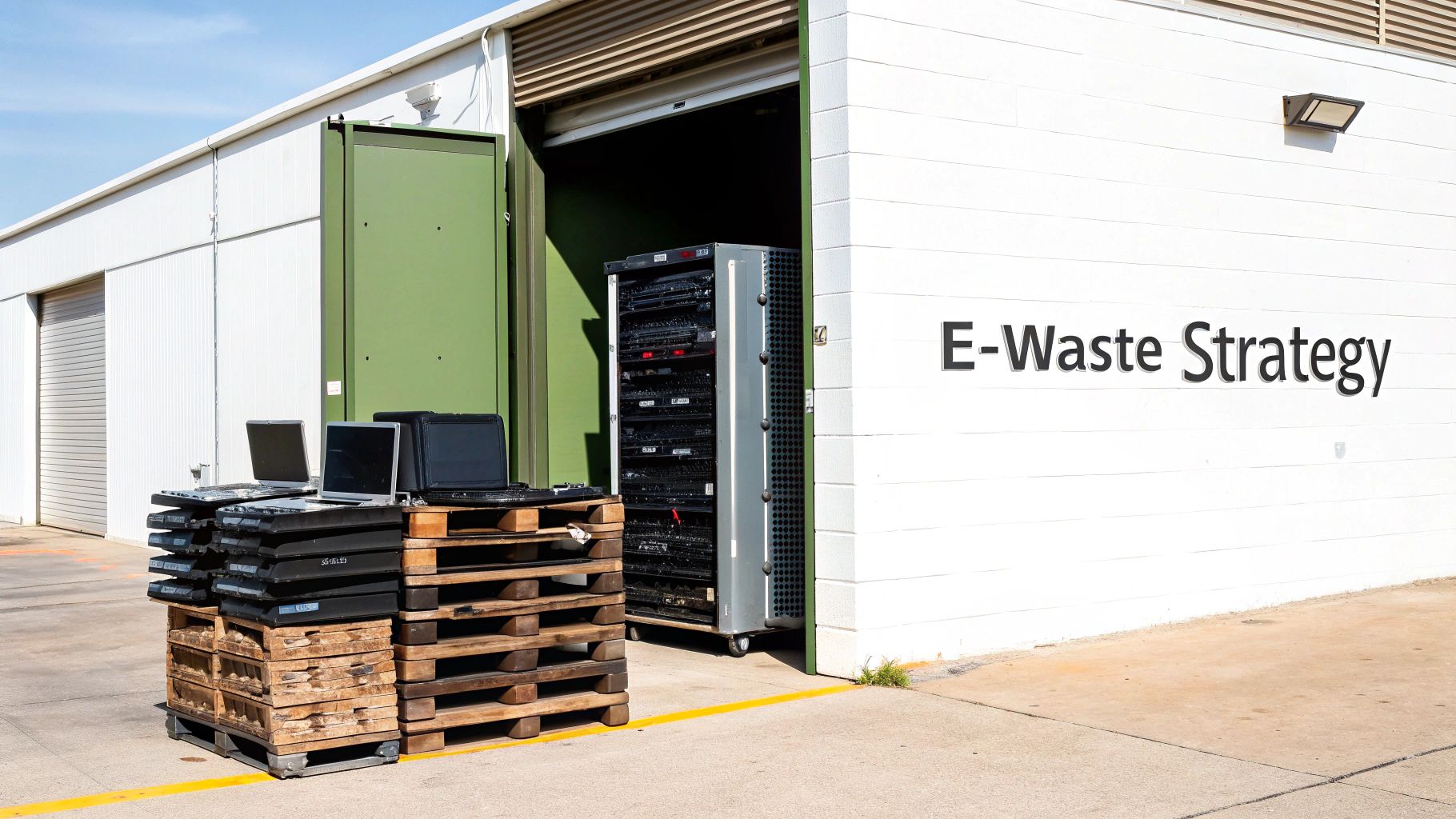
That pile of old electronics collecting dust in a storage closet? It might seem like a low-priority issue, but every retired server, laptop, and monitor is a potential risk and a missed opportunity. This isn't just about clearing out clutter; it's about proactively managing your IT assets from the day you buy them to the day you get rid of them.
A solid e-waste strategy, what we in the industry call IT Asset Disposition (ITAD), is a must-have for modern businesses. It’s simply the process of securely and sustainably disposing of unwanted, obsolete, or retired electronics. For any business in a bustling area like Lawrenceville, it's absolutely essential.
The Growing E-Waste Challenge
The sheer scale of the e-waste problem is mind-boggling, and it hits local businesses directly. Right here in the Atlanta–Lawrenceville corridor, companies are part of a massive, growing stream of e-waste.
Globally, the numbers are staggering. In 2022, the world generated 62 million tonnes of e-waste, which is an 82% jump from 2010. And it's not slowing down—that number is expected to hit 82 million tonnes by 2030. The worst part? Only 22.3% of that waste was properly collected and recycled, leaving an estimated US$62 billion in valuable, recoverable materials sitting in landfills.
This global trend is a local reality. Without a plan, your company’s old hardware is just contributing to a huge environmental and economic mess. Proper https://www.montclaircrew.com/what-is-electronic-waste-recycling/ is the only real solution.
Key Takeaway: The first step is to stop thinking of e-waste as trash. It’s a collection of assets. These assets hold sensitive data that needs to be destroyed and valuable materials that can be recovered.
From Compliance Burden to Competitive Edge
I've seen it time and again: a well-managed ITAD program does so much more than just keep you on the right side of environmental regulations. It delivers real, tangible benefits that make your organization stronger.
- Data Security: This is non-negotiable. It ensures every last bit of sensitive company and customer data is wiped clean and irretrievably destroyed before any device is resold or recycled.
- Environmental Responsibility: It shows you’re serious about sustainability. That's a big deal for your brand's reputation with both customers and your own employees.
- Value Recovery: Why throw money away? A good program lets you recoup some of your initial investment by reselling components and equipment that still have life in them.
- Operational Efficiency: Let's be practical—it frees up precious storage space and gets rid of the logistical nightmare of managing a closet full of obsolete gear.
Beyond just saving money, a smart e-waste strategy helps your business contribute to larger environmental goals, aligning with efforts toward achieving broader ESG wins and net zero goals. By partnering with a local expert in e-waste recycling, Lawrenceville businesses can turn what feels like a chore into a genuine strategic advantage.
Taking Stock: Auditing and Prepping Your IT Assets for Disposition
Before you can even think about e-waste recycling in Lawrenceville, you need to know exactly what you're dealing with. A solid IT asset audit is your first move. This isn't just about making a list; it’s about creating a strategic inventory that tells you everything you have, from servers and laptops to those easily forgotten items that need special care.
Think of it as a reconnaissance mission for your IT closet. The goal is simple: document every single piece of electronic gear that's headed for retirement. You're not just counting computers. You're identifying each asset, noting where it is, and understanding its potential value—or its potential risk.
A well-organized audit is your best defense against last-minute surprises. It ensures the pickup process is smooth and efficient, empowering your IT or facilities manager to get everything ready and avoid logistical headaches later on.
Building Your Initial Inventory
First things first: create a master list. Start by walking through your office, server closets, and any storage rooms where old tech might be hiding. To keep things from getting chaotic, group what you find into simple categories.
Here are a few that work for most businesses:
- Core IT Hardware: This is your bread and butter—servers, desktops, laptops, and monitors.
- Networking Gear: All the stuff that keeps you connected, like routers, switches, firewalls, and modems.
- Office Peripherals: Think printers, scanners, keyboards, mice, and docking stations.
- Specialized Equipment: This is a big one. It includes things like uninterruptible power supplies (UPS), which often contain lead-acid batteries and need very specific handling, or those massive multi-function copiers.
For each item you log, jot down the brand, model, serial number, and a quick note on its condition. This inventory is the bedrock of the entire disposition process and a core component of good IT governance. For a more in-depth look, our guide on IT asset management best practices covers these strategies in greater detail.
To help you get started, here's a quick reference table for identifying common e-waste you might find around your Lawrenceville office.
Common Business E-Waste Categories in Lawrenceville
| Asset Category | Examples | Key Recycling Consideration |
|---|---|---|
| Computing Devices | Laptops, Desktops, Servers, Tablets | Data security is paramount. These devices require certified data destruction before recycling or resale. |
| Monitors & Displays | LCD/LED Monitors, Projectors | Older CRT monitors contain lead and require specialized handling. Modern displays can be recycled for plastics and metals. |
| Networking Equipment | Routers, Switches, Firewalls, Modems | Can often be refurbished or remarketed if not too old. Data-bearing devices need to be wiped. |
| Office Peripherals | Printers, Scanners, Keyboards, Mice | Printers and copiers often have toner cartridges and other components that must be handled separately. |
| Mobile Devices | Smartphones, Business Cell Phones | Contain valuable rare earth metals but also batteries that pose a fire risk if not handled correctly. |
| Data Storage | External Hard Drives, SAN/NAS Units | High-risk assets that must undergo physical destruction (shredding) or multi-pass wiping to ensure data privacy. |
| Power Management | Uninterruptible Power Supplies (UPS) | The lead-acid batteries inside are hazardous waste and must be removed and recycled under strict protocols. |
This table isn't exhaustive, of course, but it covers the majority of what we see from local businesses. Identifying these categories early makes the whole process run that much smoother.
The Power of Tagging and Consolidation
Once your inventory spreadsheet is looking good, it's time to tag everything. Assigning a unique ID number to each piece of equipment is absolutely critical for maintaining a clean chain of custody. That little tag follows the device from your office all the way to our facility, making sure nothing gets lost and everything is accounted for on your final certificates of recycling and data destruction.
Pro Tip: Don't overcomplicate it. Simple, numbered adhesive labels work great. Just make sure the number on the sticker matches the line item in your inventory file. This one small step is your best insurance against tracking errors.
After everything is tagged, you can start consolidating. Disconnect all the equipment from power and network cables. Then, gather it all in one secure, easy-to-access spot—an empty office, a corner of the warehouse, or a conference room will do.
Why does this matter? Because consolidating your assets makes the actual pickup incredibly fast and efficient. Our logistics team can come in, load everything up, and be out of your way without disrupting your team's day-to-day work. A little bit of prep work here turns what could be a complex project into a straightforward, hassle-free task.
Ensuring Your Data Is Destroyed Before Devices Are Recycled
When an old device leaves your building, your sensitive data should never go with it. For any Lawrenceville business, especially those in regulated fields like healthcare or finance, data security isn't just a best practice—it's a legal and ethical mandate.
Before any equipment is recycled, you have to be absolutely sure that sensitive information is gone for good. This process is a core part of any solid set of data loss prevention best practices.
Think about a local medical practice getting rid of old office computers. Those hard drives could hold thousands of patient records protected under HIPAA. A simple "delete" doesn't actually erase the data; it just tells the computer the space is available to be overwritten later. The actual files are still there and can be easily recovered. This is why certified data destruction is completely non-negotiable.
This flowchart maps out the foundational steps—inventory, tagging, and consolidation—that get your assets ready for secure handling.
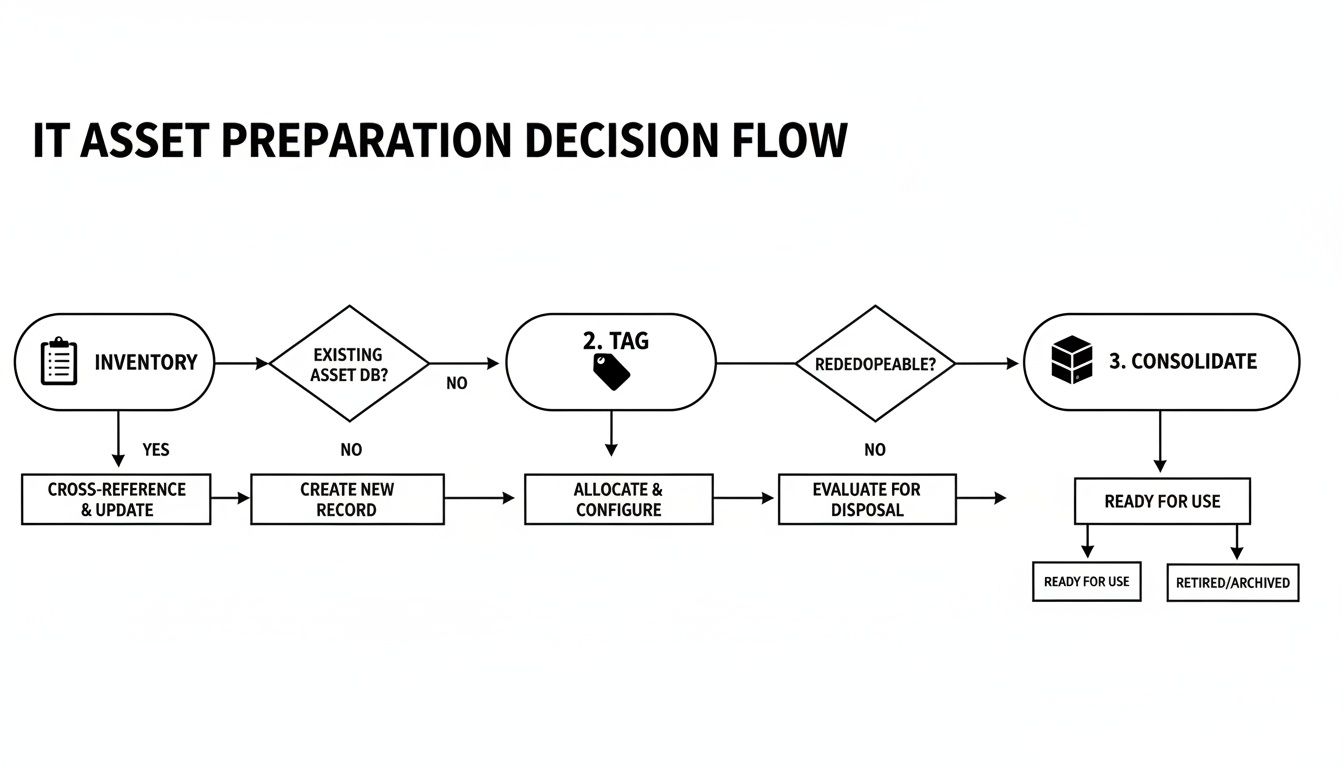
As you can see, a structured workflow ensures every single device is accounted for, which is the crucial first step toward responsible data destruction.
Understanding Data Wiping Standards
So, how do you really erase data? The industry relies on proven data sanitization methods. One of the most recognized is DoD 5220.22-M, a standard developed by the U.S. Department of Defense. This isn't just about deleting files; it’s a rigorous "three-pass" wiping process.
Here’s what that means in simple terms:
- First Pass: The software overwrites every bit of data on the hard drive with zeros.
- Second Pass: It does it all over again, this time with ones.
- Third Pass: It finishes with a final overwrite using random characters.
This multi-layered approach makes the original data practically impossible to recover with current technology. It’s the gold standard for ensuring your information is gone forever before a device is even considered for refurbishment or recycling.
When Wiping Is Not Enough: Physical Destruction
For some organizations, particularly those handling incredibly sensitive intellectual property or high-level financial data, even a DoD-level wipe isn't enough to satisfy internal security policies. When you need absolute, verifiable certainty, physical destruction is the only answer.
On-Site Shredding for Ultimate Peace of Mind: We can bring an industrial-grade shredder right to your Lawrenceville facility. You get to witness your hard drives, solid-state drives, and backup tapes being turned into tiny, unusable metal fragments right before your eyes.
This process provides an unbreakable chain of custody and leaves zero doubt that your data is completely destroyed. Afterward, you receive a Certificate of Data Destruction that lists the serial numbers of every single drive, giving you a crystal-clear audit trail for your compliance records.
Exploring your options for certified IT asset destruction is a critical step in protecting your business from a data breach.
From Pickup Logistics to Potential Profit Sharing
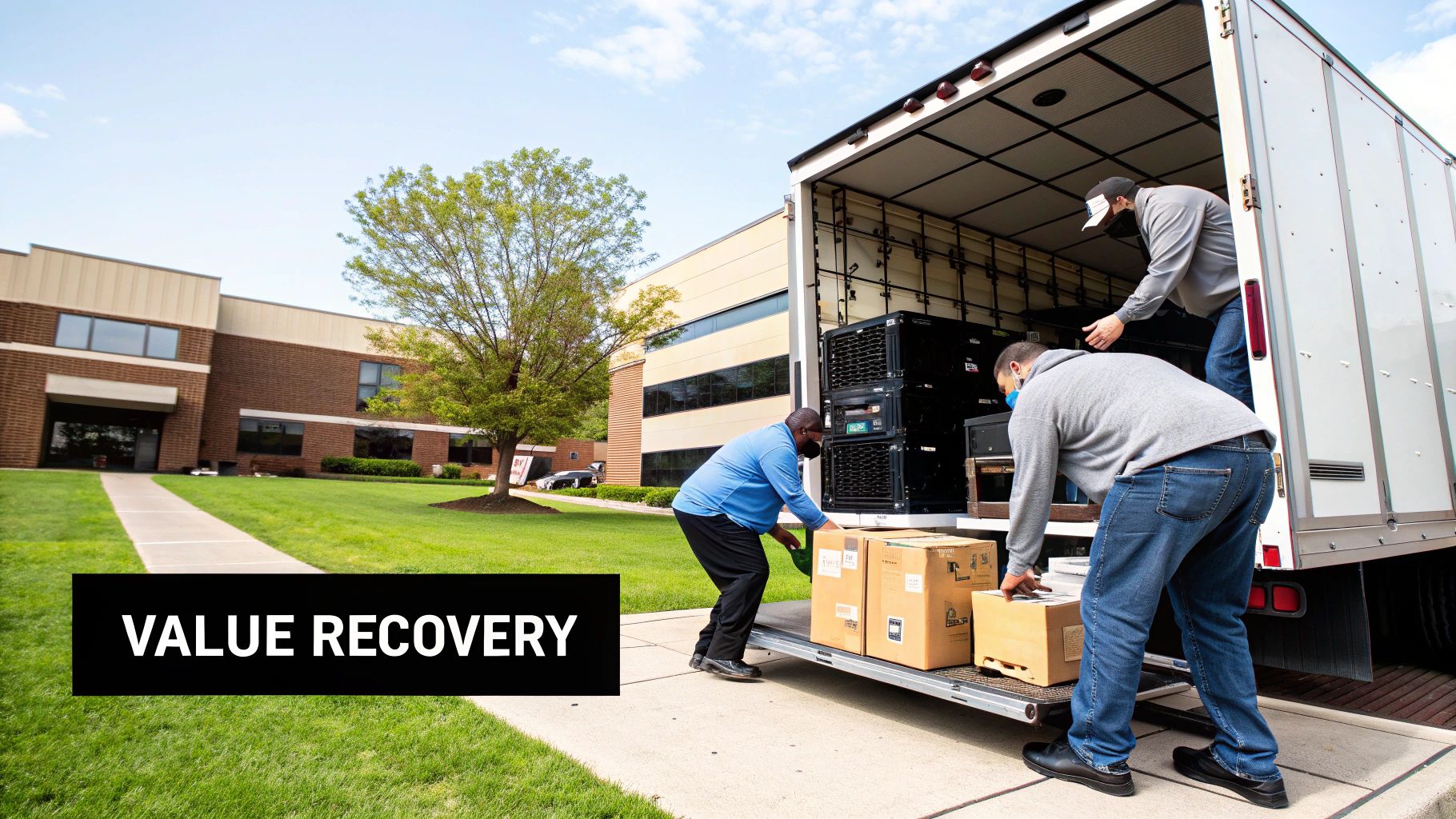
So, you’ve inventoried your old IT assets and wiped the data. The final hurdle? Getting stacks of old equipment out of your office and to a recycling facility. Frankly, the logistics can be a headache, which is why most businesses find that scheduling a dedicated, on-site pickup is the only way to go.
This simple step means your team isn't stuck hauling heavy, bulky items across town. A professional crew shows up at your Lawrenceville location, handles all the heavy lifting, and makes sure everything is packed securely for transport. We’ve managed these pickups for years, and our whole process is designed to cause zero disruption to your workday. You can see the specifics of our electronics recycling and free pickup services here.
Turning Costs into Revenue
While smooth logistics are great, the most overlooked part of e-waste recycling in Lawrenceville is its financial upside. Too many businesses still think of disposal as just another expense, but that's an outdated view. Enterprise-grade equipment—things like servers, networking switches, and newer laptops—often holds significant value long after you've moved on.
This is where IT Asset Disposition (ITAD) becomes more than just a compliance chore; it's a smart financial move. Instead of just paying a fee to have gear hauled away, you can partner with a recycler who specializes in recovering that hidden value. We look at every single piece of equipment to see what it's worth on the secondary market.
A server that’s five years old might be obsolete for your high-traffic operations, but it could be the perfect upgrade for a small business or a research lab. This secondary market is surprisingly robust.
How Profit Sharing Actually Works
A profit-sharing model completely flips the script on the economics of e-waste. After your equipment arrives at our facility for a full audit and data wipe, anything with resale potential is refurbished and sold through our established sales channels. The net revenue from those sales? It gets shared right back with your company.
This approach delivers some serious benefits:
- Slash or Eliminate Costs: Often, the value we recover is more than enough to cover all the service fees for pickup, data destruction, and recycling.
- Create a New Revenue Stream: For companies decommissioning newer data center hardware, the return can be quite substantial. You can actually turn a disposal project into a profitable one.
- Promote True Sustainability: By giving functional electronics a second life, you're participating in the highest and best form of recycling.
This isn't just a niche idea; it's backed by major market trends. The ITAD market is projected to hit $36.4 billion by 2034, fueled by constant data-center upgrades and tougher data privacy laws. For companies in the Atlanta area, this means your retired IT hardware is no longer just a liability—it's a tradable asset waiting to be monetized.
How to Choose a Certified E-Waste Partner Near Lawrenceville
Picking the right partner for your e-waste recycling in Lawrenceville is probably the single most important call you'll make in this whole process. It’s a common misconception that all recyclers are the same, but the reality is that the wrong choice can blow a hole in your data security and leave you exposed to serious environmental compliance headaches.
You aren't just looking for someone to haul away old tech. You're looking for a partner to protect your business from what happens after that gear leaves your building—what we call downstream liability.
A solid partner is transparent, secure, and gives you a fully documented paper trail from beginning to end. They won't flinch when you ask tough questions. If they can't provide clear proof of their security and compliance, you have zero guarantees that your old hard drives aren't being sold on eBay or that your equipment isn't ending up in a landfill on the other side of the world.
The Power of Certifications
When you start vetting vendors, the first thing to look for is third-party certification. This isn't just fluff; it's your frontline defense. In the e-waste world, two names carry all the weight and act as the gold standard for doing things the right way.
-
R2 (Responsible Recycling): This certification is a comprehensive stamp of approval. It covers everything from environmental protection and worker safety to data security and a documented chain of custody. To get R2 certified, a facility has to pass rigorous, independent audits proving they meet these high standards.
-
e-Stewards: Often seen as the most stringent certification out there, e-Stewards was developed by the Basel Action Network. It has an absolute zero-tolerance policy for exporting hazardous electronics to developing nations and puts an enormous focus on data security and environmental justice.
Your very first question to any potential vendor should be, "Are you R2 or e-Stewards certified?" If they are, they’ve already invested the time and money to prove they’re serious about responsible recycling.
Crucial Takeaway: These certifications aren't just fancy badges for a website. Think of them as your insurance policy against a recycler who might cut corners, putting your company's data and reputation squarely on the line.
Key Questions to Ask Any Potential Vendor
Beyond just checking for a certificate, a few direct questions will tell you everything you need to know about a company's real-world operations. A trustworthy partner will have confident, straightforward answers ready to go.
Here's what you need to ask:
-
Can you provide a complete chain-of-custody document? This is non-negotiable. This paperwork tracks your assets from the second they're off your property to their final destruction or recycling. It's your proof for any audit trail and confirms every single item was handled correctly.
-
What are your specific data destruction methods? They need to get specific. Do they use DoD 5220.22-M three-pass wiping? Do they offer on-site shredding? Ask them to show you a sample Certificate of Data Destruction so you can see exactly what their final documentation looks like.
-
How transparent are you about your downstream vendors? No recycler does everything in-house. They have partners for processing specific materials like plastics or precious metals. A certified recycler is required to audit their own partners. Ask them how they make sure those downstream processors also meet strict environmental and security standards.
Choosing the right vendor is the last, critical piece of the puzzle. It’s what ensures all your hard work clearing out old equipment actually supports your bigger goals: protecting company data and being a good environmental steward.
To give you a clearer picture, here’s a quick checklist comparing a certified partner to the risks you take with an uncertified one.
Vendor Vetting Checklist for E-Waste Recycling
| Evaluation Criteria | Certified Partner (like Montclair Crew) | Uncertified Vendor Risk |
|---|---|---|
| Certifications | Holds R2v3 and/or e-Stewards certification, verified by third-party audits. | No verifiable certifications, leaving you to trust their word alone. |
| Data Security | Offers documented, auditable data destruction (wiping/shredding) with certificates. | Vague or non-existent data destruction process. High risk of data breaches. |
| Chain of Custody | Provides detailed tracking from pickup to final disposition for every asset. | Incomplete or no documentation. You have no idea where your assets actually go. |
| Environmental Compliance | Adheres to a strict "no-export" policy for hazardous waste and has audited downstream partners. | May export toxic e-waste overseas to cut costs, creating environmental and legal liability for you. |
| Transparency | Welcomes questions, provides clear answers, and allows facility audits. | Often evasive about their processes, partners, or final destination of materials. |
| Liability Protection | Assumes liability for the equipment upon pickup, backed by pollution and liability insurance. | You retain all liability. If they dump your equipment illegally, you could face fines. |
This table makes the choice pretty clear. The peace of mind that comes from working with a certified, transparent partner is invaluable.
When you partner with a team that can confidently answer these questions, you’re not just recycling—you’re building a secure and responsible electronics program from the ground up. To see how a certified local partner can handle all of this for you, check out our complete guide to IT asset disposition in Lawrenceville GA.
Answering Your Business E-Waste Recycling Questions
Even with the best intentions, recycling a truckload of old office tech can bring up a few questions. It's totally normal. We get calls all the time from Lawrenceville businesses trying to figure out the details.
Let's clear up some of the most common things people ask.
So, What's This Going to Cost Us?
This is usually the first thing on everyone's mind, and the answer is better than you'd think. For most of the businesses we work with, our e-waste recycling services are free. Sometimes, we even end up paying you.
How does that work? It all comes down to what you have. If you're getting rid of relatively modern servers, laptops, and networking gear, there's still value in those assets. We focus on recovering that value, which often covers all our costs for pickup, data destruction, and processing.
If your project is mostly older, low-value items—think ancient printers, broken keyboards, and tangled cords—there might be a small service fee to cover our logistics. We're always upfront about this and give you a clear quote before we do anything. No surprises.
The Bottom Line: Your inventory determines the cost. A quick rundown of your equipment helps us see if you qualify for a free pickup or even a profit-sharing deal. It's a great way to turn a clean-out project into a win for your budget.
What Kind of Paperwork Do We Get?
Proper documentation isn't just a "nice-to-have"—it's critical for proving you did things the right way. Once we've processed your equipment, we provide a full paper trail for your records.
You'll receive two key documents:
- A Certificate of Recycling, which confirms every item was handled in an environmentally responsible and compliant manner.
- A Certificate of Data Destruction, which is your proof that every hard drive and storage device was wiped clean or physically shredded according to strict standards like DoD 5220.22-M.
This paperwork is your shield. It protects you from liability and shows anyone who asks—auditors, leadership, customers—that you take data security and environmental stewardship seriously.
How Do We Get a Pickup on the Calendar?
Getting your old tech out of the office is simple. The fastest way to get started is to just give us a call or fill out the contact form on our website.
Tell us a little bit about what you have—the types of devices, a rough count, and your location in Lawrenceville. Our team will get back to you right away to nail down the details, give you a quote if needed, and find a pickup time that doesn't disrupt your workday. Our crew takes care of all the heavy lifting, so you don't have to.
Do You Take E-Waste from Just Anyone?
Montclair Crew is built for business. We specialize in B2B e-waste recycling for companies, schools, government offices, and other organizations in Lawrenceville. Our entire process is designed for the volume, security, and compliance needs that businesses face.
We don't handle residential recycling directly. But if you're an individual looking to get rid of some old electronics from home, we're still happy to point you in the right direction. We know some great local partners who specialize in residential services and can get you connected.
Ready to clear out your old IT equipment the right way? The team at Montclair Crew Recycling is here to make your e-waste recycling in Lawrenceville secure, compliant, and hassle-free. Let's get started.
