
That old CPAP machine gathering dust in your closet? It could be a genuine lifeline for someone who can't afford one. Through CPAP machine donations, your functional, gently-used device can give someone with untreated sleep apnea the critical care they desperately need.
Why Your Old CPAP Machine Is a Lifeline
It's easy to tuck an old CPAP machine away once you no longer need it. But for thousands of people struggling with sleep apnea, that very device is a huge barrier to better health. New machines can run anywhere from $500 to $1,000, and many people just can't afford that kind of expense.
Insurance gaps, high deductibles, and flat-out denials leave a lot of folks without treatment. This is exactly where your donation makes a difference. Instead of ending up as e-waste, your machine can be professionally refurbished, sanitized, and put back to work.
The Human Impact of a Single Donation
Donating your CPAP machine has an immediate and tangible impact. For the person who receives it, it’s not just about getting a piece of equipment—it's about getting their life back. Consistent therapy can be the difference between chronic fatigue and having energy again, or between facing dangerous health complications and a stable future.
Your one donation directly gives someone:
- Restful sleep and improved daily function: This helps them be more present at work, with their families, and in their community.
- A lower risk of serious health issues: Untreated sleep apnea has been linked to heart disease, stroke, and diabetes.
- Major financial relief: It removes the stress of a huge out-of-pocket medical bill.
Donating your CPAP is one of the most direct ways you can impact someone's health. It’s a simple action that delivers a powerful, life-altering tool into the hands of a person who would otherwise go without.
A CPAP donation does more than just help one person; it has a ripple effect that benefits the recipient's family, community, and even the healthcare system. The table below breaks down the wide-ranging impact of this single act of giving.
Donation Impact at a Glance
| Benefit Type | Description | Example |
|---|---|---|
| Health | Provides immediate access to therapy, reducing risks of conditions like heart disease, stroke, and diabetes. | A recipient starts sleeping better, lowering their blood pressure and reducing daily fatigue. |
| Financial | Eliminates a major out-of-pocket expense for individuals and families facing high medical costs. | A family on a tight budget can now afford treatment for a loved one without going into debt. |
| Environmental | Keeps a valuable and functional medical device out of a landfill, promoting a circular economy. | A perfectly good machine gets a second life instead of becoming hazardous electronic waste. |
| Community | Strengthens community health by ensuring more people have access to the essential care they need to thrive. | A local clinic receives a donated machine, allowing them to serve a patient on their waiting list. |
Each donation creates a chain of positive outcomes, turning a piece of surplus equipment into a cornerstone of someone's well-being.
Addressing a Nationwide Need
This isn't a small problem. The need for affordable CPAP machines is so widespread that numerous organizations have built programs specifically for these donations. Across the United States, groups like the Reggie White Foundation, Breathe California, and MedWish International have created solid programs to collect, sanitize, and get these devices to patients in need. These groups are helping thousands of people who would otherwise go untreated. If you want to learn more, you can find details on various CPAP assistance programs.
By donating, you're also promoting a more sustainable approach to healthcare. It keeps valuable medical equipment in use and out of landfills. If you’re curious how this fits into a bigger picture, you might want to explore options for a full medical equipment recycling program. Your single machine becomes part of a larger cycle of community health, transforming a personal medical device into a lifeline for someone else.
How to Prepare Your CPAP Machine for Donation
So you’ve decided to donate your old CPAP machine. That’s a fantastic decision. But before you box it up, there are a few key steps to take. Getting it ready properly is what makes the difference between a good intention and a device that can genuinely change someone's life.
It's about more than just a quick wipe-down. We're talking about hygiene, protecting your personal data, and making sure the donation process is seamless for the organizations that give these machines a second life. A few minutes of prep work makes a world of difference.
First, Separate the Reusable Parts
Here's the most critical step: for hygiene reasons, you can only donate the main machine. Think of it like donating a computer; you’d give the tower, but not your used keyboard and mouse. All the single-patient items that came into direct contact with you cannot be passed on.
Make sure you throw these items away, as they can’t be sanitized for reuse:
- Used Masks and Headgear: These have direct contact with your skin and breath.
- Used Tubing/Hoses: Bacteria and moisture can build up inside the tube over time.
- Used Water Chambers (Humidifier Tanks): Mineral deposits and potential bacteria make these single-patient use only.
- Used Filters: All disposable filters must be discarded.
The parts you should donate are the main CPAP or BiPAP blower unit, its power cord, and the carrying case if you still have it. These are the core components that can be professionally refurbished and sanitized.
Erase Your Personal Data
Modern CPAP machines are smart devices, and they store a surprising amount of usage data—your therapy hours, pressure settings, and even your sleep patterns. Before you donate, you absolutely must wipe this information.
Wiping your machine’s data is just as important as wiping a smartphone before you sell it. It protects your personal health information and gives the next user a clean slate.
The exact process for a factory reset depends on the model. Your best bet is to check the user manual or do a quick online search for your specific device, like "ResMed AirSense 10 factory reset." It’s a simple step that ensures your private health data stays private.
This flowchart shows the simple but impactful journey of your donation, from your hands to a person in need, all while helping the planet.
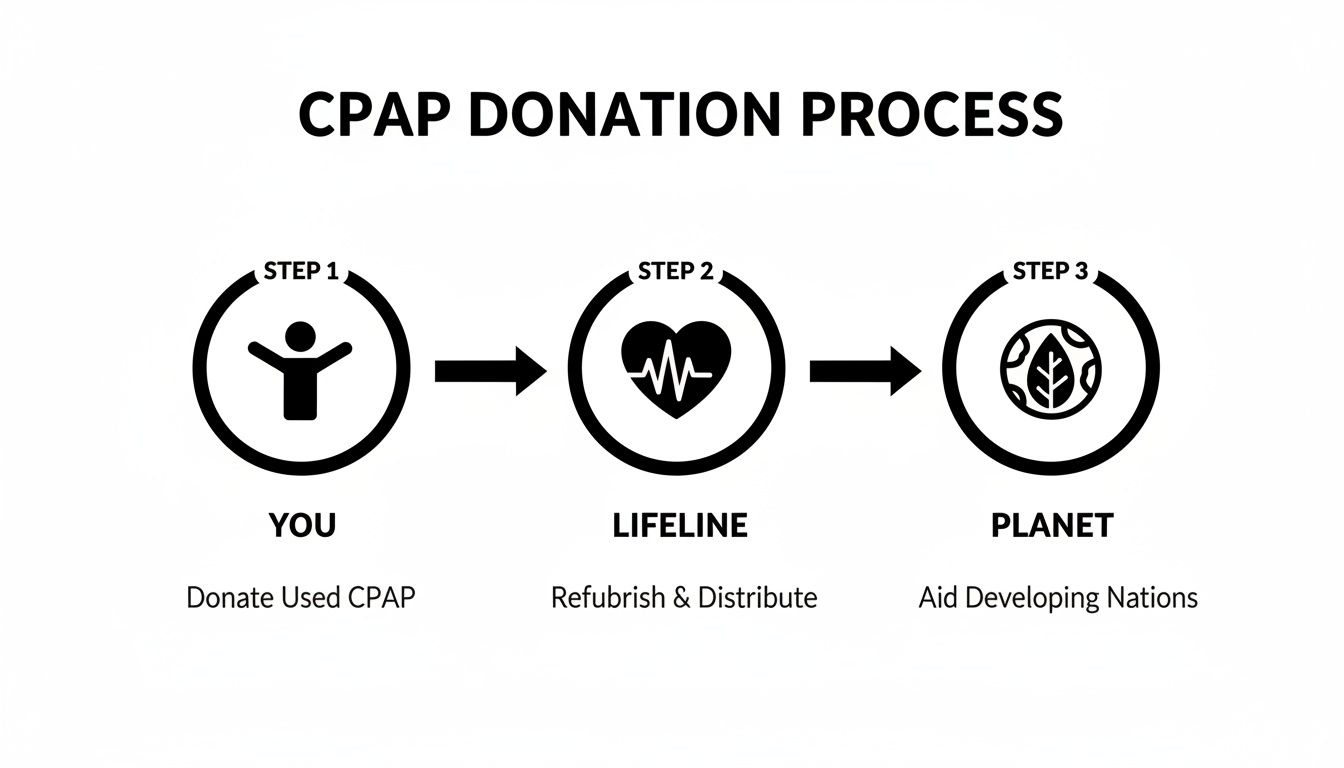
As you can see, your donation isn't just a single act—it becomes part of a larger cycle of health and environmental responsibility.
Cleaning and Final Touches
Even though the donation center will professionally sanitize the machine, giving it a good surface cleaning is a thoughtful and helpful first step. Just use a damp cloth with a little mild soap to wipe down the exterior of the machine and its case. Steer clear of any harsh chemicals that could damage the plastic.
Finally, gather up any original accessories you still have. The owner's manual or any service records can be incredibly helpful for the technicians doing the refurbishment. Place the machine, power cord, and manuals into the carrying case, and it’s officially ready for its next chapter. And if you're sorting through other types of equipment, you might find our guide to medical equipment recycling useful, too.
Finding the Right Home for Your CPAP Machine
So you’ve cleaned, reset, and packed up your CPAP machine. What now? The next step is critical: finding a reputable organization that can get it into the hands of someone who truly needs it. This isn’t as simple as dropping it in a donation bin. You need a partner with the expertise to properly handle, refurbish, and distribute specialized medical equipment.
Thankfully, there are some fantastic national and local programs built for this exact purpose. Many people searching for a Cpap Machine Near Me come up empty because of high costs or lack of availability. Your donation can directly bridge that gap.
National Programs for CPAP Machine Donations
Several large-scale organizations have built reliable pipelines for CPAP donations, making it easy to contribute no matter where you live. They take care of the heavy lifting—logistics, final sanitization, and patient matching—to ensure your device makes a real difference.
Here are a few of the most trusted national programs to consider:
- The American Sleep Apnea Association (ASAA): Their CPAP Assistance Program accepts gently used machines and factory-sealed supplies. They then provide these devices to low-income or uninsured individuals for a small fee, confirming that the equipment goes to those with a verified need.
- Project C.U.R.E.: With a massive global footprint, Project C.U.R.E. collects donated medical equipment and sends it to hospitals and clinics in over 135 countries. Your CPAP could end up supporting a patient in a community with severely limited healthcare resources.
- The Reggie White Foundation: This foundation was started in memory of the pro football hall-of-famer who passed away from complications of sleep apnea. It provides both new and donated CPAP machines to people facing financial hardship, asking only for a nominal fee to cover handling.
Choosing the right organization depends on what's most important to you—whether that's supporting a global health mission or helping someone in the U.S. struggling with costs.
Comparison of National CPAP Donation Programs
To help you decide, here’s a quick comparison of the leading national organizations that accept CPAP donations.
| Organization | What They Accept | Donation Method | Key Focus |
|---|---|---|---|
| ASAA | Gently used CPAPs, factory-sealed supplies | Mail-in | Supporting low-income/uninsured patients in the U.S. |
| Project C.U.R.E. | Wide range of medical equipment, including CPAPs | Drop-off or mail-in | Supplying hospitals and clinics in developing countries |
| The Reggie White Foundation | New or used CPAP machines | Mail-in | Providing affordable devices to those in financial need |
Each of these programs offers a lifeline. A U.S.-based study found that when refurbished PAP devices were provided to patients, 62.8% of the recipients couldn't have afforded one otherwise due to high insurance copays or deductibles. It's proof that these donations directly improve health and save lives.
What If My Machine Can't Be Donated?
What happens if your CPAP is too old, broken, or simply doesn't meet the strict criteria for donation? Don't just toss it in the trash. It doesn’t have to end up in a landfill.
You still have a couple of responsible options:
- Donating for Spare Parts: Even a non-functional machine has value. Some local durable medical equipment (DME) suppliers or independent repair shops might accept it to salvage working components. It’s always worth making a quick call to see if they can use it for parts.
- Certified E-Waste Recycling: If the machine is truly at the end of its life, it must be recycled properly. Medical devices are full of electronic components that can harm the environment if they end up in a landfill.
For businesses in the Atlanta area, Montclair Crew can connect you with our trusted partners who specialize in medical equipment disposition. We ensure your devices are handled compliantly, whether they're destined for donation or recycling.
Finding a certified e-waste recycler is key to making sure that materials are recovered and any hazardous substances are managed safely. The process is a lot like how you'd handle other electronics, a topic we cover in more detail in our guide on where to donate old computers. Taking this extra step ensures your device is handled responsibly, no matter its condition.
The Global Impact of Your Donation
It's easy to look at an old CPAP machine and just see a piece of used equipment. But that device sitting in your closet can be so much more. Your decision to pass it on does more than just clear out space—it can give someone across the globe a new lease on life. You're turning potential e-waste into a lifeline for communities with limited or no access to this kind of technology.
We saw this in action during the COVID-19 pandemic. As the world scrambled for respiratory equipment, some incredible initiatives stepped up. The UCL-Ventura project, for example, was a perfect case study in how generosity and quick thinking could save lives on a massive scale.
A single donated device is more than a piece of equipment. It represents a breath of fresh air for someone in a low-resource community, a chance at healthier living, and a symbol of global solidarity.
This wasn't just a small effort. During the peak of the crisis in 2020-2021, a team from University College London (UCL) and Ventura worked to produce and distribute over 500 UCL-Ventura CPAP devices in Pakistan alone. Those machines also went to about 130 hospitals in the UK and at least 15 other countries, from India and South Africa to Ukraine.
A Lifeline in Low-Income Regions
Here, a new CPAP machine might be an insurance-covered expense. In many parts of the world, it's an impossible luxury. A device that costs a few hundred dollars here could be more than a year's salary in another country. This is where international donation programs make a real, tangible difference.
When you make a CPAP machine donation, your old device could end up in:
- A small, rural clinic in a developing nation that has no other means of getting respiratory support gear.
- An under-funded hospital struggling to keep up with patient demand and a severe shortage of equipment.
- The hands of a person who would otherwise have to endure the devastating long-term health effects of untreated sleep apnea.
More Than a Donation It Is a Sustainable Choice
Let's not forget the environmental angle. Donating your CPAP is a smart, sustainable choice. Electronic waste is a massive, growing problem worldwide, and medical devices are packed with materials that have no business sitting in a landfill.
By giving your machine a second life, you're plugging directly into the circular economy. You're helping conserve valuable resources and cutting down on pollution. For a deeper dive, take a look at our article on the environmental impact of electronic waste.
It's a simple act, but it has a powerful ripple effect. Your responsible choice helps someone breathe easier and contributes to a healthier planet for all of us.
How Businesses Can Streamline Equipment Donations
If you're running a healthcare facility, clinic, or any business with a mix of equipment, you know the headache of asset retirement. You've got a few gently used CPAP machines from patient trials, a closet full of old office computers, and maybe some retired servers. Trying to find separate solutions for each—one for medical donations, another for IT recycling, a third for e-waste—is a logistical nightmare loaded with compliance risks.
There's a much smarter way to handle it.
Working with an expert in comprehensive asset disposition rolls everything into one secure, straightforward process. Instead of juggling a half-dozen vendors, you make one call. That’s it. Every asset, from specialized medical gear to old office electronics, is taken care of.
A Single Solution for Diverse Assets
Let's say your clinic is upgrading. You're left with a mixed bag of equipment: perfectly good CPAP units, old laptops packed with sensitive patient data, and outdated networking hardware. This is where a specialized partner shines, managing the entire lot without you having to lift a finger.
A single, integrated service handles it all:
- Medical Equipment Routing: We identify functional devices like your CPAP machines and get them to our vetted refurbishment partners who manage the sanitization and distribution to those in need.
- Certified Data Destruction: We securely wipe every single hard drive from computers and servers to DoD 5220.22-M standards. This isn't optional; it's essential for protecting patient and business information.
- Responsible E-Waste Recycling: Anything that can't be donated or is broken gets recycled responsibly. This keeps hazardous materials out of landfills and ensures you're compliant with environmental regulations.
Creating an Efficient and Compliant Workflow
Switching to this model saves an incredible amount of time and administrative work. Your staff doesn't have to spend hours researching CPAP donation programs while also trying to find a separate, certified IT recycler. A single partner handles all the logistics. You get a clear chain of custody and, crucially, a certificate of destruction for every data-bearing device.
For organizations, the biggest wins are compliance and simplicity. A single asset disposition plan ensures that medical equipment is handled properly, data is securely destroyed, and all e-waste is recycled responsibly, minimizing risk across the board.
This approach is especially powerful in the healthcare world. For example, The Insomnia and Sleep Institute of Arizona once donated $500,000 worth of CPAP supplies to help ALS patients. A donation of that size shows just how critical organized processes are for managing valuable equipment. An asset disposition expert can make those connections happen, making sure your surplus assets have the biggest possible impact.
This consolidated strategy goes beyond just CPAP machine donations; it covers the entire lifecycle of your retired assets. For a deep dive into building a solid internal process, you can learn more about managing electronic waste in our detailed guide. By partnering with an expert like Montclair Crew, your business can transform a complex logistical puzzle into a simple, secure, and impactful action.
Common Questions About Donating CPAP Machines
Even after you’ve decided to donate, a few questions always seem to pop up. It’s completely natural to have some final concerns. We hear them all the time, so let’s clear the air on the most common ones.
Lots of people ask us if donating is really worth the trouble, especially if they’re already exploring other sleep apnea solutions without CPAP. The simple answer is yes. Donating your old machine gives it a second life helping someone else, which is far better than letting it become another piece of e-waste.
Can I Get a Tax Deduction for My Donation?
Absolutely. In nearly all cases, when you donate to a registered 501(c)(3) nonprofit, your donation is tax-deductible.
The most important thing is getting an official receipt from the organization. This is the document you'll need for your tax records. You can typically claim the "fair market value" of the device—basically, what it would be worth if you sold it in its current used condition. We always suggest a quick chat with a tax professional to see how this applies to your specific situation.
What Should I Do with Old or Recalled Machines?
This is a huge safety point, so listen up. Most donation programs have a strict age limit and will only take machines that are less than 7-10 years old. This is to make sure the technology is still reliable and parts are available for service.
Recalled machines are a totally different ballgame. Any unit that was part of a major recall, like the Philips Respironics recall, is not safe or legal to donate. These have to be dealt with exactly as the manufacturer instructs. For machines that are just too old or broken, your best bet is a certified e-waste recycler.
It is illegal and unsafe to donate a recalled medical device. Always check the FDA's recall database if you are unsure about your machine's status before proceeding with a donation.
Is It Legal to Donate a Prescription Device?
We get this question a lot. It’s easy to get confused, but yes, it is 100% legal to donate a used CPAP machine as long as you go through the right channels.
While you need a prescription to buy a new CPAP from a medical supplier, established charities are set up to handle used devices. They act as a critical go-between, ensuring every machine is professionally sanitized, tested, and refurbished before it goes to a new patient who has a valid prescription from their own doctor. This process keeps everything above board and, most importantly, safe for the next person.
Managing equipment donations can feel overwhelming, especially for businesses with surplus assets. Montclair Crew takes the guesswork out of it. We connect organizations like yours with our network of trusted partners who are experts in handling specialized medical devices. We make sure your retired equipment gets a new purpose, responsibly.
Find out how we can help your business manage its retired assets at https://www.montclaircrew.com.
