
Getting rid of old cell phones the right way is about more than just clearing out a junk drawer. It's a critical business process that involves securing your data, figuring out what the devices are still worth, and partnering with a certified recycler who knows the ins and outs of e-waste compliance. Handled correctly, this process shields your business from nasty data breaches and environmental fines.
Why Your Old Phones Deserve a Better Fate Than a Drawer
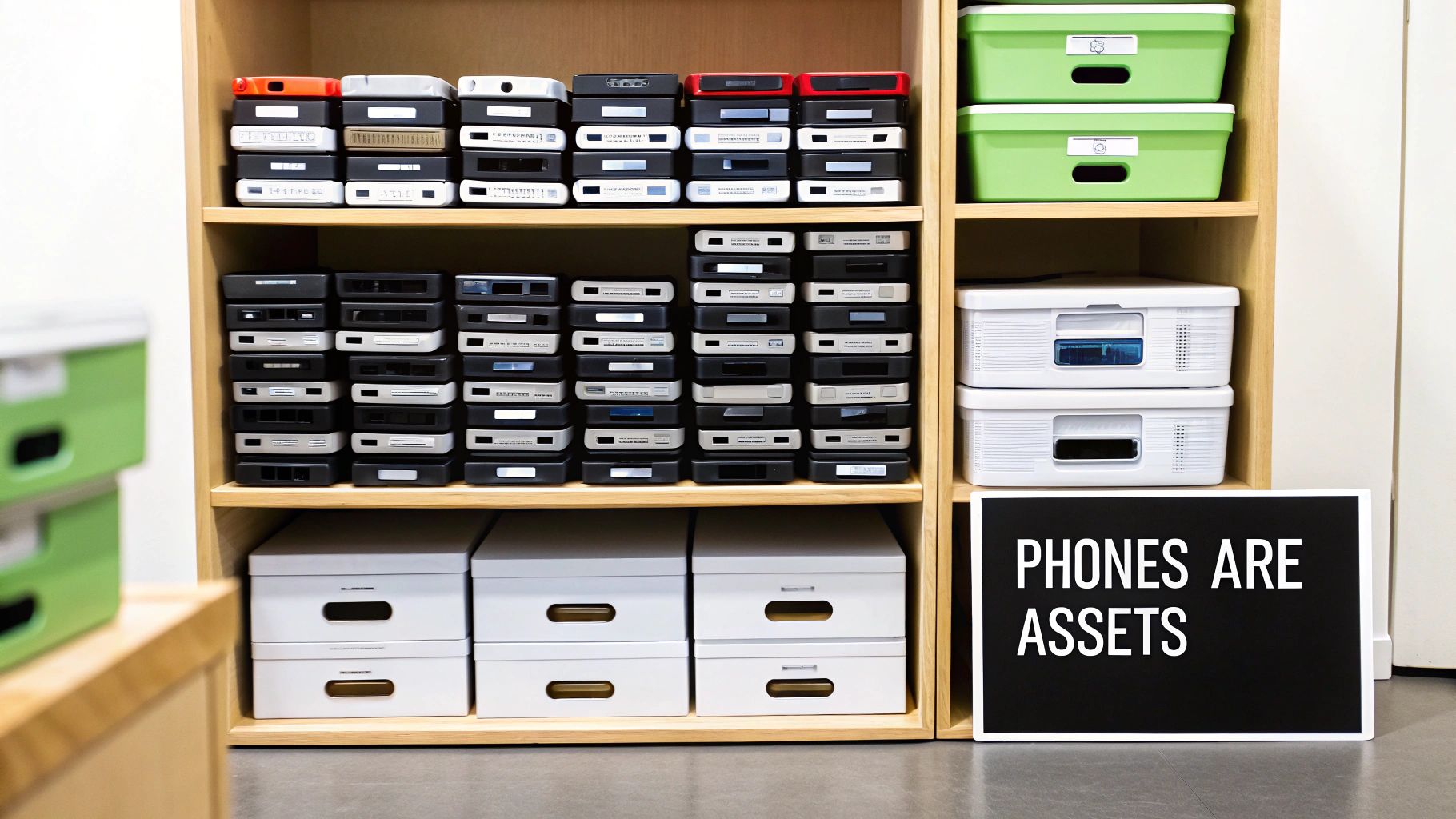
We’ve all seen it: that back-room cabinet or closet shelf overflowing with old company phones. It seems harmless enough, but that pile of obsolete tech is a ticking time bomb. It’s a goldmine of sensitive company data, a potential environmental hazard, and frankly, a pile of cash you're ignoring.
Deciding how to get rid of old cell phones shouldn't be an afterthought—it needs to be a proactive part of your IT strategy. Every single one of those devices, even the ones that won’t turn on, is packed with materials that are both valuable and potentially harmful.
The Scale of the E-Waste Problem
The sheer volume of electronics we toss is hard to wrap your head around. Think about this: in 2022, while there were about 16 billion mobile phones in use globally, a staggering 5 billion of them were expected to become e-waste in that year alone.
That's almost a third of all phones heading for the bin. The problem is, most just get stashed away, which means valuable materials like gold and copper are never recovered.
This isn't just an environmental issue; it's a direct threat to your business. Dropping the ball on disposal can have serious consequences.
- Data Security Breaches: A phone left in a landfill is a security nightmare. A simple factory reset isn't foolproof—lingering data can often be recovered, exposing everything from client information to internal financial records.
- Environmental Compliance Fines: Local and federal laws are strict about how electronics are disposed of. Tossing phones in the dumpster can lead to hefty fines. You can learn more about the environmental impact of electronic waste and the rules you need to follow.
- Missed Financial Opportunities: Don't assume those old phones are junk. They contain precious metals that recyclers pay for, and newer models might still have a decent resale or trade-in value.
When you start treating old phones as assets instead of trash, you're not just cleaning up—you're engaging in strategic IT Asset Disposition (ITAD). It’s the core of doing this right.
Viewing Old Phones as Assets
A smart ITAD strategy changes the conversation from "How do we dump this junk?" to "How do we get the most value out of these assets while eliminating risk?" This means having a clear, documented plan for every device the second it's retired.
The process involves secure data destruction, properly assessing each phone's potential for reuse, and working only with certified recyclers who can provide proof of compliant disposal. If you're looking for practical ways to get started, there are great guides on decluttering, donating, selling, and recycling items that can give you a framework.
At the end of the day, a well-managed disposal process protects your reputation, secures your data, and can even put money back in your pocket. The next sections will walk you through exactly how to build that process.
Wiping Your Data Before You Say Goodbye
Before a single phone leaves your possession, the first and most critical job is making sure every byte of company data is gone for good. A lot of folks think a simple factory reset is enough, but for a business with confidential information on the line, that's a dangerous assumption.
Think of it this way: a factory reset is like tearing a sensitive document into a few large, easy-to-reassemble strips. Professional data destruction turns it into confetti. You can't put it back together, and that's exactly the point.
The process of securely getting rid of old cell phones starts long before the final wipe. It begins with a careful, methodical prep phase to protect your assets and ensure nothing important is lost forever.
Preparing Your Devices for Disposition
First things first: back up any data you absolutely need to keep. While your company data should ideally live on your servers, individual employees might have stored critical files locally. Make sure all contacts, documents, and photos are safely migrated to a cloud service or your company's network storage. Only after you confirm the backup is complete and accessible should you move on.
Next, you have to cut the cord. Remove the devices from your company’s control systems, like any Mobile Device Management (MDM) or Enterprise Mobility Management (EMM) platforms. This is a non-negotiable step. It severs the administrative link between the phone and your network, closing off any potential future security loopholes.
Finally, it's time to log out. Methodically sign out of every single account on the device.
- Primary Accounts: Log out of the main Google account (on Android) or Apple ID/iCloud account (on iPhone).
- Company Apps: Disconnect from any proprietary business applications, communication tools like Slack or Microsoft Teams, and email clients.
- Third-Party Services: Don't forget social media, banking apps, or any other services logged in on the device.
Doing this prep work ensures that when you do wipe the phone, no lingering connections to your company’s digital infrastructure remain.
Choosing Your Data Destruction Method
With the device prepped, it's time to choose your weapon. How are you going to permanently erase the data? Your choice really comes down to two primary approaches: software-based wiping or physical destruction. The right one depends on your security requirements, the age of the devices, and whatever compliance standards your industry has to follow.
A software wipe, also known as data sanitization, uses specialized programs to overwrite the existing data on the phone's storage. A standard factory reset just removes the pointers to the data, leaving the actual files intact and potentially recoverable with the right tools. A true software wipe, on the other hand, overwrites the entire storage drive with random characters, often in multiple passes.
For businesses that need an auditable paper trail, using a recognized standard is key. The DoD 5220.22-M standard, for example, is a widely accepted method that involves overwriting data three times. It’s the gold standard for making sure data is completely unrecoverable.
For a deeper dive into these methods, you can explore our guide that explains what data sanitization is and why it's such a vital step for any business. This process is highly effective for modern smartphones, which have built-in encryption. Wiping the device also destroys the encryption keys, rendering the underlying data permanently inaccessible gibberish.
When Physical Destruction Is the Only Answer
Sometimes, a software wipe just isn't enough. For devices containing highly sensitive intellectual property, financial records, or protected health information (PHI), physical destruction is the only way to guarantee 100% data security. This is also the best route for older or damaged phones where a software wipe can't be reliably performed.
There are a few ways to physically destroy a phone:
- Shredding: This is the most common and secure method for businesses. We’re not talking about your office paper shredder. Industrial shredders designed for electronics grind the entire device—including the memory chip—into tiny, unsalvageable fragments.
- Drilling or Smashing: While it sounds satisfying, drilling holes directly through the phone's logic board and memory chip can work, but it’s less precise. This method is much harder to verify and isn't practical for a whole fleet of phones.
- Incineration: High-temperature incineration turns the device to ash, but it requires specialized facilities to manage the hazardous fumes and materials.
For most businesses, partnering with a certified ITAD vendor that offers on-site or off-site shredding is the most practical and compliant solution. This ensures the job is done right and, more importantly, provides you with a Certificate of Destruction. That certificate is your proof—a crucial document for your compliance and audit records—that you took every necessary step to protect your data.
Finding the Hidden Value in Your Old Phone Fleet
Once your data is properly handled, it's time to figure out what those old devices are actually worth. Too many businesses just write off old phones as junk, but that stack of electronics gathering dust in a storage closet could be a surprise source of cash—or a meaningful charitable donation.
Before you jump into a disposition plan, you need a realistic assessment of their value. Several factors come into play here, and knowing them will help you choose the right path for your business.
Assessing Your Phones' Potential Worth
Let's be clear: not all old phones are created equal. A fleet's value really boils down to a few key things. Newer models, especially flagship devices that are only a generation or two old, will always bring in the most money. Simple as that.
Beyond the model, physical condition is huge. A phone with a clean screen and minimal wear is obviously going to be worth a lot more than one that's covered in scratches or has a cracked screen. And, of course, it has to work. Does it power on? Does it hold a charge?
- Model and Age: A two-year-old iPhone will have way more value than a five-year-old Android from an obscure brand.
- Physical Condition: Scratches, dents, and especially cracked screens will tank the resale price.
- Functionality: Fully operational devices that are unlocked from carrier networks fetch the best prices.
- Market Demand: Some models just hold their value better than others because people are still looking for them on the secondary market.
This three-step visualization shows the critical data wiping process that must be completed before assessing value and choosing a disposition channel.
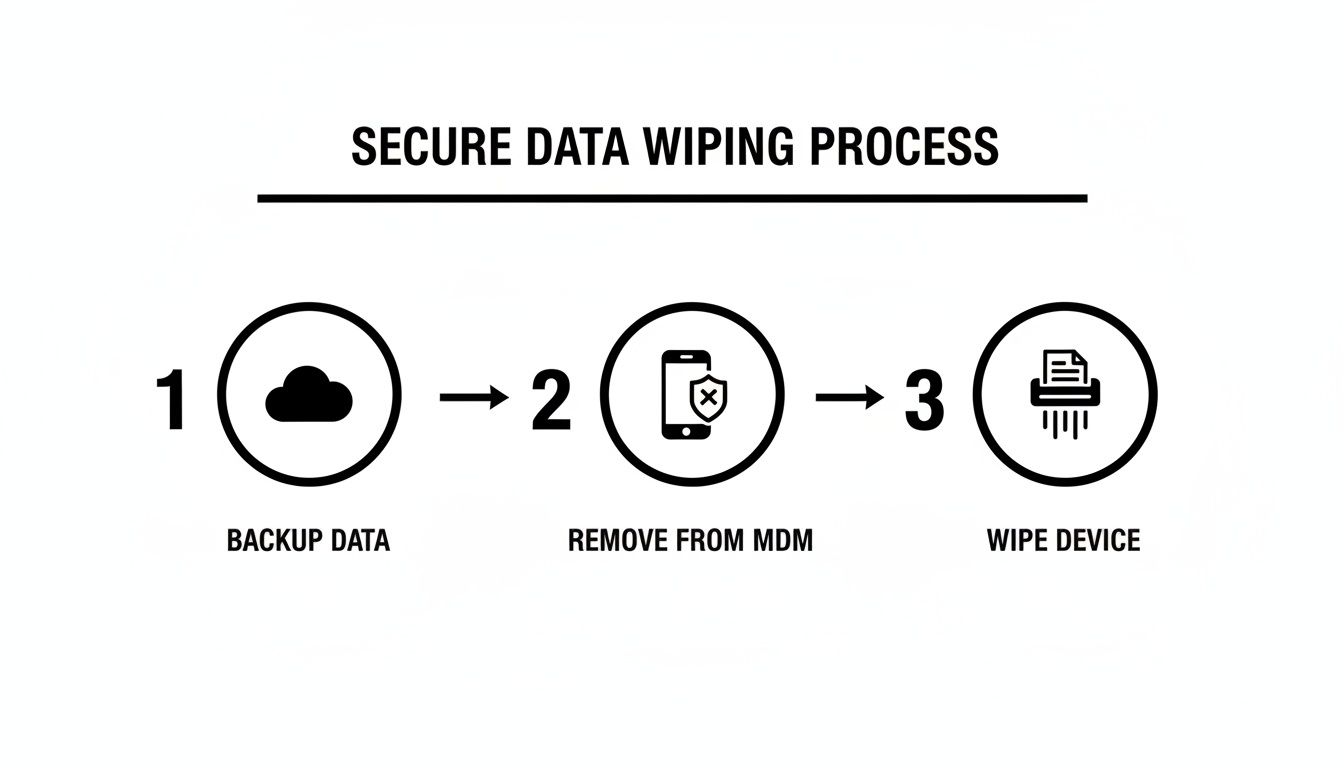
This flow highlights that secure data handling through backup, MDM removal, and a final wipe is a non-negotiable prerequisite to any value recovery effort.
Exploring Your Disposition Options
After you get a handle on what your phones are worth, you can start looking at the different ways to offload them. Each option strikes a different balance between convenience, financial return, and how much work you have to put in.
For businesses, one of the most popular routes is working with an IT Asset Disposition (ITAD) partner or a bulk refurbisher. These companies are set up to handle large quantities of used electronics. They make the whole process of valuation, data destruction, and payment pretty seamless and can often get you a much better return than consumer-focused services.
Another option is carrier trade-in programs. They're convenient, for sure, but they usually just give you credit toward new phones instead of cash. The value they offer, especially for older models, often isn't the best.
For a broader perspective on maximizing returns from your devices, especially for a larger "fleet" of phones, exploring comprehensive strategies for liquidating assets can offer valuable insights.
Donating your old phones is a fantastic alternative that lets you do some good and can even provide a financial perk. Plenty of non-profits accept used electronics to either refurbish them for people in need or recycle them to raise funds. Your business might even be able to get a tax deduction for the fair market value of the phones. If you're considering this path, we have a detailed guide on where you can donate an old cell phone to a worthy cause.
Finally, if your phones have zero resale or donation value, responsible recycling is the only way to go. These devices are still full of valuable materials. Recycling just 1 million phones can recover about 35,000 pounds of copper, 772 pounds of silver, and 75 pounds of gold. It's a powerful reminder of why keeping these materials out of landfills is so important.
Choosing a Certified E-Waste Disposal Partner
Alright, you've backed up and wiped your phones, and you know what they're worth. Now for the most critical step: picking the right partner to handle the final disposition. This isn't just about hauling away old tech. It’s about protecting your company's reputation, staying compliant, and doing the right thing for the environment.
Going with an uncertified recycler might look cheap upfront, but the hidden risks are massive. We've seen it happen—improper data handling, illegal e-waste exports, or sketchy disposal methods that leave a business exposed to huge legal and financial blowback. A certified partner is your guarantee that every device is managed securely and ethically, from your door to its final destination.
The scale of this problem is staggering. In 2022, the world generated 62 million tonnes of e-waste, but a dismal 22.3% was actually collected and recycled properly. With that number expected to climb to 82 million tonnes by 2030, choosing a certified recycler is how you ensure your company's old phones don't become part of the crisis. You can dig into these stats in the latest Global E-waste Monitor report.
Understanding E-Waste Certifications
When you start vetting potential partners, the first thing to check for is their certifications. These aren't just logos for their website; they represent proof of intense, third-party audits. They verify that a company’s processes meet the highest industry standards for both data security and environmental safety.
In the U.S., two certifications really matter:
- R2 (Responsible Recycling): This is the leading standard covering the entire lifecycle of an electronic device. An R2-certified recycler has been audited on everything from data security protocols to environmental practices and worker safety.
- e-Stewards: Developed by the Basel Action Network, this certification is hyper-focused on preventing the illegal export of hazardous e-waste to developing nations. It’s widely considered the toughest environmental standard in the game.
Finding a partner with one or both of these is your best defense against risk. It tells you they’re committed to doing things by the book.
Comparing Phone Disposition Options
Choosing the right path for your old business phones can feel complicated. To simplify things, here's a quick breakdown of the main options, highlighting the pros and cons of each.
| Disposition Method | Best For | Data Security Level | Potential Return | Compliance Assurance |
|---|---|---|---|---|
| Certified ITAD Partner | Businesses needing full compliance, data security, and documentation for a large number of devices. | Highest. Includes certified data wiping and physical destruction options with full reporting. | Moderate to High. Partners can often resell valuable assets on your behalf. | Highest. Provides Certificates of Destruction and full chain-of-custody documentation. |
| Manufacturer Trade-In | Companies upgrading with the same brand and looking for simple credit toward new purchases. | Variable. Security protocols depend entirely on the manufacturer's program. | Moderate. Usually offered as credit, not cash, and may undervalue devices. | Variable. You may not receive formal destruction certificates. |
| Employee Buyback/Sale | Small businesses with a handful of non-sensitive devices looking for a quick, simple disposition. | Lowest. Relies on employees to wipe data properly; zero company oversight. | Low. Value is often minimal, and the process can be an administrative headache. | None. The business retains all liability for data breaches and improper disposal. |
| Donation to Charity | Devices that are still functional but have little resale value; good for CSR initiatives. | Low to Moderate. Depends on the charity's ability to perform secure data wipes. | None. The return is a tax deduction, not direct cash value. | Low. Requires vetting the charity's data security practices and e-waste policy. |
Ultimately, for any business concerned with liability and compliance, a certified ITAD partner offers the most secure and well-documented solution. The other options might seem easier for a few phones, but they introduce risks that most companies can't afford to take.
Key Questions to Ask Any Potential Partner
Beyond just checking for a certification, you need to dig into the details of how they operate. A legitimate partner will welcome your questions and be completely transparent. Don't hesitate to press them on the specifics—your company's security is on the line.
Start with their data destruction methods. Do they offer on-site shredding if you need it? Can they perform certified software wipes and give you detailed reports for your records? You can also see how top-tier providers structure their services by checking out our guide on the best IT asset disposition companies.
Next, you absolutely must ask about their chain of custody.
A secure chain of custody is the chronological paper trail documenting every single person who has handled your assets, at every stage. This documentation is your undeniable proof that the phones were never lost, stolen, or improperly accessed after they left your control.
Finally, get into the logistics. Can they handle a secure, on-site pickup for hundreds of phones? Do they provide serialized asset tracking and reporting? A true professional makes the process seamless and arms you with all the paperwork you need for your own compliance records.
The Importance of a Certificate of Destruction
No matter who you partner with or what services they provide, the job isn't done until you have a Certificate of Destruction. This is the single most important document in the entire process.
This is your legally binding proof that your devices—and all the sensitive data they held—were permanently and compliantly destroyed. It should detail the serial numbers of the phones, the date they were destroyed, and the specific method used.
Think of this certificate as your ultimate "get out of jail free" card. If you ever face an audit or a legal challenge, this document proves you performed your due diligence. Without it, you’re leaving your business completely exposed.
A Local Solution For Your Business With Montclair Crew
Let's be honest, figuring out what to do with a pile of old company cell phones can be a real headache. Between data security risks and confusing e-waste rules, it's a task that often gets pushed to the back burner. For businesses here in the Metro Atlanta area, however, it doesn't have to be complicated. Montclair Crew offers a direct, secure, and local service built to take that entire burden off your plate.
We specialize in helping companies responsibly retire old cell phones and other IT gear. Our whole process is designed to be as straightforward as possible. It starts with a simple conversation to understand what you're dealing with—whether it's a dozen phones or a thousand—and ends with you holding the certified paperwork proving everything was handled by the book. No more guesswork.
Our Process for Businesses
We’ve built our service around solving the real-world problems we see businesses face every day. You don’t have time for complicated logistics or nagging security concerns, so we’ve done away with them. The goal is a complete, end-to-end solution that lets you get back to your real job while we handle the tech.
It all starts when you call or email our team. We'll work with you to schedule a secure pickup right from your office, whether you're in Alpharetta, Marietta, or anywhere across the Atlanta metro. Our crew shows up ready to catalog and safely transport your retired devices, making sure a documented chain of custody starts the moment they leave your hands.
The most critical part of our commitment is guaranteeing your data is gone for good. We provide free DoD 5220.22-M three-pass data wiping for all assets. For businesses needing that extra layer of certainty, we can even bring our shredders to you for on-site physical destruction.
Certified Partners and Rock-Solid Compliance
Trust is everything when your company's data is on the line. That's exactly why we only work with certified specialists who meet the highest industry standards, including R2 (Responsible Recycling). This ensures every single component of your old phones is managed in an environmentally compliant and ethical way.
This network of vetted partners means we can handle a huge range of equipment and guarantee that nothing ever sees a landfill. Once the job is done, you'll receive a Certificate of Destruction. This isn't just a piece of paper; it's your auditable proof that your data has been permanently wiped and your company has done its due diligence.
Options for Residential and Specialized Needs
While we focus on serving businesses, we're committed to being a resource for our whole community. We get plenty of calls from individuals asking how to get rid of a personal phone. For residential electronics recycling, we're always happy to refer you to trusted local partners who specialize in household e-waste.
- Residential Referrals: We can point you to convenient drop-off locations and services designed for individuals.
- Specialized Equipment: Have something unusual like old medical or lab equipment? We have partners who are experts in handling those specific items correctly.
This way, everyone has access to a secure and responsible disposal option. For businesses and residents alike, knowing where to start is half the battle, and our guide on disposing electronics near you is a great local resource.
Get In Touch With Montclair Crew Today
Ready to clear out those old devices with total confidence? Our team is here to give your business a clear, secure, and compliant path for its retired cell phones and IT assets. We pride ourselves on fast, professional service and clear communication from start to finish.
Contact us today to schedule a quick consultation or arrange for an on-site pickup. Let us show you how simple and secure getting rid of old electronics can be.
Common Questions About Getting Rid of Old Cell Phones
Even with a solid plan, you might have some last-minute questions when it's time to actually get rid of old cell phones. It happens all the time. Whether you’re a business manager dealing with dozens of company phones or just cleaning out a desk drawer at home, you need to be confident in your decision.
Let's walk through some of the most common questions we hear from clients. Getting these details right is the final piece of the puzzle.
Is a Factory Reset Enough to Wipe My Data?
This is the number one question we get, and the answer is a hard no, especially for business devices. A factory reset might make your data harder to find, but it doesn’t actually erase it. Think of it like tearing the table of contents out of a book—all the pages are still there, and someone with the right software can easily piece it all back together.
For real security, you need certified data destruction. That boils down to one of two methods:
- Software Wiping: We use professional-grade software to overwrite every bit of the phone's storage multiple times, following strict standards like DoD 5220.22-M. This process turns your original data into complete, unreadable gibberish.
- Physical Destruction: This is exactly what it sounds like. The device is physically shredded into tiny pieces, completely obliterating the memory chip. It's the only 100% foolproof method.
A certified ITAD partner will always give you a Certificate of Destruction, which is your official, legal proof that the data is gone for good.
What Happens If I Just Throw My Old Phone in the Trash?
Tossing an old phone in the regular trash is one of the worst things you can do, for a couple of big reasons. First off, it’s illegal in many places. E-waste regulations exist because phones are full of nasty materials like lead, mercury, and cadmium. In a landfill, that stuff can seep into the soil and groundwater, causing serious environmental problems.
Second, it's a huge security gamble. Any data left on that phone—even if you did a factory reset—is up for grabs. Anyone could pick it up and try to recover personal or company information. Going through a certified recycler makes sure those toxic materials are handled safely and your data is completely destroyed.
By choosing responsible disposal, you’re not just following the law. You’re protecting your community's environment and making sure your sensitive information doesn’t fall into the wrong hands.
How Can I Find Out If My Old Phones Have Any Value?
Figuring out if your old phones are worth anything is easier than you might think. It really comes down to the model, age, and physical condition. Naturally, newer models from popular brands that are in good shape will fetch the best prices.
To get a quote, you've got a few options:
- Carrier Trade-In Programs: These are convenient, but you'll likely get credit instead of cash, and the offers can be on the low side.
- Online Buy-Back Sites: Services like Gazelle or Decluttr give you quick online quotes, which works well for one or two phones.
- ITAD Partners: If you have a bunch of corporate phones, an ITAD company is your best bet. We can audit the whole fleet, give you a detailed valuation, and usually get a much better return in bulk than you could on your own.
An ITAD pro handles the entire resale process for you, maximizing your return on investment while guaranteeing every device is wiped clean.
What Documentation Should I Get for Business Phones?
For business phones, paperwork isn't optional—it's your proof of compliance. It shows you did your due diligence. Any reputable ITAD partner should provide two key documents for your records, no questions asked.
- Certificate of Destruction: This is the big one. It’s a legal document that lists the serial numbers of your devices and confirms their data was permanently destroyed according to specific, recognized standards.
- Chain-of-Custody Record: This paper trail tracks your phones from the moment they leave your office until they are recycled or resold. It shows who handled them and when, so there's no chance of a device "going missing."
Without this documentation, your business could be on the hook for data breaches or environmental fines down the road. Don't take the risk.
Ready to dispose of your company's old IT assets with complete peace of mind? Montclair Crew provides secure, compliant, and convenient electronics recycling services for businesses across Metro Atlanta. We handle everything from on-site pickup to certified data destruction, ensuring your equipment is managed responsibly from start to finish. Contact us today to schedule your pickup.
