
Ready to walk through the pages of history, but not sure which Georgia sites are worth the drive, the parking hassle, or the half-day commitment? That’s the gap most roundups miss. They tell you what’s famous, but they rarely tell you how a place visits in real life.
Georgia’s historic places reward practical planning. Some sites work best as a dense urban walking day. Others need a cooler morning start, advance tickets, or the right shoes. A few are emotionally heavy enough that you should build in time to slow down instead of stacking too much around them. If you care about history, that matters as much as the marker at the entrance.
This guide to Historic Places to Visit in Georgia for History Lovers is built for people who want both context and logistics. You’ll find city streets layered with colonial and Civil Rights history, coastal fortifications that changed military strategy, Indigenous ceremonial sites, and battlefields that still make sense only when you walk the terrain yourself.
The list is organized to help you make real decisions. Each stop includes a quick historical read, practical Visitor Intel, and a Pro-Tip block that focuses on what enhances the visit. Some sites are best for first-time visitors. Some are better for repeat travelers who want depth. Some are ideal if you’re planning around Metro Atlanta and want a strong history outing without turning it into a full road trip.
The goal is simple. Spend less time cross-checking websites and more time standing in places where Georgia’s past still feels tangible.
1. Savannah Historic Landmark District

If you want the highest concentration of history per block in Georgia, start in Savannah. The Historic Landmark District is the rare place where wandering works. You can cover a lot on foot without feeling like you’re spending the day commuting between sites.
What makes Savannah strong for history lovers isn’t just age. It’s density. The district’s grid of 22 historic squares creates a built-in route through restored homes, churches, monuments, museums, and riverfront spaces, so even a short visit feels productive. If you only have a day, Savannah gives you more historical texture than most places can deliver in a weekend.
Why It Matters
Savannah layers colonial planning, the legacy of the independence era, and Civil War history in a format that’s easy to absorb without a car. That matters for visitors who don’t want a museum-only experience. You can move between public squares and paid attractions naturally, then decide where to go deeper.
It also offers one of the strongest tour ecosystems in the state. Architecture walks, Black history tours, trolley rides, carriage tours, and house museums all compete for your time. That’s a good problem, but it does mean you should choose your format before you arrive instead of trying to decide curbside.
Visitor Intel
The district itself is open as a public neighborhood, so you can walk the streets and squares without an entry ticket. Costs depend on the museums or tours you choose, and hours vary by operator and site. Use the Savannah Historic Landmark District visitor page as your starting point.
A few trade-offs matter:
- Best for short trips: You can see a lot quickly because the core is compact.
- Less ideal for peak crowds: Popular squares and the riverfront can get busy.
- Parking takes patience: Street parking and garages are available, but convenient spots near the most visited areas don’t always stay open.
If food planning matters as much as sightseeing, pair your route with this guide to the best food cities to visit in Georgia, since Savannah easily supports a history-and-dining day.
Pro-Tip: Don’t try to “do Savannah” by checking off every house museum. Pick one guided tour and one interior site, then leave time to walk at your own pace. The squares are part of the experience, not just the space between attractions.
2. Martin Luther King, Jr. National Historical Park

Some historic sites impress with age. This one hits harder because of proximity. On Auburn Avenue, the history of the Civil Rights Movement isn’t abstract. It’s tied to a neighborhood, a church, a family home, and public spaces that still hold their original civic context.
That concentration is what makes Martin Luther King, Jr. National Historical Park one of the best stops in Georgia. You’re not looking at isolated artifacts. You’re moving through a place that shaped Dr. King’s early life and helps visitors understand the movement through actual streets and institutions.
Why It Matters
This is one of the strongest interpretation sites in Atlanta because the storytelling is anchored in primary places. The Visitor Center gives you orientation. Historic Ebenezer Baptist Church adds emotional and historical depth. The Birth Home block connects the public message to private beginnings.
For many visitors, this park works better than a rushed “top attractions” day because it rewards focus. Give it real time. If you’re already building an Atlanta weekend, this roundup of top things to do in Atlanta this weekend can help you combine it with other nearby stops without overloading the schedule.
Visitor Intel
Core public areas are generally accessible without an admission fee, but the details that matter most are schedule-based. Birth Home interior access, when operating, is limited and handled through day-of, in-person timed tickets. Ranger talks and presentations can also shift depending on staffing and daily conditions.
Before you go, check the official Martin Luther King, Jr. National Historical Park website for current operating information.
A practical approach works best:
- Arrive early: Limited-access presentations are easier to plan around if you start the day there.
- Use the Visitor Center first: It gives context that improves everything else on site.
- Expect emotional weight: This isn’t a quick photo stop. It deserves slower pacing.
Go with a plan, but leave room to pause. Visitors who rush through the church and exhibits usually leave with less than the site offers.
3. Kennesaw Mountain National Battlefield Park
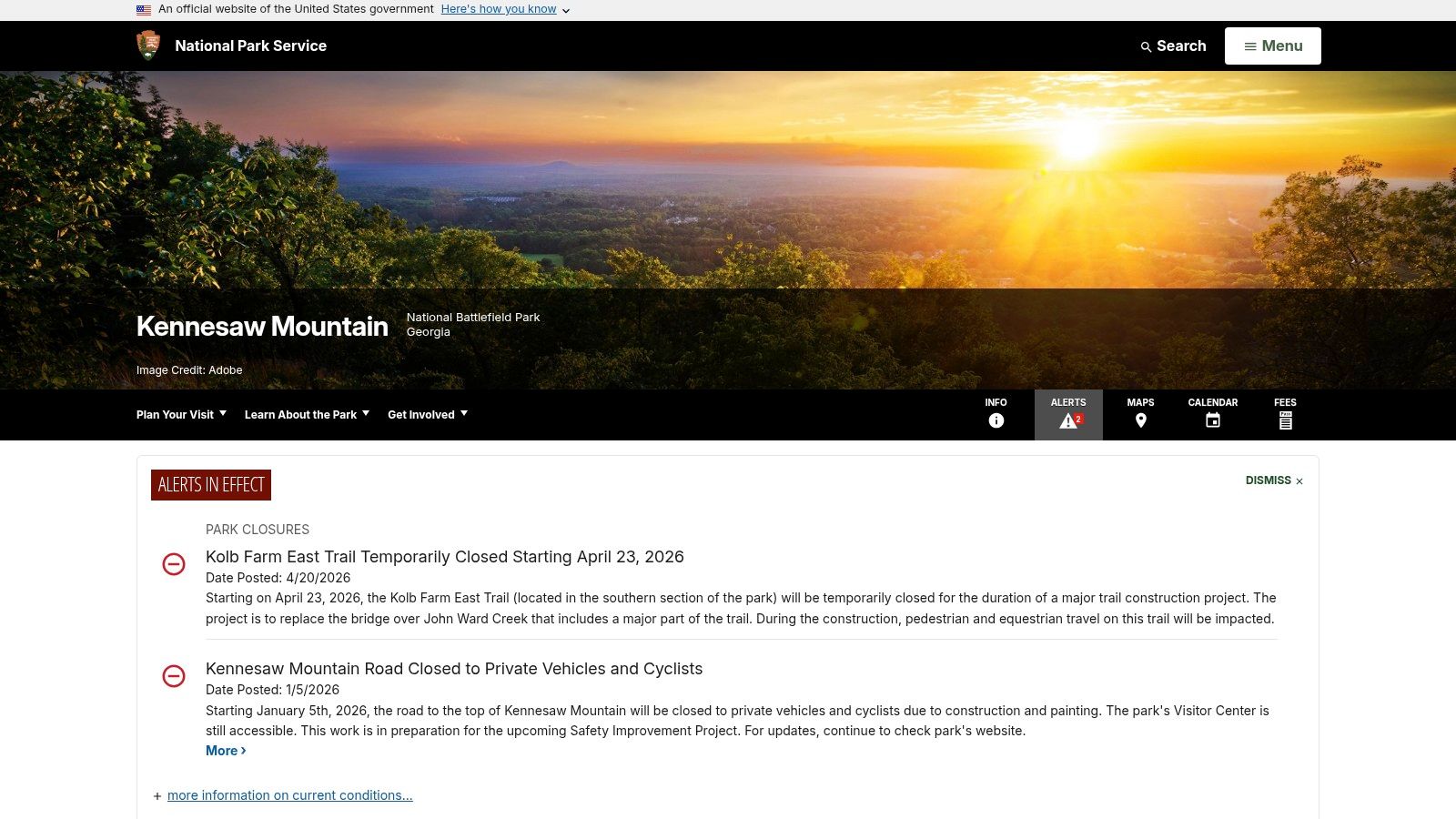
Want a Civil War site where the ground itself explains the battle?
Kennesaw Mountain National Battlefield Park is one of the strongest history stops in Georgia for visitors who learn best by walking the terrain. The value here is practical and immediate. You can stand on the slopes, trace the ridge lines, and understand why attacking these positions cost Union forces heavily during the 1864 Atlanta Campaign. A museum visit helps, but the field is the ultimate interpreter.
Why It Matters
Kennesaw Mountain shows how topography shaped combat. The Confederate line held strong defensive ground, and that advantage is still readable on site if you give yourself enough time to walk beyond the busiest areas. For history lovers trying to connect battlefield decisions to what they can see, this park does that better than many marker-heavy sites.
It also fits real trip planning better than many major battlefields. The park sits within easy reach of Atlanta’s northern suburbs, so it works as a serious half-day stop without the long transit time some historic sites require.
Visitor Intel
Start with the official Kennesaw Mountain National Battlefield Park site for current operating hours, shuttle or road access, parking updates, and any temporary trail or visitor center changes. Conditions matter here more than at a house museum. Heat, rain, and weekend crowd levels can shape the visit.
This park rewards visitors who are ready to walk. If you only stop at the visitor center and scenic viewpoints, you will get context but miss the site’s main strength. If you add even one purposeful trail segment, the defensive logic of the battlefield becomes much clearer.
A few planning trade-offs to keep in mind:
- Best use of time: Give it at least a half day if military history is your priority.
- Harder for low-mobility travelers: Some of the most useful perspective comes from trails with elevation change.
- Stronger in cooler weather: Summer heat can make the exposed sections feel longer than they look on a map.
- Easy to pair with other Georgia stops: It works well before or after a coast-focused trip, especially if you are also comparing inland history days with the best beaches in Georgia for a relaxing vacation.
If you want to combine battlefield history with a stronger outdoor day, use this guide to best hiking trails in North Georgia mountains as a planning companion for the rest of your trip.
Pro-Tip: Arrive early, start with the park orientation, then walk a trail before the day gets hot. Kennesaw makes the most sense on foot. The longer you stay in the terrain, the easier it is to read the battle.
4. Fort Pulaski National Monument
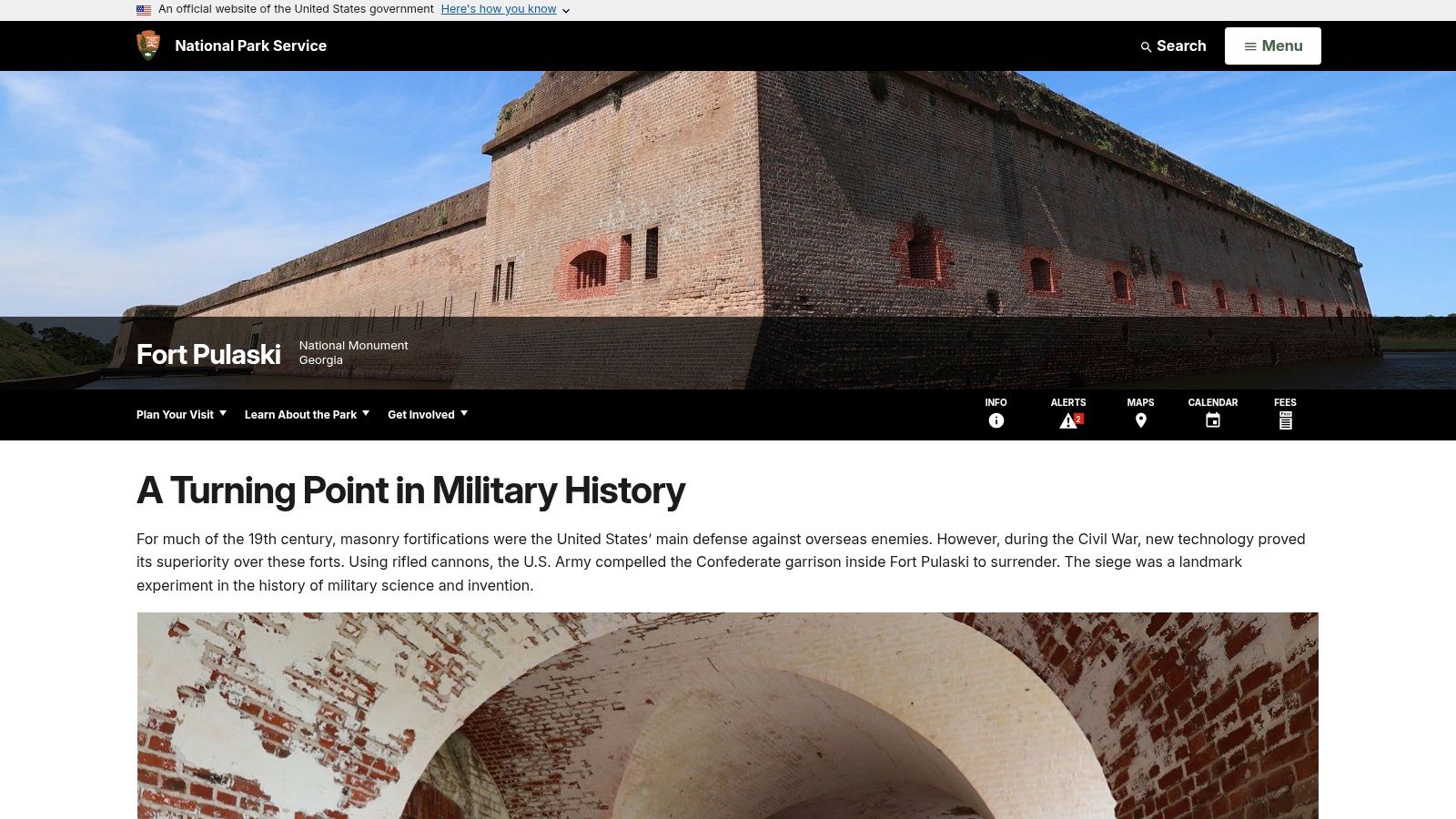
Fort Pulaski is one of the most visually satisfying historic sites in Georgia. You get a massive brick fort, a moat, open parade ground, coastal marsh setting, and interpretation that’s easy to follow even if you don’t arrive with deep military history knowledge.
It also solves a common travel problem. Many visitors want a serious history stop between Savannah and Tybee Island, but not one that turns into a full-day commitment. Fort Pulaski fits that slot well. You can give it a few focused hours and still leave feeling like you saw a complete site.
Why It Matters
The fort matters because it marks a turning point in military engineering. The bombardment showed that traditional masonry forts were vulnerable to newer artillery. For history lovers, that means the site isn’t just about local defense or Civil War movement. It marks a broader shift in how war changed.
It’s also one of those rare places where the structure itself does much of the interpretation. Walking the casemates and bastions gives you scale that’s hard to get from a book or battlefield marker.
Visitor Intel
The official Fort Pulaski National Monument website is the place to check current entrance fees, demonstration schedules, and opening hours. The entrance station is cashless, so don’t arrive expecting to pay with bills. The monument’s ticket validity window can also help if you’re balancing a Savannah stay with a Tybee detour.
Keep these planning points in mind:
- Great coastal add-on: Easy to pair with Savannah or beach time.
- Weather changes the experience: Sun, wind, and heat are part of the visit.
- Strong for families and non-specialists: The fort’s layout is intuitive and photogenic.
If you’re turning the day into a coast-focused itinerary, this roundup of the best beaches in Georgia for a relaxing vacation helps connect the history stop with the rest of your route.
“Wear more sun protection than you think you need.” Forts don’t offer much sympathy when the light reflects off brick, water, and open ground all at once.
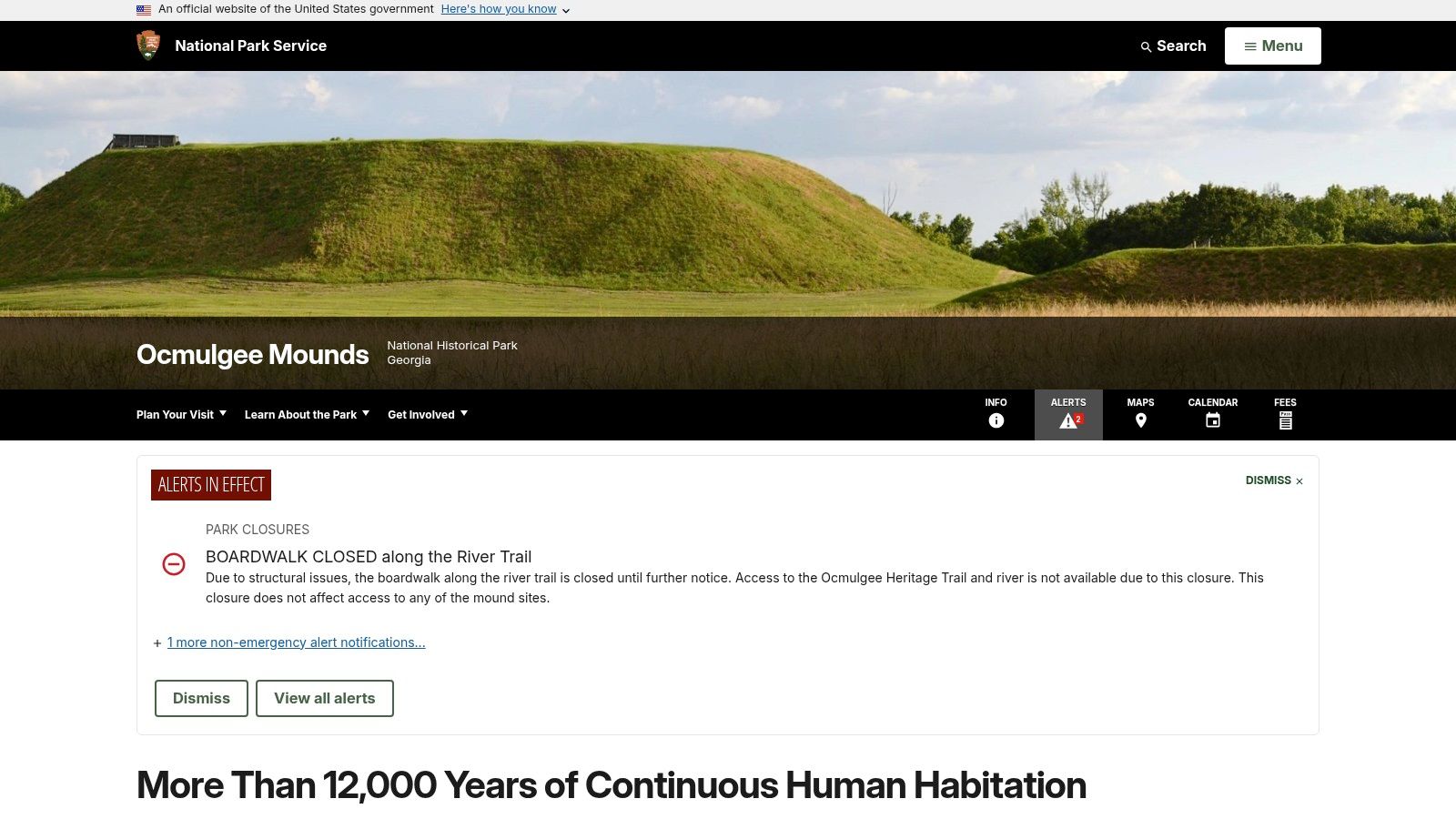
5. Ocmulgee Mounds National Historical Park
If your idea of history in Georgia starts with colonial settlements or the Civil War, Ocmulgee Mounds resets the timeline. This is one of the state’s most important places because it puts Indigenous history first and does it through its physical setting, not just display cases.
The site preserves a deep cultural record associated with Muscogee history and Southeastern mound-building traditions. That alone makes it essential. Many travelers overlook it because it doesn’t fit the usual mansion-fort-battlefield pattern, but that’s exactly why serious history lovers should go.
Why It Matters
Ocmulgee gives you long-range historical perspective that most itineraries miss. The mounds, trails, and reconstructed Earth Lodge make human continuity visible in a way that’s hard to replicate elsewhere in Georgia. It broadens the story of the state beyond the periods that usually dominate tourism.
It’s also one of the most useful educational sites in Georgia because the interpretation encourages slower observation. Instead of moving from room to room, you move through a ceremonial and civic setting.
Visitor Intel
The official Ocmulgee Mounds National Historical Park website should be your first stop for current hours, temporary access notes, and daily program information. Public access is generally straightforward, and the site is often easier logistically than visitors expect.
A few practical notes help:
- Go earlier in the day: Heat and exposure can shape the visit more than distance does.
- Bring water: Outdoor interpretation works best when you’re not rushing to get back inside.
- Leave time for the museum and trails: The site is most effective when you do both.
For travelers building a broader outdoors-and-history route, this guide to the most beautiful state parks in Georgia to explore pairs well with a Macon-area stop.
The Earth Lodge is the point where many visitors stop treating the site as “just mounds” and start understanding it as a lived ceremonial place. Don’t skip it.
6. Andersonville National Historic Site & National Prisoner of War Museum
Andersonville is not casual history travel. It’s one of the most sobering sites in Georgia, and that’s exactly why it belongs on a serious list. The preserved Camp Sumter prison grounds and the National Prisoner of War Museum create a visit that is both Civil War specific and national in scope.
The prison site can feel stark at first. That starkness is part of the interpretation. Its surroundings force you to think about confinement, exposure, and scale. Then the museum expands the story to American POW experiences across multiple conflicts, which gives the site broader relevance than many visitors expect.
Why It Matters
This is one of the strongest places in Georgia for understanding suffering, memory, and commemoration in public history. It doesn’t rely on spectacle. It relies on direct confrontation with place and testimony.
That makes it especially important for repeat visitors who’ve already covered the state’s more obvious highlights. If you want history that stays with you, Andersonville does.
Visitor Intel
Start with the official Andersonville National Historic Site website for current hours, ranger programming, film schedules, and driving route information. Public access is generally straightforward, but the rural location means travel time matters more than it does at urban sites.
A few trade-offs are clear:
- Best for visitors who can give it time: The museum and prison grounds both deserve attention.
- Not ideal as a rushed detour: The emotional tone doesn’t pair well with a hurry-up schedule.
- Useful for group education: The combination of museum interpretation and preserved grounds supports deeper discussion than a single indoor exhibit would.
A practical approach
If you’re traveling with students or mixed-interest family groups, set expectations before arrival. This isn’t a light stop between lunch and shopping. It’s reflective, and people need room for that.
A good visit sequence is museum first, then prison grounds, then cemetery if time and energy allow. That order gives the outdoor setting more context and prevents the site from feeling visually empty.
Build margin into the day. Andersonville asks more of visitors than most historic sites do, and it gives more back when you don’t rush it.
7. Jekyll Island Historic Landmark District
Jekyll Island offers a very different kind of historical experience. Instead of war, activism, or ancient ceremonial sites, you get the architecture and social world of a Gilded Age retreat. That shift in tone can be useful if you’re building a Georgia trip with varied historical moods.
The district preserves a former winter colony associated with the Jekyll Island Club, and it visits best when you lean into the formal interpretation. This isn’t the kind of place where you should just stroll through and assume the story will reveal itself. The trolley tour and museum orientation make a real difference.
Why It Matters
This site matters because it captures wealth, leisure, and architectural ambition in a coastal setting that still feels distinct from mainland Georgia. It’s not just about big houses. It’s about how elite Americans shaped seasonal outdoor spaces, institutions, and restoration priorities.
The district also works well for travelers who want history without giving up broader vacation appeal. You can pair architectural touring with coastal scenery and other island attractions in the same day.
Visitor Intel
The Jekyll Island Historic Landmark District website is the key planning page for tour booking, museum information, and current access details. Vehicle entry to the island requires a paid gate or parking pass, and trolley tours can fill on busy dates, so this is one site where advance booking is usually the better move.
Here’s what works best:
- Book the trolley if interiors matter: The exterior walk alone won’t give you the full value.
- Use the museum as orientation: It helps the district make sense faster.
- Plan around peak demand: Popular travel days tighten your options.
If you only have a few hours on Jekyll, prioritize one structured tour over a loose wander. This district rewards guided context more than improvisation.
7 Historic Georgia Sites: Comparison for History Lovers
| Site | 🔄 Access / Logistics | ⚡ Time & Cost | ⭐ Experience Quality | 📊 Ideal Use Cases | 💡 Key Advantages |
|---|---|---|---|---|---|
| Savannah Historic Landmark District | Walkable 22‑square grid; limited metered parking; busy in peak seasons | Most public areas free; pay for museums/tours; efficient for short visits | ⭐ Very high concentration of layered Colonial–19th‑century sites | Short city history visits, architecture/photography tours, guided walks | Dense site clustering, many tour options, excellent wayfinding |
| Martin Luther King, Jr. National Historical Park | Centrally located in Atlanta; some timed, day‑of reservations for Birth Home | Core access free; Birth Home interior limited by reservation when offered | ⭐ Powerful, primary‑source civil‑rights interpretation | Civil‑rights education, downtown Atlanta itineraries | Ranger programs, intact primary sites, strong interpretive exhibits |
| Kennesaw Mountain National Battlefield Park | Multiple trailheads near suburbs; some steep terrain; parking fees & fills on weekends | Entrance/parking fees typical; half‑ to full‑day visit for hikes and museum | ⭐ Solid battlefield interpretation with both indoor & outdoor elements | Active history hikes, outdoor learning, suburban day trips | Extensive signed trails, orientation museum, ranger‑led programs |
| Fort Pulaski National Monument | Easy Savannah/Tybee detour; exposed fort areas (windy); cashless entry | Modest fee; seven‑day valid ticket; short to half‑day visit | ⭐ Highly photogenic, well‑interpreted Third‑System fort | Coastal history stops, living‑history or weapons demos | Exceptionally intact fort fabric, clear signage, regular demonstrations |
| Ocmulgee Mounds National Historical Park | Located in Macon; ample parking and fee‑free access; outdoor exposure to sun/heat | No entrance fee; suitable for groups/schools; plan for outdoor conditions | ⭐ Exceptional deep‑time Indigenous and mound‑building interpretation | Indigenous history education, archaeology interest, school groups | Large platform mounds, reconstructed Earth Lodge, strong cultural depth |
| Andersonville NHS & National POW Museum | Rural site requiring longer drive; driving routes and outdoor interpretation | Free access; expect extended visit time for museum and grounds | ⭐ Comprehensive, moving POW and memorial interpretation | Educational groups, memorial/commemorative visits | Extensive POW exhibits, national cemetery, broad cross‑conflict context |
| Jekyll Island Historic Landmark District | Island access requires paid gate/parking pass; trolley tours operate daily | Paid island entry and often separate tour tickets; advance booking recommended | ⭐ Rich Gilded Age architecture with interior cottage access | Architectural tours, combined beach/history vacations | Professional tour program, cottage interiors, coastal ecology tie‑ins |
Your Historical Georgia Itinerary Awaits
Georgia’s best historic sites don’t all ask for the same kind of visitor. Savannah rewards walkers who like layered urban history and flexible pacing. Martin Luther King, Jr. National Historical Park works best for travelers who want moral and political context grounded in real streets and institutions. Kennesaw Mountain delivers most when you’re willing to let geography explain the battle. Fort Pulaski gives you a compact, highly visual military site that fits neatly into a coastal trip.
Ocmulgee Mounds changes the frame entirely. It reminds visitors that Georgia’s history didn’t begin with colonial settlement or statehood. Andersonville slows the trip down and asks for reflection, not speed. Jekyll Island rounds out the list with architectural and social history in a setting that suits travelers who want structure, restoration stories, and a coastal backdrop.
That variety is what makes Historic Places to Visit in Georgia for History Lovers such a strong travel theme. You don’t need to repeat the same kind of site across the state. You can build an itinerary around contrasts. Follow Indigenous history with a Civil Rights landmark. Pair a battlefield morning with a museum-heavy city afternoon on another day. Put a sobering site like Andersonville in a trip where you’ve left enough space to absorb it. Good planning isn’t only about mileage. It’s about sequence and energy.
If you’re based in Metro Atlanta, Kennesaw Mountain and the King park are obvious starting points because they’re easier to reach without a long overnight commitment. Savannah and Fort Pulaski work well together if you want a coastal history trip with strong walkability and a clear military-history anchor. Macon adds depth through Ocmulgee Mounds, especially for travelers who want a broader timeline. Jekyll Island fits best when you’re already planning a coastal stay and can justify booking the tour experience in advance.
A practical itinerary also respects how people travel. Some days are for long walks and detailed interpretation. Some are better for one focused site and a relaxed meal nearby. Some trips need family-friendly logistics. Others are built for dedicated history lovers who don’t mind spending hours reading exhibits and walking grounds. Match the site to the day, not just to your bucket list.
The easiest mistake is overpacking. Georgia’s historic places often look manageable on a map, but the best ones reward time. Savannah needs wandering. The King park needs attention. Kennesaw needs walking. Andersonville needs emotional bandwidth. When people say a site was “just okay,” the problem is often pacing, not the place itself.
Use this guide as your starting framework, then move into planning a detailed itinerary that fits your region, your interests, and the amount of time you want to spend on the ground. Georgia’s history isn’t hidden. It’s remarkably accessible when you choose the right stops and visit them in the right rhythm. Book the tour, check the site hours, bring the right shoes, and go. The stories are still there.
If your Georgia history trip also overlaps with an office move, school cleanout, data center refresh, or IT equipment decommissioning project, Montclair Crew Recycling is a practical local resource to keep in mind. Based in the Atlanta area, Montclair Crew helps businesses, schools, healthcare organizations, and public agencies recycle computers, servers, telecom gear, and other IT assets with secure data handling and compliant disposal, which makes them a strong fit for organizations that want their operations and their travel planning handled responsibly.
