
For businesses here in Augusta, figuring out what to do with old computers isn't just about clearing out a storage closet anymore. It's a critical part of running a smart, secure operation. This process—computer recycling—is about securely and environmentally handling outdated IT hardware, and it’s way more important than most people think.
Why Secure Computer Recycling in Augusta GA Is a Business Necessity
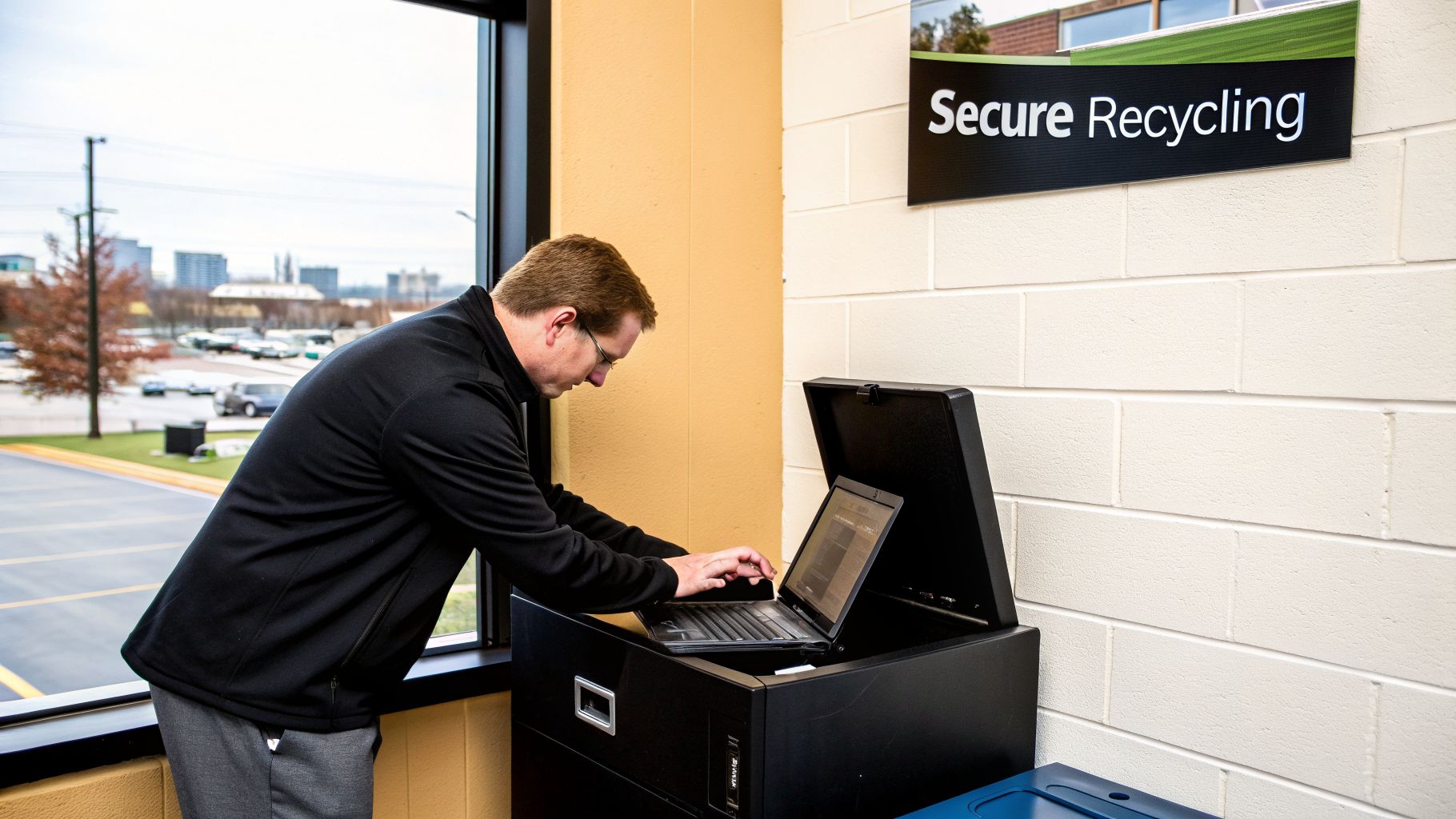
So, what are you supposed to do with that pile of old desktops, servers, and monitors? Tossing them out with the regular trash is a recipe for disaster. You're looking at potentially massive data breaches, serious environmental fines, and a hit to your reputation that can be hard to come back from.
Think about it this way: your old work computers are like little vaults packed with sensitive information. We're talking client lists, financial statements, and all your internal company secrets. You wouldn't just drag a company safe to the curb and hope for the best, right? Leaving old computers unsecured is pretty much the same thing.
Understanding ITAD as a Core Business Function
This is where a proper strategy for secure IT Asset Disposition (ITAD) becomes essential. ITAD isn't just a fancy acronym; it's the formal process your business uses to retire old tech safely and responsibly. It’s not a task to handle at the last minute—it's a fundamental piece of your company's risk management plan.
Working with a professional ITAD service turns a major headache and liability into a streamlined, secure process. The upsides are real and you'll see them right away:
- Data Security: A certified partner doesn't just delete files; they perform certified data destruction. This guarantees your company and client info is gone for good, protecting you from breaches.
- Environmental Compliance: Professional recyclers know and follow all the strict federal and state e-waste laws. This keeps toxic materials out of Georgia’s landfills and water.
- Value Recovery: Don't assume old tech is worthless. An ITAD partner can test, refurbish, and resell equipment that still has life in it, often sharing the profits to help offset or even cover your recycling costs.
The need to get this right is only getting bigger. For instance, Microsoft’s plan to end support for Windows 10 is expected to make 240 million PCs obsolete. That’s a huge wave of hardware businesses will need to upgrade and dispose of securely to dodge major security vulnerabilities.
The Smart Choice for Georgia Businesses
It's no surprise that companies all over Georgia are now relying on certified partners for computer recycling in Augusta GA to manage this complex job. A true professional gives you a solid chain of custody, tracking your equipment from the moment it leaves your building until it’s fully processed. They also provide official paperwork, like Certificates of Data Destruction, which serves as proof that you did everything by the book.
This approach also fits perfectly with corporate sustainability goals and shows your customers and community that you’re a responsible business. By bringing in an expert, you lock down your security, stay compliant, and can even get some money back from your old equipment. It’s just good business.
The Hidden Dangers of Growing E-Waste
The constant push for newer, faster technology creates a real and growing headache for every business: mountains of electronic waste, or e-waste. This isn't just about old equipment piling up in a storeroom; it's a serious environmental and legal problem that affects businesses right here in Augusta.
Think of it this way: your old IT gear is like a stream. Left on its own, it becomes a toxic flood that pollutes our community. But if you channel it through experts in computer recycling in Augusta GA, that same stream turns into a source of valuable, reusable materials.
The Environmental Stakes
Your old computers, servers, and monitors are packed with materials that are perfectly safe when the device is running, but become hazardous waste once it's thrown out. When this equipment gets dumped in a landfill, those toxins don't just sit there. They seep into the ground, threatening local soil and water.
Some of the worst offenders inside your old tech include:
- Lead: Found in circuit board solder and old CRT monitors, lead is a powerful neurotoxin.
- Mercury: Used in flat-panel displays and laptop screens, mercury can cause severe damage to kidneys and the nervous system.
- Cadmium: A known carcinogen found in rechargeable computer batteries and on circuit boards.
Tossing hardware filled with this stuff isn't just bad practice—it's illegal. The EPA has strict federal and state rules for managing e-waste. Getting it wrong can lead to heavy fines and a major blow to your company’s reputation. To really understand why proper disposal is so critical, it’s worth looking into the full environmental impact of electronic waste.
A Global Problem with a Local Solution
The sheer scale of the e-waste problem is hard to wrap your head around. In 2022, the world generated 62 million tonnes of e-waste, but only 22.3% of it was properly collected and recycled. Small IT gear like laptops and desktops accounted for 4.6 million tonnes of that total, with a similarly dismal recycling rate of just 22%. You can dig deeper into these global e-waste statistics on emew.com. This gap isn't just a challenge; it's a huge opportunity for local businesses to act responsibly.
An old computer is more than just obsolete hardware; it’s a container of both valuable resources and hazardous substances. Choosing professional recycling ensures the hazards are neutralized and the resources are recovered, protecting both your business and the community.
This is exactly why having a formal IT asset disposition plan is no longer a "nice-to-have" for your Augusta business—it's essential. It's about staying compliant, being a good environmental steward, and simply making a smart, sustainable choice. Working with a certified recycling partner guarantees your old tech is handled the right way, preventing pollution and turning a potential liability into a win for everyone. You might also be interested in our closer look into the environmental impact of electronics. By taking this step, you protect our local environment and show that your business is a responsible community partner.
Preparing Your Computers For Secure Recycling
Before you hand over your old equipment, there's a little prep work that needs to be done. Think of it as a final checklist to make sure your sensitive business data is completely protected and that the recycling process itself goes off without a hitch.
First thing’s first: create a detailed IT asset inventory. This is just a straightforward list of every single device you’re planning to recycle. You'll want to log details like serial numbers, asset tags, and the type of device (like a Dell Latitude 7490 or an HP EliteDesk 800 G4). An accurate inventory is absolutely vital for accountability, letting you track each piece of hardware and confirm its destruction down the line.
Next up, you have to back up any data you can’t afford to lose. While the whole point is to wipe these drives clean, you don't want to lose mission-critical files by accident. Make sure to securely transfer your important documents, client records, and databases to a new machine, a secure company server, or encrypted cloud storage before you do anything else.
The Critical Step Of Data Destruction
Now we get to the most important part—making sure your data is gone for good. Just hitting 'delete' or even reformatting a hard drive won’t cut it. Most people don't realize that deleted data can be pulled back with pretty basic software, leaving your business wide open to risk.
Making sure all sensitive information is truly unrecoverable before a computer leaves your sight is non-negotiable. Following solid Data Loss Prevention Best Practices is the only way to steer clear of a potential data breach and protect your company’s reputation.
For businesses here in Augusta, especially those in healthcare or finance, certified data destruction isn’t just a good idea—it’s a strict requirement. A single data breach from one improperly handled computer can trigger devastating financial penalties and completely shatter the trust you've built with your customers.
Professional computer recycling in Augusta GA uses certified methods that make data recovery physically impossible. If you want to get into the weeds, you can check out our detailed guide on how to wipe a computer before recycling.
The flowchart below breaks down the hidden dangers lurking in old electronics when they aren't handled correctly—from toxic environmental damage to massive data security holes.
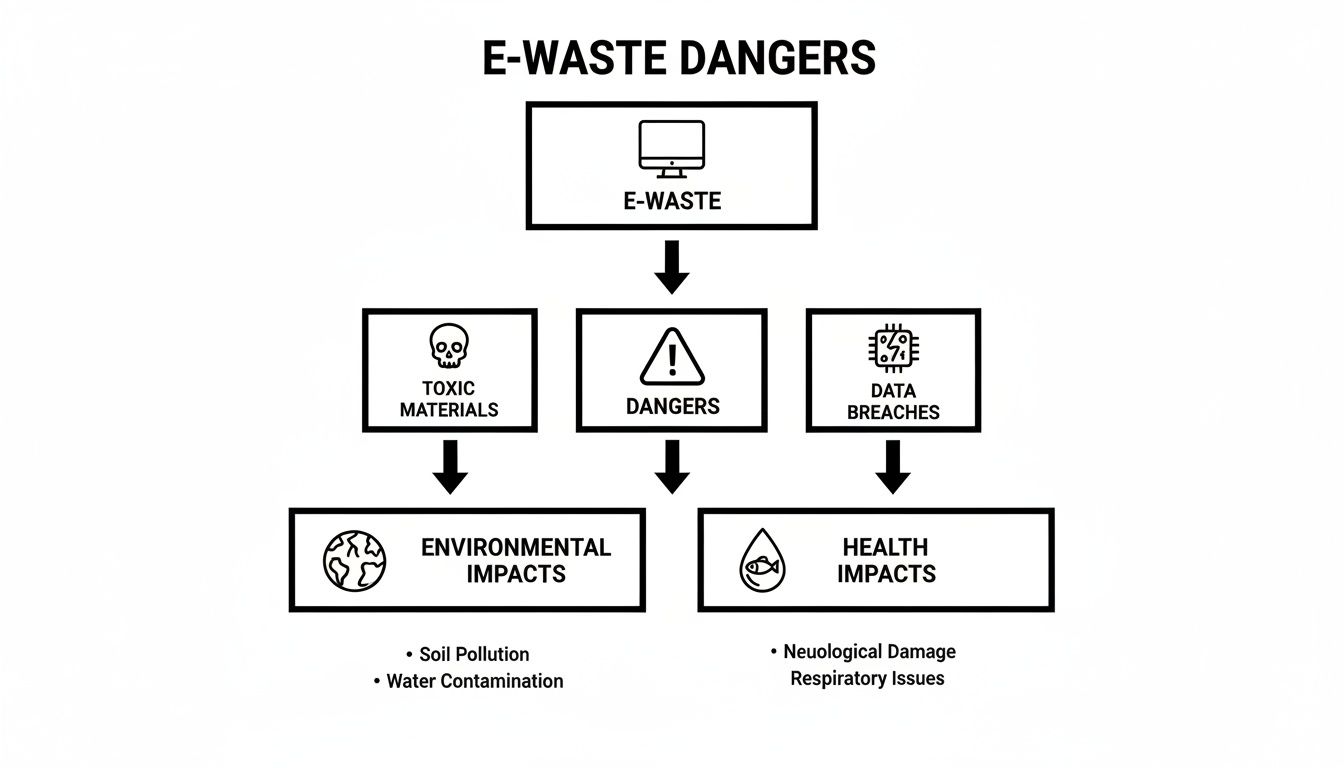
As you can see, improperly discarded electronics create a direct path to environmental contamination and expose you to serious data security vulnerabilities. This is exactly why a professional, certified process is so important.
Data Destruction Methods Compared
When it comes to true data security, certified recyclers use specific, proven methods. Understanding the difference helps you pick the right level of protection for your business's needs.
Here’s a quick comparison of the most common professional data destruction methods.
| Method | Description | Security Level | Best For |
|---|---|---|---|
| Data Wiping | Specialized software overwrites the entire hard drive with random data multiple times (e.g., a three-pass wipe). | High | Devices with hard drives that may be refurbished and resold. Securely sanitizes the drive while preserving the hardware. |
| Degaussing | A powerful magnetic field is used to instantly and permanently erase all data on magnetic media like hard drives and tapes. | Very High | Erasing large quantities of magnetic storage media quickly. Renders the drives unusable afterward. |
| Physical Shredding | An industrial shredder grinds the hard drives, SSDs, and other media into tiny, unrecognizable fragments of metal and plastic. | Maximum | Devices containing highly sensitive intellectual property, financial records, or PII. The ultimate guarantee that data is gone forever. |
Each method offers a different level of security and has its own best-use case. For most businesses, a combination of wiping for reusable assets and shredding for the most sensitive data provides a perfect balance of security and value.
How to Choose the Right Recycling Service in the Augusta Area
Finding the right partner for computer recycling in Augusta, GA can feel like a tough job. But when you get right down to it, it’s all about one thing: trust.
You need someone who won’t just haul away your old gear, but who will actively protect your business from the very real risks of a data breach or an environmental fine. Not all recyclers operate the same way, so knowing what to look for is absolutely critical.
Think of it like hiring a specialist for your company's finances or legal team. You wouldn’t trust just anyone with that. The same standard has to apply here. The right partner acts as an extension of your own risk management, making sure every single asset is tracked and every byte of data is gone for good.
Essential Vetting Checklist for Augusta Businesses
When you start talking to potential recycling services, your focus needs to be on two things: verification and transparency. Marketing claims are one thing, but certified proof is what actually protects your company. Before you sign anything, demand that the provider meets these non-negotiable standards.
- Industry Certifications: Look for either R2 (Responsible Recycling) or e-Stewards certification. These are the gold standards. They prove the vendor follows the absolute highest protocols for environmental safety, worker protection, and data security.
- Proof of Insurance: The provider must have solid liability insurance, and that includes a policy that specifically covers data breaches. This is your safety net if something goes wrong.
- Transparent Data Destruction Policy: They should be able to tell you exactly how they destroy data, whether it's through multi-pass wiping, degaussing, or physical shredding. Ask to see a sample Certificate of Data Destruction so you know what their official paperwork looks like.
- Downstream Accountability: A reputable recycler can show you their "downstream" chain—where all the processed materials end up. This is your guarantee that your e-waste isn’t being illegally shipped overseas or just dumped in a landfill.
Picking a certified partner isn't just about checking a box; it’s a smart business move. While North America generates about 14.1 kg of e-waste per person, Europe has a documented recycling rate of 42.8%. Working with a certified local provider helps Augusta businesses do their part. You can learn more about these regional e-waste disparities and their implications.
Key Service Models to Consider
Most providers in the Augusta area have a few different ways of working to match what your business actually needs. Figuring out these options helps you pick the most efficient and secure solution.
- Scheduled Pickups: This is the most common approach. The recycler’s team comes to your office or facility to pack up and transport your inventoried equipment to their secure location for processing. It’s a great fit for businesses that have a decent amount of equipment ready to go.
- On-Site Services: For maximum security and peace of mind, some companies offer on-site hard drive shredding. They’ll bring a mobile shredding truck right to your parking lot, so you can personally witness the physical destruction of your hard drives before they ever leave your property.
- IT Asset Disposition (ITAD): This is a much more complete service that often includes getting some money back from your old gear. If you have newer equipment that still has some market value, an ITAD partner can audit it, test it, and resell it for you. This can help offset—or even pay for—your recycling project. For a deeper dive, check out our guide on IT asset disposition services in Georgia.
By asking the right questions and demanding proof, you can confidently choose a partner for computer recycling in Augusta GA that protects your data, keeps you compliant, and handles your old technology the right way.
The Financial Side of IT Asset Disposition
Most businesses look at computer recycling as just another expense—a necessary cost to get old equipment off the books. But that view misses a huge opportunity. What if getting rid of old tech could actually put money back into your budget? With the right partner, IT asset disposition (ITAD) stops being a cost center and starts generating revenue.
This is especially true when you're dealing with enterprise-grade hardware. Things like network servers, high-end workstations, enterprise switches, and newer laptops often have plenty of life left in them. You might see a storage closet full of outdated tech, but a real ITAD expert sees a portfolio of assets they can sell.
A professional ITAD provider does more than just recycle. They audit, test, and find new homes for your valuable hardware. After wiping all your data for good, they tap into secondary markets to sell the devices. The best partners split the profits with you, which can seriously reduce or even cover your service costs entirely.
What Goes Into the Service Cost?
While getting money back is a massive plus, you also need to know what drives the cost of professional computer recycling in Augusta GA. Any transparent provider will be able to give you a clear, itemized quote based on what your project actually involves.
Here are the key factors that shape the price:
- Equipment Volume and Type: The amount and kind of gear you have matters. A single pallet of laptops is much easier and cheaper to process than an entire data center filled with heavy, racked servers.
- Logistics and Location: How hard is it to get the equipment out? A simple pickup from a ground-floor office will always cost less than a job that needs technicians to de-install servers from a secure, fifth-floor data center.
- Specialized Services: Extra services will affect the final price. The most common add-on is on-site hard drive shredding. This offers the highest level of security by destroying your data right at your location, but it requires bringing specialized mobile shredding trucks and trained staff to your door.
“Thinking of recycling as just an expense is an outdated model. By partnering with a certified ITAD provider, businesses can unlock residual value in their old hardware, turning a potential liability into a tangible financial return.”
This financial angle is a big reason the ITAD industry is booming. The global computer recycling market is on track to hit $50 billion by 2025 and is expected to keep growing at an impressive 12% CAGR through 2033. This isn't just about compliance anymore; it's about smart companies recovering value while ensuring their data is completely secure. You can discover the research behind the computer recycling market on archivemarketresearch.com to learn more about these trends.
When Augusta businesses understand both the potential for revenue and the factors that influence costs, they can budget for their ITAD projects with confidence. It’s about seeing the full financial picture and the true return you get from a professional partner who knows how to maximize value and guarantee security.
Your Next Steps for Secure Computer Recycling in Augusta
You've seen why secure computer recycling in Augusta GA is non-negotiable for protecting your business. We've walked through how to prep your old gear and what to look for in a recycling partner you can actually trust.
Now it's time to put that knowledge to work. For businesses in the Augusta area ready to finally solve their e-waste problem the right way, getting started is simple. It all begins with a quick conversation.
Taking Action Is Easy
Getting professional computer recycling handled shouldn't be a complicated project. Our job is to make it completely hands-off for you so you can stay focused on your business.
Here’s what that looks like:
- Talk To Us: Give us a call to chat about your inventory and what level of security you need. We'll help you figure out the best path, whether that's getting money back for your assets or having us perform on-site data destruction.
- Schedule the Pickup: We find a time that works for you and our team handles all the heavy lifting and logistics. It doesn't matter if it's a straightforward pickup or a complex project at your facility.
- Get Your Certificate: Once the job is complete, you'll receive a Certificate of Data Destruction. This is your official, auditable proof that every bit of data was securely wiped, keeping you compliant.
Planning for your old hardware isn't just about clearing out a storage closet. It's a critical step in defending your company from very real digital threats and environmental liabilities that are only growing.
Don't let that pile of old equipment turn into a business risk. If you're still weighing your choices, you can find more providers in this guide to 12 top options for recycling computers in Georgia.
Take the next step today and make sure your business is completely protected.
Your Questions About Computer Recycling in Augusta, GA—Answered
When it's time to get rid of old IT gear, a lot of questions pop up. It can feel complicated, but it doesn't have to be. For businesses here in Augusta, we've put together some straight-to-the-point answers to the things we get asked most often.
Can I Just Haul Old Computers to the Dump?
Absolutely not. Putting electronics in with your regular trash is illegal here in Georgia. Those old machines are full of hazardous materials like lead and mercury that can seep into the soil and water, and that can lead to some serious environmental fines for your business.
Even more importantly, just tossing a computer is a huge data security risk waiting to happen.
What Kind of Gear Do You Take?
A professional ITAD (IT Asset Disposition) service can handle just about any piece of tech a business uses. If you've got it sitting in a storage closet, chances are we can take it off your hands.
- Desktop computers and laptops
- Servers, switches, and routers
- Monitors of all types (flat-panel and even old CRTs)
- Printers, scanners, and other peripherals
- Office phone systems and telecom equipment
Got something really unusual or specialized? Just ask your provider. We’ve seen it all.
A lot of people think old equipment is just junk with no value. The truth is, even broken electronics are packed with valuable raw materials like gold, copper, and aluminum. Recycling recovers these materials so they can be used again, which means less need for new mining.
Is My Company's Data Actually Safe?
Yes, but this is where choosing a certified recycler is critical. A reputable company won't just say your data is gone; they'll prove it. They use methods like DoD 5220.22-M three-pass data wiping to completely sanitize hard drives.
For maximum peace of mind, you can also opt for on-site physical shredding, where we destroy the drives right at your location. Afterwards, you get a formal Certificate of Data Destruction. This document is your legal proof of compliance and protects you from any future liability. It’s your guarantee that every last bit of sensitive information has been destroyed for good.
What Does Computer Recycling Usually Cost?
The price tag really depends on what you have, how much of it there is, and what services you need. Things like on-site shredding can affect the cost, but it's often much more affordable than most businesses think.
Here's the best part: if you have newer or high-end enterprise equipment, you might not have to pay anything at all. Value recovery from reselling those assets can often offset or even completely cover the recycling costs. We’ve turned what could have been an expense into a check written back to the company many times.
Ready to stop guessing about IT disposal? Montclair Crew Recycling makes it easy for businesses across the Augusta area to handle computer recycling the right way—securely, compliantly, and responsibly. Contact us today for a free consultation and see how easy it is to protect your data and your business.
